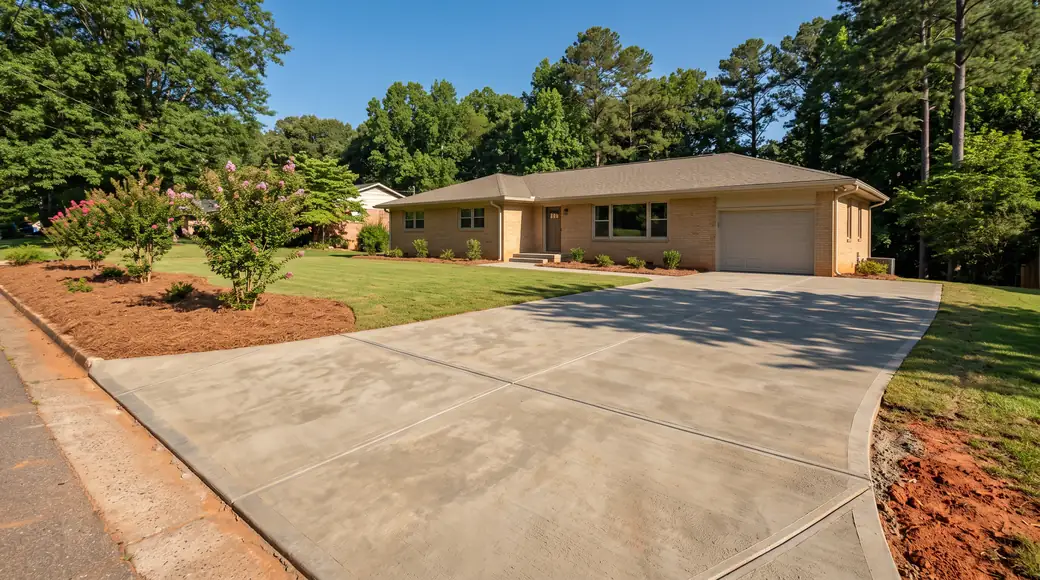
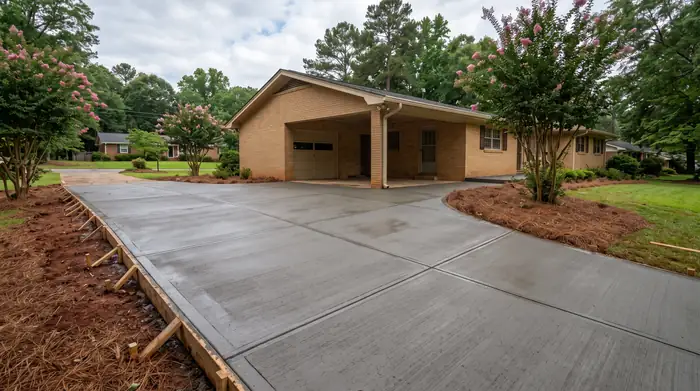
Commercial concrete for a restaurant or a hotel is mostly the surfaces nobody looks at until they fail. Dumpster pads that take a loaded truck twice a week. Loading approaches. Entry landings. The concrete sidewalk that runs the length of your frontage and carries every guest who walks through the door. Patio slabs, sometimes stamped concrete for a courtyard or a bar deck, sometimes a plain broom finish where the tables go. Grease trap lids and cleanouts get set into all of it. This work takes weight, water and traffic that a home driveway never sees.
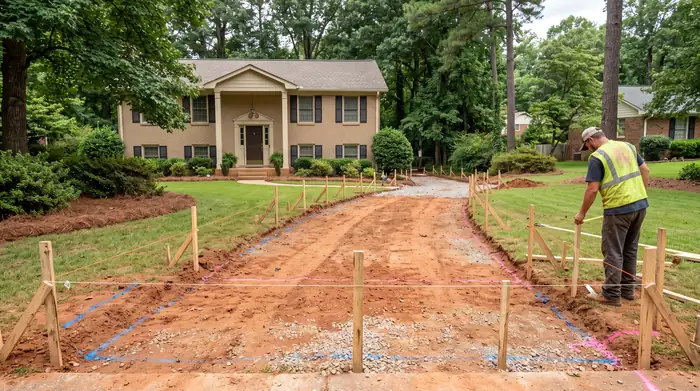
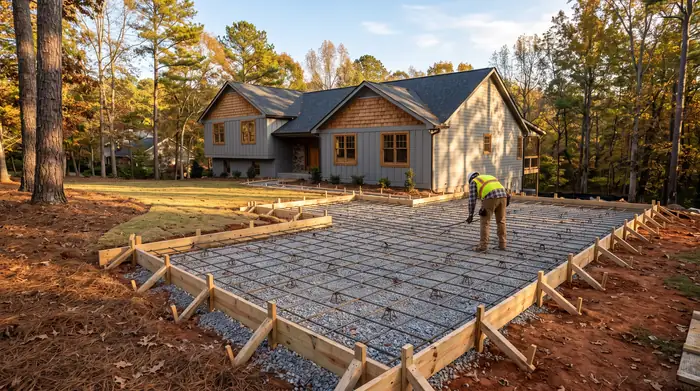
Layout comes first, because the slope decides everything after it. Water has to run away from the building, not toward it, and on a patio that pitch still has to stay flat enough to keep a four-top level. We cut the grade, compact the base, set forms, and tie rebar where the load calls for it. Any work in the public right of way, the sidewalk especially, goes through City of Lawrenceville permitting before we pour. Then we place, finish, and cut control joints while the slab is still green.
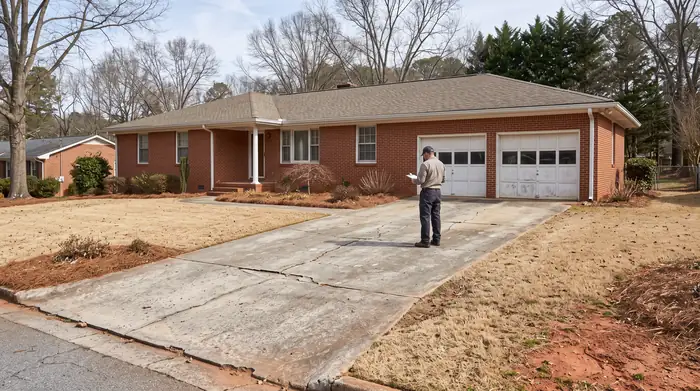
Failures usually start underneath. A slab poured over soft fill or a base that was graded and hoped for will crack no matter how clean the finish looked on day one. Thin pours in a truck path break at the edges first. Stamped surfaces that never got sealed lose their color under grease and pressure washing. Joints cut too late let the concrete crack where it wants to rather than where you put the line. Bad drainage is the quiet one: a low spot by the back door holds water and never dries.
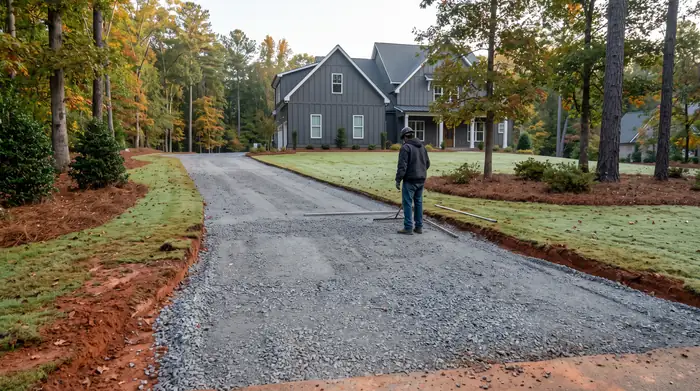
Getting it right is thickness, steel and patience, in that order. A dumpster pad wants a heavier slab and a rebar mat rather than wire mesh, over a base built up and compacted in lifts. Stamped work needs proper release, sealer, and a cure that nobody walks across early. Pours get staged so an entry or a section of patio stays usable while the rest sets up. A concrete contractor who skips those steps saves himself a week and costs you the slab. Call for a free estimate.