+1 470-229-2076
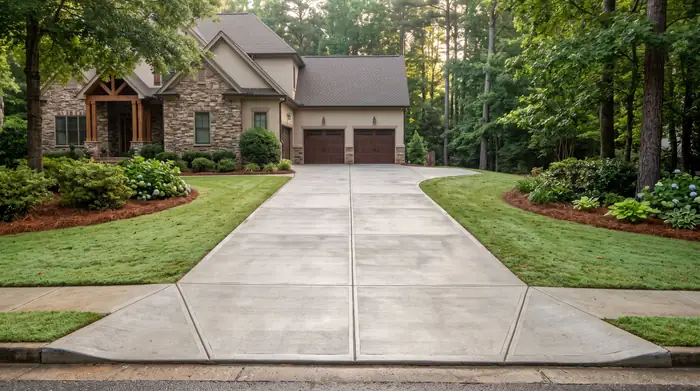
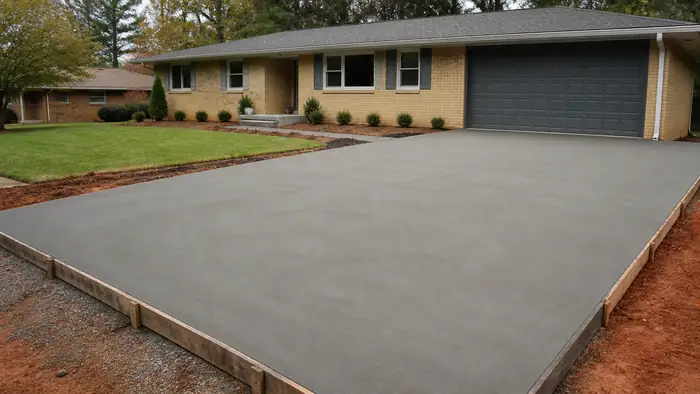
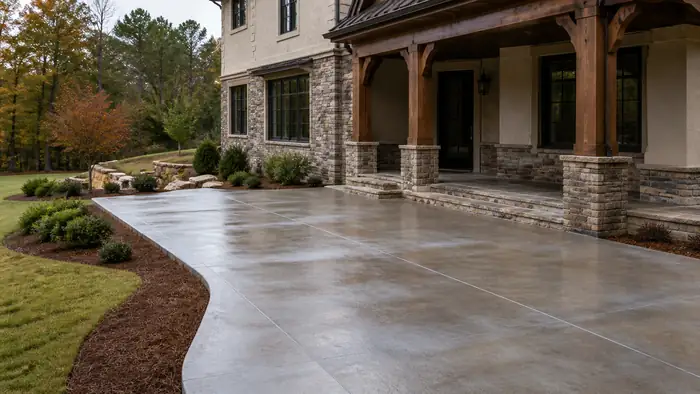
Wide view of finished concrete flatwork across the front of a home at a buff-brick ranch home in Lawrenceville, GA, in clear late-morning sun.

Commercial Concrete for Medical & Dental Offices in Lawrenceville, GA

We pour concrete for medical and dental offices in Lawrenceville. That means the parking lot approach, the accessible route from the striped stall to your front door, the sidewalk running along the building, the pad under the dumpster enclosure. A dental office is a place people walk into with a cane, a walker, a stroller, sometimes still numb from the chair. Flatwork that sits level, drains where it should, and holds its line matters more here than in most places. As a concrete contractor we run the same order of operations on every job: forms squared, base compacted, rebar and wire mesh where the load asks for it.

Appearance counts too. Stamped concrete at the entry, a colored border along the walk, exposed aggregate where you want texture without a pattern: any of it can read as calm and cared for instead of industrial. We keep the stamped work restrained, because a medical entrance should still look clean at seven in the morning in the rain. The median home here dates to 1987, and a practice taking over a building of that age often inherits a slab poured to different expectations. Call for a free estimate on your building, whether it sits in Lawrenceville or out toward Duluth.

Call +1 470-229-2076

Licensed, Bonded, and Insured ยท A combined 15 years of experience

Get a FREE Quote

We warranty all of our work because we believe in what we do.

What Commercial Concrete for Medical & Dental Offices Involves

Commercial concrete at a medical or dental office is everything a patient crosses before they reach the door: the entry walk, the accessible landing, the drop-off apron, the parking bays, the pad under the dumpster. Some of it carries delivery trucks and dumpster hauls. Most of it carries people who are unsteady on their feet, using a cane, a walker or a wheelchair, and that changes how a concrete contractor lays the whole thing out. Flat, even, pitched away from the building, with no lip anyone has to negotiate.

Offices stay open while we pour, so the work comes apart into pieces that always leave a usable entrance. We take out one run of concrete sidewalk, form it, tie steel, place, finish, then rope it off until it can carry weight. A temporary walkway covers the gap. Demolition and saw cutting get scheduled around the appointment book where the schedule allows it, because a rotary hammer running through a cleaning is nobody's idea of a good visit.

Trouble shows up at the joints and the thresholds first. A panel settles, one edge stands proud of the next, and a walker wheel catches on an edge nobody noticed until somebody went down. Water ponds at a door because the slab was pitched wrong or not pitched at all. Hard troweled finishes turn slick wet. Stamped concrete reads well along a border or a courtyard walk and rides badly under wheels if the pattern runs deep, so texture stays where texture belongs.

Most of what makes a sidewalk last is the part that disappears under it. Compacted base. Thickness matched to what rolls across it. Rebar or wire mesh set up on chairs instead of hooked off the ground halfway through the pour. Control joints cut on time and placed where the slab already wants to crack. Curing counts as much as placing does. We do this work in Lawrenceville, Snellville, Suwanee, Duluth and Sugar Hill, and across metro Atlanta, all on the same terms. Call for an estimate.

Commercial Concrete for Medical & Dental Offices in metro Atlanta

Medical and dental offices need concrete that holds up under patients who are not steady on their feet, and under delivery carts, wheelchairs and walkers all day. We pour entry sidewalks, landings, ramps, dumpster pads and parking approaches for offices across metro Atlanta. The flatwork is plain gray most of the time. Some of it is stamped or colored where the building wants a front that reads finished. Rebar and wire mesh go where the load says they should, not where the estimate looks tidiest.

The housing around these offices has a median build year of 1987, and a good share of the concrete serving them dates to the same stretch. Old slabs settle. Joints open, panels tip, and a walk that once ran flat now catches a toe or a wheel at every seam. We saw out what has failed, dig back to solid ground, form clean, and pour a slab that sits level with what stays. Patching over a moving slab buys a season.

Exposed aggregate, stamped concrete and colored finishes all sit on the same base: clean subgrade, honest thickness, steel where it belongs, joints cut before the slab decides on its own where to crack. That is most of what separates concrete work that lasts from concrete work that looks fine in year one. We take commercial concrete and residential drives alike, from sidewalk installation to a full parking pour. A concrete patio at a house and a clinic entry walk are the same trade, done to the same standard. Call for a free estimate.

How the Work Runs

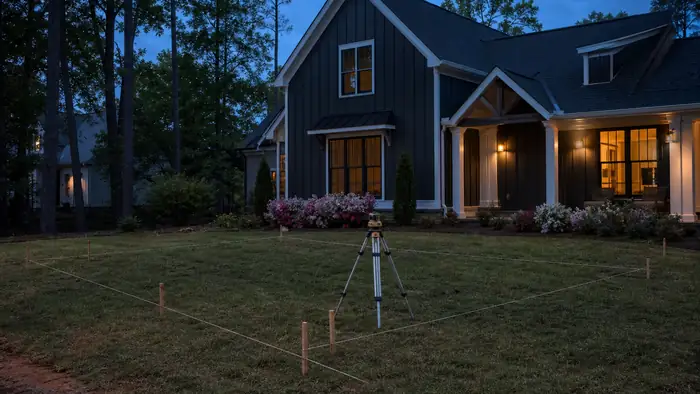
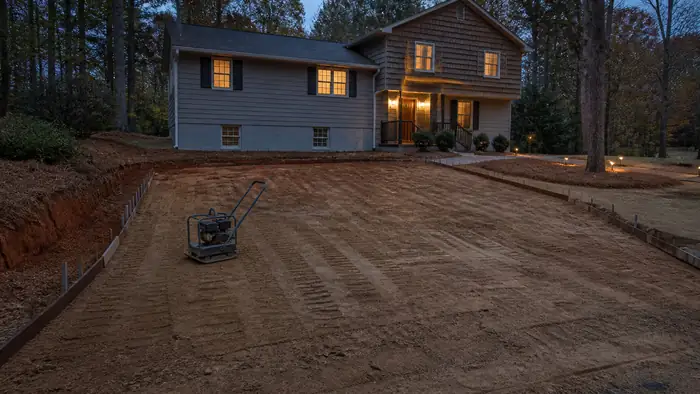
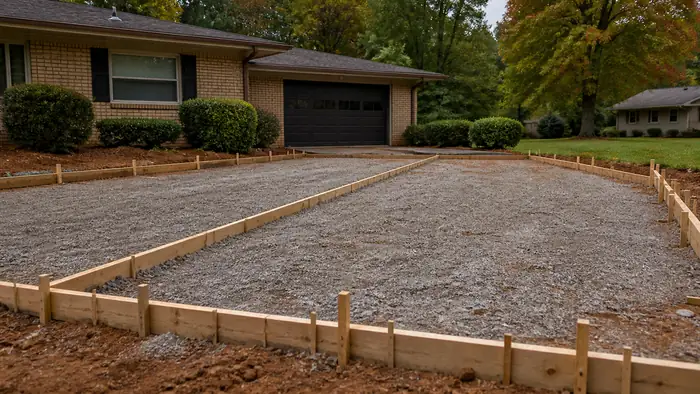
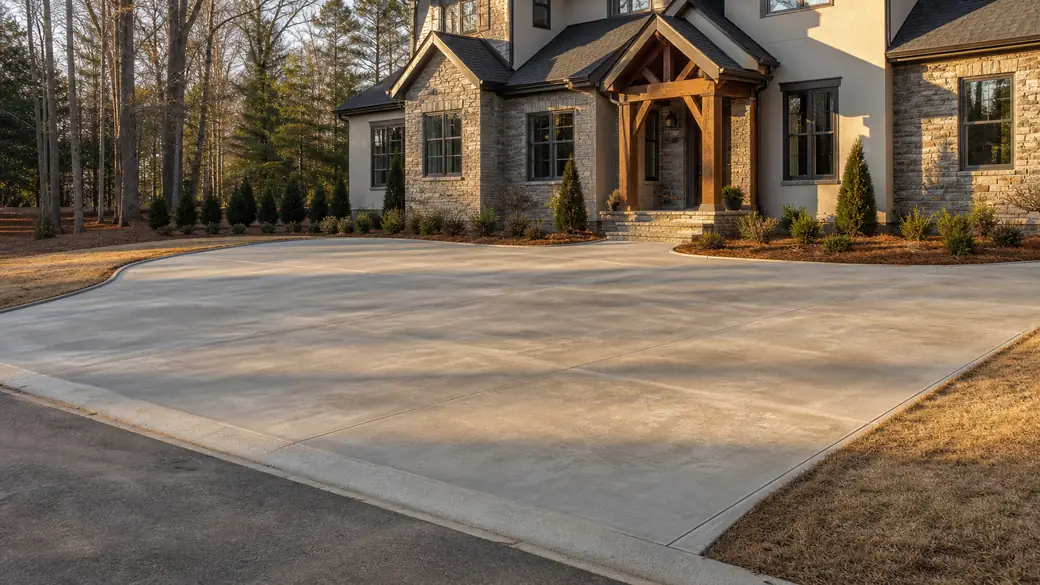
String lines and grade stakes laid out across a yard before a pour at a tan-brick colonial in Lawrenceville, GA, under bright midday cloud.

Step 1: Site Evaluation

We walk the property with you and look at what is already there: the existing slab, how water moves across the lot, where delivery vans and patients actually travel. Cracked or settled concrete usually points to a base problem underneath, not the concrete itself. We check grades at door thresholds, measure the areas, and note anything that has to stay open during construction. That visit tells us what the concrete installation really requires.

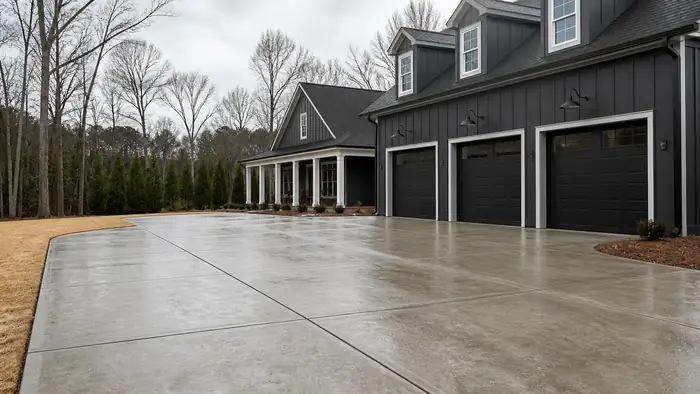
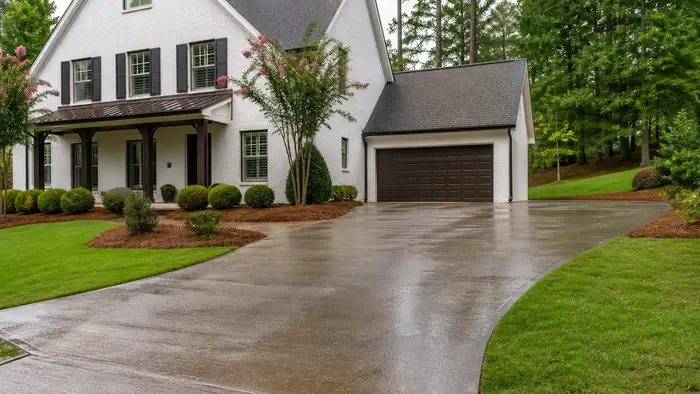
Concrete driveway and walk at a home, the kind of job an estimate covers at a red-brick ranch home in Lawrenceville, GA, under bright midday cloud.

Step 2: Written Estimate and Permits

You get the scope in writing: square footage, slab thickness, reinforcement, finish, and how the work gets phased around your patient schedule. Anything that needs approval before we break ground, we handle. For a medical office, phasing matters as much as the concrete. We plan which entrances stay usable, where the temporary walking route runs, and which days the pour blocks parking.

Broken-out concrete removed and the base rebuilt before a new pour at a charcoal farmhouse-modern home in Lawrenceville, GA, in early morning light.

Step 3: Demolition and Base Prep

Old concrete comes out, and so does the soft material under it. We haul the debris off, then bring the subgrade to plan with compacted graded aggregate base, usually four inches under a driveway and a bit less under walks. Compaction is the step people skip. Skip it and the slab cracks along the low spot within a season or two, no matter how good the mix was.

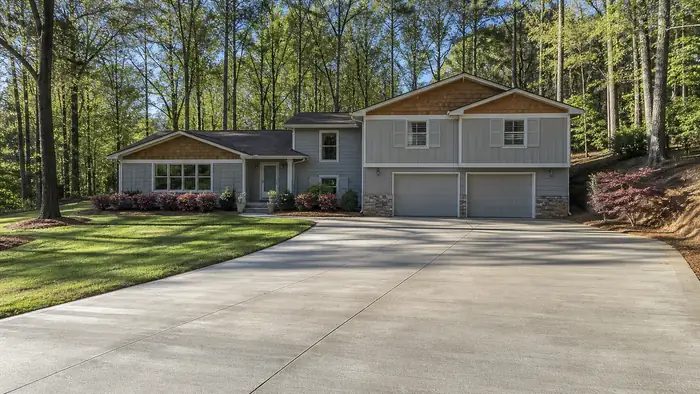
Wooden forms and rebar grid set and tied, ready for concrete at a grey split-level home in Lawrenceville, GA, in late afternoon light.

Step 4: Forming, Steel and the Pour

Forms get set to the grades we shot, with fall carried away from the building and away from door thresholds. Reinforcement depends on the load: wire mesh on light-duty sidewalks, rebar on a grid where trucks or dumpsters run. Steel sits on chairs, up in the slab, not laid on the dirt. Concrete driveways at a medical office carry heavier traffic than a house driveway, so they get thickened edges.

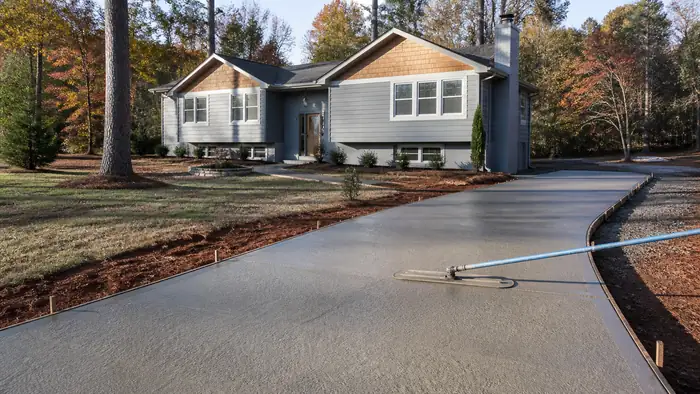
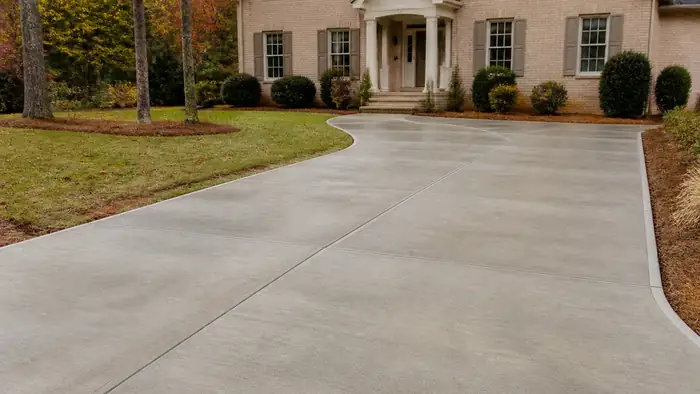
Freshly finished concrete slab curing under a clean broom texture at a buff-brick ranch home in Lawrenceville, GA, after a rain shower.

Step 5: Finishing, Curing and Final Walkthrough

Finish depends on where it sits. Walking surfaces get a broom finish across the direction of travel for traction when wet. Ramps and accessible routes get checked for slope before the concrete sets, because that is the last chance to fix it. Control joints go in early at the spacing the slab thickness calls for. We cure the surface, then walk the driveways and sidewalks with you once traffic is back on them.

What Decides the Price

Two lots of the same square footage can price very differently, and most of that difference is settled before anyone pours. Permitted work goes through the City of Lawrenceville, which adds time to the schedule. Everything else is site condition you can walk out and check yourself.

What changes the priceWhich wayWhy
Old slab or asphalt still in placecosts moreIt has to be broken out, loaded and hauled before the subgrade is right
Mixer truck can back to the pourcosts lessLong buggy runs or a pump line add hours and equipment
Slab thickness the use calls forthicker costs moreA dumpster pad or delivery bay carries loads a walkway never sees
Rebar mat instead of wire meshcosts moreMore steel, tied and chaired, and slower to set
Soft or wet subgradecosts moreStone and compaction go in until it stops pumping under a wheel
Water with nowhere to gocosts moreSlope, drains or a thicker stone base keep it off the concrete
Conduit, irrigation or gas under the workcosts moreLocates first, then hand digging around what is live
Stamped or colored finishcosts moreRelease, sealing and timing the pour to the finish

Compare bids on thickness, reinforcement, inches of stone base, and who hauls the tear-out. A bid silent on those is not cheaper, only vaguer.

Questions About Commercial Concrete for Medical & Dental Offices

What surfaces suit a Lawrenceville medical car park?

Poured concrete carries the load better than asphalt where cars idle and stop under a canopy. We use a reinforced slab, rebar or wire mesh sized to the traffic, for drive lanes and the drop-off apron. Parking stalls, walkways and the entry ramp run as flatwork. A broom finish gives footing to wheelchairs and walkers. Colored concrete or exposed aggregate can mark crossings without relying on paint.

Can you work around a clinic's hours in metro Atlanta?

Yes. Most medical concrete work happens after the last patient leaves, or on a weekend when the building is quiet. We schedule pours so the concrete has the night to set before staff arrive. A few phases need daylight and a full crew, so we tell you which ones early and put them on days you are closed.

How do you control dust and noise near patients in Lawrenceville?

Saw cutting and demolition produce most of both. We cut wet, which holds silica dust down and takes the noise down a step, and we run those tools at the far end of the site from exam rooms where the layout allows. Poly sheeting and taped doors keep dust out of entries. Loud demolition goes on the schedule you set.

Can you keep a Lawrenceville medical practice open while you work?

Yes. We break the job into sections so part of the lot stays open while another part cures. Temporary walkways, cones and signage route patients around fresh concrete. A slab needs days before vehicles touch it, so phasing matters more than speed here. We walk the property with you first and agree on where patients go during each stage.

How do you keep ambulance and drop-off access open at a Lawrenceville clinic?

The drop-off lane and any emergency route stay clear. We pour those areas in halves, or in short bays, so one side is always drivable while the other sets. Barricades mark the live lane clearly. Where a canopy sits over the pour, we hand finish under it. Your staff know which door is in use before a crew starts each morning.

What accessibility standards apply to a medical entrance in Lawrenceville?

Medical entrances fall under ADA rules for the accessible route: ramp slope, cross slope, level landings at doors, and detectable warnings at curb ramps. We form and check those with a level as we go, because concrete does not forgive a slope you catch after it hardens. Accessible stalls, the access aisle and the sidewalk connecting them are poured to the same standard.

Get a Free Estimate

Get a FREE Quote

We warranty all of our work because we believe in what we do.

Tap to call +1 470-229-2076