+1 470-229-2076
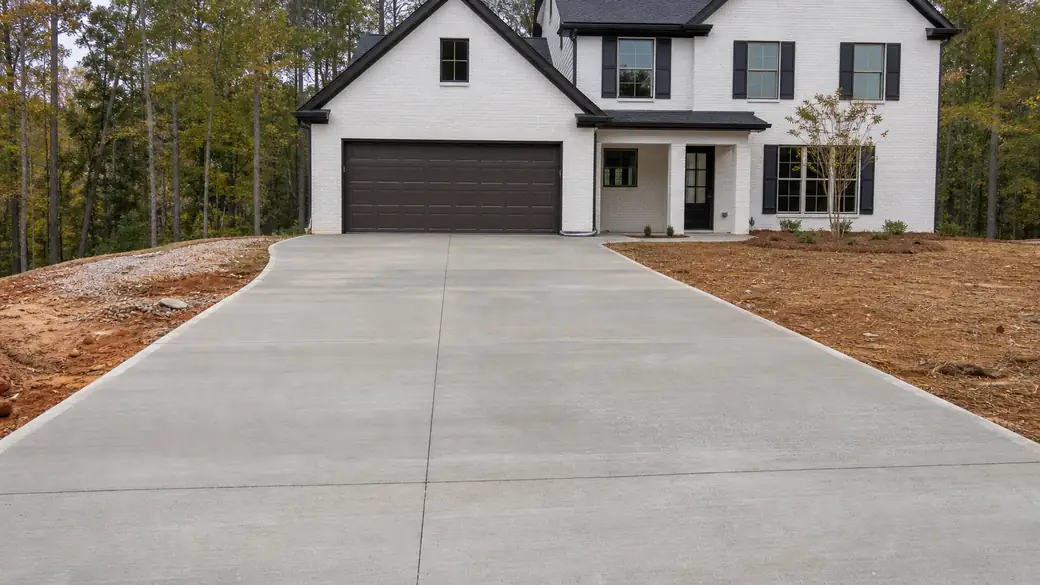
concrete installation completed by a local contractor at a painted-white-brick two-story home in Lawrenceville, GA, under an overcast sky.

Concrete Installation in Lawrenceville, GA

Concrete installation in Lawrenceville is mostly residential work: driveways, patios, walkways, and the slabs under garages and sheds. We also take on commercial surfaces when the project suits our crew. The median home here was built in 1987, so a good share of what we pour replaces a slab that has already done its time. Some of it gets a plain broom finish. Some of it is stamped or decorative. All of it depends on the ground underneath.

Every job starts on site, not on paper. Gwinnett County is hilly, with about 181 feet of relief within a few miles, and that changes from one block to the next. So we grade and test each site on its own before any forms go in. Pacolet soil is the dominant type here and it drains well, but it varies across the county. Once the base is right, we set the reinforcement, pour, finish the surface, and let it cure properly.

Most failed concrete fails from below. A base that was never compacted settles, and the slab cracks along the soft spot. Water is the other problem. This area gets about 55 inches of rain a year, and on a sloped lot that water goes wherever the grade sends it. A driveway poured without a plan for runoff ends up with pooling, undercut edges, or a crack working its way toward the street. Thin sections and skipped reinforcement show up sooner than anyone wants.

What it takes to get right is mostly work you never see. That means digging to the proper depth, bringing in base material and compacting it, pitching the slope so water leaves the slab, and using the reinforcement the load calls for. None of it shows once the concrete is down, which is exactly why it gets skipped. We handle the permit when the project needs one. If you are planning a driveway, patio, or slab, call for a free estimate.
Call +1 470-229-2076

Get a FREE Quote

What Concrete Installation Involves

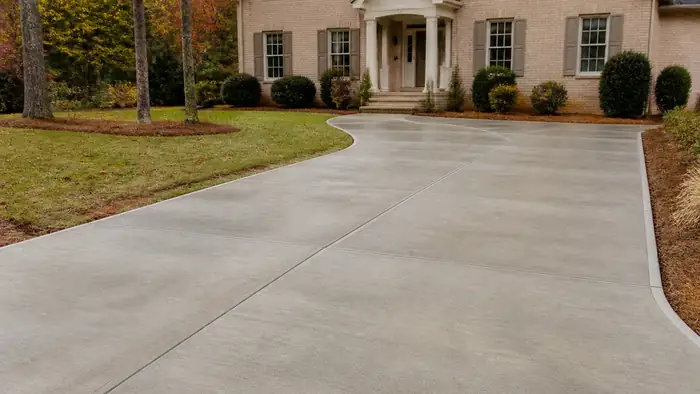
concrete slab installation completed by a local contractor at a tan-brick colonial in Lawrenceville, GA, under bright midday cloud.

Concrete Slab Installation Cost

What a slab costs comes down to what sits under it and around it. Pacolet soil, the county's most common type, drains well, but it varies, and Gwinnett County has real grade change. A sloped lot means more excavation, more base stone and sometimes formed edges to hold the fill. Thickness matters. So does reinforcement: welded wire, rebar on chairs, or fiber in the mix. We walk the site, test the ground and price the slab you actually need.

concrete driveway installation completed by a local contractor at a brick-and-siding two-story home in Lawrenceville, GA, in early morning light.

Concrete Driveway Installation

Driveways carry the heaviest loads we pour for a house, so we build them thicker than a patio, usually five inches, with rebar set on chairs so it stays in the middle of the slab instead of lying in the dirt. We compact a stone base, pitch the surface so water runs off, and cut control joints before the concrete can crack on its own. Finishes run from plain broom to stamped and colored. On a steep drive, broom texture gives tires grip.

concrete flooring installation completed by a local contractor at a charcoal farmhouse-modern home in Lawrenceville, GA, after a rain shower.

Concrete Flooring Installation

Basement, garage and shop floors live or die by the work done before the pour. We lay a vapor barrier over compacted base so ground moisture stays out of the slab, then place reinforcement and pour to grade. The finish follows the use: a hard steel trowel for a garage, a smoother surface ready for sealer, stain or polishing in living space. Half the houses around Lawrenceville went up before 1987, so a new floor often sits inside an older foundation. We check it first.

concrete slab repair completed by a local contractor at a grey split-level home in Lawrenceville, GA, under low winter sun.

Concrete Slab Repair

Cracks tell you what went wrong. A hairline crack along a control joint is usually shrinkage, and it can be routed and sealed. A crack with one side higher than the other means the base moved, often because water washed out fill on a slope. Sunken sections can sometimes be lifted; broken ones get cut out, the base rebuilt and new concrete doweled into the old. With about 55 inches of rain a year, we look at where the water goes before we patch anything.

Our Warranty and Guarantee

What we stand behind is the slab itself, and the work that goes into it before the first truck arrives. A promise on paper is only as good as the base under the concrete, so that is where our attention goes. Before anything is signed, we walk the property with you, point out what we see, and put the scope of the project in writing: thickness, reinforcement, joint spacing, finish. You know what the job includes, and what it leaves out, before any work starts. If a detail matters to you, say so, and it goes on the page.

Most concrete that fails early fails from the ground up. Pacolet soil is the dominant type in Gwinnett County and it drains well, but it varies across the county, so we test every site on its own instead of trusting a map. Grading matters just as much. Gwinnett County is hilly, with 181 feet of local relief within a few miles, and that changes from block to block. A driveway or patio that sheds water toward the house will pay for it. We set our forms so about 55 inches of rain a year runs away from the slab, not under it.

Concrete cracks. Anyone who tells you otherwise is selling something. What we control is where it cracks and how much that matters. Control joints cut at the right depth and spacing give the slab a place to move, and steel reinforcement holds the pieces tight when it does. We pour when conditions allow, keep the surface from drying too fast, and tell you how long to stay off it before a car or a grill goes on. Stamped and decorative surfaces get sealed, and we explain what resealing involves later on. Call for a free estimate, and ask us about any of it.

How Much Does Concrete Installation Cost in Lawrenceville?

Concrete prices come from the site more than from the slab. Two driveways of the same size can land far apart once we see what is under them, how a truck gets in, and where the water goes. Most of what moves the number is something you can check from your own yard.

What changes the priceWhich wayWhy
Old concrete, stumps or roots in the waycosts moreBreaking out, hauling off and clearing the ground all happen before any new work starts.
How a ready-mix truck reaches the formscosts less with direct accessIf the truck can't back up to the pour, the concrete moves by pump or wheelbarrow, which means more equipment and more hands.
Slope of the lotcosts more on a gradeGwinnett County is hilly, with 181 ft of local relief within a few miles, and a sloped site needs more cutting, fill and taller forms.
Soil under the slabcosts more if soft or filledPacolet soil is common here and drains well, but it varies, so a soft spot means digging out and bringing in compacted base.
Where water goes nowcosts more if it poolsWith about 55" of rain a year, water that runs toward the house or sits on the site has to be regraded or drained before we pour.
Thickness and reinforcementcosts more for heavier loadsA driveway that carries a truck needs more depth and steel than a patio that holds chairs.
Stamped or decorative finishcosts moreStamping and color add materials and hand work while the surface is still workable.

When bids come in, compare the details, not the bottom line. Look for slab thickness, the reinforcement (wire mesh, rebar or fiber), how much base gets laid and compacted, and whether tear-out and haul-off are included. Check that the permit is in the price and that control joints are spelled out. A low bid that leaves one of these out is a different job, not a better deal.

Frequently Asked Questions About Concrete Installation in Lawrenceville

How long does concrete expansion joint installation take from site prep to final seal for Lawrenceville properties?

It depends less on the joint than on the slab around it. We clean out the old material, cut or rout the joint square, set backer rod at the right depth and prime the edges where the sealant calls for it. Then the sealant has to cure before anyone drives or walks over it, and the weather sets that pace. Once we have seen your slab, we can give you a schedule for your job.

Why We Are the Best Concrete Contractor in Lawrenceville, GA, and Surrounding Areas?

We would rather show you than tell you. Every job starts with the ground. We grade the site and test the soil before anything is formed, because conditions here change from one block to the next. We set reinforcement where the slab needs it, cut joints where cracks want to go, and finish at the pace the concrete allows. Nothing gets rushed to make a schedule look good.

What are the most common causes of cracks, spalling, and surface flaking on concrete decks in Lawrenceville?

Water, mostly, and how the deck was built to handle it. The area gets about 55 inches of rain a year, so a deck that holds puddles or drains toward the house takes a steady beating. Flaking usually starts at finishing, when the surface is worked with bleed water still on it. Cracks come from a thin base, missing reinforcement or shallow joints. Spalling follows once water reaches the steel and it starts to rust.

Does Lawrenceville Best Concrete handle commercial concrete projects?

Yes. We pour and repair sidewalks, entrances, loading areas, dumpster pads and parking surfaces for businesses, alongside our residential work. Retail, schools and health care employ more people around here than any other fields, and all of them need walkways that stay level and safe underfoot. We plan the pour around your operating hours where we can, size the slab and reinforcement for the loads it will carry, and handle the permit.

Can you resurface cracked or damaged concrete in Lawrenceville, GA?

Yes, when the slab underneath is sound. Resurfacing bonds a thin new layer over old concrete, which fixes scaling, flaking and worn finishes, and it can take a decorative or stamped texture. It will not fix a slab that has settled or cracked clean through, because that crack comes right back. We check for it first. The median home here was built in 1987, and plenty of those driveways and patios are good candidates.

How long does concrete last in Lawrenceville's climate?

Concrete lasts as long as its base, drainage and joints let it. The temperatures are easy on a slab: average highs around 72°F, lows around 53°F, and only about 2 inches of snow a year. Rain is the real test. The dominant local soil, Pacolet, drains well, but the ground is hilly and varies lot to lot, so we test each site. A slab built on that footing and sloped to shed water will serve a household for decades.

Get a Free Estimate

Get a FREE Quote

Tap to call +1 470-229-2076


