+1 470-229-2076
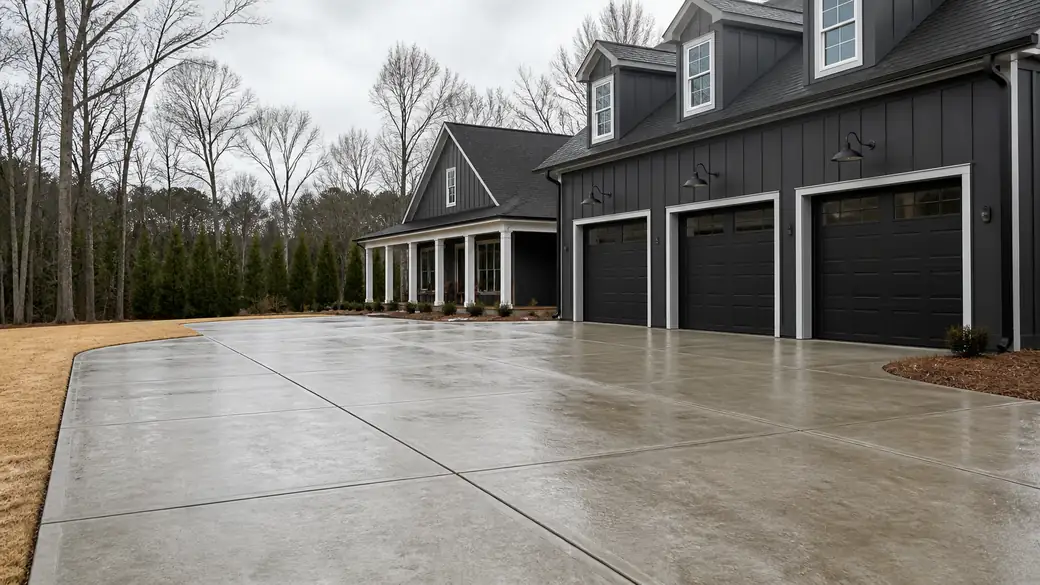
concrete flooring installation completed by a local contractor at a charcoal farmhouse-modern home in Lawrenceville, GA, after a rain shower.

Concrete Flooring Installation in Monroe, Georgia

A concrete floor in Monroe is usually one of three things: a garage slab, a basement or shop floor, or the ground level of a commercial building. Each one carries a different load and sees different use, so we don't pour them all the same way. A residential garage needs a surface that shrugs off tire traffic and dripped oil. A shop or storefront floor needs to sit flat and carry the right reinforcement for what goes on it. Some owners want it plain. Others want a decorative or stamped finish.

The real work starts under the slab. We test every site individually before anything else happens, because the ground changes from one property to the next and a floor is only as good as what it sits on. Then comes the base: graded, compacted and checked. Where moisture is a concern, a vapor barrier goes down. Reinforcement is set at the right height, not lying in the dirt. After the pour we finish the surface and give it the time it needs to cure.

Most floor failures trace back to something nobody could see once the concrete went in. Water is the usual culprit. This part of Georgia gets about 55 inches of rain a year, and a slab poured over a soft or wet base will settle, crack, or pull moisture up through the surface. Getting it right takes attention, not shortcuts. If you have a floor in mind, call us for a free estimate.

Call +1 470-229-2076

Get a FREE Quote

What We Do in Monroe

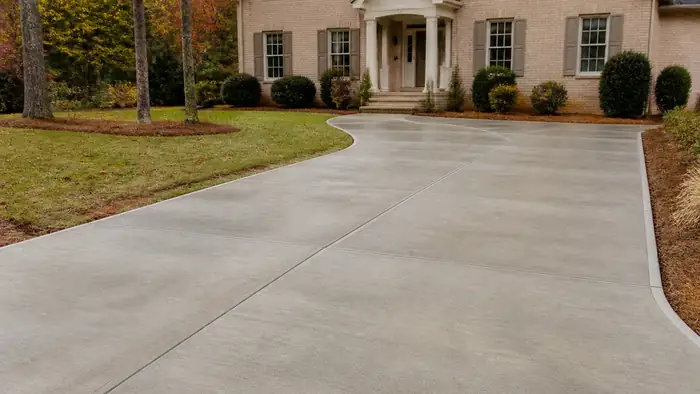
concrete slab installation completed by a local contractor at a tan-brick colonial in Lawrenceville, GA, under bright midday cloud.

Concrete Slab Installation Cost

Four things set the number on a slab: size, thickness, what goes under it, and how much steel goes in it. A 4-inch slab on compacted gravel for a shed takes less material and labor than a 6-inch slab with rebar that has to carry a vehicle or a structure. Access matters too. A pour where the truck backs straight up to the forms goes faster than one pumped or wheeled across a yard. We walk the property and write the estimate from what we see.


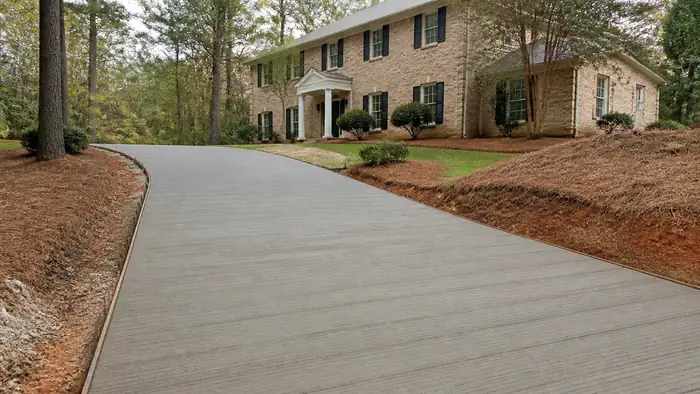
concrete driveway installation completed by a local contractor at a brick-and-siding two-story home in Lawrenceville, GA, in early morning light.

Concrete Driveway Installation

Most residential driveways we pour are 4 inches thick, and we go to 5 or 6 where heavier trucks park or turn. Reinforcement is rebar or welded wire set on chairs so it sits mid-slab instead of lying in the dirt. Control joints go in every 10 feet or so, cut early, because concrete cracks and the joints decide where. The usual finish is a broom texture for grip. Stamped and colored surfaces are there when you want the driveway to match the house.

Concrete Flooring Installation

Garage floors, basements, workshops and shop buildings all start as a slab, and the finish is what makes it a floor. We place a vapor barrier under interior slabs so ground moisture stays out of whatever sits on top. The surface gets a steel-trowel finish, smooth and dense, ready for sealer, epoxy or polishing. Flatness matters more indoors than out: a low spot in a garage holds water. Decorative stains and saw-cut patterns suit floors people actually look at.

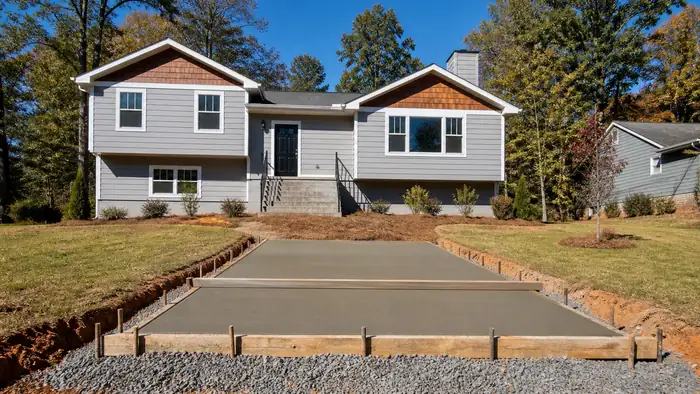
concrete slab repair completed by a local contractor at a grey split-level home in Lawrenceville, GA, under low winter sun.

Concrete Slab Repair

Not every cracked slab needs to come out. Hairline shrinkage cracks can be routed and sealed. A slab that has sunk or tipped is a different problem, usually traced to what is underneath: soil that washed out, settled fill, or a downspout emptying beside the edge. With about 55 inches of rain a year, water is the first thing we check. When the base has failed, patching the surface only buys time, so we cut out the section, rebuild the base and pour new.

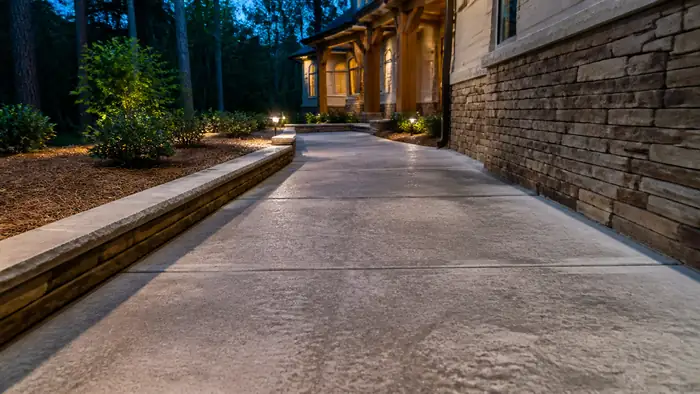
concrete sidewalk installation completed by a local contractor at a stacked-stone and stucco home in Lawrenceville, GA, at blue hour.

Concrete Sidewalk Installation

A walkway is the thinnest concrete on most properties, typically 4 inches, and the first piece people notice when it heaves. We compact the base, set forms with a slight cross slope so rain runs off instead of pooling, and tool joints every 4 or 5 feet. Pacolet soil, the dominant type in Gwinnett County, drains well, but soil varies from lot to lot, so every site is tested before a form goes in. Broom finish is standard. Exposed aggregate and stamped borders are options.

Why Monroe Chooses Lawrenceville Best Concrete

A concrete floor is only as good as what sits under it, and that is where we spend most of our attention. We pour slabs for garages, basements, workshops and commercial spaces in Monroe, and each one starts with the ground rather than the finish. Soil is not the same everywhere, so we test every site individually before any work starts. What we find decides the base, the thickness and the reinforcement. Nothing is assumed.

Rain is the other thing we plan around. This part of Georgia sees about 55 inches of it a year, so drainage, vapor barrier and grading are settled before the forms go in. We time pours around the forecast and let the slab cure at its own pace instead of rushing to the next job. If something about your property needs extra work, we say so at the estimate, in plain terms, before anything is poured.

Getting a floor right costs a little more time up front, and it saves a great deal later. Cracks, low spots and moisture coming up through the slab almost always trace back to a thin base, missing reinforcement or a pour that was hurried. Those are expensive to fix once flooring, cabinets or equipment sit on top. We would rather do the groundwork once and hand you a surface built to stay flat. Call for a free estimate.

Our Concrete Process, Step by Step

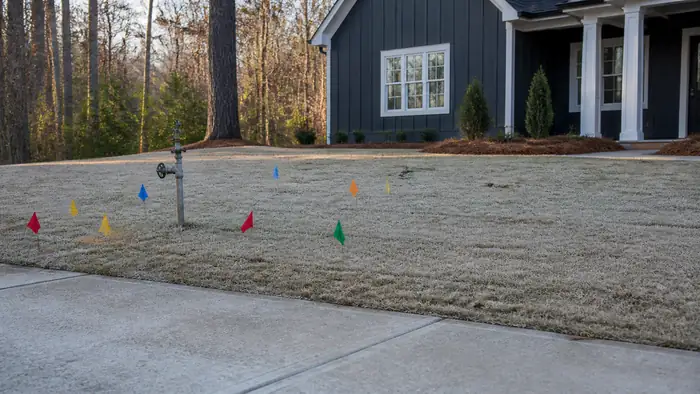
Utility flags mark buried lines before digging starts. at a charcoal farmhouse-modern home in Lawrenceville, GA, in early morning light.

Step 1: Site Assessment

Every job starts with a walk of the property and a close look at the ground. Soil changes from one lot to the next, so we test each site individually before any work begins. We check where water runs after a storm, how the grade falls away from the house, and what the slab will have to carry. A garage floor, a shop floor and a basement floor each ask for something different, and we plan for the one you actually need.

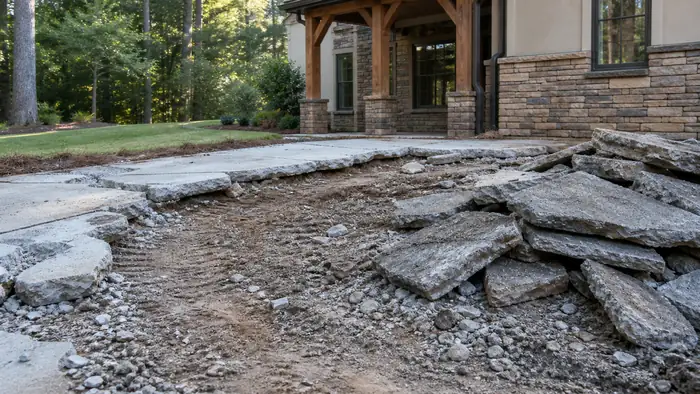
An old patio slab is broken up and hauled away. at a stacked-stone and stucco home in Lawrenceville, GA, under low winter sun.

Step 2: Site Preparation

Most slab failures trace back to what sits underneath. We strip topsoil and organic material down to firm ground, then bring in crushed stone and compact it in lifts until it stops moving under the plate. Soft spots get dug out and replaced, not covered over. With about 55 inches of rain a year, we set the grade so water leaves the site, and we lay a vapor barrier under interior floors to keep ground moisture out of the finished surface.

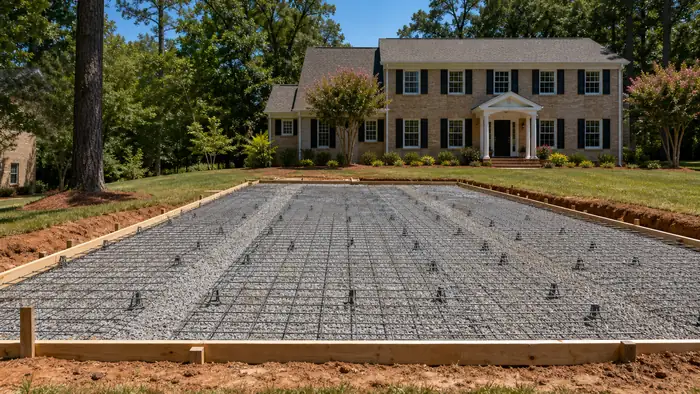
Wire mesh is unrolled across a driveway base before pouring. at a tan-brick colonial in Lawrenceville, GA, in clear late-morning sun.

Step 3: Forming & Reinforcement

Forms go in straight, level and staked tight, because concrete takes whatever shape you give it. Exterior slabs get a slight pitch for runoff; interior floors stay flat. Reinforcement depends on the load: welded wire mesh or rebar, set on chairs so it sits in the middle of the slab instead of lying on the stone, where it does nothing. Edges are thickened where walls or heavy equipment bear. Isolation joint material goes wherever the slab meets a foundation or column.

A screed board levels fresh concrete on a small patio. at a grey split-level home in Lawrenceville, GA, in clear late-morning sun.

Step 4: Pouring

We order the mix to suit the job and check it when the truck arrives, not after. Adding water on site makes concrete easier to spread and weaker once it sets, so we don't do it. The crew places concrete close to where it will stay rather than dragging it across the slab, and consolidates it around the reinforcement so no voids are left. We screed to the forms and keep the pour continuous. A cold joint in the middle of a floor is where cracks start.

A broom drags across a driveway creating a slip-resistant texture. at a tan-brick colonial in Lawrenceville, GA, under bright midday cloud.

Step 5: Finishing

Timing matters more here than anywhere else. Bull floating brings cream to the surface, and then we wait for the bleed water to leave before touching it again. Troweling too early traps that water, and the top flakes off months later. Interior floors usually get a hard steel trowel finish; garages and exterior surfaces get a broom finish for grip. Stamped and decorative work happens at this stage too. Control joints are cut at planned spacing so the slab cracks where we choose.

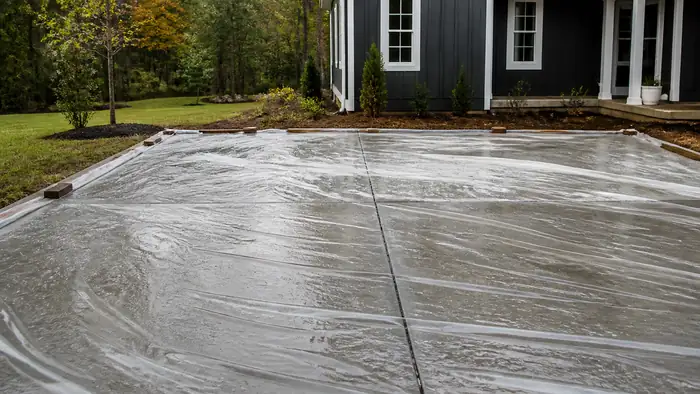
Plastic sheeting covers a curing driveway slab. at a charcoal farmhouse-modern home in Lawrenceville, GA, after a rain shower.

Step 6: Curing

Concrete gains strength slowly, and only while it holds its moisture. We keep a new slab damp with curing compound, wet blankets or plastic sheeting so the surface doesn't dry faster than the core. A surface that dries too fast is what causes crazing and dusting on a finished floor. Average daily highs run around 72°F, but hot, windy afternoons still get covered sooner. Foot traffic comes first. Vehicles and heavy loads wait until the slab has gained real strength.

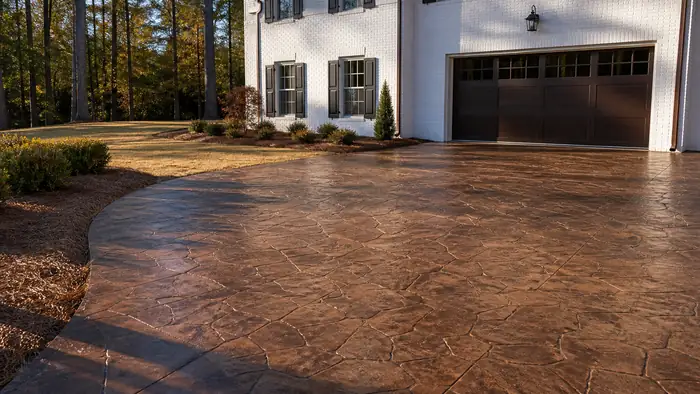
A finished stamped surface shows a glossy sealed sheen. at a painted-white-brick two-story home in Lawrenceville, GA, in late afternoon light.

Step 7: Sealing

A good sealer keeps out water, oil and stains, and it makes a floor far easier to clean. We use penetrating sealers on exterior slabs and film-forming acrylic or epoxy coatings on interior floors, depending on how the space is used. Sealing waits until the cure is complete and the surface is clean and dry. Seal over trapped moisture and the coating turns milky and peels. When water soaks in instead of beading, the floor is due for another coat.

Common Questions From Monroe Owners

Do you coordinate ready-mix delivery and placement for Monroe job sites?

Yes. We order the mix, set the delivery time and plan where the truck will stand before anyone pours. On a Monroe job that starts with how the concrete reaches the forms: straight off the chute from the street, by buggy across the yard, or by pump when the reach is too long. We watch the forecast closely, and we would rather move a pour than place concrete in heavy rain.

What areas beyond Monroe do you serve?

We cover a wide stretch of metro Atlanta, and the full list of towns appears elsewhere on this page. Every place on it is served on the same terms: the same standards, the same process, the same care with the slab. A driveway in Conyers gets exactly what a patio in Monroe gets. If you are unsure whether your property falls inside our area, call and ask.

What types of commercial projects does Lawrenceville Best Concrete handle?

Most of our commercial work is flatwork that has to carry weight and traffic: shop and warehouse floors, retail slabs, sidewalks and entrances, dumpster pads, loading areas and parking pads. We also pour structural footings and foundation slabs for smaller commercial buildings. Each project gets reinforcement and thickness matched to what it will carry, whether that is foot traffic outside a clinic or a forklift working a storage floor.

Are you licensed and insured?

Ask any contractor, Lawrenceville Best Concrete included, for that answer on paper rather than trusting a web page. Before you sign anything, request current license and insurance documents in writing and check them yourself: the insurance with the carrier named on the certificate, and any license with the office that issued it. A contractor who stands behind their work has no reason to hesitate over that request. Settle it before any work starts.

Can you provide custom wire mesh sizes for specific projects?

Yes. Mesh is chosen for the slab, not pulled from whatever happens to be on hand. A patio, a driveway that takes a loaded pickup and a commercial floor under racking all call for different spacing and wire weight, and some jobs are better served by rebar or a mix of both. We cut and lap the mesh to fit the forms, then set it on chairs so it sits inside the concrete where it does its work.

How does Lawrenceville Best Concrete protect our property and keep the job site clean?

Before the first truck arrives, we lay plywood over any lawn the equipment has to cross and cover siding, doors and windows near the pour. The ready-mix truck washes out into a contained area, never onto your yard or into the storm drain. Forms, stakes, offcuts and leftover materials leave with us when the work is done. The only thing that should look different afterward is the new concrete.

Get a Free Estimate

Get a FREE Quote

Tap to call +1 470-229-2076