+1 470-229-2076
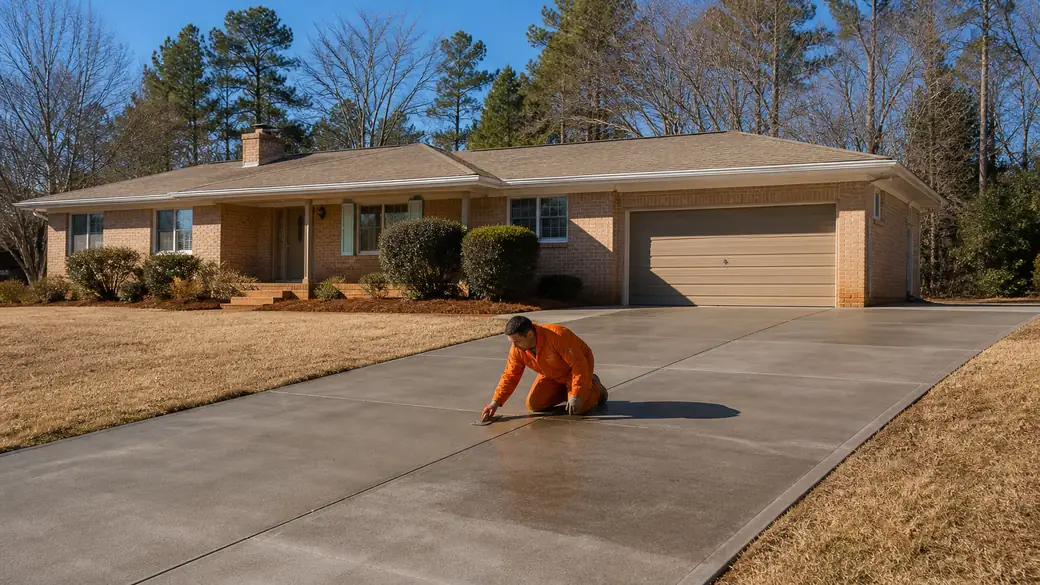
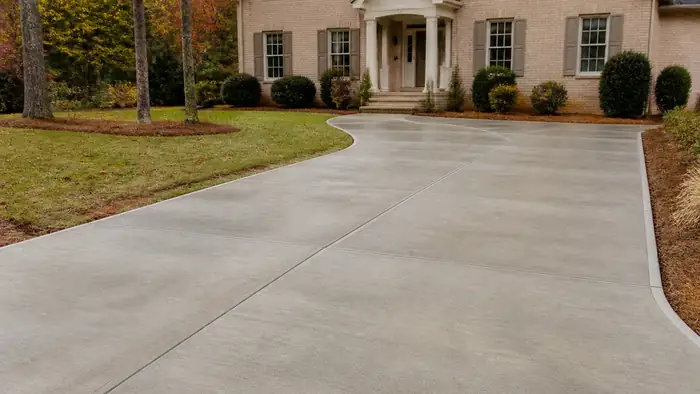
concrete repair and resurfacing completed by a local contractor at a buff-brick ranch home in Lawrenceville, GA, in clear late-morning sun.

Concrete Repair And Resurfacing in Lawrenceville, GA

Concrete repair and resurfacing is how we bring a tired slab back without tearing it out. In Lawrenceville the median home was built in 1987, so a lot of driveways, patios and walkways here have been carrying cars, rain and tree roots for a long time. Some just need their cracks cleaned out and sealed. Others have a worn, scaled surface that takes a bonded overlay well, and many of those can take a stamped or decorative finish on top. We look at the slab first and tell you which one you have. When the structure underneath has failed, we say that too.

On site, we start with the ground, not the surface. Gwinnett County is hilly, with 181 feet of local relief within a few miles, and it changes from one block to the next. Pacolet soil, which drains well, is the most common type here, but we test every property on its own before deciding anything. Then we clean the concrete down to sound material, fix what needs structural attention, and put down the resurfacing materials. We keep the work area tidy. We also tell you plainly when the new surface can take foot traffic and when it can take a car.

Most failed repairs fail for the same reason: someone patched the top and ignored what was underneath. A thin overlay on a slab that is still moving will crack right along the old lines. Water is the other problem. We get about 55 inches of rain a year here, and it finds every gap. When it runs under a slab on a slope, it washes out the base, and no coating will hold after that. Poor prep does the rest. Resurfacing material needs a clean, open surface to bond to, and skipping the grinding saves an hour while costing you the whole job.

Doing it right means spending time where nobody will ever look. That is drainage correction, crack repair with proper reinforcement where the slab calls for it, and surface prep that often takes longer than the application itself. It also means being honest when resurfacing is the wrong call and replacement is the better use of your money. We would rather tell you that up front than sell you a finish that peels. If your concrete is showing its age, call us for a free estimate.
Call +1 470-229-2076

Get a FREE Quote

What Concrete Repair And Resurfacing Involves

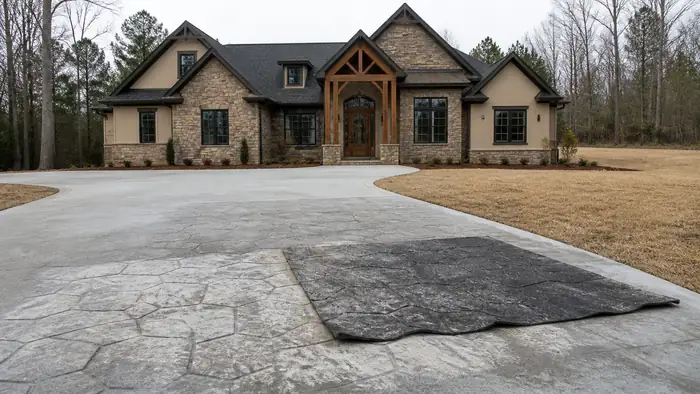
concrete slab installation completed by a local contractor at a tan-brick colonial in Lawrenceville, GA, under bright midday cloud.

Concrete Slab Installation Cost

What moves the number on a slab is mostly what sits under it and around it. A flat lot with easy access needs forming, a compacted gravel base, reinforcement and the pour. A sloped yard can mean cutting, filling and compacting before any concrete arrives, and Gwinnett County has 181 ft of local relief within a few miles. Thickness, rebar versus wire mesh, and a broom or stamped finish all change it too. We price each slab after walking the site.

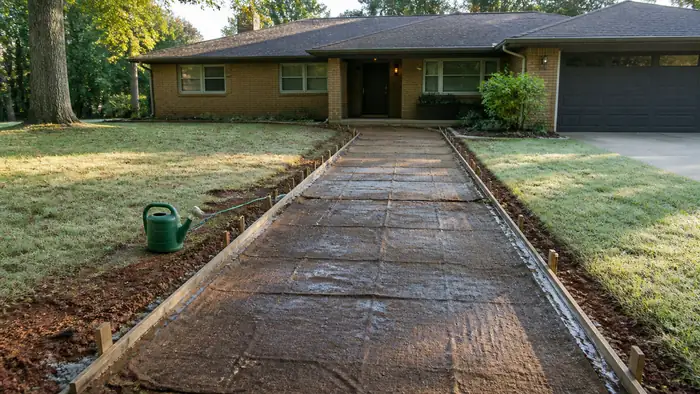
concrete driveway installation completed by a local contractor at a brick-and-siding two-story home in Lawrenceville, GA, in early morning light.

Concrete Driveway Installation

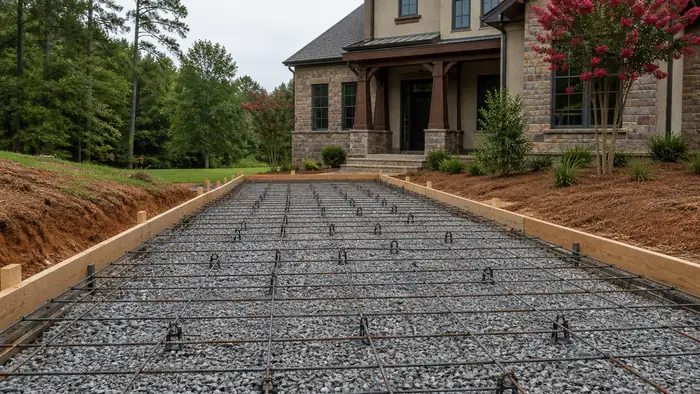
A driveway carries cars, delivery trucks and the odd loaded moving van, so we build it thicker at the apron and where the tires land. The base is compacted in lifts. Rebar sits on chairs so it ends up mid-slab instead of in the dirt, and control joints get cut before the concrete picks its own cracks. With about 55" of rain a year, we slope the surface to carry water away from the garage and the house.

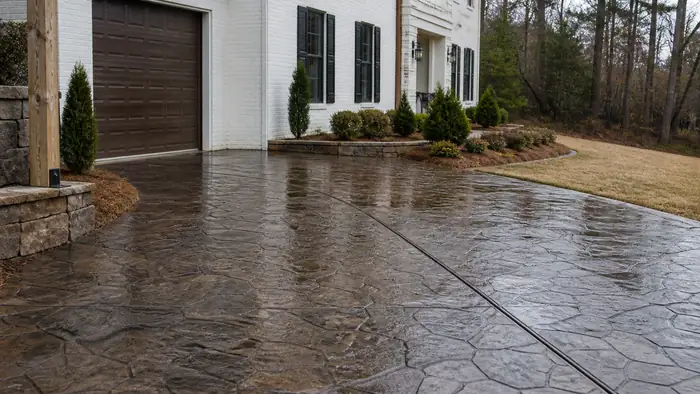
concrete flooring installation completed by a local contractor at a charcoal farmhouse-modern home in Lawrenceville, GA, after a rain shower.

Concrete Flooring Installation

Interior floors in basements, garages, shops and commercial spaces come down to three things: a vapor barrier under the slab, a flat and well-compacted base, and a finish that suits the use. We power-trowel for a smooth, dense surface, then cure it slowly so the edges do not curl. Garage and shop floors can take a sealer or epoxy coating. In a finished room, polished or stained concrete gives a hard-wearing surface with nothing laid over it.

concrete slab repair completed by a local contractor at a grey split-level home in Lawrenceville, GA, under low winter sun.

Concrete Slab Repair

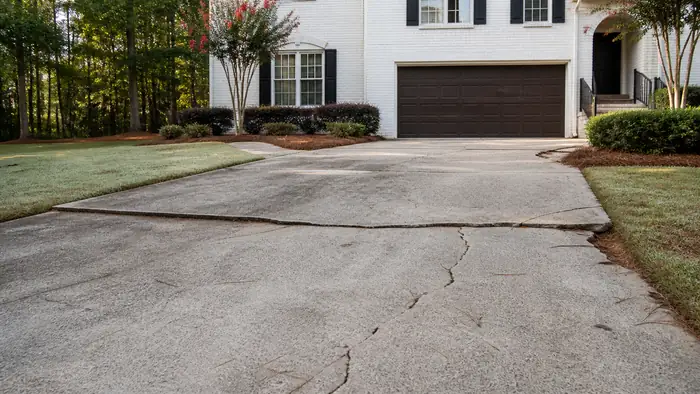
Most slabs we repair show one of a few problems: settling where the base washed out, cracks that kept widening, spalling where the top layer flakes off, or a corner that dropped near a downspout. The median home here was built in 1987, so plenty of patios and garage floors have decades of use on them. Hairline cracks get routed and sealed. Settled sections are lifted or cut out and repoured. A worn but sound slab can take a bonded resurfacing overlay instead of full replacement.

Our Concrete Process, Step by Step

A worker examines an old driveway before replacement. at a painted-white-brick two-story home in Lawrenceville, GA, in early morning light.

Step 1: Site Assessment

We start by walking the slab with you and reading what the cracks say. A hairline crack across a driveway is usually shrinkage. A crack with one side higher than the other means the base underneath has moved, and a resurfacing coat laid over that will fail. Gwinnett County is hilly, with 181 ft of local relief within a few miles, so we also check how water runs across the property. Every site is tested on its own before we recommend repair or replacement.

Crushed stone base is raked level inside driveway forms. at a grey split-level home in Lawrenceville, GA, after a rain shower.

Step 2: Site Preparation

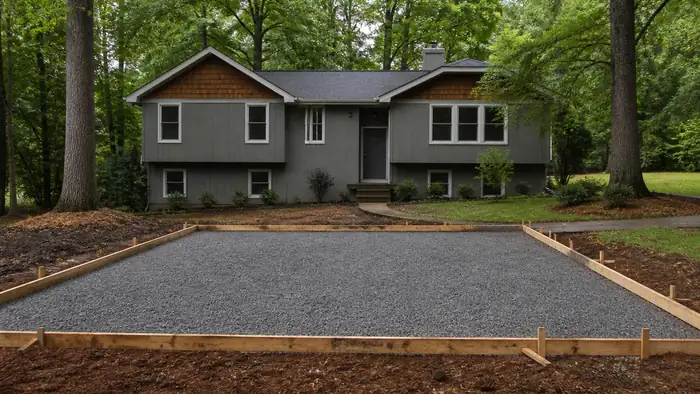
Preparation decides whether new concrete bonds or peels. On a resurfacing job we pressure wash, then grind or shot-blast the old surface to open it up, and cut out loose or spalled edges back to sound concrete. Where a section has to come out, we dig past the soft material and compact a gravel base in lifts. Pacolet soil, the county's dominant type, drains well, but it varies across the county, so we test it rather than trust it. We handle the permit when one is needed.

A worker ties rebar into a grid before a residential pour. at a stacked-stone and stucco home in Lawrenceville, GA, under an overcast sky.

Step 3: Forming & Reinforcement

On sloped lots, forms do more than hold the concrete in. They set the finished height and the pitch, and we pitch patios and driveways away from the house so water sheds instead of pooling against the foundation. Inside the forms goes reinforcement sized to the load: welded wire or rebar set on chairs so it sits mid-slab, not on the ground where it does nothing. On repairs, we drill and epoxy dowels into the old slab so the new section and the existing one move together.

A ready-mix truck discharges concrete into a driveway form. at a buff-brick ranch home in Lawrenceville, GA, in early morning light.

Step 4: Pouring

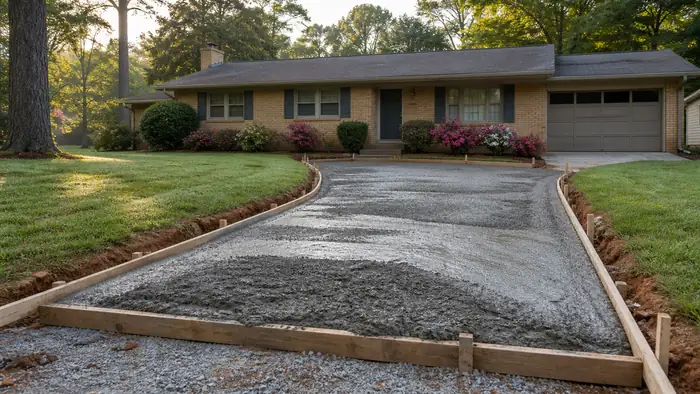
Timing drives the pour. This area sees about 55" of rain a year, and a shower on fresh concrete washes the cream right off the surface, so we schedule the truck around the forecast. The mix goes down in one continuous placement, spread with rakes and come-alongs, then struck off with a screed to form height. Adding water at the chute makes concrete easier to place and weaker once it sets. We don't do it. Resurfacing work uses a polymer-modified overlay on a dampened surface instead.

Stamping mats are pressed into a patio surface to imprint a pattern. at a stacked-stone and stucco home in Lawrenceville, GA, under an overcast sky.

Step 5: Finishing

Once the bleed water leaves the surface, finishing starts. A bull float closes the top, edgers round the perimeter so it resists chipping, and we tool control joints so the slab cracks where we choose rather than where it wants to. Driveways and walks get a broom finish for grip in wet weather. Stamped and decorative work happens in the same window: release agent and color go down, texture mats get pressed in, all before the surface stiffens past the point where a pattern will take.

Damp burlap covers a small slab section during curing. at a buff-brick ranch home in Lawrenceville, GA, in early morning light.

Step 6: Curing

Curing is the step people skip, and it shows up years later as dusting and surface scaling. Concrete gains strength by holding its water, not by drying out. We keep new work damp or cover it with a curing compound, and we keep traffic off it: foot traffic first, vehicles only after the slab has had time to gain strength. Average daily highs here run around 72°F with lows around 53°F, conditions that let a protected slab cure evenly from top to bottom.

A roller applies sealer to a stamped patio surface. at a painted-white-brick two-story home in Lawrenceville, GA, after a rain shower.

Step 7: Sealing

After the concrete has fully cured, and not before, the sealer goes on. Sealing too early traps moisture and turns the finish cloudy. We use a penetrating sealer on plain broom finishes and an acrylic sealer on stamped and decorative surfaces, where it deepens the color and slows fading. Either one keeps water, oil and leaf stains from soaking in. Sealer wears with traffic and weather, so reseal when the finish looks dull or water stops beading on it.

How Much Does Concrete Repair And Resurfacing Cost in Lawrenceville?

Nobody can price a repair honestly from a photo. The number depends on what the slab shows us in person, and most of what moves it is something you can walk outside and check yourself.

What changes the priceWhich wayWhy
Cracks where one side sits higher than the othercosts moreA flat crack can be routed and filled. An offset means the base moved, so that section usually comes out instead of getting a cosmetic patch.
Flaking or scaling on the top layer onlycosts lessIf the slab underneath is sound, we grind, clean and resurface. Nothing gets broken out or hauled away.
Old patches, paint or sealer already on the surfacecosts moreAll of it has to be ground off before new material will bond. Resurfacing over it peels.
How a truck or buggy reaches the workcosts more when blockedA driveway off the street is simple. A patio behind the house, past a fence or down a slope, means pumps, wheelbarrows and extra hands.
Thickness and reinforcement for replaced sectionscosts more for heavier loadsA walkway and a driveway that carries a pickup are not poured the same. Thicker sections and rebar add material and labor.
Water pooling against the slab or running under itcosts moreFixing the surface without fixing the drainage puts you back where you started.
Tree roots lifting the concretecosts moreThe roots get cut back before we pour, or the lift returns.
Stamped or decorative finish that needs matchingcosts moreMatching color and pattern on existing decorative work takes test batches and slow hand work.

When you line up bids, compare them on the same points: how much each one removes versus patches, the thickness and reinforcement for new sections, how the old surface gets prepared, and what happens with drainage. A low number that skips prep is a quote for a shorter repair. Ask each contractor to put those details in writing, along with who handles the permit.

Frequently Asked Questions About Concrete Repair And Resurfacing in Lawrenceville

How much does concrete resurfacing cost compared to replacement?

Resurfacing nearly always costs less, because we keep the slab you already have and bond a new surface over it. Replacement means breaking out the old concrete, hauling it away, rebuilding the base and pouring fresh, and every one of those steps adds labor and materials. The catch is that resurfacing only works on a slab that is structurally sound. We check that first, then price whichever option actually fits your property.

How long does concrete resurfacing take to complete?

It depends mostly on the size of the surface and the weather. Resurfacing moves faster than a tear-out and repour since there is no demolition and no new base to build. The prep is where the care goes: cleaning, grinding, patching cracks so the overlay bonds. With about 55 inches of rain a year here, we plan around wet days instead of pushing an overlay onto a damp slab. Ask about timing when you call for a free estimate.

What's the best foundation contractor in Lawrenceville?

We won't call ourselves the best. That's for you to decide once you've seen the work. What we can tell you is how to judge anyone you're considering. Ask to see finished slabs they've poured. Ask how they test the soil and grade the site before they start. Ask for their license and insurance details, and check them yourself. Then lay the written estimates side by side and compare what each one actually includes.

What areas beyond Lawrenceville do you serve?

Lawrenceville is home base, and our work reaches across metro Atlanta. The full list of towns is on this page. A driveway repair in Snellville gets the same site test, the same materials and the same attention as one a few streets from us. There is no short list and no back of the line. If you're not sure whether your address falls inside the area we cover, call and ask.

Can you provide custom wire mesh sizes for specific projects?

Yes, as part of the concrete work we install. Reinforcement is chosen for each project, not pulled from a default. We cut and lay welded wire mesh to the shape of the slab, and where a surface will carry heavier loads (a driveway that sees trucks, a commercial pad) we step up the mesh or switch to rebar. The right reinforcement depends on the slab's thickness, its use and the ground under it.

Should a damaged Lawrenceville patio be repaired or replaced?

It comes down to what's under the damage. Flaking, surface wear and hairline cracks usually mean the slab is fine and a repair or resurface will do. Sunken sections, heaving or wide cracks that run clear across point to a base problem, and a new surface won't fix that. The median home here was built in 1987, so plenty of patios have seen decades of use. We test the soil and check the grade on every site before we recommend either.

Get a Free Estimate

Get a FREE Quote

Tap to call +1 470-229-2076