+1 470-229-2076
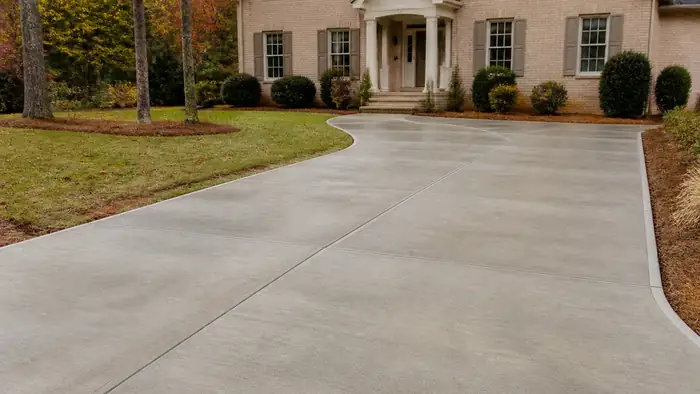
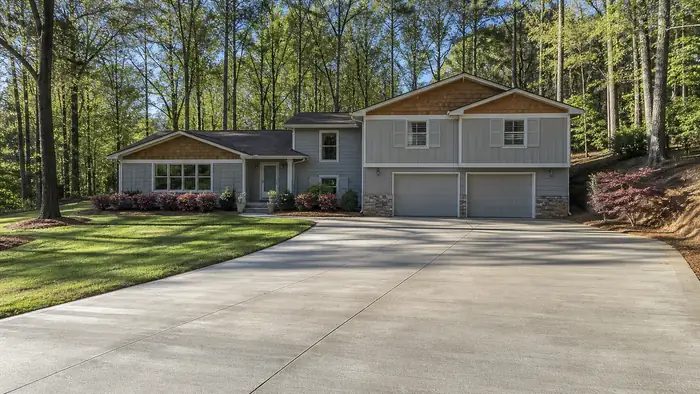
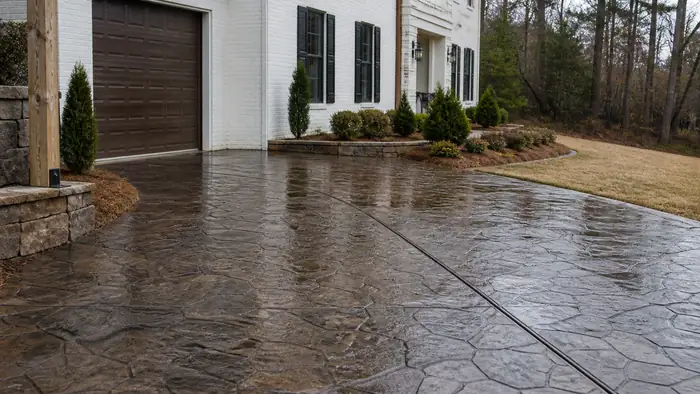
Wide view of finished concrete flatwork across the front of a home at a buff-brick ranch home in Lawrenceville, GA, in clear late-morning sun.

Repair, Leveling & Resurfacing in Duluth, Georgia

Concrete does not fail all at once. It settles, cracks, spalls and lifts at the joints, and the slab you have often has more life left in it than it looks like from the street. We repair, level and resurface existing concrete in Duluth, Georgia: driveways, walkways, patios, steps, garage floors, and the concrete sidewalk that runs across the front of a property. Some of that work is cosmetic and some of it is structural. Sorting out which one you are looking at is the first thing we do.

A slab that has sunk is a different problem from a slab that has broken, and the fix rarely looks the same. We look at what sits under the concrete before deciding anything, because a void, a washed out base or a soft subgrade will pull a new surface down exactly the way it pulled the old one. Where panels are still sound and sitting flat, lifting them takes less material and less demolition than tearing them out. Where they are not, we say so plainly.

The median home in this market went up in 1987, so a good share of the flatwork we see is original to the house. Older pours often went down thin, with no rebar or wire mesh, and with control joints cut too shallow or spaced too far apart. Concrete moves. When nothing holds it together and there is nowhere planned for it to crack, it cracks where it wants. Roots, a downspout draining against one edge and heavy vehicles parked on a thin apron finish the job.

Resurfacing is the part homeowners get sold badly. An overlay bonded to a slab that still moves will telegraph every crack underneath it soon enough, so the repair comes first and the surface comes second. Done in that order, an overlay holds color and texture for years, and stamped concrete laid over sound structure reads as the real thing because the structure under it is real. Sometimes a slab is too far gone to carry a new surface at all. We would rather tell you that than take the job.

We work as a concrete contractor out of Lawrenceville, and Duluth gets the same crew, the same mix and the same standard as everywhere else we go. A single sunken panel by the front steps is worth doing right, and so is a full driveway that has to come out and go back down. Call for a free estimate. We would rather stand on the concrete, look at the joints and the edges and the drainage, and give you a straight read on it than guess from a description over the phone.

Call +1 470-229-2076

Licensed, Bonded, and Insured ยท A combined 15 years of experience

Get a FREE Quote

We warranty all of our work because we believe in what we do.

What We Do in Duluth

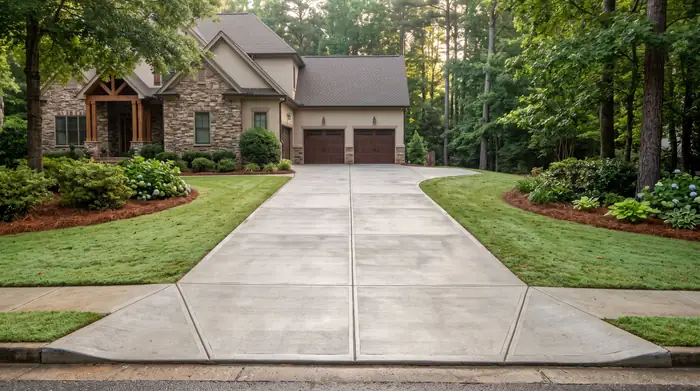
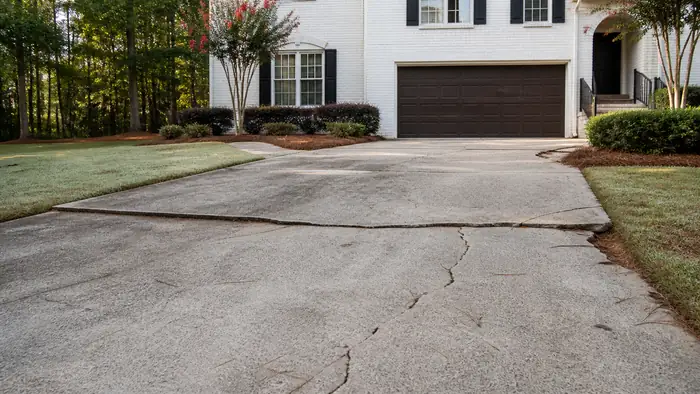
Replaced concrete driveway panel with clean saw-cut edges at a brick-and-siding two-story home in Lawrenceville, GA, under an overcast sky.

Repair, Leveling & Resurfacing

Most of what we repair is settlement or surface failure. Slabs that have dropped at a joint get lifted back to grade, and the voids underneath get filled before anything is refinished. Spalling and scaling mean the top layer lost its bond, so we clean and profile the sound concrete below, then bond a resurfacing overlay to it. Cracks wider than a pencil get routed and filled. A crumbling concrete sidewalk edge is often better cut out and repoured.

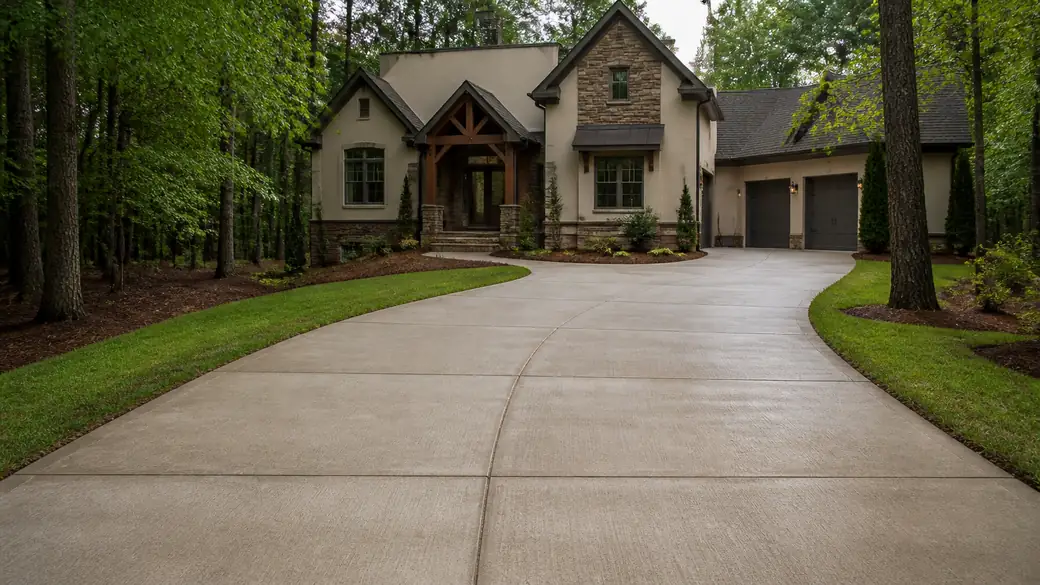
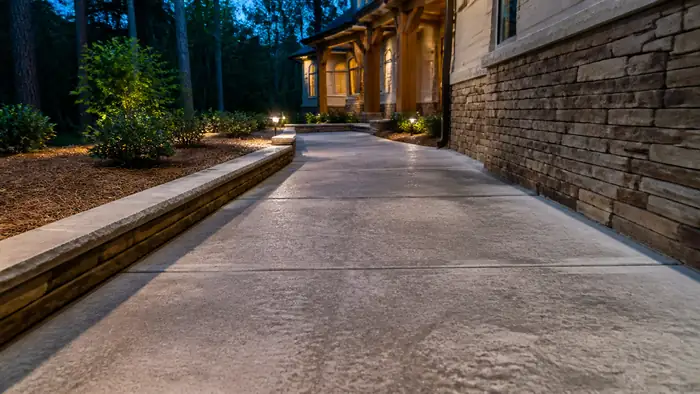
Broom-finished concrete driveway running up to a two-car garage at a stacked-stone and stucco home in Lawrenceville, GA, in early morning light.

Driveway Installation & Replacement

Driveways go down at four inches over a compacted aggregate base, with rebar or wire mesh carried through the slab and thicker sections where vehicles turn in. We saw control joints early so the concrete cracks where we put the joints instead of across the middle of the apron. Tear out and haul off of the old drive is part of the work. Permits, where a job needs one, go through the City of Lawrenceville.

Rectangular concrete patio with a low step up to the rear door at a painted-white-brick two-story home in Lawrenceville, GA, under bright midday cloud.

Patio Construction & Outdoor Living

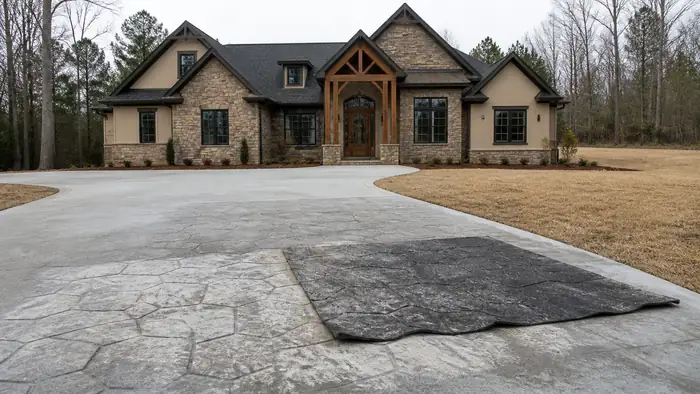
Patios are where stamped concrete earns its keep. We form and pour the slab, put color in the mix or broadcast it dry across the surface, then stamp texture before it sets: slate, wood plank, running bond brick. Exposed aggregate is the other finish we pour often, and it keeps its footing when wet. Everything gets sealed. Steps, landings and a walkway tying the patio back to the house come out of the same pour.

Board-formed concrete retaining wall holding a raised lawn at a tan-brick colonial in Lawrenceville, GA, in late afternoon light.

Retaining Wall Construction

Poured concrete walls sit on a footing sized to the height of the wall, cast on undisturbed subgrade with vertical rebar lapped into the stem. Drainage decides whether a wall lasts. Washed gravel goes behind the face, a perforated pipe daylights to the low side, and weep holes come through the front. Walls that lean, bulge or crack at the base have almost always lost their drainage first. We build low garden walls and taller structural ones.

Square-edged concrete slab pad with a storage shed on it at a red-brick ranch home in Lawrenceville, GA, in late afternoon light.

Concrete Slabs & Pads

Slabs and pads cover garage floors, shed and generator pads, sidewalks, and commercial concrete like dumpster enclosures and loading aprons. We set the vapor barrier, place mesh or bar on chairs so the steel sits inside the slab instead of on the dirt, and pour four inches or heavier depending on what rides on it. Sidewalk installation follows the same order. As a concrete contractor we would rather thicken an edge now than patch it later.

How a Job Runs

A job starts with a walk over the concrete in question, tape measure out, while you tell us what has been bothering you about it. We measure the run, note the thickness wherever an edge is exposed, and watch where water leaves the surface. Most of what decides the work is visible in the first ten minutes of looking. The rest comes out of questions: how old the slab is, what sits on it, whether anyone has patched it before and what they used.

Underneath matters more than the surface does. A slab that has dropped at one corner is saying something about the base beneath it, and fresh concrete poured over a bad base buys a few years at most. Lawrenceville housing runs to a median build year of 1987, so a good share of the flatwork we look at is original to the house and has simply run its course. We check whether the movement is finished or still going.

Repair makes sense when the concrete itself is sound and only its support has failed. Resurfacing makes sense when the slab sits where it should but the top has worn, spalled, or gone rough underfoot. Replacement is the honest answer when a slab is cracked through in several directions and has no structure left worth saving. We say which one it is in plain terms, and we say why. Nobody has to take our word for it, so we show you what we are reading.

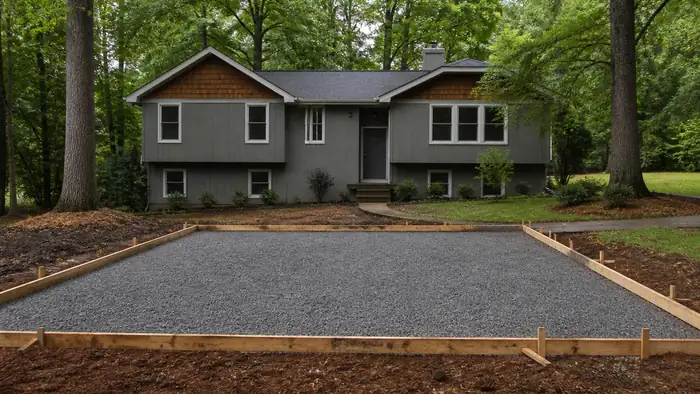
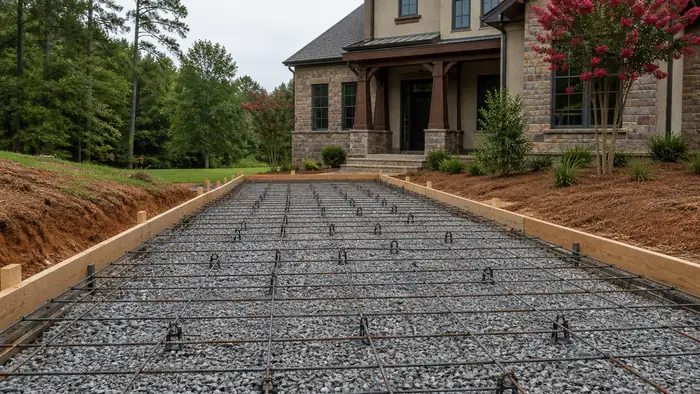
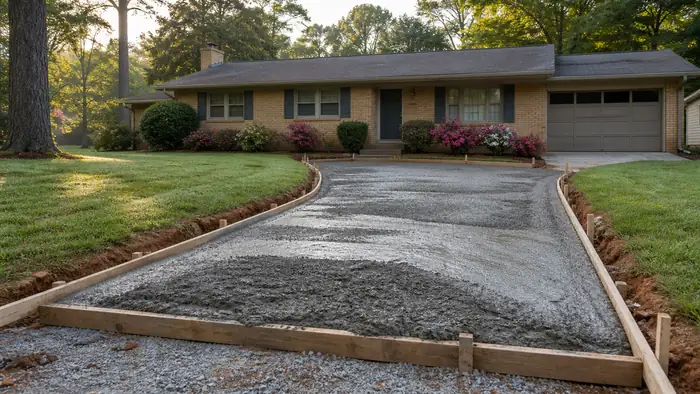
Once the scope is settled, prep takes the bulk of the labor. Old concrete gets cut, broken out, and hauled off. We grade and compact the base until it stops giving under a boot, set forms to the lines and slopes we agreed on, and tie rebar or lay wire mesh depending on what the slab has to carry. Driveways get the heavier reinforcement. None of this looks like much, and it is where the pour is actually won or lost.

Pour day runs on the concrete's clock rather than ours. Trucks arrive, the mix goes in, and from there the crew works to the material: screed, float, edge, then finish it before it sets up on us. Stamped and colored work happens inside that same window, which is why a stamped patio carries more hands than a plain slab does. Control joints get cut so the slab cracks along a line we chose instead of somewhere across the middle of it.

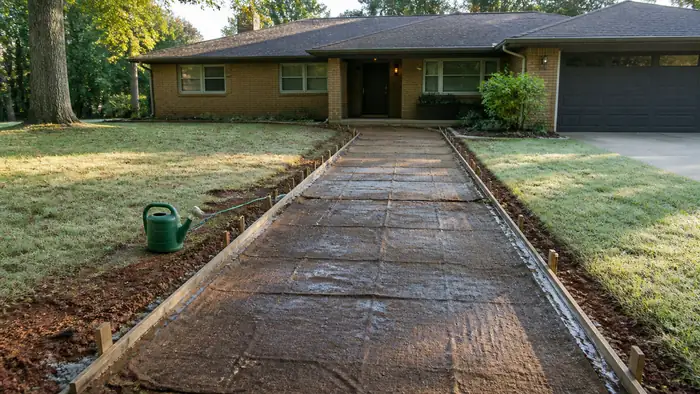
Curing takes longer than most people expect. A surface is walkable well before the concrete has any real strength, so we tell you when to stay off it on foot and when a vehicle can come back onto a new concrete driveway. Sealers, when the finish calls for one, go on after the slab has dried out properly. Rushing that step is how a sound pour ends up wearing a blotchy face that nobody can correct later.

Surprises usually come out of the ground. Irrigation lines run under old sidewalks, tree roots work in beneath driveways, and a base that looked solid can turn soft once the slab above it is gone. When that happens we stop and show you before we spend your money on it. Weather moves pour dates as well, and we would rather push a date than finish a slab in falling rain and hand you a surface that never hardens the way it should.

We run the same crews and the same sequence through Lawrenceville, Snellville, Suwanee, Duluth, and Sugar Hill, and through the rest of this corner of metro Atlanta on the same terms. Call for a free estimate on concrete installation, repair, or resurfacing, whether the trouble is one settled panel of sidewalk at the curb or a driveway that has finally run out of life. Tell us what you are seeing and what it is doing.

Duluth Questions

Is there a minimum job size for Duluth?

No. We take small repairs in Duluth the same as we take full replacements, and a single cracked sidewalk panel or a sunken slab at the bottom of a driveway is a normal call for us. Small jobs get scheduled around larger pours, so timing depends on what is already on the calendar. Tell us what the concrete is doing and we will tell you whether repair, leveling or resurfacing is the honest answer.

What is the drive time from Lawrenceville to Duluth for a site visit?

Duluth sits inside our regular working radius from Lawrenceville, a short run west across Gwinnett County, and we are in that area often enough that a site visit does not require a special trip. We come out, walk the flatwork with you, look at the edges and the subgrade where we can see it, and measure. Call for a free estimate.

How many jobs has Lawrenceville Summit Concrete done around Duluth?

We do not publish a job count, and any number we gave you would be a number you could not check. What we can tell you is what we look at on a Duluth driveway or patio: how the slab was reinforced, whether rebar or wire mesh is present, how the base has held, and whether the surface is worth resurfacing or has gone too far. That conversation is more useful than a tally.

Does Duluth require its own permit for this work?

It depends on the work. Straight repair, leveling and resurfacing of concrete that already exists usually does not trigger the same review as new construction, while widening a driveway, changing drainage or pouring a new slab can. We check the requirements for your specific address before we start, and we tell you what we find, including when the answer means the job takes longer.

Do you charge more to work in Duluth than in Lawrenceville?

No. Duluth work is priced the same way Lawrenceville work is priced: by the square footage, the thickness, the reinforcement, the access for the truck, and how much old concrete has to come out first. Housing in this part of Gwinnett runs to a median build year of 1987, so we see a lot of original flatwork that has simply aged. Location is not a line item.

Get a Free Estimate

Get a FREE Quote

We warranty all of our work because we believe in what we do.

Tap to call +1 470-229-2076