+1 470-229-2076
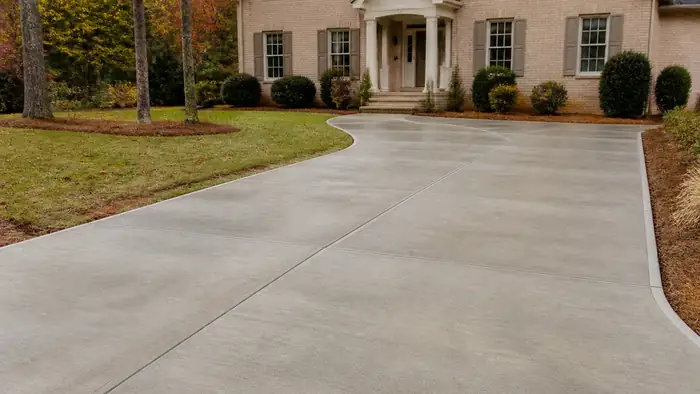
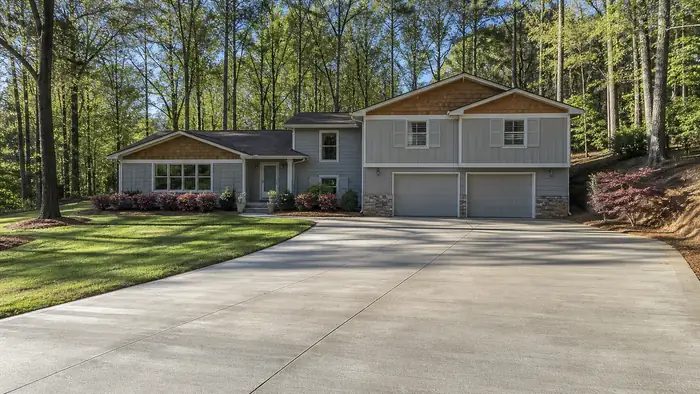
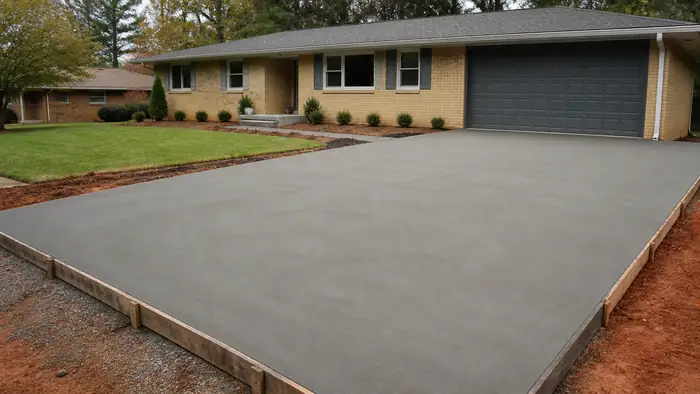
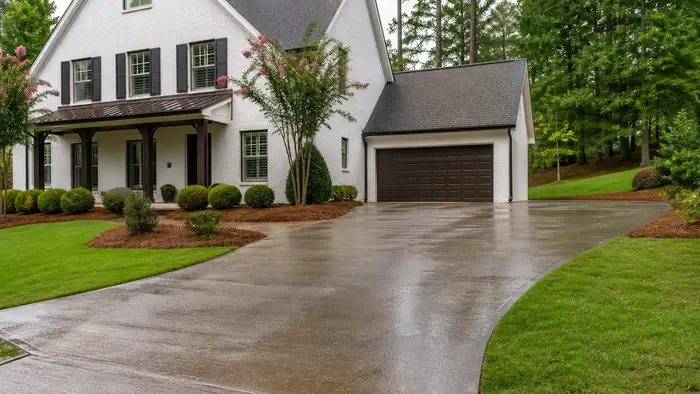
Wide view of finished concrete flatwork across the front of a home at a buff-brick ranch home in Lawrenceville, GA, in clear late-morning sun.

Repair, Leveling & Resurfacing in Snellville, Georgia

Repair, leveling and resurfacing are what you want when the slab underneath is still sound and the trouble sits on top of it or beneath it. A driveway that has dropped an inch at one joint does not need to come out. Neither does a sidewalk whose surface has gone rough and pitted while the concrete under that surface is solid. Plenty of the flatwork we get called about is in better shape than the homeowner thinks. We read the slab first, then tell you which situation you actually have.

Our crews cover Snellville, Lawrenceville, Suwanee, Duluth and Sugar Hill on the same terms, all of it this side of metro Atlanta. Same trucks, same crew, same way of working, whichever of those addresses you are standing at. Most calls come from people who have watched one section of concrete get worse over a couple of years and finally want a straight answer about it. That is a fair thing to ask of a concrete contractor, and it is the part of the job we take seriously.

Leveling and resurfacing solve different problems, and mixing them up wastes money. Leveling raises a slab that has sunk, filling the empty space beneath it until the concrete sits back where it started. Resurfacing leaves the slab in place and puts a fresh wearing layer over concrete whose top has worn through, spalled or gone chalky. Repair covers the rest: broken corners, cracks that have opened wide, a panel heaved up against its neighbor. One slab can easily need two of the three.

Concrete fails in ordinary, readable ways. A slab settles because something under it moved or washed out, not because the concrete itself gave up. Cracks run where control joints were cut too shallow or spaced too far apart. Surfaces spall when the top was overworked, or finished with water still sitting on it. Thin flatwork poured without rebar or wire mesh breaks under weight it was never built to carry. Each of those points to a different fix, and guessing is how people pay twice.

Doing this right takes longer than doing it fast. Grinding a trip lip flat is an hour of work; bringing a settled slab back to level means drilling, pumping and checking as it comes up. Stamped concrete that has faded needs its surface read carefully first, because a coating over a failing slab buys you one season. The median home in Lawrenceville was built in 1987, and concrete that has been in the ground that long is usually worth saving outright or worth replacing outright. Call for a free estimate.

Call +1 470-229-2076

Licensed, Bonded, and Insured ยท A combined 15 years of experience

Get a FREE Quote

We warranty all of our work because we believe in what we do.

What We Do in Snellville

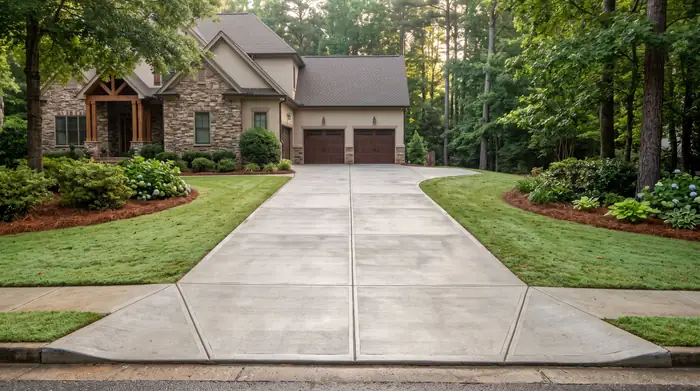
Replaced concrete driveway panel with clean saw-cut edges at a brick-and-siding two-story home in Lawrenceville, GA, under an overcast sky.

Repair, Leveling & Resurfacing

Settled slabs usually move because the base beneath them washed out, not because the concrete itself failed. We lift sunken driveway and sidewalk panels back to grade and fill the void underneath. Surface damage is a different problem: spalling, crazing and shallow pitting take a bonded overlay, finished broom or stamped. When a panel is cracked through in several directions and rocks underfoot, replacement is the honest answer, and we will say so.

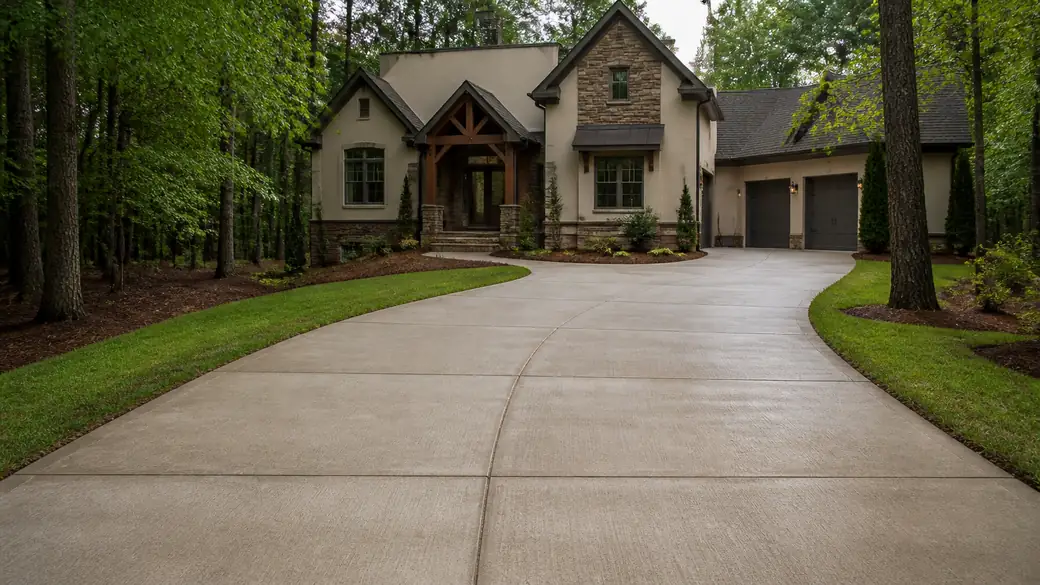
Broom-finished concrete driveway running up to a two-car garage at a stacked-stone and stucco home in Lawrenceville, GA, in early morning light.

Driveway Installation & Replacement

Most driveways go down at four inches over a compacted base, with rebar or wire mesh through the slab and thickened edges where tires turn in. Six inches is worth the difference if a truck or an RV parks on it. We saw control joints early so the concrete cracks where we put the joint. Drives poured in the late 1980s tend to show their age at the apron and along the outer edges first.

Rectangular concrete patio with a low step up to the rear door at a painted-white-brick two-story home in Lawrenceville, GA, under bright midday cloud.

Patio Construction & Outdoor Living

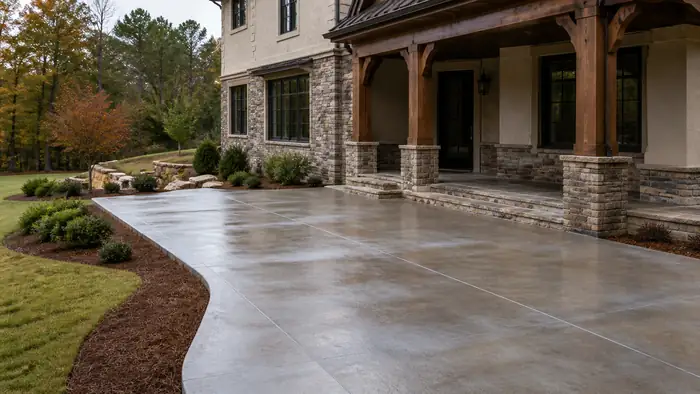
Stamped concrete is the request we hear most, and it holds up well when the base and the joint layout are right. We also pour exposed aggregate, colored concrete and plain broom finish, which is the simplest to match if you extend the patio later. Grade matters more than pattern. Water has to run away from the house. Sealer keeps color from washing out and needs redoing every few years, not once.

Board-formed concrete retaining wall holding a raised lawn at a tan-brick colonial in Lawrenceville, GA, in late afternoon light.

Retaining Wall Construction

Walls fail from water, almost every time. Ours get a footing set below grade, rebar tied vertically and horizontally, clean gravel backfill, a drain line behind the stem and weep holes through the face. A poured wall gives you one continuous structure with no block joints to open up as the soil behind it loads and unloads. For low walls carrying a patio edge, we size the footing to what sits on top.

Square-edged concrete slab pad with a storage shed on it at a red-brick ranch home in Lawrenceville, GA, in late afternoon light.

Concrete Slabs & Pads

Shed pads, garage slabs, HVAC pads and generator pads all get the same treatment: compacted base, vapor barrier under anything that will be enclosed, reinforcement sized to the load rather than to habit. Commercial concrete runs heavier, with thicker slabs, more steel and joints laid out around traffic patterns. As a concrete contractor based in Lawrenceville, we pour concrete sidewalk work too, from a short front walk to a long sidewalk run along a parking area.

How a Job Runs

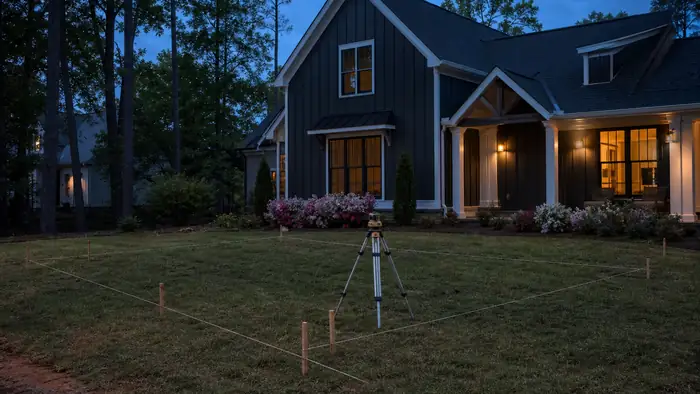
Every job starts on the property, not on the phone. We walk the slab with you, look at where water sits after a rain, and check how the existing pour meets the garage, the porch, the street. We measure, note the thickness at broken edges, and work out whether the ground underneath moved or whether the concrete simply wore out. Those are different problems with different fixes. You get the read in plain language, before anything is written down as a number.

Measurements turn into a written scope: square footage, thickness, where the control joints land, and how the new work ties into what stays. A concrete driveway that slopes toward a house needs the pitch corrected down in the base, not disguised in the finish. We mark the drainage path first and build up from there. Access matters too, so we look at where a truck can reach the site and how far material has to be wheeled or pumped to get where it is going.

Permits go through the City of Lawrenceville when the work calls for them, and we handle that filing rather than leaving it with you. Replacing a slab in kind is not the same job as widening one, adding an approach, or touching a public walk, and the requirements change with each. We tell you which category yours falls into before anyone shows up with a saw. Inspection timing often sets the schedule, so we build the week around it instead of against it.

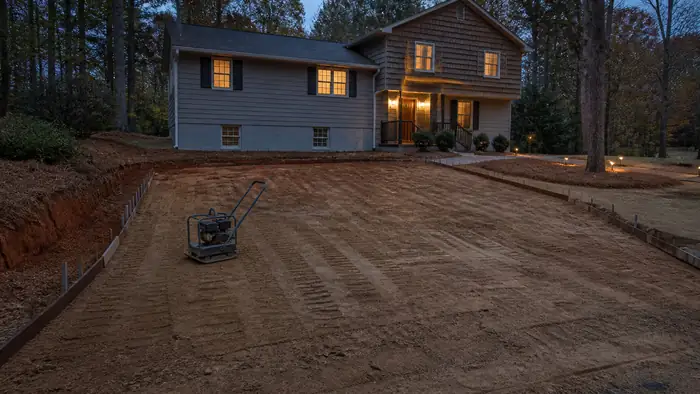
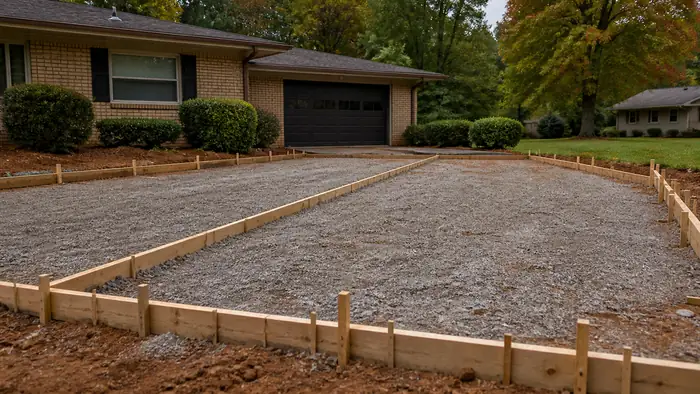
Demolition day is loud and it is short. We saw clean lines at the tie-in, break the old slab out in sections, and haul it off the same day so nobody is parking around a pile of rubble. What sits under the old pour tells us plenty. Soft spots get dug out and replaced with compacted stone. We grade the base to the finished elevation, run a plate compactor across the whole footprint, and check the fall with a level before a single form goes down.

Forms and steel take the day before the concrete arrives. We set and brace the edges, then tie rebar or lay wire mesh depending on the load the slab will carry, chaired up off the base so the steel sits inside the pour instead of resting on dirt. Vehicle work gets more steel than sidewalks do. Concrete installation starts early in the day, because a slab that flashes off before it has been floated will never finish clean, no matter who is holding the trowel.

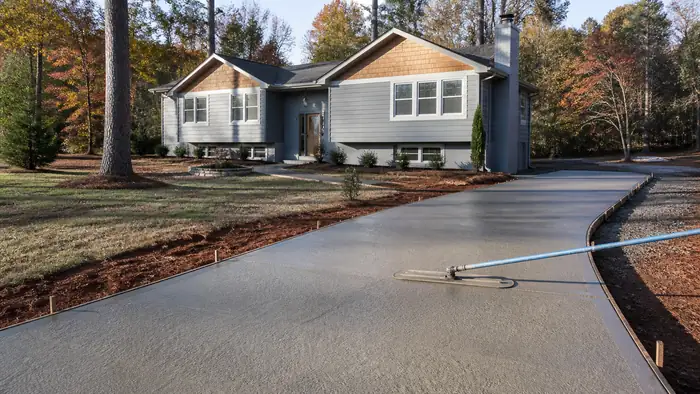
Finishing is where a slab is won or lost, and the window is measured in hours. We screed, bull float, then wait for the bleed water to leave the surface before troweling or brooming. Stamped and colored work runs on that same clock, so we bring enough hands to keep an entire panel moving at once rather than chasing it in pieces. Joints get cut the same day or early the next, spaced to control where the concrete cracks, because it is going to crack somewhere.

Most of the failures we tear out trace back to the base, not the mix. Plenty of the houses we work on were built around 1987, the median year in town, and their original driveways have carried decades of traffic on thin concrete with no steel in it and joints cut in the wrong places. When we find that, we say so on the spot. Then we lay the repair out against a full replacement, explain what each one buys you, and let you weigh the two.

Getting it right costs more in preparation than it does in concrete, and preparation is the part nobody sees once the finish goes on. Stone, compaction, steel, and a crew large enough to finish a pour on time are where the real work sits. We would rather tell you a slab needs a thicker pour and mesh than sell you the thin version and come back to break it out later. Call Lawrenceville Summit Concrete for a free estimate.

Snellville Questions

Does Snellville require its own permit for this work?

Yes, in most cases. Replacing a slab in place, resurfacing an existing driveway or grinding down a trip hazard on a sidewalk usually falls under repair, but new flatwork, added square footage and anything that changes drainage tends to need a permit pulled before we break ground. We handle that paperwork as part of the job and confirm what applies once we have looked at the actual work.

What is the ground like in Snellville, and does it change how you build?

We do not make claims about your subgrade before we see it. What matters is what is under the failing concrete: the compaction, whether water has been running through it, whether a root or a settled trench is doing the damage. We dig, we look, and we build the base to suit. Rebar or wire mesh goes in based on the slab, the span and the load.

How many jobs has Lawrenceville Summit Concrete done around Snellville?

We are not going to put a number on that. Snellville sits close to Lawrenceville, so the work travels easily and we are in that area regularly for driveways, patios and sidewalk installation. Ask us about a specific type of concrete work and we will tell you plainly how we approach it, what it takes and where the difficulty usually shows up.

Can you match concrete you did not pour in Snellville?

Usually close, rarely exact. Concrete cures to a color that keeps shifting for years, and the original mix, the finish and the weather it sat through all left a mark we cannot reproduce from scratch. Stamped and colored concrete are the hardest. We test, we adjust, and we tell you honestly what the seam will look like before you decide.

Do you work on older properties in Snellville?

Yes. The median home around here was built in 1987, so a lot of the flatwork we meet has been in the ground for decades: driveways that have settled at the apron, patios with a crack running corner to corner, exposed aggregate worn thin. Older slabs are worth assessing carefully. Sometimes leveling buys you years, and sometimes the honest answer is replacement.

Get a Free Estimate

Get a FREE Quote

We warranty all of our work because we believe in what we do.

Tap to call +1 470-229-2076