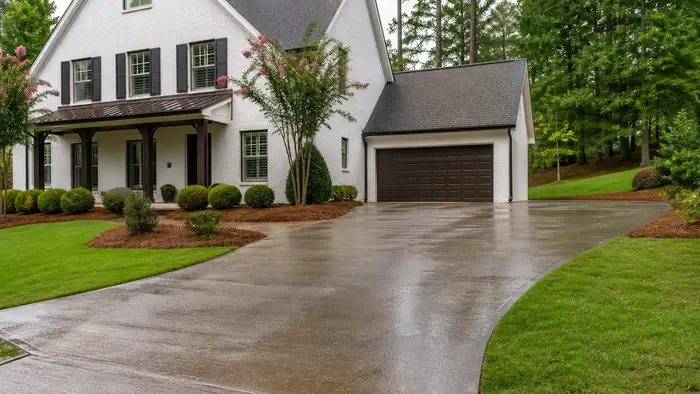
A concrete slab is the flat, poured base that everything else sits on: a garage floor, a shed pad, a patio, the floor of an addition. In Auburn we pour slabs for residential property owners and for smaller commercial jobs, and the work looks simple from the street. It isn't. A slab that stays flat and uncracked for decades comes from what happens underneath it and inside it, long before anyone sees a finished surface. That hidden part is where most of our attention goes.
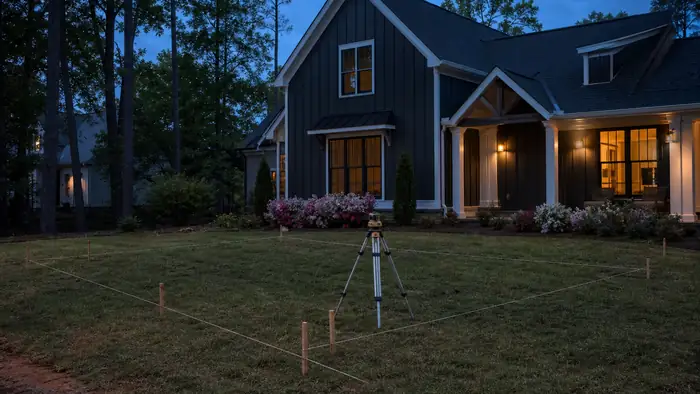
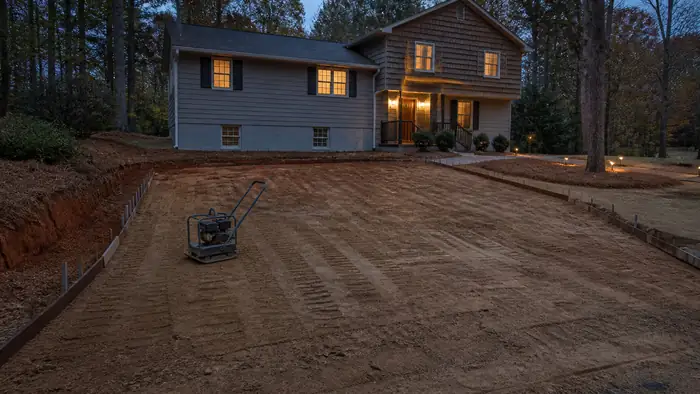
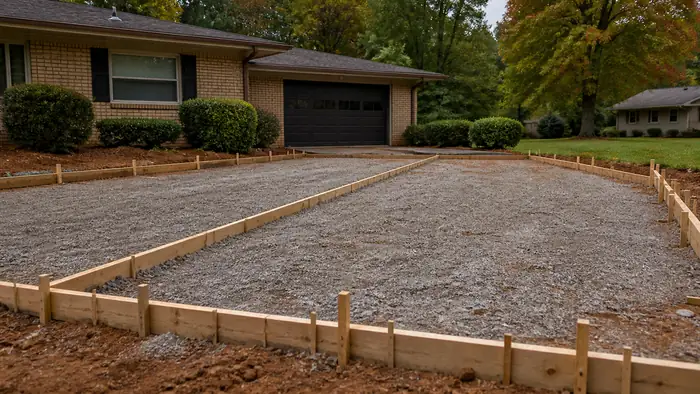
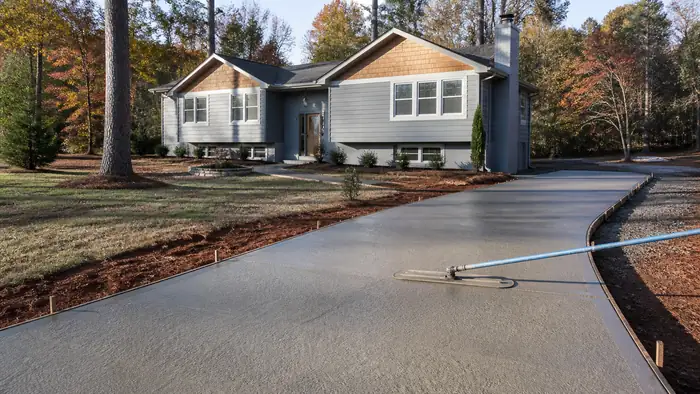
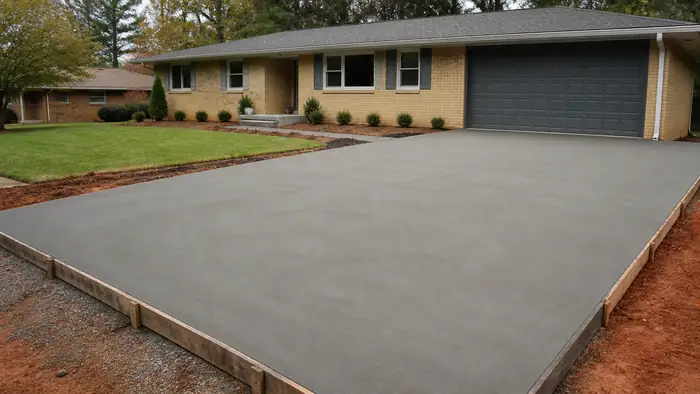
Every project starts with the ground. Pacolet soil, which drains well, is the dominant type across Gwinnett County, but it changes from one lot to the next, so we test each site individually before work starts. From there we set the grade, compact the base, place the reinforcement the slab calls for, and set forms to the finished height. Pour day is the short part. The preparation behind it takes longer, and it should. Once the concrete is placed, we finish the surface to suit its use: broomed for grip outside, troweled smooth inside.
Most failures we get called to look at trace back to a handful of causes. The base wasn't compacted, so the slab settled unevenly and cracked along the low side. Water had nowhere to go, and with about 55 inches of rain a year, it finds the weak point. Reinforcement was left out, or it sat on the dirt instead of up in the pour where it does its job. Control joints were cut too shallow or too far apart. None of this shows on the first day. It shows a year or two later.
Getting it right costs time more than anything else. It means an extra day on base work when the ground needs it. It means waiting out a storm rather than pouring into one, and ordering the mix that suits the slab instead of whatever is easiest to get delivered. It means cutting joints at the right hour, not the convenient one. A homeowner would never spot any of these as a line item on a bill. Every one of them decides whether the slab lasts or gets torn out early.
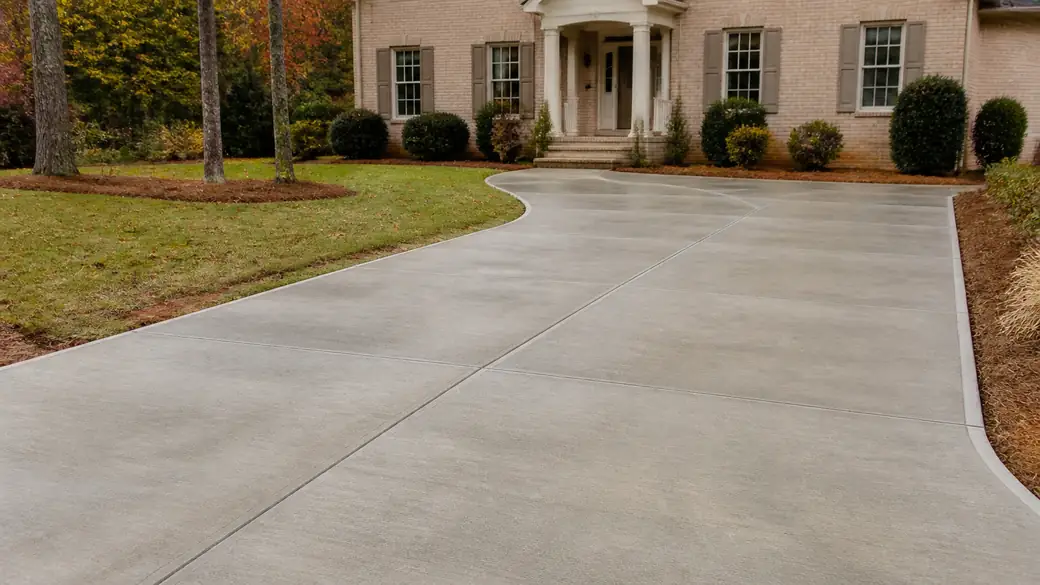
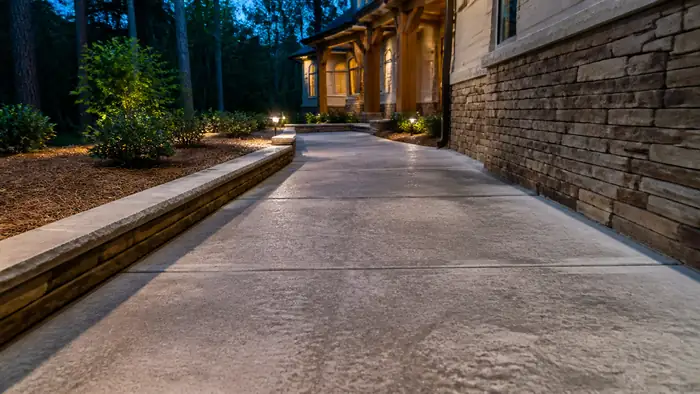
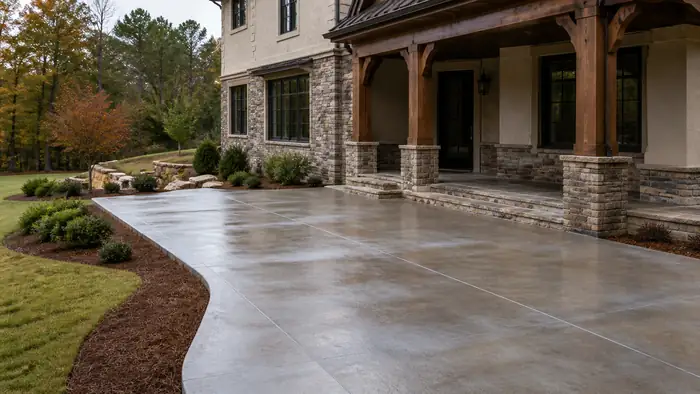
Slabs are the center of our work, and the same attention goes into driveways, patios and decorative concrete, stamped surfaces included. A useful estimate starts with what the slab has to carry: a parked truck, a workshop full of heavy tools, a hot tub, the walls of a room addition. Each of those calls for its own thickness and its own reinforcement, and the ground under it matters as much as the load on top. If you have a project in Auburn, call us for a free estimate and tell us what's going on it.