+1 470-229-2076
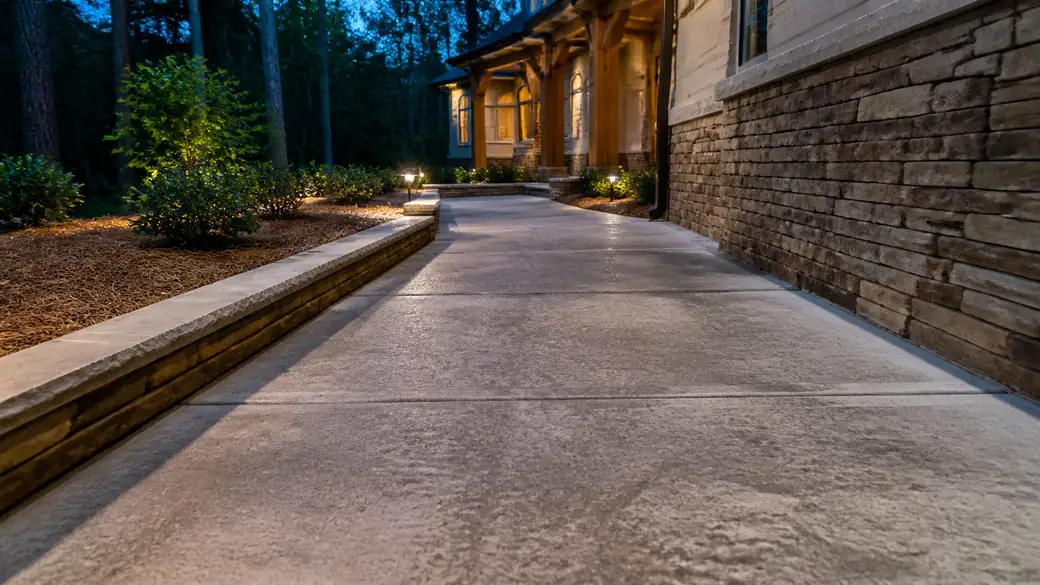
concrete sidewalk installation completed by a local contractor at a stacked-stone and stucco home in Lawrenceville, GA, at blue hour.

Concrete Sidewalk Installation in Oakwood, Georgia

A concrete sidewalk is a slab people walk on every day, so it has to stay flat, shed water and hold its edges year after year. In Oakwood we pour residential walks from the street to the front door, side paths out to a gate or a back patio, and connecting runs alongside a driveway. Most get a plain broom finish for grip. Some owners want a stamped or decorative border, and we do that as well.

When a sidewalk fails, it usually fails from underneath. The base was thin or never compacted, so one section settled and left a lip that catches a toe. Or the slab was poured dead flat, water sat on it, and the surface began to scale. Tree roots lift panels that were placed with no room for them. Cracks wander across walks that had no control joints to tell them where to go. None of this is bad luck. It is skipped work.

Getting it right starts with the ground. Soil changes from one lot to the next, so every site is tested individually before work starts, and we build the base to suit what we find. This part of Georgia also sees about 55 inches of rain a year, and a walk has to move all of it off its surface. We pitch each slab to drain, compact the base properly, cut joints at sensible spacing and add reinforcement where the conditions ask for it. Call us for a free estimate.

Call +1 470-229-2076

Get a FREE Quote

What We Do in Oakwood

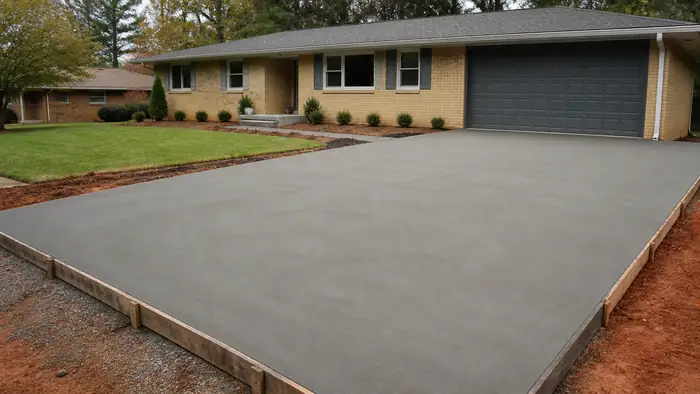
concrete slab installation completed by a local contractor at a tan-brick colonial in Lawrenceville, GA, under bright midday cloud.

Concrete Slab Installation Cost

A written estimate from us breaks the slab into the parts you are actually paying for: excavation, the compacted gravel base, forms, reinforcement, the concrete itself, finishing and cleanup. Seeing it itemized lets you compare bids honestly. A low number often means a thinner slab, no real base, or wire mesh left lying in the dirt instead of lifted into the pour. We price your Oakwood slab after we have walked the property and tested the soil. Call for a free estimate.


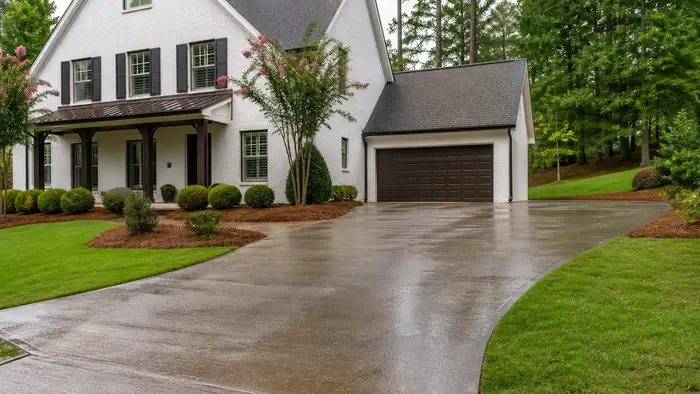
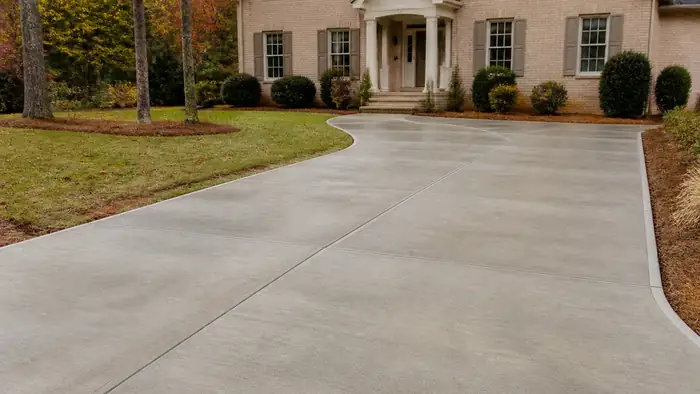
concrete driveway installation completed by a local contractor at a brick-and-siding two-story home in Lawrenceville, GA, in early morning light.

Concrete Driveway Installation

Driveways fail at the edges and the apron first, so that is where we spend the extra effort. We dig out soft spots, compact the base in lifts, and thicken the slab where tires turn in from the street. Rebar sits on chairs so the steel ends up in the middle of the pour, where it does its job. Control joints go in the same day, so cracks follow our lines instead of their own. Broom finish is standard. Stamped and exposed aggregate are options.

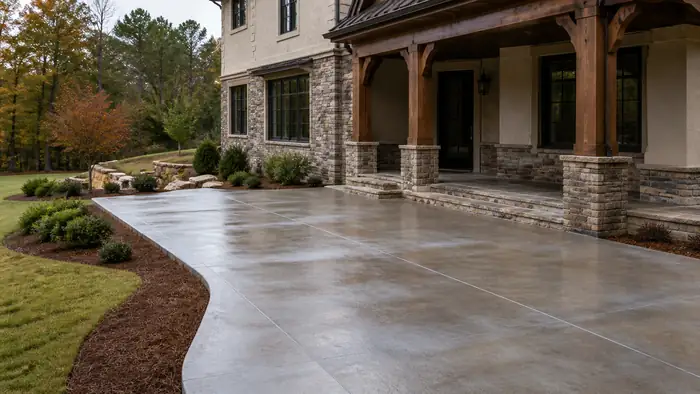
concrete flooring installation completed by a local contractor at a charcoal farmhouse-modern home in Lawrenceville, GA, after a rain shower.

Concrete Flooring Installation

Inside a garage, shop or basement, a concrete floor has to be flat before it is anything else. We lay a vapor barrier over the compacted base so ground moisture does not wick up into your flooring or stored boxes. The slab is then poured, screeded and power-troweled to a hard, tight surface. Saw cuts go where walls or cabinets will hide them. Commercial spaces and workshops often stay sealed and bare. Residential floors can take tile, epoxy or a polished finish.

concrete slab repair completed by a local contractor at a grey split-level home in Lawrenceville, GA, under low winter sun.

Concrete Slab Repair

Not every cracked slab needs tearing out. Hairline shrinkage cracks are cosmetic, and we can rout and seal them. A slab that has dropped or tilted is a different problem: something underneath has washed out or was never compacted properly. With about 55 inches of rain a year, water getting under the concrete is a common cause. We find where it gets in and fix the drainage first. Then we decide between lifting, patching, or cutting out the bad section and pouring new.

Concrete Sidewalk Installation

Sidewalks look simple, which is why so many are poured badly. We build in a slight cross slope so rain runs off to the side instead of pooling at your front step. Forms are staked straight, the base is compacted, and joints are tooled at even spacing so the walk cracks where it is meant to. A broom finish gives your shoes something to grip when it is wet. Curved paths, stamped borders and steps up to the porch are all part of the same job.

Why Oakwood Chooses Lawrenceville Best Concrete

A sidewalk is the part of a property people use every day and notice least, right up until a slab heaves or a raised joint catches a toe. We build walks so nobody has to think about them. A short path from the driveway to the porch gets the same care as a commercial entry: a proper base, the right mix, reinforcement where the load calls for it, and a surface finished for sure footing in wet weather.

Every job starts with the ground, not the drawing. Soil varies from one site to the next, so we test each site before work starts and build the base to suit what we find. Forms are set with a slight cross slope so water runs off the walk instead of pooling on it. Control joints go where the concrete would want to crack anyway, which keeps any movement neat and out of sight.

Most sidewalks that fail go wrong below the surface: a thin base, poor drainage, joints spaced too far apart. With about 55 inches of rain a year, water finds each of those shortcuts and works on it season after season. Getting it right is not complicated. It takes compacted fill, honest thickness and patience while the slab cures. Stamped and decorative finishes hold up well when the concrete under them is sound. Call us for a free estimate.

Our Concrete Process, Step by Step

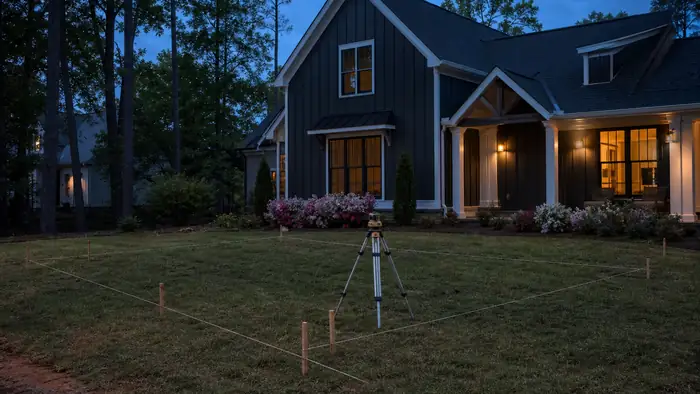
A contractor checks slope and drainage before work begins. at a charcoal farmhouse-modern home in Lawrenceville, GA, at blue hour.

Step 1: Site Assessment

Every sidewalk starts with a walk of the route itself. We look at where water runs off the roof and lawn, where the grade falls, which tree roots sit close to the surface, and how the new walk meets the driveway, steps or street. Pacolet soil, which is well drained, is the dominant type across Gwinnett County, but it varies from lot to lot, so we test every site individually before work starts. What the ground tells us sets the base and the slope.

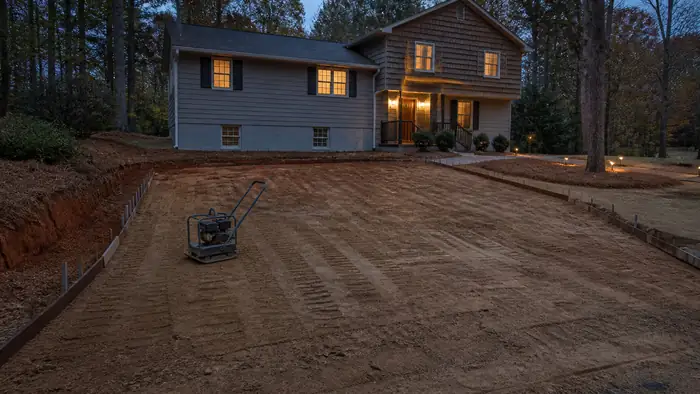
A plate compactor tamps down soil in a small excavated area. at a grey split-level home in Lawrenceville, GA, at blue hour.

Step 2: Site Preparation

Sod, roots and topsoil come out first, down to firm subgrade. Organic material rots and settles, and a walk poured over it cracks within a few seasons. We compact the subgrade with a plate compactor, then lay and compact a gravel base so the slab bears evenly along its whole length. The grade gets a slight cross slope so rain sheds off the surface instead of pooling. With about 55 inches of rain a year, standing water is the thing we plan around.

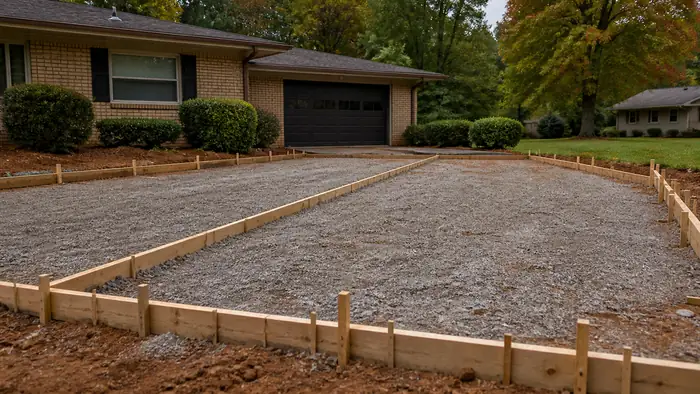
Wooden forms outline a patio slab before the pour. at a buff-brick ranch home in Lawrenceville, GA, under an overcast sky.

Step 3: Forming & Reinforcement

Forms go in next: straight lumber staked on the outside and set to string lines so the edges run true and the slope stays consistent. Curves get flexible form board. Inside the forms we place reinforcement, welded wire mesh or rebar, held up on chairs so it sits in the middle of the slab rather than lying on the gravel, where it does nothing. Where the walk meets a driveway, foundation or existing slab, we set expansion joint material so each piece can move on its own.

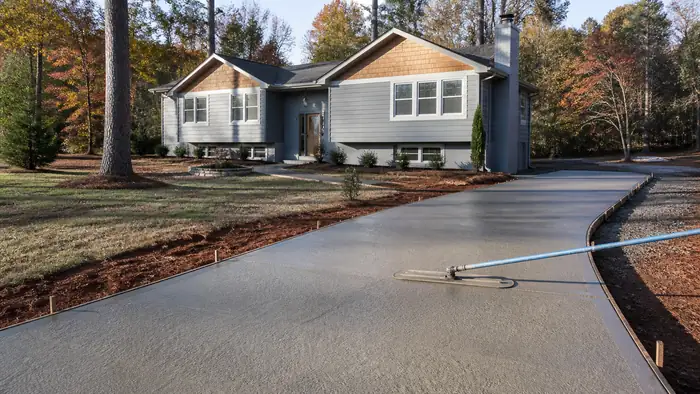
A bull float smooths a residential walkway surface after screeding. at a grey split-level home in Lawrenceville, GA, under low winter sun.

Step 4: Pouring

Ready-mix concrete comes off the truck and goes straight into the forms, placed close to where it belongs rather than dragged across the reinforcement. We never add water on site to make it easier to push around. Extra water weakens the mix and leaves a dusty, flaking surface a few years later. Once the forms are full, the concrete is struck off level with the form tops and bull floated to push the stone down and bring cream to the surface.

A hand trowel smooths a small patio surface to a hard finish. at a buff-brick ranch home in Lawrenceville, GA, under bright midday cloud.

Step 5: Finishing

Finishing is timing. Work the surface too early and you trap bleed water under it; too late and it won't close up. We edge the slab so the corners resist chipping, then cut control joints at regular spacing so the concrete cracks where we tell it to rather than wherever it likes. Most sidewalks get a broom finish for grip when wet. Stamped or decorative finishes are an option where a walk ties into patios or a front entry.

A hand sprayer applies curing compound to a finished patio. at a stacked-stone and stucco home in Lawrenceville, GA, after a rain shower.

Step 6: Curing

Fresh concrete keeps gaining strength for weeks after the forms come off, but only if it holds onto its moisture. A slab that dries out too fast turns weak at the surface and shows fine cracks. We keep the new walk damp or apply a curing compound right after finishing, and we cover it when the weather turns hot or cold. Foot traffic can usually go on within days. Anything heavier, like a mower or a loaded wheelbarrow, should wait longer.

A sprayer applies sealer across a driveway. at a painted-white-brick two-story home in Lawrenceville, GA, after a rain shower.

Step 7: Sealing

Sealing comes last, once the concrete has cured enough to take it. A penetrating sealer soaks into the surface and cuts down on water absorption, staining and the green growth that shows up on shaded walks. Decorative and stamped concrete usually gets a film-forming sealer that deepens the color. We roll or spray it on thin, since a heavy coat turns slippery and can peel. Resealing every few years keeps the surface in good shape, and it is work you can do yourself.

What Decides the Price of Concrete in Oakwood

Two sidewalks of the same length can come in at very different prices, and most of the reasons are visible from your own front walk. What sits under the path, how a truck gets to it and where water goes after a storm matter more than the footage. These are the things we look at on every walk-through.

What changes the priceWhich wayWhy
An old walk, slab or pavers already in placecosts moreIt has to be broken out, loaded and hauled away before any forming starts.
Tree roots crossing the line of the pathcosts moreRoots get cut back or routed around, or they lift the new surface within a few seasons.
No room for a truck to back up near the formscosts moreConcrete then moves by wheelbarrow, buggy or pump, which adds labor on pour day.
A path that climbs a slope or needs stepscosts moreGrade changes mean more forming, and steps are built as their own pour.
A stretch that meets the driveway or gets driven oncosts moreThat section needs extra thickness and reinforcement that foot traffic alone does not.
Low spots where water stands after raincosts moreWith about 55" of rain a year, the base gets built up and graded so water runs off the walk, not under it.
Soft ground found when we test the sitecosts moreEvery site is tested before work starts, and weak spots are dug out and replaced with compacted base.
A plain broom finish instead of stamped or decorativecosts lessStamping and color add materials and hours after the concrete is placed.

When you compare bids, check that they describe the same job. Look for the slab thickness, the base depth, what reinforcement goes in, where the control joints fall, and whether removal and haul-off are included. A lower number usually leaves one of those out.

Common Questions From Oakwood Owners

Can you provide custom wire mesh sizes for specific projects?

Yes. Welded wire mesh comes in standard sheets and rolls, and we cut, lap and tie it to follow the shape of the pour instead of forcing the pour to fit the mesh. When a slab will carry more weight, we move to a heavier gauge, tighter spacing, or rebar. Placement matters as much as size. We set the reinforcement on chairs so it sits inside the concrete, where it does its job, whether that's a sidewalk in Oakwood or a shop floor.

Should a damaged Oakwood patio be repaired or replaced?

It depends on what failed. Hairline cracks, flaking or a worn surface on a sound slab can usually be cleaned, patched and resurfaced. A patio that has sunk, tilted toward the house, or broken into pieces that shift underfoot has a problem underneath, and a new top layer won't fix it. In that case we remove it, correct the base and drainage, and pour again. We look at the slab first and tell you plainly which one it needs.

Do I need permits for foundation work in Oakwood?

Yes, in almost every case. Foundation work is structural, and structural work generally needs a permit and inspections along the way. The exact requirements depend on the jurisdiction and the scope of the project, so we confirm them for your property before anything is scheduled. Pouring without the right approvals tends to cause trouble later, often when the property is sold. It's a step we don't skip.

How deep do commercial foundations need to be in Oakwood?

There is no single depth that fits every building. Footing depth for a commercial foundation comes from the engineer's design, the loads the structure will carry, and what the soil shows at that site. Soil varies from one lot to the next, so every site is tested individually before work starts. We build to the stamped drawings and the inspector's requirements. A number like that should come from a calculation, not a guess.

What types of commercial projects does Lawrenceville Best Concrete handle?

Around Oakwood, most of our commercial work is flatwork and foundations: slabs for new buildings and additions, sidewalks, entry walks, curbs, dumpster pads, loading areas, ramps and parking pads. Storefronts, medical offices and schools all need walkways that stay level and shed water, because people cross them all day. We plan pours around business hours where we can. That way the property stays open while the construction goes on.

What type of foundation is best for Oakwood homes?

The one that suits the lot. A slab-on-grade works well on a level, well-drained site and is the simplest to build. A crawlspace handles a gentle slope and leaves room to reach plumbing and ductwork. A basement makes sense where the grade already falls away and the extra space is wanted. Before recommending one, we look at the grade, the drainage, the soil test and the plans for the house. What suits a neighbor's lot may not suit yours.

Get a Free Estimate

Get a FREE Quote

Tap to call +1 470-229-2076