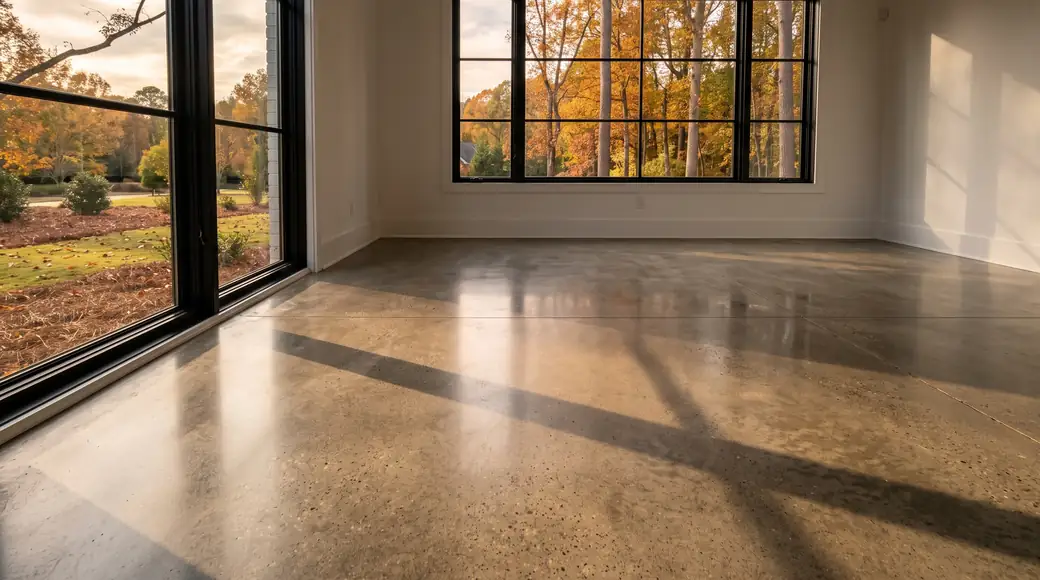
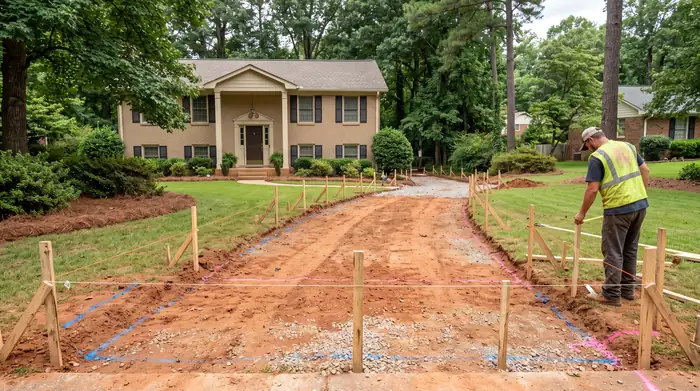
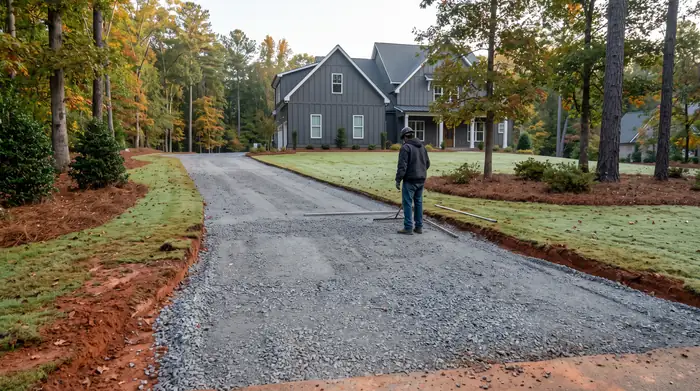
We polish concrete floors in Lawrenceville and the towns around it, Snellville, Suwanee, Duluth and Sugar Hill, and through the rest of metro Atlanta on the same terms everywhere. Most of what we grind is already in the ground: a garage slab, a basement, a shop floor, a kitchen that has carried tile through two owners. Polishing turns that slab into the finished surface instead of a base for something else. It stays concrete. It just gets flat, closed and hard on top.
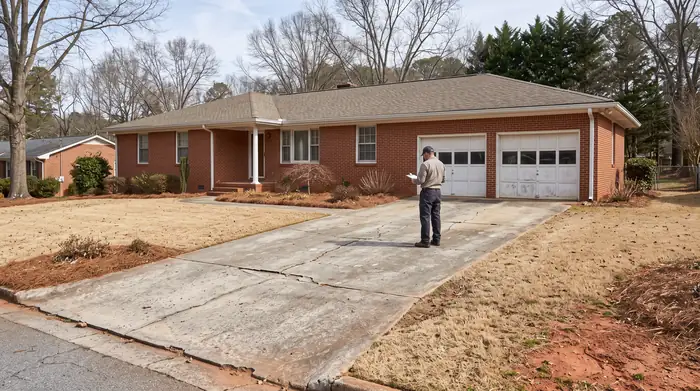
The median home in Lawrenceville was built in 1987, and that shapes what we find once the carpet and tile come up. Slabs from that period were poured to carry a house, not to be looked at, so a surface can be uneven, stained with old adhesive, or scarred where a wall once stood. Some of them polish beautifully. We grind a test patch first, take our reading off that, and say what the floor will actually look like before anyone commits to it.
Trouble usually shows up in the first pass. Trenches cut for plumbing get patched with material that never quite matches, and that patch stays visible no matter how fine we take the polish. Grind too deep and the slab opens into exposed aggregate whether you wanted that look or not. Old cracks move again. Wire mesh that sank to the bottom of the pour does nothing for the surface. None of it is fatal, but it decides how far the finish can go.
Getting one right is mostly patience and sequence: joints filled, cracks cut and repaired, densifier worked in, then every grit taken all the way through before the next one starts. Dye goes down when you want colored concrete instead of the gray that is already sitting there. We do floors in houses, and commercial concrete for shops and small retail spaces, by the same order of steps. Done that way, a floor takes furniture, dogs and daily traffic with no coating to peel off later. Call for a free estimate.