+1 470-229-2076
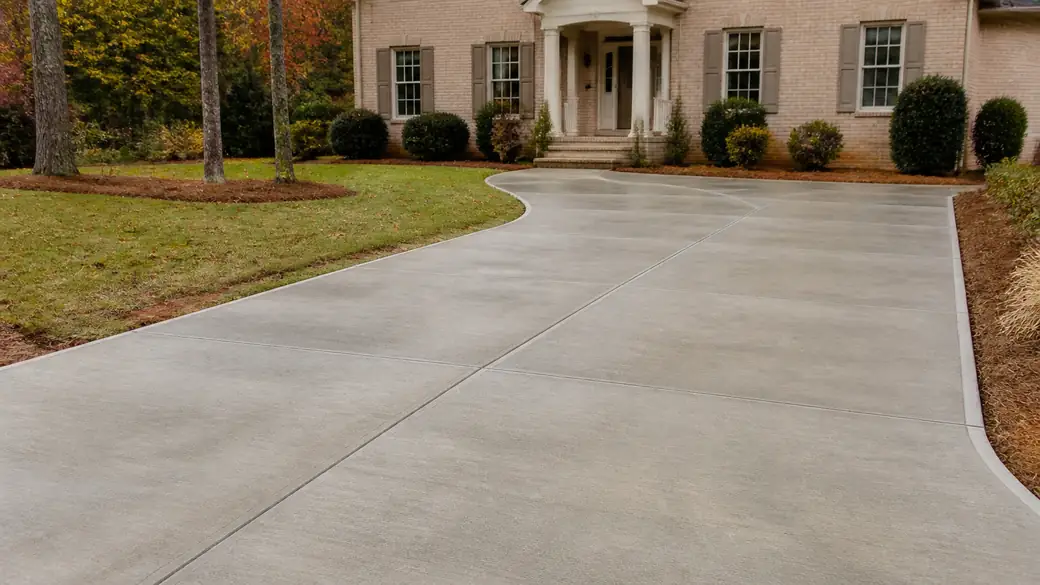
concrete slab installation completed by a local contractor at a tan-brick colonial in Lawrenceville, GA, under bright midday cloud.

Concrete Slab Installation Cost in Lawrenceville, GA

A concrete slab is the flat, reinforced surface that everything else sits on: a garage floor, a shed pad, a patio, the base under an addition. In Lawrenceville the median home was built in 1987, so a good share of what we pour replaces a slab that has cracked, settled or simply worn out after decades of use. What a new one costs depends less on the concrete itself than on what happens before the truck shows up. That groundwork is where most of the effort goes on any project we take on. It is also where it should go.

Every job starts with the ground. Gwinnett County is hilly, and the grade changes from one block to the next, so we grade and test each site on its own before we set a single form. Pacolet soil, the county's dominant type, drains well, but it varies, and we check what is actually under your property instead of assuming. Then comes the base, the forms, the reinforcement sized to the load, the pour and the finish. A slab for a parked car and a slab for a hot tub are not built the same way. We handle the permit when the work calls for one.

Water is what undoes most slabs, and this area sees about 55 inches of rain a year. A pad poured without proper slope sends that water toward the house instead of away from it. A thin or poorly compacted base lets the ground shift underneath. Skip the control joints and the concrete picks its own place to crack, which is usually right down the middle. None of these problems show on the day of the pour. They show up a few years later, when fixing them means breaking out what is already there. Getting the base, slope and joints right the first time is the cheaper path. Call for a free estimate.

Call +1 470-229-2076

Get a FREE Quote

What Concrete Slab Installation Cost Involves

Concrete Slab Installation Cost

Most of what you pay for in a slab sits below the finished surface. We strip the topsoil, compact the subgrade and spread a crushed stone base before a truck ever shows up. Pacolet soil, the dominant type in Gwinnett County, drains well, but it changes from lot to lot, so every site gets tested on its own. A residential slab usually pours four inches thick over rebar or wire mesh. Extra thickness, heavier reinforcement and more digging on a sloped lot all move the figure.


concrete driveway installation completed by a local contractor at a brick-and-siding two-story home in Lawrenceville, GA, in early morning light.

Concrete Driveway Installation

A driveway carries more weight than a patio, so we pour it thicker: five inches for cars, six where a truck or trailer turns. Rebar on a grid holds it together. Control joints, cut at regular spacing, give the concrete a straight line to crack along instead of a random one. Gwinnett is hilly, with 181 feet of relief within a few miles, so a steep drive gets a broom finish for grip and a pitch that sends water toward the street.

concrete flooring installation completed by a local contractor at a charcoal farmhouse-modern home in Lawrenceville, GA, after a rain shower.

Concrete Flooring Installation

Inside a garage, basement or shop, the floor has to stay dry and flat. With about 55 inches of rain a year, we lay a heavy polyethylene vapor barrier under every interior slab; skip it and moisture comes up through the concrete and lifts whatever gets glued on top. We power trowel the surface smooth and cure it slowly so the edges do not curl. Saw cuts go in early, before shrinkage cracks pick their own path. Then it gets sealed, stained or left ready for polishing.

concrete slab repair completed by a local contractor at a grey split-level home in Lawrenceville, GA, under low winter sun.

Concrete Slab Repair

The median home here was built in 1987, so plenty of slabs around Lawrenceville have decades of settling behind them. We see sunken sections by the garage, cracks from tree roots, and surfaces flaking where the top layer was overworked on pour day. Hairline cracks get routed and sealed. Spalled patches get ground back and resurfaced. A section that has dropped, or keeps moving, usually needs cutting out and repouring on a recompacted base, and we tell you that plainly.

Choosing the Right Concrete System

A concrete system is more than the slab you see. It is the base underneath, the thickness of the pour, the reinforcement inside it, and the finish on top, and each one is chosen for what the slab has to carry. A patio that holds a grill and some chairs does not need what a driveway needs under a loaded pickup. Reinforcement runs from wire mesh to rebar tied on a grid, sometimes with fiber mixed into the concrete as well. Finishes run from a plain broom texture to stamped and decorative surfaces. We match all of it to the job in front of us.

Every site gets looked at on its own before we settle on any of that. Pacolet soil, which drains well, is the most common type in Gwinnett County, but it changes across the county, so we test the ground where the slab will actually sit. Gwinnett is hilly as well, with about 181 feet of relief within a few miles, and it varies from one block to the next. A lot that falls away from the house needs different grading and forming than a flat one. With around 55 inches of rain a year, where the water goes once it leaves the slab matters as much as the slab itself.

Most slab problems start with a system that was built for a different job. Too thin, too little steel, or a base that was never compacted, and the concrete cracks and settles no matter how clean the finish looked on day one. The median home in Lawrenceville was built in 1987, so a new patio or driveway often has to meet older concrete: a garage apron, a walk, a slab that has already moved a little. We plan that joint instead of hoping it lines up. Getting the system right takes more thought at the start and saves trouble for years. Call for a free estimate.

How Much Does Concrete Slab Installation Cost Cost in Lawrenceville?

We price every slab after walking the property, because two pours of the same size can land far apart once the site is factored in. Most of what moves the number is something you can check yourself before anyone measures: what is already on the ground, how a truck reaches the work, and where the water goes when it rains.

What changes the priceWhich wayWhy
Old concrete, asphalt or pavers where the new slab goescosts moreIt has to be broken up, loaded and hauled off before we can grade.
A clear path for the mixer truck to back up to the formscosts lessWhen a truck can't get close (fences, septic fields, tight side yards), we pump the concrete or wheel it in, and both add labor and equipment.
Slope across the pour areacosts more on steeper groundGwinnett County is hilly and varies block to block, so a sloped site needs more cutting, fill and taller forms to get a level slab.
What the ground underneath is made ofcosts more if it is soft or loose fillPacolet soil drains well and is common here, but it varies, so we test every site and dig out anything that won't hold.
How thick the slab has to becosts more for vehicle trafficA driveway or a slab carrying a shed needs more depth and more base stone than a walkway or patio.
Rebar grid versus wire mesh or fibercosts more for rebarRebar takes more material and time to cut, tie and set on chairs, and some structural work calls for it.
Where downspouts and runoff draincosts more if water has to be redirectedWith about 55" of rain a year, a slab needs to shed water away from the house, sometimes with a drain or a regraded swale.
Broom finish versus stamped or decorativecosts more for stampedStamping and coloring take extra crew, extra materials and a tighter pour window.

When you compare bids, line them up on the same points: slab thickness, the depth of compacted base, the type of reinforcement, and who removes and hauls the old material. A lower number often leaves one of those out. We spell each item out in writing, and we handle the permit.

Frequently Asked Questions About Concrete Slab Installation Cost in Lawrenceville

What factors determine the cost to construct concrete steps and staircases in Lawrenceville?

Rise and run come first. We count how many steps the grade needs, measure the width, and check whether the landing ties into a porch, a walk or a slab. Gwinnett County is hilly, with 181 feet of local relief within a few miles, so two yards on the same street can need very different stair runs. Forming, reinforcement, railings and any decorative finish on the treads all add labor.

How much does concrete wire mesh reinforcement cost in Lawrenceville, GA?

We price mesh as part of the whole pour, not as a separate item, so the number moves with the slab's square footage and the gauge and spacing the job calls for. The better question is whether mesh is the right reinforcement at all. For a patio or a garden walk it often is. A driveway carrying vehicles may be better served by rebar, and we say so plainly when that is the case.

What does retaining wall installation cost in Lawrenceville, GA?

Height and length set most of it. A short wall edging a flower bed and a tall wall holding up a driveway are different structures, with different footings, reinforcement and drainage. The area sees about 55 inches of rain a year, so we build drainage behind every wall we pour. That water has to go somewhere. We walk the slope, test the soil, and price the wall the site actually needs.

How much does it cost to pour a residential concrete slab in Lawrenceville?

Start with what the slab carries. A shed pad, a patio and a garage floor each want a different thickness and reinforcement. Pacolet soil (well drained) is Gwinnett County's dominant type, but it varies across the county, so we test every site before we form anything. Lawrenceville's median home was built in 1987, which means some slab work begins with breaking out and hauling away old concrete first.

How much does concrete waterproofing and sealing cost in Lawrenceville, GA?

Condition matters more than size. A clean, newer driveway takes a penetrating sealer with little prep. An older, stained surface needs cleaning, crack repair and sometimes etching before any sealer will bond to it. Stamped and decorative concrete usually gets a film-forming sealer that brings the color back up. We look at the surface first and recommend the sealer that suits it, not the most expensive one on the shelf.

How much does concrete curbing and edging cost in Lawrenceville, GA?

Curbing is measured by the linear foot, so the length of your bed lines and the number of curves drive most of it. Tight radii take more hand work than a long straight run. Profile and finish add to it too: a plain slant curb runs simpler than a stamped or colored one. We measure the beds, talk through the profile you want, and give one number for the whole run. Call for a free estimate.

Get a Free Estimate

Get a FREE Quote

Tap to call +1 470-229-2076
