+1 470-229-2076
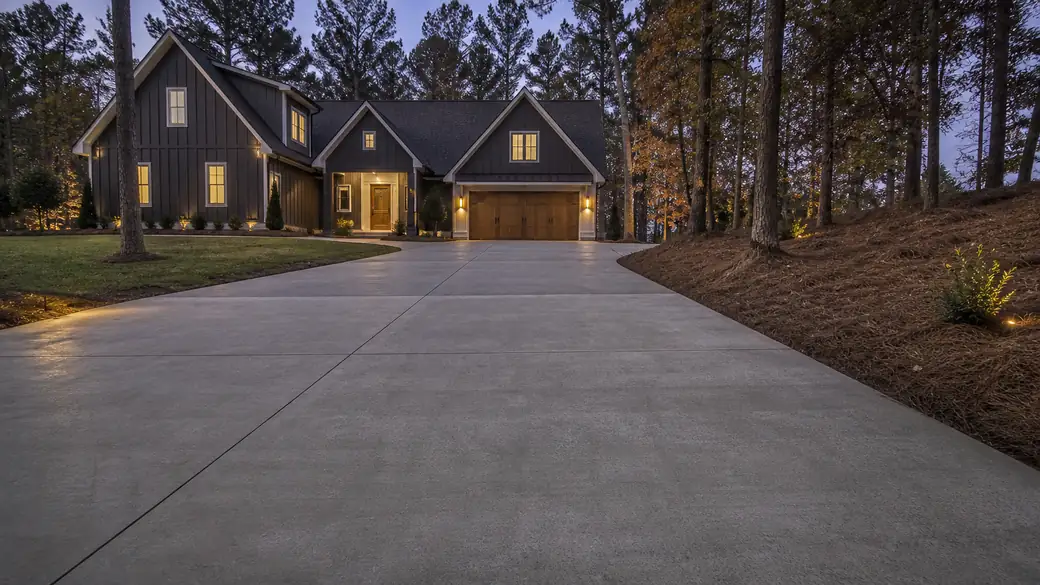
concrete construction services completed by a local contractor at a charcoal farmhouse-modern home in Lawrenceville, GA, at blue hour.

Concrete Construction Services in Lawrenceville, GA

We pour driveways, patios, slabs and decorative concrete for residential and commercial properties in Lawrenceville. The median home here was built in 1987, so a lot of the concrete we look at has been in the ground for decades. Driveways crack across the middle. Patios settle and tip back toward the house. Walks heave at one end. Sometimes a repair holds, and sometimes the only honest fix is to break it out and pour it again on a proper base. Part of every estimate is telling you which one you have, and why. Stamped or plain, the work underneath is what decides how long it lasts.

Gwinnett County is hilly, and the ground changes from block to block, so every site is graded and tested on its own before we set a form. Pacolet soil, the county's most common type, drains well, but it is not the only soil you will dig into here. The area also takes about 55 inches of rain a year, and that water has to run off a new surface rather than pool on it or cut under the edges. So we build up a compacted base, set the slope, and size the reinforcement to what the slab will carry: a pickup on a driveway, a table and grill on a patio. We handle the permit.

Call +1 470-229-2076

Get a FREE Quote

What Concrete Construction Services Involves

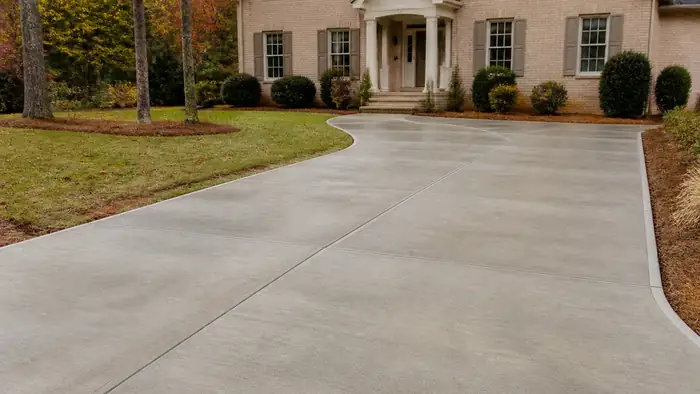
concrete slab installation completed by a local contractor at a tan-brick colonial in Lawrenceville, GA, under bright midday cloud.

Concrete Slab Installation Cost

What sets the price of a slab is mostly what goes under it and inside it. A patio on a level, dry pad is straightforward work. A shop floor or RV pad needs a thicker pour, a deeper compacted gravel base, and rebar set on chairs rather than wire mesh laid on the ground. Gwinnett County is hilly, so a sloped yard adds grading, taller forms, and sometimes a thickened edge. The number comes from the site, not a chart.


concrete driveway installation completed by a local contractor at a brick-and-siding two-story home in Lawrenceville, GA, in early morning light.

Concrete Driveway Installation

Most driveway failures start underneath. We remove the old surface, cut down to firm soil, and compact a crushed stone base before a single form goes in. Gwinnett sees about 55 inches of rain a year, so we pitch the slab to carry water off the garage apron and away from the house. Reinforcement is rebar or fiber, depending on what parks there. Control joints are sawcut early so shrinkage cracks land in straight lines instead of across the middle.

concrete flooring installation completed by a local contractor at a charcoal farmhouse-modern home in Lawrenceville, GA, after a rain shower.

Concrete Flooring Installation

Floors are held to a tighter standard than anything poured outside. Basement, garage and commercial slabs get a vapor barrier underneath so ground moisture does not work up into the flooring later. We place the concrete, screed it flat, and power-trowel it once it can hold weight. From there the surface can stay smooth and sealed, take a polish, or get a decorative stain or epoxy coating. Timing the trowel is most of the job.

concrete slab repair completed by a local contractor at a grey split-level home in Lawrenceville, GA, under low winter sun.

Concrete Slab Repair

Cracks, sunken sections and spalled surfaces each point to a different cause, so we find it before we patch anything. A hairline shrinkage crack can be routed and sealed. A slab that has dropped usually sits on base that washed out or was never compacted, and it may be raised or cut out and replaced. Flaking tops often come from an overworked finish. Gwinnett's dominant Pacolet soil drains well, but it varies across the county, so every repair starts with a look underneath.

Our Warranty and Guarantee

A slab holds up because of what goes under it, so that is where our effort goes. Every site is graded and tested on its own before any work starts. Pacolet soil is the dominant type in Gwinnett County and it drains well, but it changes from one lot to the next. The county is hilly, too, with enough fall across a few miles that grade and runoff decide how a driveway or patio behaves over time. About 55 inches of rain lands here in a year. That water has to go somewhere. We decide where before we pour.

Reinforcement goes in at the spacing the project calls for, set up on supports so it sits inside the slab instead of on the dirt beneath it. Control joints are cut where cracking is most likely to start, so the concrete breaks along a line we chose rather than one it picked. When the surface is finished, we walk it with you: the joints, the edges, the slope away from the house. Residential driveways, patios and stamped decorative work all get that same walk. If something looks wrong to you, say so then, while the crew is still on site.

Choosing the Right Concrete System

The right system starts with what the slab has to carry and what the ground under it is doing. A walkway, a patio and a driveway that takes a loaded truck are three different jobs, and we set thickness, reinforcement and joint spacing for each one rather than pouring the same slab everywhere. Gwinnett County is hilly, and plenty of Lawrenceville lots slope more than they look. That changes how we grade, where the water goes, and whether a section needs extra steel. Pacolet soil, the county's dominant type, drains well. It varies from site to site, though, so we test every property before we decide anything.

Finish comes second. Broom-finished concrete is the plain, durable surface most driveways need. Stamped and decorative work suits patios and entries where people spend time, and it asks more of the base and the sealer to keep looking right. With about 55 inches of rain a year, we build drainage into the pour itself: slope away from the house, control joints where cracks would want to form, edges that do not hold water. The median home here was built in 1987, so replacement work often starts with tearing out an old slab and finding whatever made it fail. That part matters more than the pattern on top.

How Much Does Concrete Construction Services Cost in Lawrenceville?

Price comes down to what your property asks of the job. Two driveways of the same size can land far apart once we see what sits under the old one, how the truck gets in, and where the water runs. You can check most of these yourself before anyone quotes.

What changes the priceWhich wayWhy
An old slab or driveway still in placecosts moreIt has to be broken out, loaded and hauled off before we form anything. Old mesh or rebar slows the tear-out.
How close a truck can get to the pourcosts less when the chute reachesA ready-mix truck that backs up to the forms pours direct. A fence, a tight side yard or a soft lawn means a pump or wheelbarrows.
Slope across the sitecosts moreGwinnett County is hilly. A pad on a grade needs cut, fill, compaction and taller forms before it sits level.
Soft spots under the slabcosts morePacolet soil drains well and is common here, but it varies lot to lot. Wet or loose ground gets dug out and replaced with compacted stone.
Slab thicknesscosts more as it goes upA driveway that carries a loaded pickup needs more depth than a walkway. That means more concrete and more base.
Reinforcementcosts more with rebarRebar tied on chairs takes longer to set than fiber mix. The loads on the slab decide which one belongs there.
Where water collectscosts more if it poolsWith about 55 inches of rain a year, a low spot needs regrading, a drain, or a surface pitched to carry water away.
Stamped or decorative finishcosts moreColor, stamp mats and sealer add material, and the crew works against the set time.

When you line up bids, read past the total. Check that each one states the thickness, the reinforcement, the base depth, and who removes the old concrete. A quote that leaves out the tear-out or the permit is not cheaper. It is incomplete.

Frequently Asked Questions About Concrete Construction Services in Lawrenceville

How much does concrete parking lot construction cost in Lawrenceville, GA?

It depends on the lot, and we would rather measure it than guess. Size sets the baseline, but grade does as much work as square footage here. Gwinnett County is hilly, and a lot that needs cut and fill costs more than one that sits flat. Slab thickness, reinforcement for truck traffic, drainage and striping all move the number. Call for a free estimate on your actual site.

What types of concrete construction does Lawrenceville Best Concrete handle?

Residential and commercial flatwork, mostly. That means driveways, patios, walkways, garage and shop slabs, and parking lots, plus decorative surfaces like stamped concrete for homeowners who want pattern or texture. We also pour structural slabs and footings where a project calls for them. The median home in Lawrenceville was built in 1987, so a good share of our work is tearing out tired concrete and replacing it properly.

Who are the best concrete contractors for parking lot construction in Lawrenceville?

We won't rank ourselves against anyone. Judge any contractor by how they talk about your site before they talk about price. Ask how they plan to handle slope and drainage, how thick the slab will be, what reinforcement goes in it, and how they compact the base. Our answers start with testing the soil and grading the site, since conditions change from block to block. Ask everyone the same questions, then compare.

How much does concrete parking lot construction cost per square foot?

A per-square-foot figure only means something once the site is known. Two lots of the same size can price very differently when one needs heavy grading and the other sits level. The same goes when one carries delivery trucks and needs a thicker, reinforced slab. Base preparation, drainage, joint layout and removal of old paving all ride on top of the concrete itself. We work out the number from your lot, not a chart.

What factors affect the price of residential concrete construction in Lawrenceville?

Access, ground and finish. A driveway we can reach with a truck costs less to pour than a backyard patio that needs a pump. Slope matters on hilly lots, and so does water: the area gets about 55 inches of rain a year, so drainage and base work are never optional. Pacolet soil, the county's dominant type, drains well, though it varies and we test each site. Stamped or decorative finishes add labor.

Do I need permits for concrete walkway construction in Lawrenceville?

Yes, in some cases. Whether a walkway needs one depends on its size, where it runs and what it connects to. Work that touches the public right of way, changes how water drains, or is part of a larger project is more likely to need approval. We check what your walkway requires before we start. When a permit is needed, we handle the permit, and the pour waits until it is approved.

Get a Free Estimate

Get a FREE Quote

Tap to call +1 470-229-2076
