+1 470-229-2076
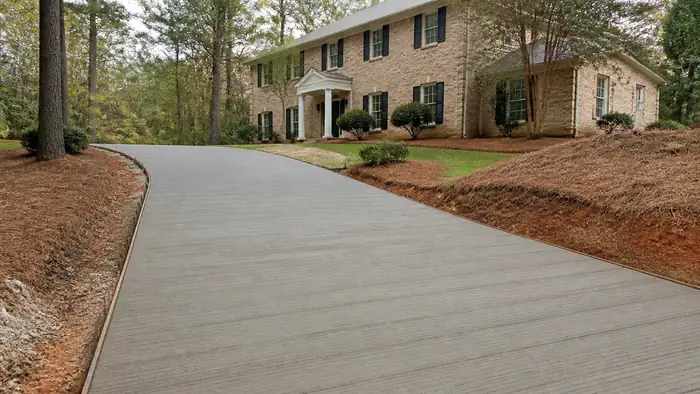
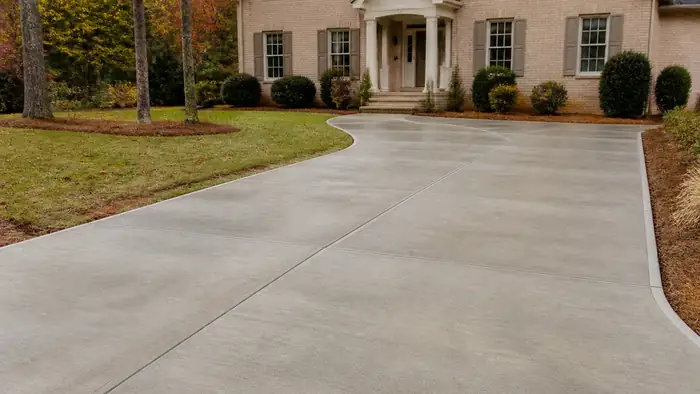
concrete repair services completed by a local contractor at a tan-brick colonial in Lawrenceville, GA, under low winter sun.

Concrete Repair Services in Lawrenceville, GA

Concrete usually goes in at the same time as the house, and the median home in Lawrenceville was built in 1987. That puts a lot of local driveways, patios and walks well into their fourth decade. We repair residential and commercial concrete: cracked slabs, sunken sections, flaking surfaces, broken steps and edges that have started to crumble. Some of it can be patched or resurfaced and give years of use. Some of it has to come out. We tell you which, and why.

Every repair starts with a look at the site. We check the slab, see how the ground falls away from it, and find out what is underneath before deciding on anything. Gwinnett County is hilly, with 181 feet of local relief within a few miles, and that changes from one side of a street to the other. Water that runs toward a driveway will keep working under it, so we deal with the drainage along with the surface. If the job needs a permit, we handle the permit.

The usual failure is a patch that looks fine for a season and then lets go. Filling a crack without asking why it opened only hides the cause for a while. The dominant soil here is Pacolet, which drains well, but it varies across the county, and about 55 inches of rain a year will find any gap left behind. Getting it right means proper surface prep, materials suited to the conditions, and reinforcement where the load calls for it. Call for a free estimate.

Call +1 470-229-2076

Get a FREE Quote

What Concrete Repair Services Involves

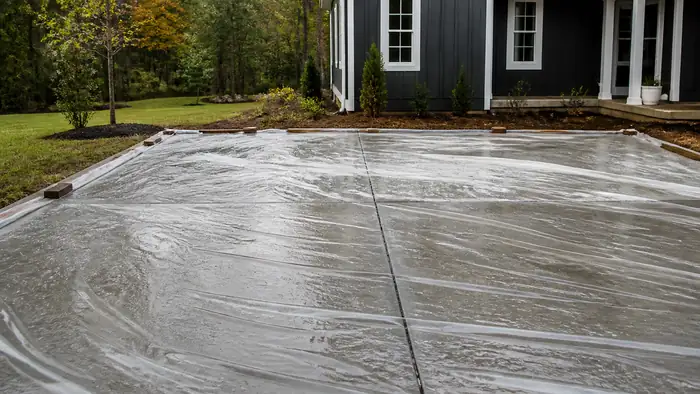
concrete slab installation completed by a local contractor at a tan-brick colonial in Lawrenceville, GA, under bright midday cloud.

Concrete Slab Installation Cost

Three things set the number: square footage, thickness, and how much ground has to move before we pour. A thin patio slab on level ground is a different job from a thick garage slab cut into a slope, and Gwinnett County is hilly, with 181 feet of local relief within a few miles. Excavation, gravel base, reinforcement and finish each show up as their own line. Call for a free estimate; every line on it traces back to your site.


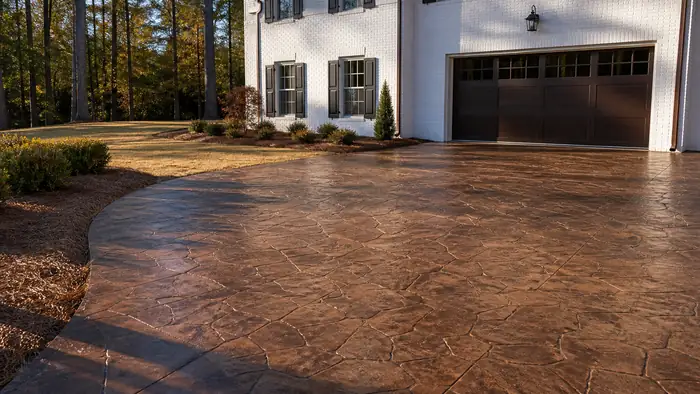
concrete driveway installation completed by a local contractor at a brick-and-siding two-story home in Lawrenceville, GA, in early morning light.

Concrete Driveway Installation

A driveway takes a car's weight in the same spots every day. It gets more depth than a walkway, rebar or wire mesh held up on chairs so it sits mid-slab, and a compacted gravel base underneath. Control joints go in at a spacing that tells the concrete where to crack. With about 55 inches of rain a year, we pitch the surface so water runs off instead of pooling. Finishes range from plain broom texture to stamped and decorative work.

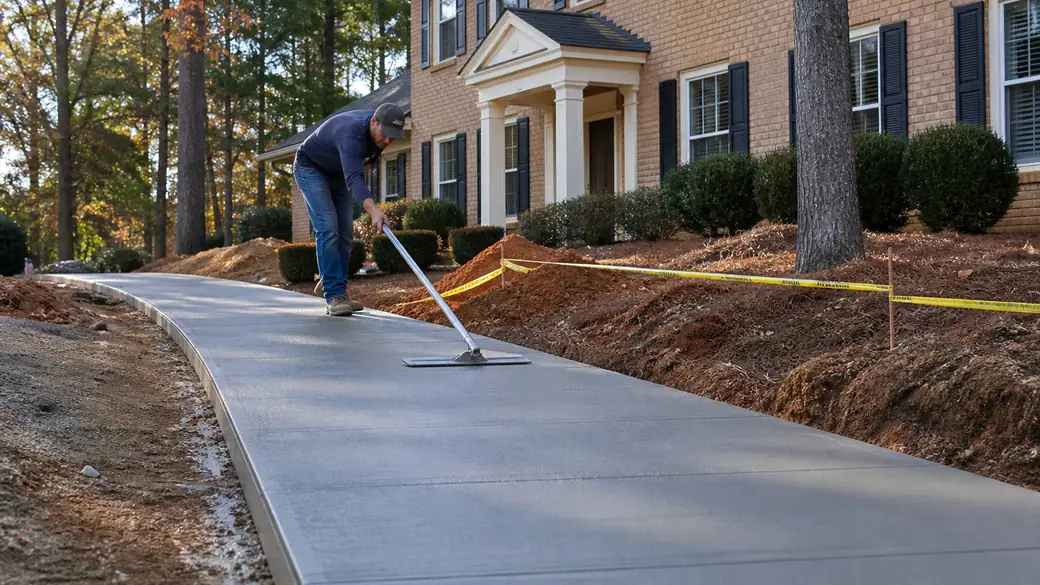
concrete flooring installation completed by a local contractor at a charcoal farmhouse-modern home in Lawrenceville, GA, after a rain shower.

Concrete Flooring Installation

Basements, garages, shops and commercial spaces all need a floor that stays flat under traffic. Interior slabs go down over a vapor barrier, reinforced with wire mesh or fiber. We trowel to the finish the room calls for: smooth and hard for sealing or polishing, lightly textured where the floor gets wet. Garage floors slope toward the door. Joints are saw-cut soon after the pour, before shrinkage cracks can choose their own lines.

concrete slab repair completed by a local contractor at a grey split-level home in Lawrenceville, GA, under low winter sun.

Concrete Slab Repair

The median home in Lawrenceville was built in 1987, so plenty of slabs here carry decades of wear. What we see most: sections that settled after the base washed out, panels lifted by tree roots, flaking surfaces, and cracks that keep widening. Hairline cracks can be routed and sealed. Where the base has failed, a surface patch only buys time, so we cut the section out, rebuild the base, dowel into the sound concrete and pour new.

Our Warranty and Guarantee

What we stand behind is the preparation, because that is where a repair either holds or fails. Every site is graded and tested on its own before work starts. Pacolet soil, which drains well, is Gwinnett County's dominant type, but it varies across the county, and the ground here is hilly, with 181 feet of local relief within a few miles. Water crosses a property in ways a quick look will miss. Finding that out takes time. We would rather spend it up front than patch a slab and watch the same crack open again next year, under a new layer of concrete that only hid it.

About 55 inches of rain falls in a typical year, and most concrete trouble starts with water: undermined edges, settled sections, joints that open and hold moisture. The median home in Lawrenceville was built in 1987, so a lot of driveways, patios and walkways have taken decades of it. A repair that lasts deals with the cause. Sometimes that means correcting drainage, sometimes adding reinforcement, and sometimes the honest answer is replacing a section instead of patching it. That is the standard we hold our own work to. Call for a free estimate, and ask us anything about how your repair is meant to hold up.

Our Concrete Process, Step by Step

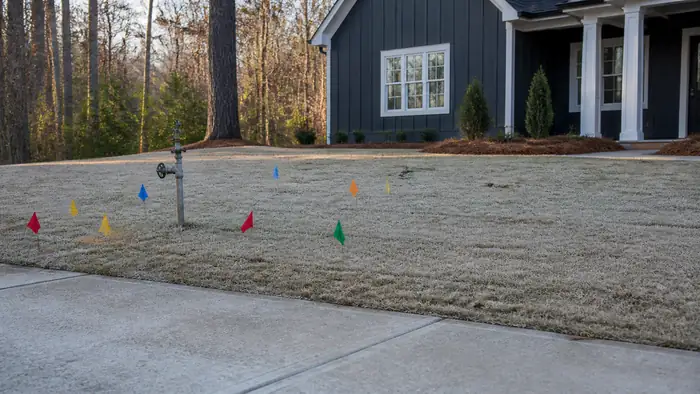
Utility flags mark buried lines before digging starts. at a charcoal farmhouse-modern home in Lawrenceville, GA, in early morning light.

Step 1: Site Assessment

We start by walking the property and working out why the old concrete failed. A crack that runs in a straight line tells a different story from a slab that has dropped at one corner, and the fix is different too. Gwinnett County is hilly, with 181 feet of local relief within a few miles, so we watch how water moves across your lot. Pacolet soil, which drains well, is the dominant type here, but it varies, so we test every site on its own.

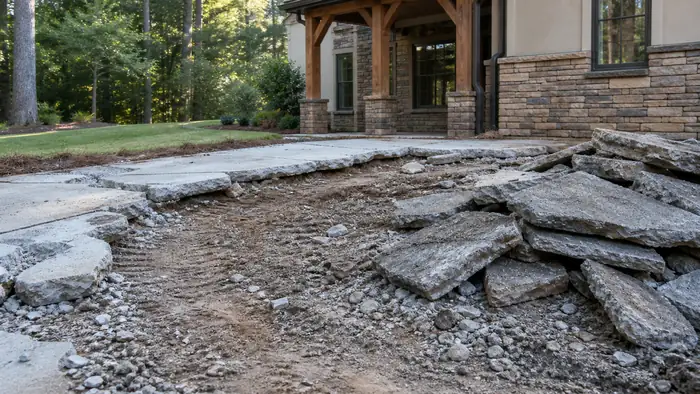
An old patio slab is broken up and hauled away. at a stacked-stone and stucco home in Lawrenceville, GA, under low winter sun.

Step 2: Site Preparation

Most failed slabs trace back to what is underneath them. We break out and haul away the damaged concrete, dig past any soft or organic material, and bring the subgrade to a consistent level. Then we lay a gravel base in lifts, running a plate compactor over each one before the next goes down. On a sloped lot we set the grade so water sheds off the surface and away from the house. The area sees about 55 inches of rain a year, and it has to go somewhere.

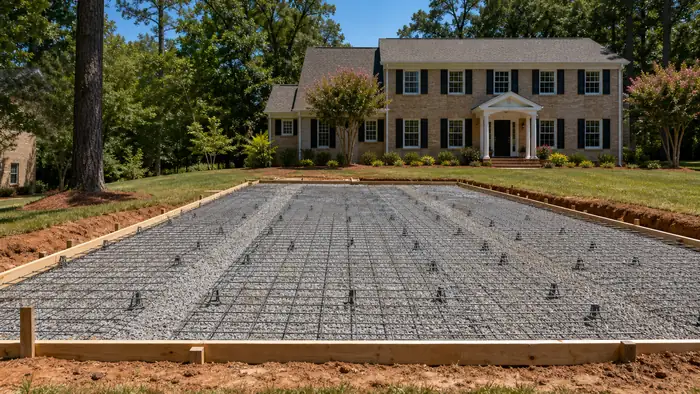
Wire mesh is unrolled across a driveway base before pouring. at a tan-brick colonial in Lawrenceville, GA, in clear late-morning sun.

Step 3: Forming & Reinforcement

Forms go in next: lumber boards staked and braced so they hold a straight edge and the right pitch under the weight of wet concrete. Their top edge sets the finished height, so we check it with a string line and a level. Reinforcement depends on the job. A driveway that carries vehicles gets steel rebar set on chairs and tied at the crossings, so it sits inside the slab instead of on the ground. Patios and walkways often get wire mesh or fiber added to the mix.

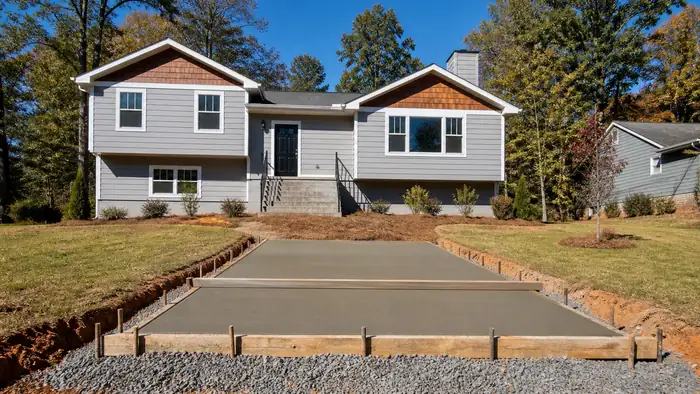
A screed board levels fresh concrete on a small patio. at a grey split-level home in Lawrenceville, GA, in clear late-morning sun.

Step 4: Pouring

Pour day is about timing. We order a mix suited to how the slab will be used, then place it straight from the truck, or by wheelbarrow where the truck can't reach. It gets worked into every corner of the forms before it starts to set, and a screed board pulled across the forms levels the top. Adding water at the chute makes concrete easier to spread and weaker once it hardens. We don't do it. The material goes in the way it was batched.

A broom drags across a driveway creating a slip-resistant texture. at a tan-brick colonial in Lawrenceville, GA, under bright midday cloud.

Step 5: Finishing

While the concrete is still workable, we bull float it to settle the stone and bring a smooth layer of cream to the top. Edges get rounded with an edging tool so they hold up to chipping. Control joints are tooled or cut in, giving the slab a planned place to crack instead of a random one. The final texture depends on where the slab sits: a broom finish for grip on driveways and walks, or stamped and colored patterns for decorative patios.

Plastic sheeting covers a curing driveway slab. at a charcoal farmhouse-modern home in Lawrenceville, GA, after a rain shower.

Step 6: Curing

Concrete gains strength slowly, and it needs moisture to do it. When the surface dries out too fast, it can craze, dust or crack before the slab has any real strength behind it. We keep it damp with a curing compound, wet coverings or plastic sheeting, depending on the weather that week. Foot traffic can come back first. Cars wait longer, and we'd rather you park on the street a few extra days than leave tire marks in a new driveway.

A finished stamped surface shows a glossy sealed sheen. at a painted-white-brick two-story home in Lawrenceville, GA, in late afternoon light.

Step 7: Sealing

Once the slab has cured, a sealer protects it from water, oil stains and the wear of daily use. Plain broom-finished concrete gets a penetrating sealer that soaks in and leaves the texture alone. Stamped and colored work gets a film-forming acrylic, which also deepens the color. Unsealed surfaces take on water every time it rains, and that is where scaling and staining start. Sealers wear down over time, so we show you what a tired finish looks like and when it's worth recoating.

Choosing the Right Concrete System

The median home in Lawrenceville was built in 1987, so a lot of the driveways, patios and slabs we look at have been carrying load for decades. Choosing a repair system starts with what is actually wrong. A worn or scaled surface can often take a bonded overlay. A slab that has cracked clean through, or dropped at one corner, usually needs that section cut out and poured again with new reinforcement. Stamped and decorative surfaces need materials matched to the original, or the patch shows.

Before we recommend anything, we look at what sits under the concrete. Pacolet soil is the dominant type in Gwinnett County and it drains well, but it changes across the county, so every site gets tested on its own. Much of the county is hilly as well. A driveway that runs downhill toward a garage takes water differently than a flat patio, and with about 55 inches of rain a year, where that water goes decides whether a repair holds. Sometimes the real fix is regrading beside the slab.

The wrong system fails in predictable ways. An overlay laid over a slab that is still moving will crack along the same line it was meant to cover. Filler pushed into a crack over a washed-out base just hides the problem for a while. Getting it right sometimes means more demolition than a homeowner expected, and sometimes far less. We walk the property with you, show you what we found, and explain why one approach fits and the others do not. Call for a free estimate.

Get a Free Estimate

Get a FREE Quote

Tap to call +1 470-229-2076