+1 470-229-2076
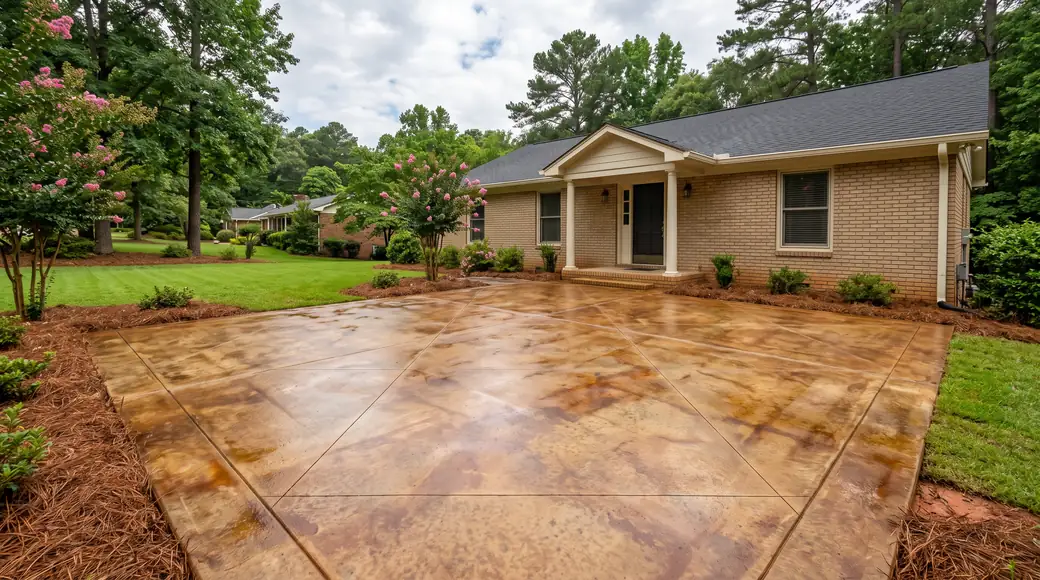
Acid-stained concrete patio in mottled earth tones at a tan-brick colonial in Lawrenceville, GA, after a rain shower.

Stained Decorative Concrete in Lawrenceville, GA

We are a concrete contractor in Lawrenceville, Georgia, and stained decorative concrete makes up a good share of what we pour and finish. Stain soaks into the slab and colors it from inside rather than sitting on the surface the way paint does. It works on a driveway, a back patio, a garage floor, a concrete sidewalk running from the drive up to the front steps. New flatwork takes it well. Sound older concrete usually does too.

Our coverage runs across Lawrenceville and the towns around it: Snellville, Suwanee, Duluth, Sugar Hill, and this stretch of metro Atlanta generally. Same crew and same finish in every one of them. The median house here was built in 1987, and a lot of that original flatwork has had decades of sun, traffic and hose water on it. Stain is often the way to get another twenty years out of concrete that is structurally fine and just looks tired.

Stain amplifies whatever is already in the slab, which cuts both ways. Old sealer, leftover curing compound, a patch someone troweled in years back: all of it reads through the finished color, so we grind the surface and test a small area before anybody settles on a shade. Stamped concrete takes stain particularly well, since the color pools in the low relief and the pattern reads deeper than it did gray. We would rather tell you honestly that a slab is too far gone to stain than take the job and hand back something blotchy. Call for a free estimate and we can walk the concrete with you.

Call +1 470-229-2076

Licensed, Bonded, and Insured ยท A combined 15 years of experience

Get a FREE Quote

We warranty all of our work because we believe in what we do.

What Stained Decorative Concrete Involves

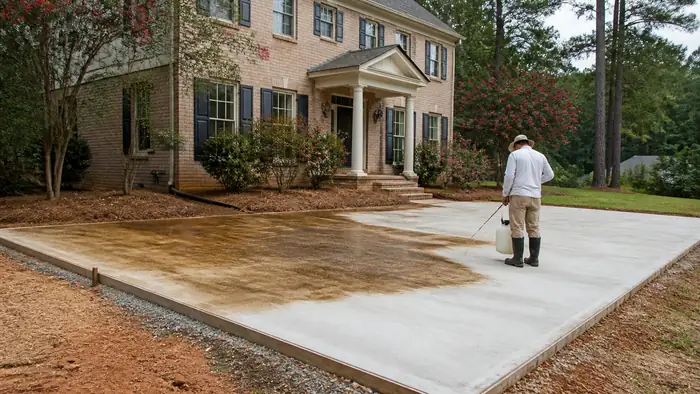
Acid stain being sprayed onto a concrete surface, half-applied at a tan-brick colonial in Lawrenceville, GA, under bright midday cloud.

Concrete staining

Staining colors concrete that is already down. We open the surface with a grinder or an etch, pull grease and old sealer off it, then work the color in and lock it under a fresh sealer. Age helps. The median house in Lawrenceville went up in 1987, and slabs that old usually take stain better than a fresh hard-troweled pour. Blotching comes from curing compound, patched cracks and rust runoff, so we test a corner of the driveway or concrete sidewalk first and show you the color wet.
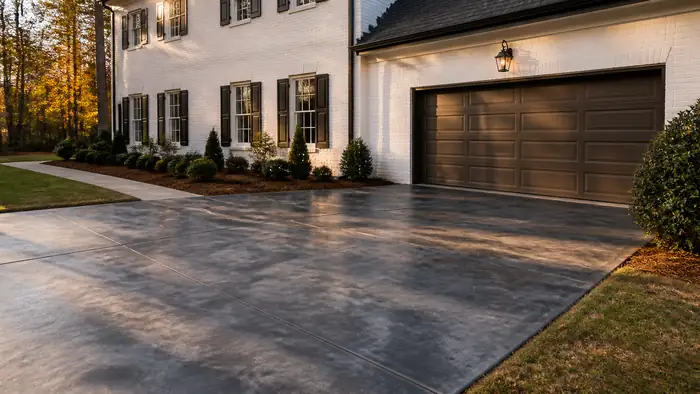
Acid-stained concrete floor in charcoal and blue-grey marbled tones at a painted-white-brick two-story home in Lawrenceville, GA, in late afternoon light.

Acid stained concrete

Acid stain is reactive. Metallic salts in the solution meet the free lime in the slab and leave mottled, variegated color that will not chip or peel the way paint does. Coverage is uneven by nature, so no two sections match. We neutralize, rinse and seal. It reads well on a patio, a sidewalk, an entry or a commercial concrete floor, and it is a different animal from stamped concrete, which takes its color at the pour. As a concrete contractor we will tell you which one your slab suits.

Stained Decorative Concrete in metro Atlanta

Stained decorative concrete colors a slab you already own instead of covering it. The median home here was built in 1987, so the patios, walkways and driveways we look at have carried decades of weather, furniture and foot traffic. That works in your favor more often than not. Concrete that old has finished its early movement, and the surface has opened up enough for an acid stain to bite in and hold color. New slabs take stain too, they just have to cure first.

We run the whole metro Atlanta side of this business out of Lawrenceville, and the drive is part of the job rather than a factor in how the job gets done. A stained patio in Suwanee gets the same prep, the same test area and the same crew as one two miles from the shop. Decorative work is not something we send a truck out to finish in an afternoon, so we schedule around the full route instead of the closest address.

Older flatwork hides things. Sealer from a previous owner will block stain in patches and has to come off before any color goes down. Patched sections, sprinkler mineral staining and spots where wire mesh sat too close to the surface all take color differently, and you find that out on a test panel, not on the finished patio. Control joints and hairline cracks stay visible after staining, and we point out where before anyone starts.

Getting stain right is mostly patience. Grinding or stripping an old slab clean takes longer than the staining itself, and rushing that step is why so much decorative concrete looks blotchy a year later. We would rather spend an extra day on prep than hand you a patio that has to be redone. Sealing comes after, and it is what keeps the color where you put it. If you want a free estimate on the slab you have, call us.

How the Work Runs

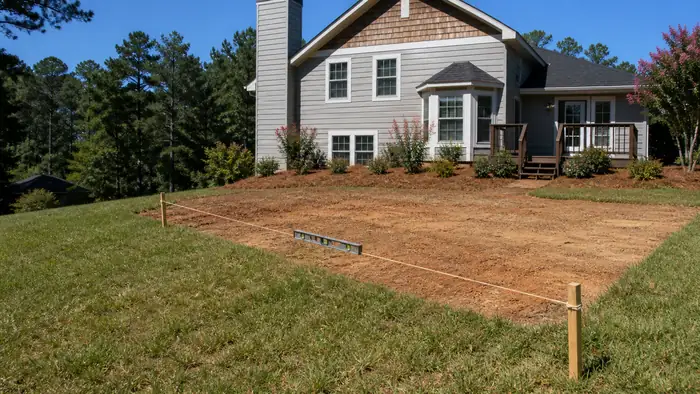
String lines and grade stakes laid out across a yard before a pour at a tan-brick colonial in Lawrenceville, GA, under bright midday cloud.

Step 1: Site Evaluation

We walk the site with a tape and a level and look hard at what is already there. Drainage decides most of it: where water leaves the slab, where it stands now, whether the grade runs back toward the house. Houses of that era, and the median build year here is 1987, often have original flatwork with joints that have settled. We also check truck access, tree roots near the pour and what the old base looks like.

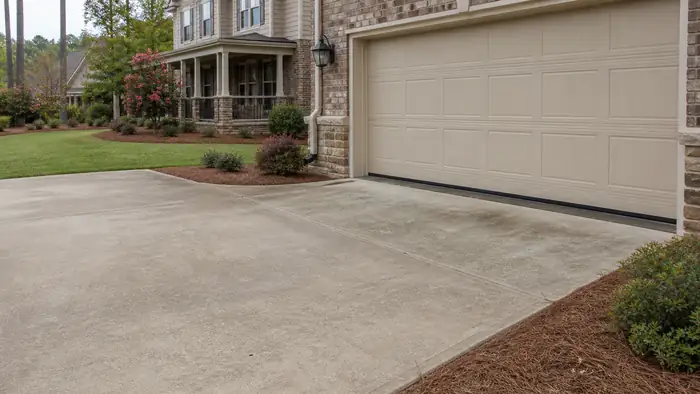
Concrete driveway and walk at a home, the kind of job an estimate covers at a red-brick ranch home in Lawrenceville, GA, under bright midday cloud.

Step 2: Written Estimate and Permits

The estimate goes on paper before anything comes out of the ground. It lists square footage, slab thickness, reinforcement, the stain system and color, the sealer, and where the debris goes. Permits are pulled when the scope calls for them, and that happens before demolition rather than after. If you want to see a stain sample on a scrap piece, dry and cured, under your own light, we do that first. Nothing starts until the scope reads right to you.

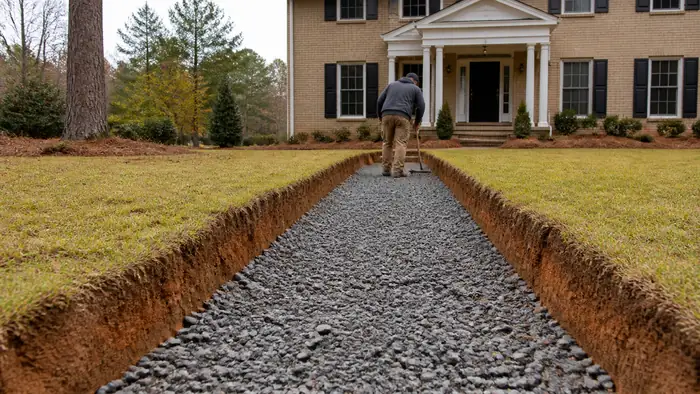
Broken-out concrete removed and the base rebuilt before a new pour at a charcoal farmhouse-modern home in Lawrenceville, GA, in early morning light.

Step 3: Demolition and Base Prep

Old concrete breaks out in pieces and leaves the property the same day it comes up. Then the part that matters: grading to the slope we set at the site visit, and a compacted base of graded aggregate placed in lifts. Soft spots get dug out, not bridged over. Most failed driveways we replace gave way underneath long before the surface showed it. Base prep is invisible once we pour and it decides how the slab holds up.

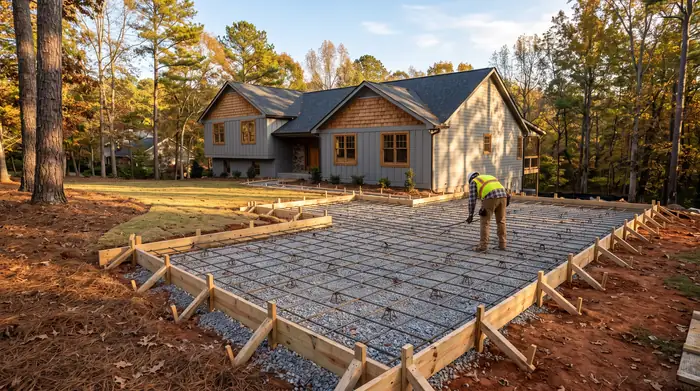
Wooden forms and rebar grid set and tied, ready for concrete at a grey split-level home in Lawrenceville, GA, in late afternoon light.

Step 4: Forming, Steel and the Pour

Forms go in braced, staked tight and set to a string line, because a form that shifts under wet concrete leaves a wavy edge you live with forever. Steel comes next: rebar tied in a grid for driveways, wire mesh where the loads are light, all of it on chairs so it sits inside the slab instead of on the dirt. Concrete installation runs continuously once trucks arrive. We screed, float, and cut control joints where we want cracking to go.

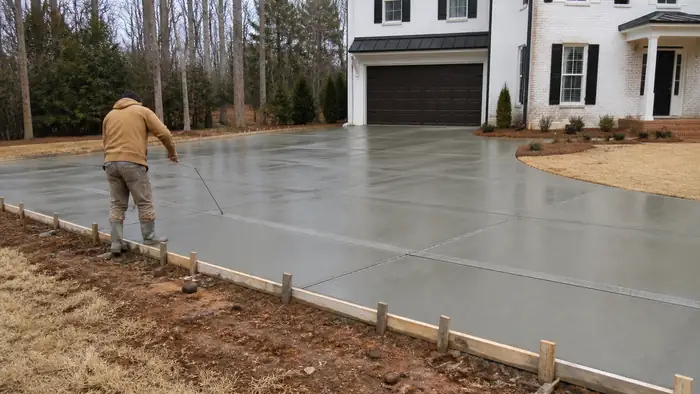
Freshly finished concrete slab curing under a clean broom texture at a buff-brick ranch home in Lawrenceville, GA, after a rain shower.

Step 5: Finishing, Curing and Final Walkthrough

Finishing sets the look. Stain goes down after the slab cures, then the surface is neutralized, rinsed clean and sealed. Curing is active work, not waiting: we hold moisture in the slab so it gains strength slowly and evenly. Sidewalks take foot traffic well before a concrete driveway can carry a vehicle, and we tell you when. At the walkthrough we go over joints, edges, color variation and how to clean and reseal the surface later.

What Decides the Price

Two stained concrete jobs covering the same square footage can land far apart on price, and the reasons are usually visible from the driveway. Most of it comes down to what we deal with before any color goes down. Here is what moves the number, and which way it moves.

What changes the priceWhich wayWhy
Sound existing slab, no spalling or moving cracksCosts lessWe clean, prep and stain instead of tearing out and repouring flatwork.
Old concrete, brick edging or a deck footing to remove firstCosts moreDemolition, loading and haul off are their own day of work.
Concrete truck can reach within a chute length of the pourCosts lessNo wheelbarrow relays, no pump, fewer hands on site.
Rebar grid rather than wire meshCosts moreDriveways and anything carrying vehicle weight need the heavier steel.
Slab poured thicker than four inchesCosts moreMore yards of concrete and more base prep under it.
Water standing near the house or a yard that falls toward the slabCosts moreGrading, a thicker stone base or a drain has to go in first.
Irrigation lines, roots or a gas line in the pour areaCosts moreHand digging and rerouting around them takes time.
Curves, steps and multiple stain colorsCosts moreForming and detail work are slower than a straight rectangle.

Compare bids on the specifics: slab thickness, rebar or mesh, whether removal and haul off is included, sealer type and coat count, and where the control joints land. Houses here run to a median build year of 1987, so original slabs often need more prep than a quote suggests.

Questions About Stained Decorative Concrete

How long does stained concrete last outdoors in Georgia?

Stain itself is permanent. Acid stain reacts with the lime in the slab and becomes part of the concrete, so it does not peel or flake off the way a surface coating does. What wears is the sealer above it. Sun, foot traffic and rain dull a sealer over a few seasons, and a patio in full afternoon light goes first. Recoating brings the color back.

Can you stain an existing driveway in Lawrenceville?

Yes, if the slab is sound. We look for structural cracks, spalling, and whether the surface has been sealed or has years of oil soaked into it. Concrete driveways collect tire marks and transmission drips, and those spots take stain differently. A driveway poured in the late eighties can stain beautifully. One that is crumbling at the edges needs concrete work first.

What colors work best for a Lawrenceville home?

Browns, tans and warm grays do the most work on the widest range of houses. Stain is translucent, so the existing slab color shows through and shifts whatever you put on it. We pull color off something already on the property: brick, roof shingles, a stone veneer. Terra cotta and deep reds read well on patios. Very dark colors hold heat underfoot in summer.

Will stain look the same on every part of my Lawrenceville slab?

No, and that is the nature of the material. Acid stain reacts with cement content, which varies across a pour, so you get movement and mottling rather than a flat sheet of color. Trowel marks, old patches, and where a finisher worked longer all show. Some homeowners want that variegation and some do not, so we sample on your actual concrete first.

Can you stain Lawrenceville concrete that has already been sealed?

Not until the sealer comes off. Acid stain has to reach bare concrete to react, and a sealed surface blocks it completely. We grind or strip the slab, then test with water: if it beads, more sealer remains. Stripping adds a day and sometimes reveals staining or damage hidden underneath. On a heavily coated slab, a dye or an overlay may make more sense.

Does acid stain or dye last better in Georgia?

Acid stain holds up better outdoors. The reaction bonds it into the slab, and the mineral pigments do not fade under direct sun. Dyes offer colors acid cannot reach, blues, greens, sharp blacks, but many are prone to UV fading and belong indoors or under a covered porch. On an open patio or driveway we recommend acid stain, sealed well.

Get a Free Estimate

Get a FREE Quote

We warranty all of our work because we believe in what we do.

Tap to call +1 470-229-2076