+1 470-229-2076
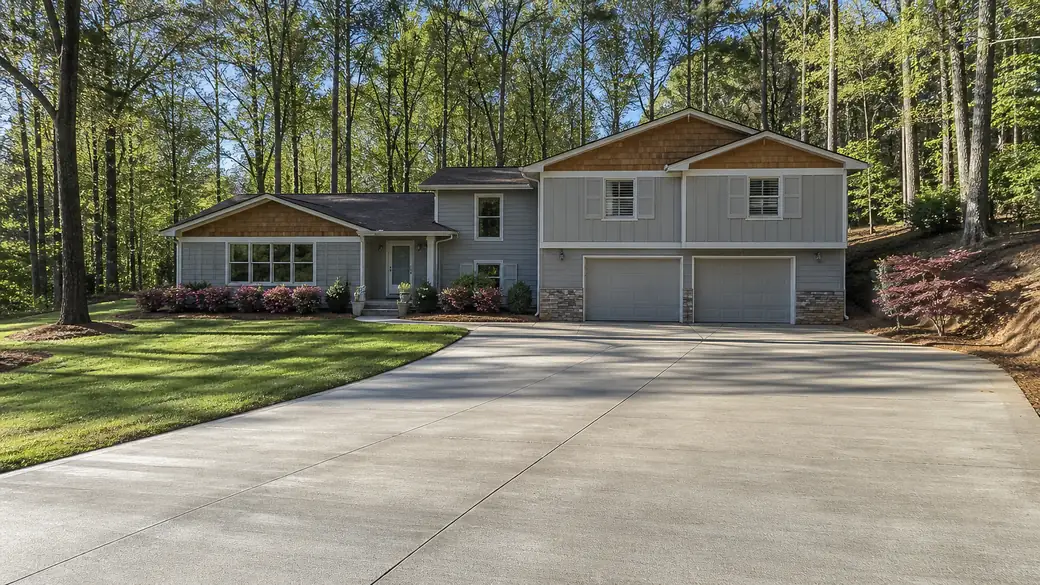
concrete slab repair completed by a local contractor at a grey split-level home in Lawrenceville, GA, under low winter sun.

Concrete Slab Repair in Lawrenceville, GA

A cracked or sunken slab usually tells you something about the ground underneath it. The median home in Lawrenceville was built in 1987, so many of the garage floors, patios and driveways here have been carrying cars, furniture and foot traffic for decades. Gwinnett County is hilly, too, and about 55 inches of rain falls on it each year. That water goes somewhere. When it settles under a slab or washes out along one edge, the concrete above it moves.

We repair slabs on residential and commercial property throughout Lawrenceville. Before we recommend anything, we look at the whole surface, check how the site is graded, and test the soil, because Pacolet soil dominates the county but changes from one lot to the next. Some slabs need a crack repaired and a joint sealed. Others need a section cut out and poured back with new reinforcement. We tell you which one yours is, and why. Call for a free estimate.

Call +1 470-229-2076

Get a FREE Quote

What Concrete Slab Repair Involves

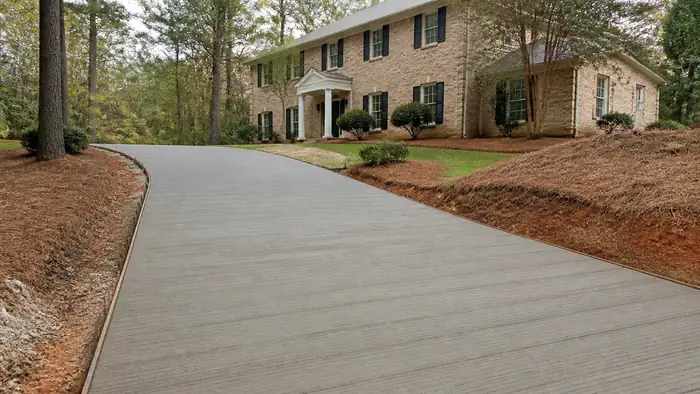
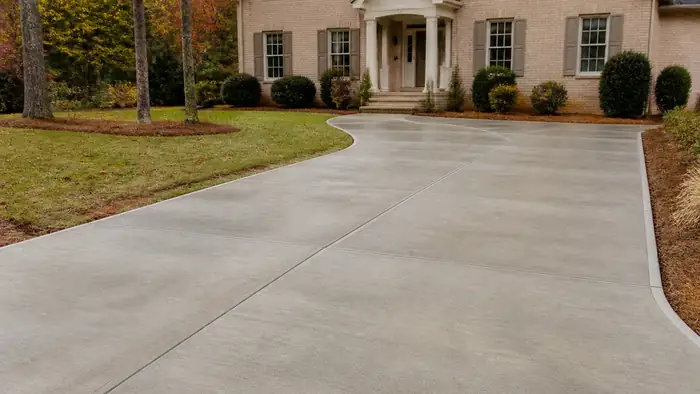
concrete slab installation completed by a local contractor at a tan-brick colonial in Lawrenceville, GA, under bright midday cloud.

Concrete Slab Installation Cost

What moves the number is mostly what sits under the slab and around it. A flat, open yard with firm subgrade needs little beyond forms, a compacted stone base, wire mesh or rebar and a broom finish. A sloped lot means cut and fill, and the ground around Lawrenceville is hilly. Access counts too: if the truck can't reach the pour, we pump it or wheel it in. Every estimate starts with a site walk and a soil test.


concrete driveway installation completed by a local contractor at a brick-and-siding two-story home in Lawrenceville, GA, in early morning light.

Concrete Driveway Installation

A driveway carries more weight than any other slab on a residential property, so we build it that way. We strip the topsoil, compact a stone base, set rebar on chairs so it sits mid-slab instead of in the dirt, and thicken the edges where tires roll off. Control joints get cut early, so cracks land where we put them. With about 55 inches of rain a year, every driveway is pitched to shed water away from the garage.

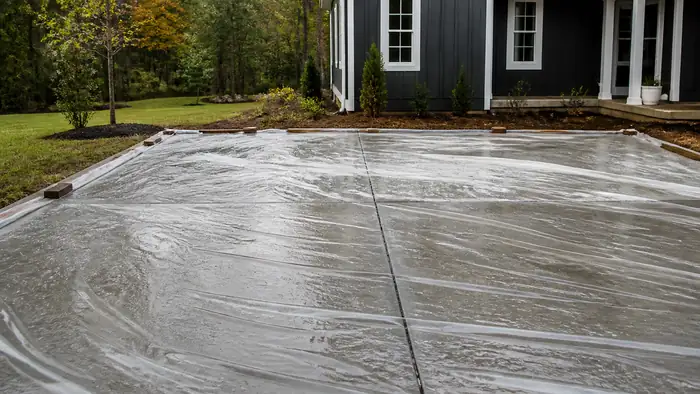
concrete flooring installation completed by a local contractor at a charcoal farmhouse-modern home in Lawrenceville, GA, after a rain shower.

Concrete Flooring Installation

Interior floors are a different job from outdoor slabs. Garages, basements, shops and additions get a vapor barrier under the pour, so ground moisture doesn't come up through the surface and lift flooring or adhesive. We power-trowel for a hard, smooth finish, then leave it bare, seal it, or prep it for a coating. Joint layout is planned around walls and columns. For commercial floors, reinforcement is matched to what rolls across it, from carts to forklifts.

Concrete Slab Repair

Most slab damage we see starts in the base, not the concrete. Water washes out the fill, a corner loses support and drops, or roots push a section up. With the median home here built in 1987, plenty of patios and driveways have had decades for that to happen. Hairline cracks can be routed and sealed, and a sunken section can often be lifted. When the steel is rusting or the slab has broken through, we cut it out, rebuild the base and pour new.

Our Warranty and Guarantee

A promise on paper is only worth the slab underneath it, so that is where we put the work. Every site is tested and graded on its own before we pour, because Gwinnett County soil and slope change from one block to the next. We set reinforcement to suit the load the slab will carry. Then we cure it properly, rather than rushing the surface to finish a day early.

Concrete cracks. What we control is where it cracks and how far it goes, with control joints cut where the slab wants to move. About 55 inches of rain a year falls here, so we slope every surface to shed water away from the house. When the job is done, we walk it with you and point out what to watch for as it ages. Most of it is simple.

Our Concrete Process, Step by Step

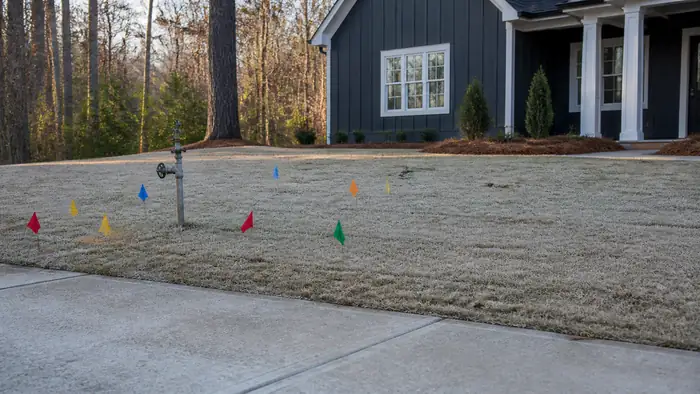
Utility flags mark buried lines before digging starts. at a charcoal farmhouse-modern home in Lawrenceville, GA, in early morning light.

Step 1: Site Assessment

We start by walking the slab and the ground around it. Cracks tell us a lot: a hairline shrinkage crack is cosmetic, while a crack with one side lower than the other points to settlement or a washed-out base. We check where downspouts empty, how the yard drains, and whether tree roots are lifting a section. Pacolet soil is the common type in Gwinnett County, but it changes from lot to lot, so we test the ground on your property before deciding anything.

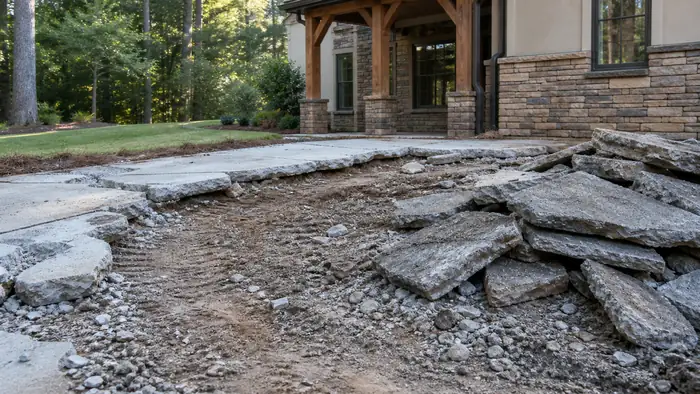
An old patio slab is broken up and hauled away. at a stacked-stone and stucco home in Lawrenceville, GA, under low winter sun.

Step 2: Site Preparation

Next comes the ground under the concrete. We saw-cut damaged sections along clean lines, break them out, and haul the debris away. Soft or muddy subgrade gets dug out until we reach firm soil, then we bring in crushed stone and compact it in lifts with a plate compactor. Gwinnett is hilly, with 181 feet of relief within a few miles, so we grade for slope as we go. Water should run off the new slab, never toward the house.

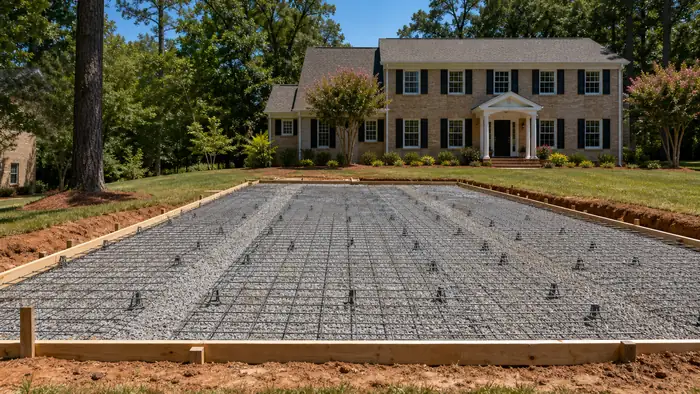
Wire mesh is unrolled across a driveway base before pouring. at a tan-brick colonial in Lawrenceville, GA, in clear late-morning sun.

Step 3: Forming & Reinforcement

Forms are straight lumber or steel, staked tight and set to string lines so the finished surface drains where we planned. Where new concrete meets old, we drill and epoxy steel dowels into the existing slab so the two sections move together instead of shearing apart. Rebar sits on chairs so it ends up in the middle of the slab. Welded wire mesh left lying on the gravel does nothing, and it is a common reason slabs crack early.

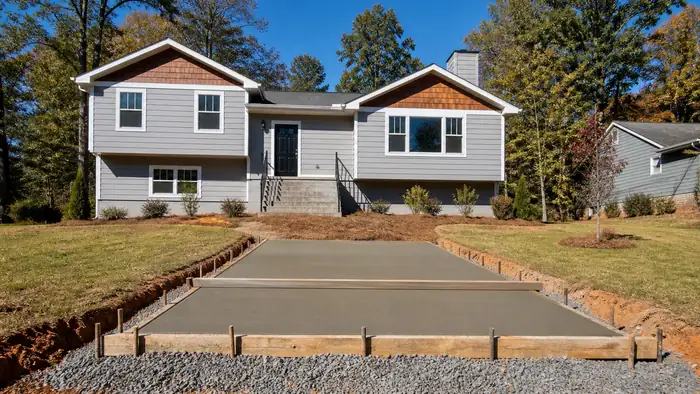
A screed board levels fresh concrete on a small patio. at a grey split-level home in Lawrenceville, GA, in clear late-morning sun.

Step 4: Pouring

Pour day starts with checking the ticket on the truck: the mix, the strength, and the time it was batched. Concrete that sits too long in the drum starts setting before it reaches the forms. We place it close to where it belongs rather than dragging it across the slab, and we vibrate along the forms and around the dowels to work out air pockets. Adding water at the chute makes concrete easier to spread and weaker once it cures, so we don't.

A broom drags across a driveway creating a slip-resistant texture. at a tan-brick colonial in Lawrenceville, GA, under bright midday cloud.

Step 5: Finishing

A screed levels the concrete to the forms, and a bull float pushes the stone down and draws cream to the top. Then we wait. Troweling while bleed water still sits on the surface is the usual cause of flaking a few years later. Control joints are cut at spacing matched to the slab's thickness, so cracks form in the joints instead of across the middle. Exterior surfaces get a broom finish for grip; stamped patterns are pressed in now.

Plastic sheeting covers a curing driveway slab. at a charcoal farmhouse-modern home in Lawrenceville, GA, after a rain shower.

Step 6: Curing

Curing is where many repairs fail, because it happens after the crew packs up. Concrete keeps gaining strength only while it stays damp, so we cover it with curing compound or wet blankets rather than letting it bake dry. With about 55 inches of rain a year here, a hard storm on fresh concrete can pit the surface, so we watch the forecast and cover the slab when rain is coming. Keep cars off until we tell you it's ready.

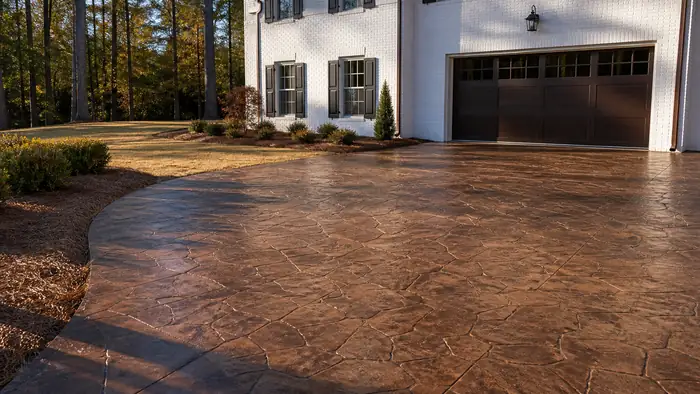
A finished stamped surface shows a glossy sealed sheen. at a painted-white-brick two-story home in Lawrenceville, GA, in late afternoon light.

Step 7: Sealing

Sealer goes on after the concrete has cured, never before. On a driveway, a penetrating sealer slows how fast water, oil and road grime soak into the surface. Stamped and colored patios get an acrylic sealer that deepens the color and needs recoating every few years as it wears. We seal the joints as well, because open joints let water reach the base, and a washed-out base is how most of the problems in Step 1 begin.

Choosing the Right Concrete System

The right fix depends on why the slab failed, not on how it looks from the street. Hairline shrinkage cracks in an otherwise sound slab get routed out and sealed. A surface that has scaled or spalled but still sits level can take a bonded resurfacing overlay, and that is also the point to switch to a stamped or decorative finish if you want the look to change. Slabs that have dropped at a corner are lifted and the void beneath them filled. Broken or heaving sections come out and get poured again with new reinforcement.

We choose by testing what sits under the concrete, not by judging the crack. The median home in Lawrenceville was built in 1987, so plenty of slabs here have taken decades of rain, about 55 inches a year. Pacolet soil, the most common type in Gwinnett County, drains well, but on sloped lots runoff still works under slab edges and carries base material away. Lifting a slab over washed-out fill only puts off the next crack. Sound base, we repair. Failed base, we replace.

How Much Does Concrete Slab Repair Cost in Lawrenceville?

We can't give a figure until we have seen the slab, because the price depends far more on what surrounds and supports it than on its footprint. Most of what moves the number is something you can check yourself: walk out to the slab and look at these.

What changes the priceWhich wayWhy
Truck access to the slabcosts less when the chute reachesA driveway the truck can back onto pours in one pass. Behind a fence or past the house, we pump or wheel it in.
Slope of the yardcosts more on a gradeGwinnett County is hilly, and a slab on a slope needs more forming and base to sit level.
Old concrete that has to come outcosts moreBreaking out and hauling off the damaged section is labor and truck time before any new work starts.
Rebar or wire mesh in the old slabcosts moreReinforcement slows demolition and has to be cut back or tied into the new pour.
Thickness the load calls forcosts more for vehiclesA patio for foot traffic needs less depth and steel than a driveway carrying a truck.
Where the water goescosts more if it poolsWith about 55 inches of rain a year, a slab sitting in runoff fails again unless we regrade or add a drain.
What is under the slabcosts more if the base washed outPacolet soil drains well across much of the county, but it varies. Voids get filled before new concrete goes down.
Stamped or decorative finish to matchcosts moreMatching an existing pattern and color takes extra materials and hand work.

When you compare bids, read the scope, not the total. Check that each one names the same thickness, the same reinforcement, the base preparation, haul-off of the old concrete, and any drainage work. A lower number often means one of those lines is missing.

Get a Free Estimate

Get a FREE Quote

Tap to call +1 470-229-2076