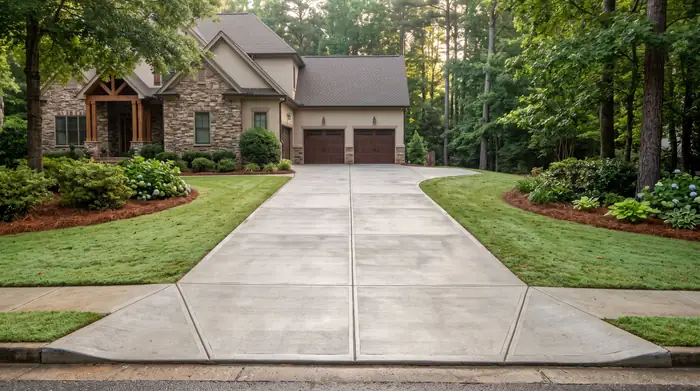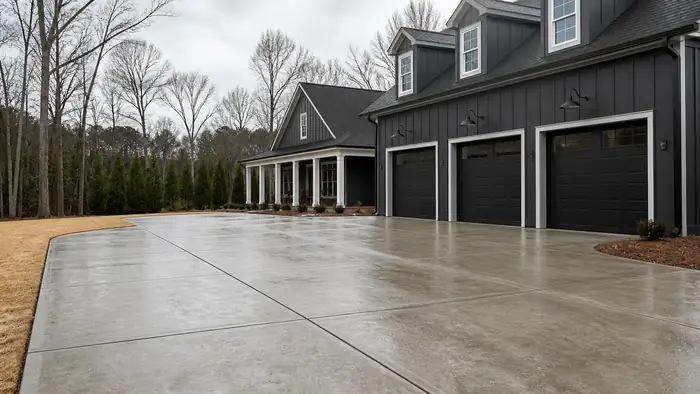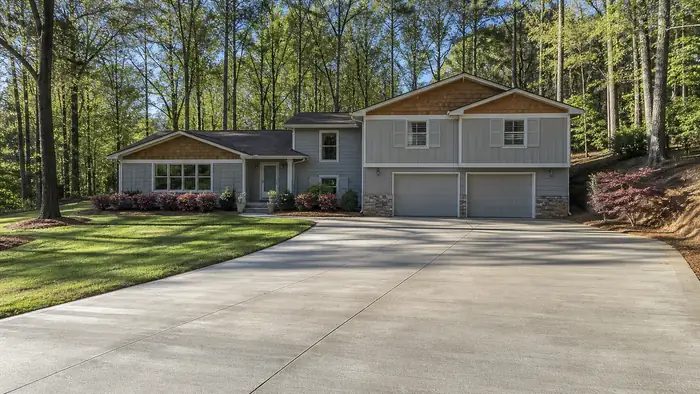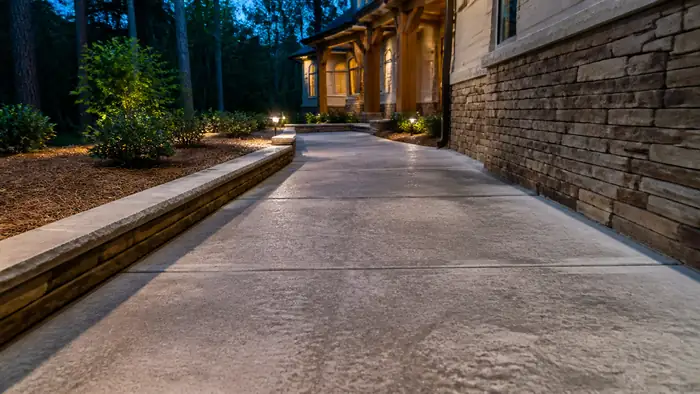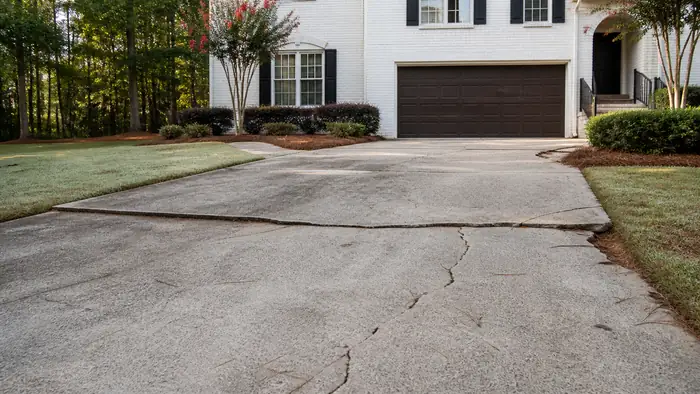
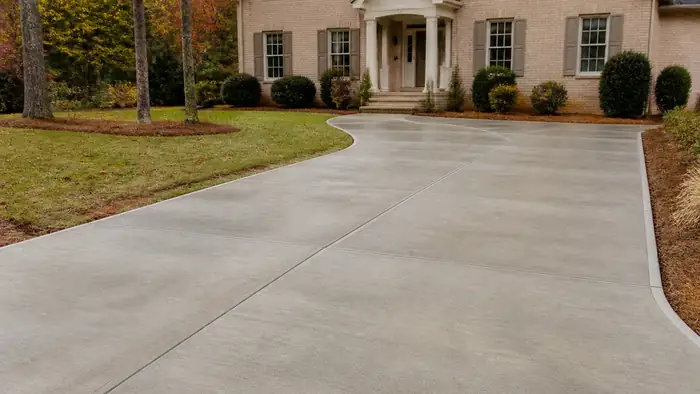
Every job starts with a walk of the ground you want poured. We measure, check how water leaves the site, and look hard at what is already there: an old slab, a settled walk, roots lifting one corner. Elevations matter more than most people expect. A concrete driveway that drains toward a garage door is a problem no amount of finish work fixes afterward. We take notes and photographs, and we tell you what we see, including the parts you may not want to hear.
Scope comes next: square footage, slab thickness, the pattern and color if you are stamping, and how much of the old surface has to come out. An estimate that buries those choices inside one lump figure tells you nothing useful about the job. Ours separates them, so you can see what drives the work and what you could reasonably drop. If a section can wait a season, we say so plainly. Estimates are free, and calling for one obligates you to nothing.
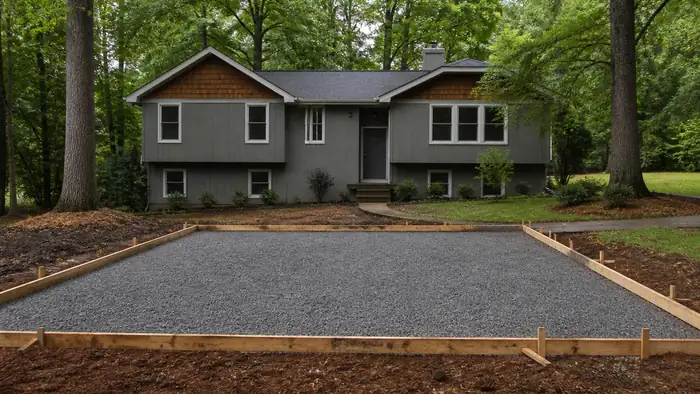
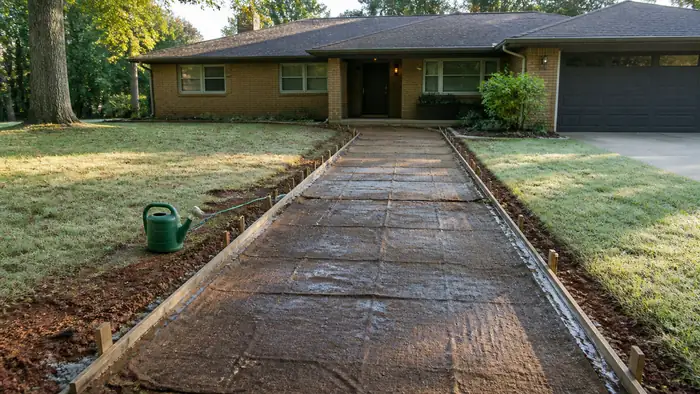
Prep decides the job, and it takes longer than the pour does. We break out the old concrete, dig to grade, and compact the base in lifts rather than one thick pass. Soft spots get dug deeper and filled with stone. Forms go in straight, set to the slope we planned on paper rather than eyeballed on the day. Sidewalks get the same base work as driveways, because a narrow pour sitting on loose fill fails the same way a wide one does, just sooner.
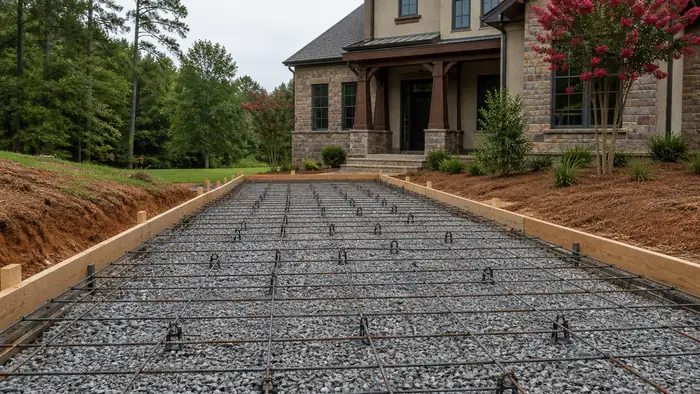
Steel goes down before anything wet arrives on site. Rebar on chairs where vehicles will run, wire mesh where the load is lighter, tied at the laps and held up off the base. Mesh lying flat on the dirt does nothing except rust. Concrete cracks. That is not a defect, it is the material behaving normally, and steel plus properly cut joints decides whether those cracks stay hairline and hidden or open into something you notice every single day.
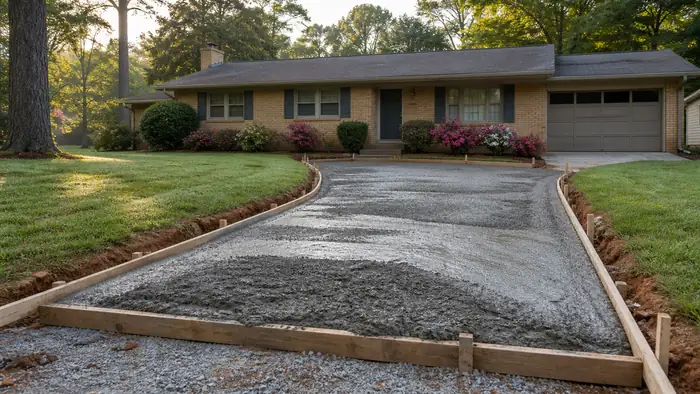
Pour day runs on weather and the truck schedule, and a concrete installation is a sequence where every step limits the next one. We start early in hot months, because a slab that flashes off before it is finished cannot be rescued by working it harder. Crew size matches the yardage. We plan the route for the trucks before the first load arrives, since cold joints show up wherever a placement stalls and the concrete ahead of it sets.
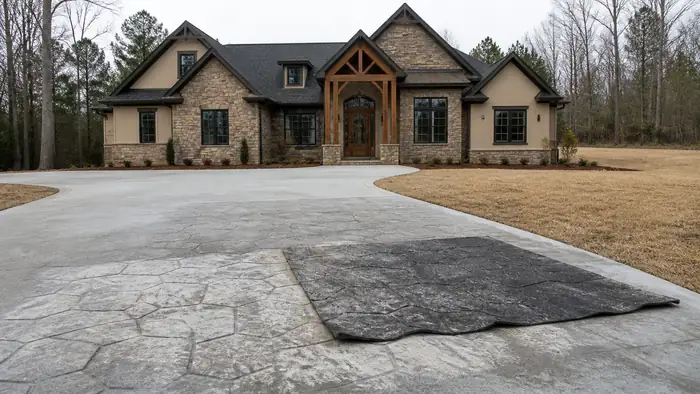
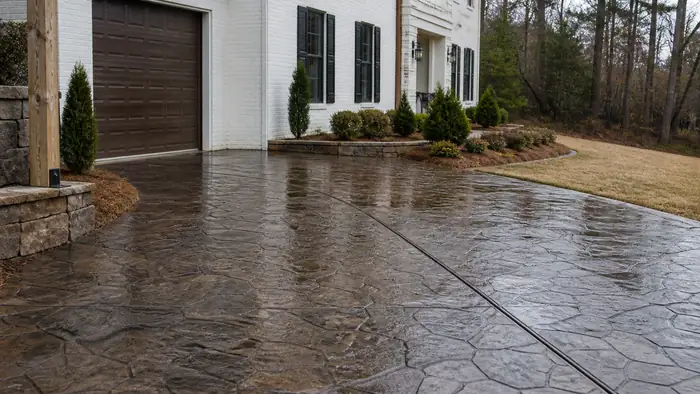
Stamping has a window, and the window is narrow. The slab has to release enough water to take a pattern without tearing, which can be a matter of minutes or most of an afternoon depending on sun, humidity and mix design. We test it by hand, not by the clock. Release goes down, mats run in sequence off a chalk line, and the crew moves in one direction so the pattern does not fight itself at the seams.
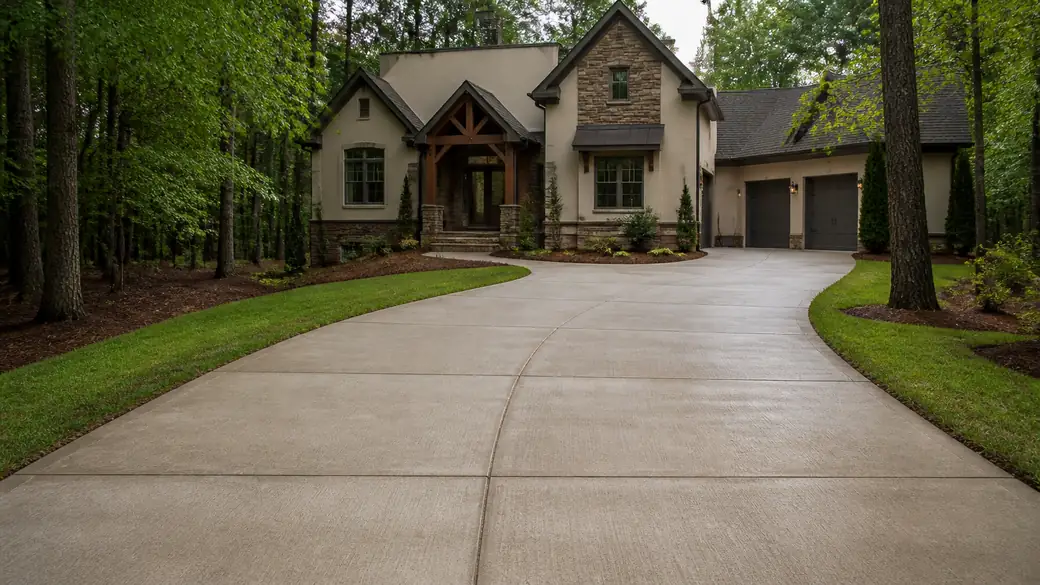
Curing is not waiting around; it is a controlled part of the work. We cure by the season and the mix, cut control joints on time rather than whenever we happen to get back, and keep traffic off until the slab has real strength instead of a dry-looking surface. Foot traffic comes back before vehicles do. Sealer on stamped work goes on once the surface is clean and dry, and it wants renewing every few years after that.
Last is the part nobody photographs. Forms come out, spoil and broken concrete get hauled off, and we wash down everything around the pour so nothing sets where it should not. The median home around here was built in 1987, and a good deal of that original flatwork is riding on a base that has moved since, which is why we clean up to the edge of what we touched. We walk the finished work with you before the trucks leave. Say something then if anything looks off.