+1 470-229-2076
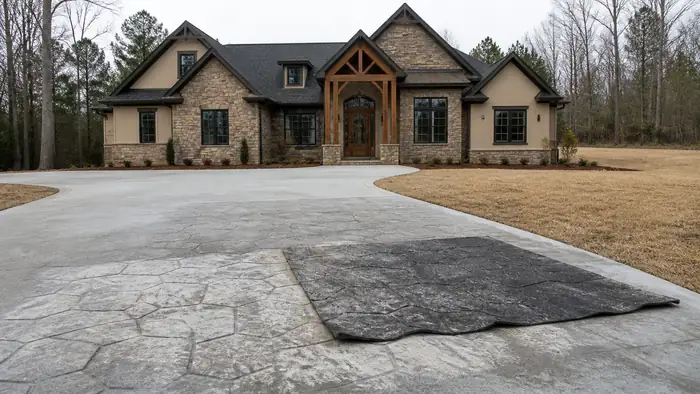
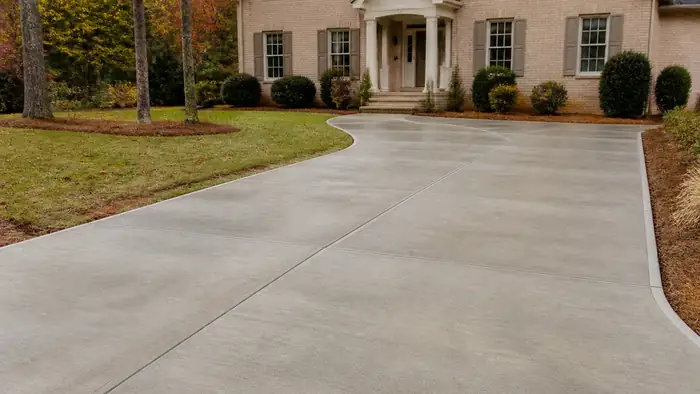
general concrete construction completed by a local contractor at a tan-brick colonial in Lawrenceville, GA, under bright midday cloud.

General Concrete Construction in Lawrenceville, GA

We pour driveways, patios, walkways, slabs and structural footings for residential and commercial property across Lawrenceville. A lot of the concrete here went in around the same time as the houses, and with a median build year of 1987, many of those surfaces are now old enough to show it: cracked driveway panels, sunken patio corners, walks that have lifted at the joints. Some of that can be repaired. Some of it needs to come out. We look at what is there, tell you which it is, and quote the work that actually fixes it, whether that means a plain broom finish or a stamped, decorative surface.

Gwinnett County is hilly, with about 181 feet of local relief within a few miles, and the ground changes from one lot to the next. Pacolet soil is the common type here and it drains well, but it is not the same everywhere, so we grade and test every site on its own before any forms go up. Around 55 inches of rain falls in a typical year. That makes slope, drainage and base preparation matter as much as the concrete itself. We set the reinforcement, the joints and the pitch for the conditions on your property, then pour. Call for a free estimate.

Call +1 470-229-2076

Get a FREE Quote

What General Concrete Construction Involves

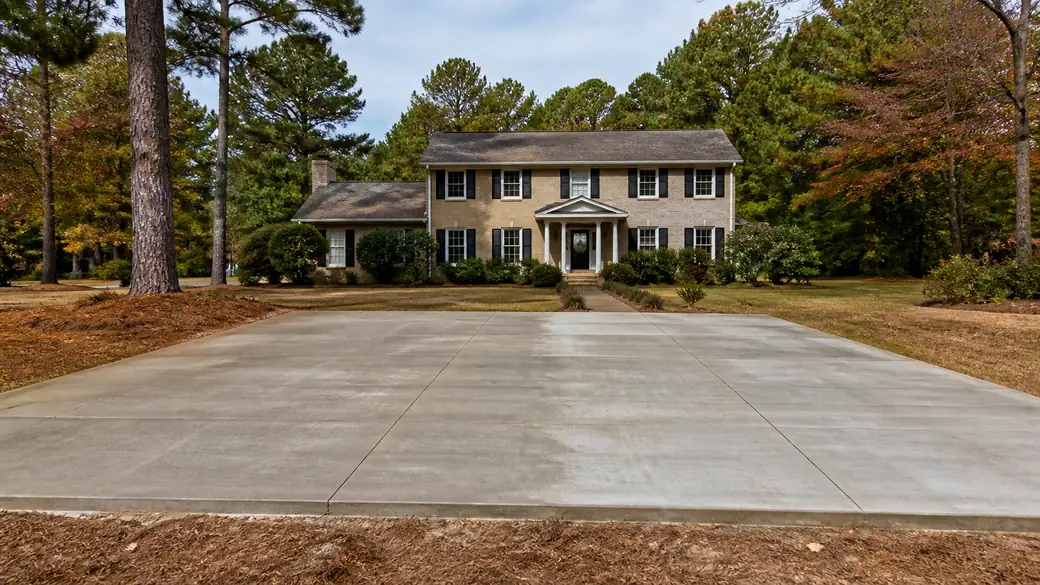
concrete slab installation completed by a local contractor at a tan-brick colonial in Lawrenceville, GA, under bright midday cloud.

Concrete Slab Installation Cost

What moves the number on a slab is mostly what sits under it and around it. Gwinnett County is hilly, so a sloped yard can mean cutting, filling and compacting before any forms go up. Thickness, reinforcement (rebar on chairs or welded wire mesh), how close the truck can get, and whether we need a pump all change the figure. A plain broom finish costs less than stamped or colored work. We measure the site, then write the estimate.


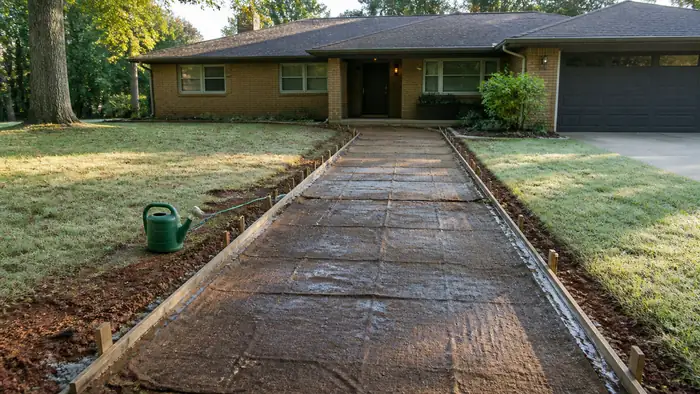
concrete driveway installation completed by a local contractor at a brick-and-siding two-story home in Lawrenceville, GA, in early morning light.

Concrete Driveway Installation

A driveway fails from the bottom up. We dig out soft material, compact a gravel base, and slope the surface so water runs away from the garage instead of pooling against it. With about 55 inches of rain a year, drainage matters as much as the mix. Driveways get rebar or mesh, plus a thickened edge where tires roll off. Control joints go in on a planned grid, so cracks land where we put them. Finish is broom, exposed aggregate or stamped.

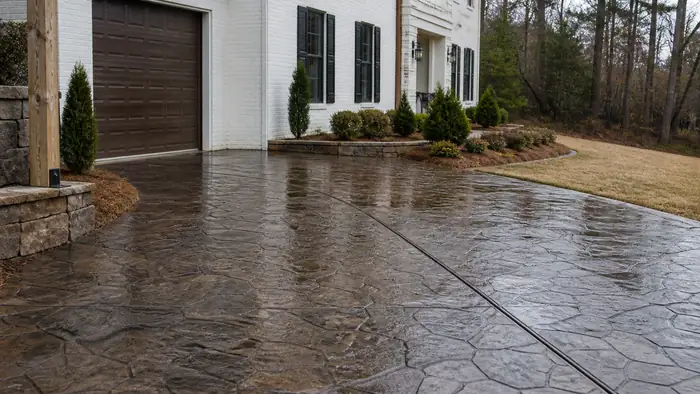
concrete flooring installation completed by a local contractor at a charcoal farmhouse-modern home in Lawrenceville, GA, after a rain shower.

Concrete Flooring Installation

Garage, basement and shop floors need a flatter, tighter surface than anything poured outdoors. Under the slab goes a vapor barrier, so ground moisture does not wick up into finished flooring later. We power trowel for a smooth, dense top and saw-cut joints early, before shrinkage cracks start on their own. Garage floors get a slight pitch toward the door. Polished, stained or sealed floors get planned before the pour, because the mix and trowel work decide the final look.

concrete slab repair completed by a local contractor at a grey split-level home in Lawrenceville, GA, under low winter sun.

Concrete Slab Repair

Not every crack means the slab is finished. Hairline shrinkage cracks are cosmetic, and we rout and seal them to keep water out. A slab that has sunk, heaved or split with one side higher than the other has a base problem, usually water washing out fill or roots pushing up. The median home here was built in 1987, so plenty of original driveways and patios carry decades of wear. We find the cause, then lift, patch, or cut out and replace.

Our Concrete Process, Step by Step

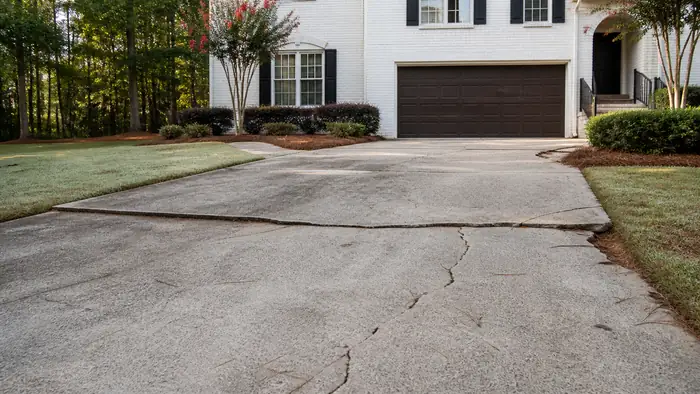
A worker examines an old driveway before replacement. at a painted-white-brick two-story home in Lawrenceville, GA, in early morning light.

Step 1: Site Assessment

Before anything is dug, we walk the property and watch where water goes. The ground around Lawrenceville is hilly, and a driveway running downhill toward a garage needs a different plan than one on flat ground. Pacolet soil is common in the area, but it varies, so we test every site on its own. The median house here was built in 1987, which means we are often judging an original slab: patch it, overlay it, or break it out. We handle the permit.

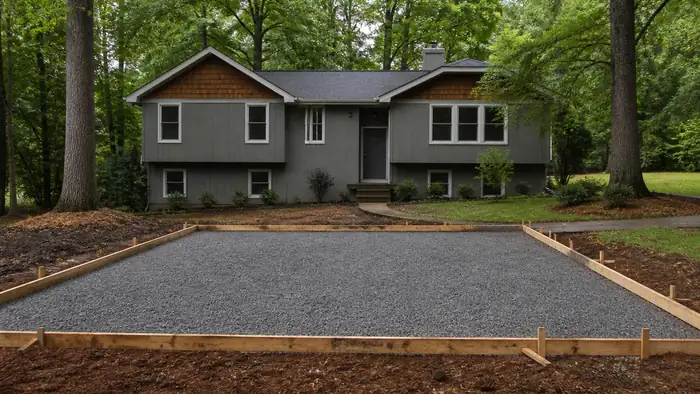
Crushed stone base is raked level inside driveway forms. at a grey split-level home in Lawrenceville, GA, after a rain shower.

Step 2: Site Preparation

Digging out is where most failed slabs were lost years before they cracked. We cut down to firm subgrade, pull out roots, organic fill and soft spots, and replace them with compacted material instead of asking the slab to bridge them. Then comes a crushed stone base, compacted in lifts and checked. On sloped lots we set grade so water sheds away from the house and off the edges. Around 55 inches of rain a year will find any low spot we leave behind.

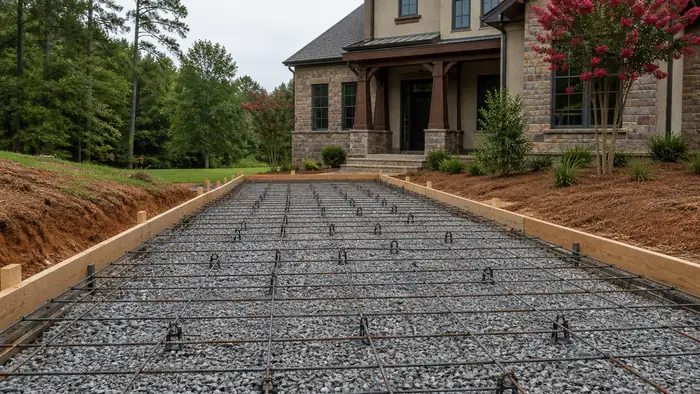
A worker ties rebar into a grid before a residential pour. at a stacked-stone and stucco home in Lawrenceville, GA, under an overcast sky.

Step 3: Forming & Reinforcement

Forms set the shape, the height and the fall of the finished surface, so we string and level them with care. For driveways we thicken the edges and the areas where vehicles turn. Reinforcement goes in next: steel rebar on a grid for structural work and driveways, welded wire or fiber for lighter patios and walks. Steel sits up on chairs so it ends up inside the slab, not pressed flat against the dirt where it does nothing.

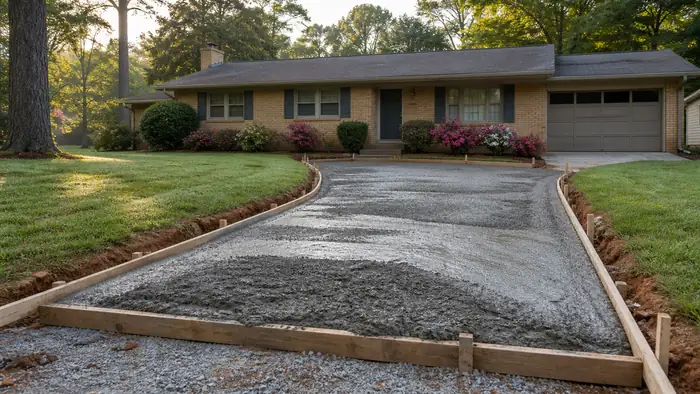
A ready-mix truck discharges concrete into a driveway form. at a buff-brick ranch home in Lawrenceville, GA, in early morning light.

Step 4: Pouring

Pour day depends on trucks, weather and crew lining up. We order a mix suited to the job, check it at the chute, and turn down water added just to make it flow easier, since extra water means a weaker, dustier surface. Concrete is placed close to where it will sit rather than dragged, then vibrated or rodded around the steel and against the forms so no voids are left. If rain is moving in, we reschedule rather than pour into it.

Stamping mats are pressed into a patio surface to imprint a pattern. at a stacked-stone and stucco home in Lawrenceville, GA, under an overcast sky.

Step 5: Finishing

Finishing is about timing more than tools. We screed the concrete flat, bull float it, then wait for the bleed water to leave before touching the surface again; working it too early traps water and leads to flaking later. Driveways and walks get a broom finish for grip. Stamped and decorative work gets its color and pattern at this stage. Control joints are cut or tooled so that when the slab cracks, as all concrete does, it cracks along a line we chose.

Damp burlap covers a small slab section during curing. at a buff-brick ranch home in Lawrenceville, GA, in early morning light.

Step 6: Curing

A fresh slab keeps gaining strength for weeks, and it only does that if it holds onto its water. As soon as finishing is done, we cover it or spray on a curing compound. Concrete that dries out too fast on a warm, windy day will craze and dust, and no amount of work afterward fixes that surface. Foot traffic stays off at first, cars stay off longer, and you get both dates before we leave.

A roller applies sealer to a stamped patio surface. at a painted-white-brick two-story home in Lawrenceville, GA, after a rain shower.

Step 7: Sealing

Sealer is the last step and the one most often skipped. Once the slab has cured, we apply a penetrating sealer to plain broom-finished concrete, or an acrylic sealer to stamped and colored surfaces to bring the color up and protect it. Either one slows water, oil and road grime from soaking in. We leave the product name with you, because sealer wears with traffic and weather, and resealing is routine upkeep rather than a repair.

Choosing the Right Concrete System

The right system starts with what the slab has to carry. A patio under a grill and a table needs different reinforcement than a driveway that takes a loaded pickup every evening, and a commercial pad under equipment asks for more again. We match the thickness, the reinforcement (rebar, wire mesh or fiber in the mix) and the base to the load first. Then we pick the finish. A broom finish gives the best footing on a slope. Stamped and decorative surfaces suit patios and walkways well, but they need resealing over the years to hold their color, and we say so up front.

Site conditions settle the rest. Gwinnett County is hilly, with 181 feet of relief within a few miles, and it changes from block to block, so one lot can pitch toward the street while the next runs back toward the house. With about 55 inches of rain a year, water has to leave every surface we pour. That means slope and drainage get set before the forms go in. Pacolet soil is the dominant type here and it drains well, but it varies across the county. We test each site on its own. The median home in Lawrenceville was built in 1987, and an old driveway usually shows us what failed underneath it.

How Much Does General Concrete Construction Cost in Lawrenceville?

Two lots on the same street can need very different work for the same size driveway, so we don't quote a slab until we've seen the site. These are the things that actually move the number. You can check most of them yourself before anyone quotes the job.

What changes the priceWhich wayWhy
Old concrete or asphalt to tear outcosts moreBreaking out an old slab and hauling it away takes labor and truck trips. With the median home here built in 1987, many original driveways need full removal rather than a patch.
Whether a mixer can back up to the formscosts more if it can'tIf the truck can't reach the pour, we pump the concrete or wheel it in. Both add equipment and hours.
Slope across the work areacosts more on a gradeGwinnett County is hilly, though it changes block to block. A sloped lot means more grading and deeper forms on the low side, so we grade and test every site on its own.
Slab thickness and reinforcementcosts more as they increaseA driveway that carries a truck or RV needs a thicker slab and more steel than a walkway.
Where water goes nowcosts more if it pools or runs toward the houseWe see about 55 inches of rain a year. Fixing the pitch or adding a drain has to happen before the pour.
Roots, stumps and buried linescosts moreTree roots, old footings and irrigation lines come out or get worked around before the base goes down.
Stamped or colored finishcosts moreDecorative work takes extra crew time and materials compared with a broom finish.
Firm, well drained soilcosts lessPacolet soil, the county's most common type, drains well. It varies, so we test every site before setting the base.

Line competing bids up on the same terms: slab thickness, what reinforcement is included and how it's spaced, base depth, whether tear-out and haul-off are in the price, and who handles the permit. A lower number that leaves one of those out describes a different job.

Frequently Asked Questions About General Concrete Construction in Lawrenceville

Do you handle permits, inspections, and code compliance for general concrete work in Lawrenceville?

Yes. We handle the permit, schedule the inspections the job calls for, and build to the approved plan. That covers the paperwork most homeowners would rather not chase: drawings, setbacks and the forms that get checked before a pour. Some small residential projects need no permit at all, and we tell you which side of that line your job falls on before construction starts. Either way, we build as if an inspector were standing on the slab.

What factors affect the total cost of a general concrete project in Lawrenceville, and how do you prepare estimates?

Size and thickness come first, then the ground underneath. We look at how the site drains, how much grading it needs, how a truck reaches the pour, and whether an old slab has to be broken out and hauled off. With the median home here built in 1987, an original driveway or patio often has to come out first. Reinforcement, finish and any decorative or stamped work round it out. We measure on site and write the estimate from those numbers.

How much does it cost to install a 4-foot concrete retaining wall in Lawrenceville?

That depends on the wall more than the height. Length, footing depth, drainage behind the wall and the reinforcement it needs all move the number, and so does the slope it holds back. Gwinnett County is hilly, with about 181 feet of local relief within a few miles, and it changes from block to block. A 4-foot wall against a steep yard is a different structural job from one on gentle ground. We price it after grading and testing your site.

What are the warranty or guarantee terms for services provided by Lawrenceville Best Concrete?

Ask us directly, and get the answer on paper. We don't publish blanket terms here because concrete work isn't one product: a stamped patio, a driveway replacement and a commercial slab carry different risks. What we can describe is how we build to keep problems from starting. Tested soil. A compacted base. The right reinforcement, and control joints placed where the slab wants to crack. Any terms that apply to your job belong in your written estimate.

Are you fully licensed, insured, and bonded for commercial work in Southern Lawrenceville?

Verify it yourself rather than trusting a website, ours included. For commercial work, the documents to ask any contractor for are the license, a certificate of insurance and whatever bond the owner requires, and each one can be checked with whoever issued it. Commercial projects also bring their own paper: owner requirements, site rules, sometimes a general contractor's terms. We go over those with you before anyone sets a form, so the job starts with nothing left unsettled.

How does the climate in Lawrenceville affect patio longevity and what does your company do to mitigate these effects?

Water is the main thing. Lawrenceville averages about 55 inches of rain a year, so a patio has to shed water instead of holding it. We slope every patio away from the house, compact the base so low spots don't form, and cut control joints before shrinkage cracks pick their own places. Snow is light, around 2 inches a year. We still recommend sealing decorative and stamped surfaces, because standing rain is what wears a finish down over time.

Get a Free Estimate

Get a FREE Quote

Tap to call +1 470-229-2076