+1 470-229-2076
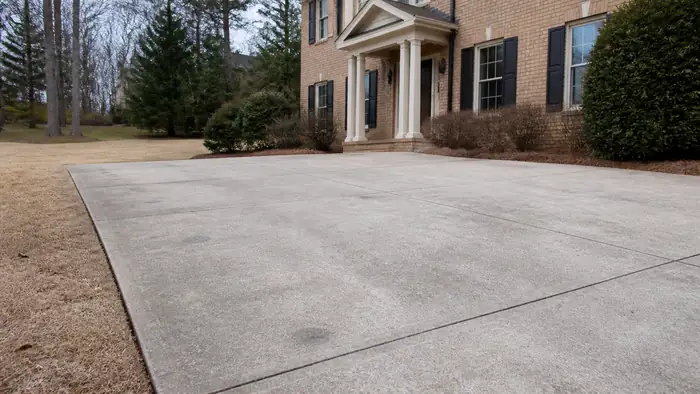
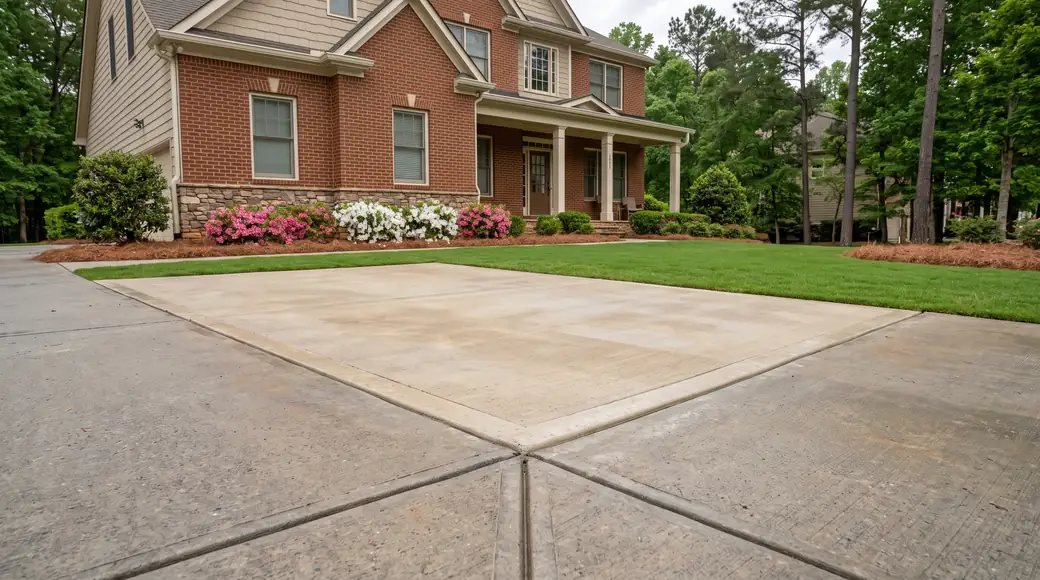
Replaced concrete driveway panel with clean saw-cut edges at a brick-and-siding two-story home in Lawrenceville, GA, under an overcast sky.

Repair, Leveling & Resurfacing in Lawrenceville, GA

We repair, level and resurface concrete in Lawrenceville, Georgia. That means a driveway that has settled at the apron, a sidewalk panel lifted high enough to catch a toe, a patio that holds water in one corner after a rain. Most of what we do is repair rather than new pour. Some slabs are worth saving and some are past it, and we will tell you which one you have before anything gets ground or poured. We work as a concrete contractor across the full range of flatwork, so resurfacing can finish as a plain broom texture or as stamped concrete laid over a slab that is sound underneath and only looks tired.

Most of the concrete we work on was poured with the house, and the median home in Lawrenceville dates to 1987. Nearly forty years of use shows up plainly enough: a cracked panel, a low corner that ponds, a driveway that no longer meets the garage slab flush. In a city of 30,954 where the median home is valued around $335,100, that adds up to a lot of aging flatwork, and a fair amount of it can be saved instead of torn out. We cover Lawrenceville and the towns around it, Suwanee included, on the same terms. Call for a free estimate and we will come look at what you have.

Call +1 470-229-2076

Licensed, Bonded, and Insured ยท A combined 15 years of experience

Get a FREE Quote

We warranty all of our work because we believe in what we do.

What Repair, Leveling & Resurfacing Involves

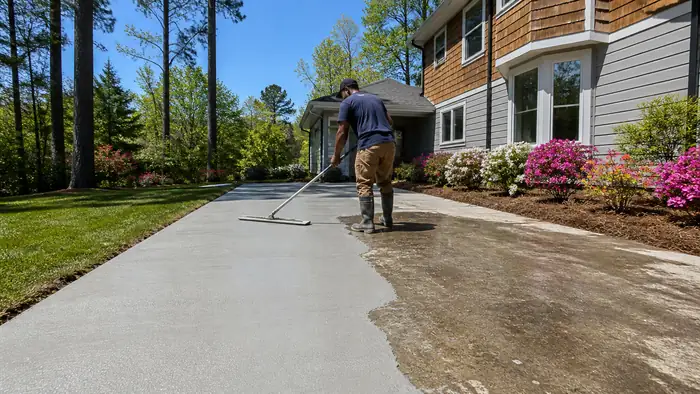
Thin concrete overlay being troweled onto an old worn slab at a grey split-level home in Lawrenceville, GA, in clear late-morning sun.

Concrete resurfacing

Resurfacing puts a new wearing surface on a slab that is structurally sound underneath. We grind and clean the old concrete, then bond a polymer modified overlay, usually a quarter inch to a half inch thick. That covers spalling, crazing and popouts. An overlay also takes a stamped concrete pattern or integral color if you want the look changed. One caution: an overlay follows whatever is below it, so a slab broken clean through gets replaced instead.
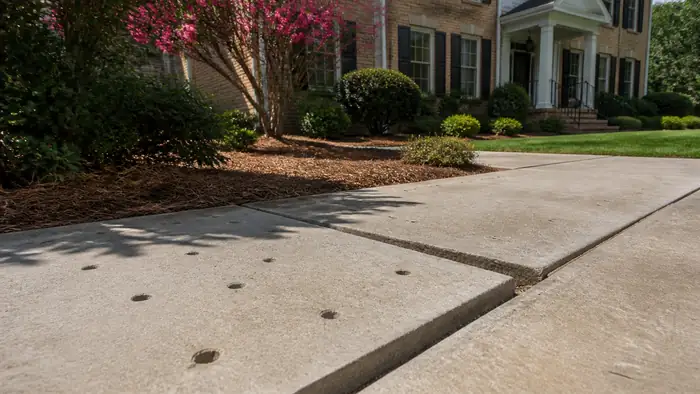
Sunken concrete slab with small drill holes for leveling at a tan-brick colonial in Lawrenceville, GA, in clear late-morning sun.

Concrete leveling

Slabs move at the joints. One panel drops half an inch, the next one holds, and you get a lip that catches a toe or a mower wheel. Leveling raises the low panel back to its neighbors rather than tearing it out, so the existing concrete sidewalk or driveway stays where it is. Work in the public right of way goes through the City of Lawrenceville for permitting, and we file that before anyone drills a hole.

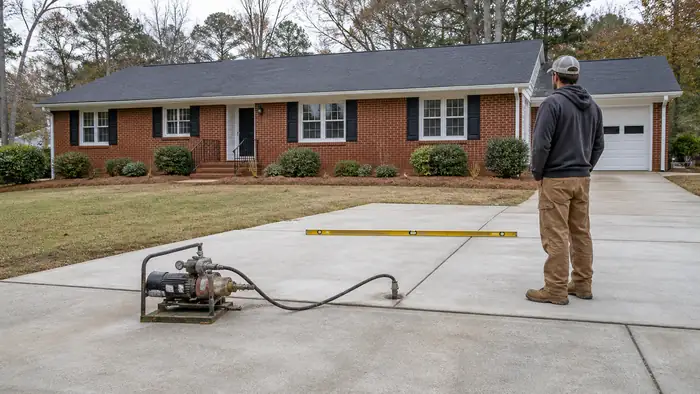
Slab-jacking pump lifting a sunken concrete slab back level at a red-brick ranch home in Lawrenceville, GA, under an overcast sky.

Concrete lifting

Lifting is done by injection. We drill five eighths inch ports through the slab, pump expanding polyurethane foam underneath, and bring the panel up in small increments until it meets the line we want. The foam is light, so it adds little load to soil that has already settled once, and it cures in minutes. Driveways, garage slabs, steps and commercial concrete all take it well.

Concrete slab leveled with small patched holes from mudjacking at a tan-brick colonial in Lawrenceville, GA, under bright midday cloud.

Mudjacking

Mudjacking is the older method and still the right one in places. A slurry of sand, cement and water gets pumped through larger holes, filling the voids under a slab and floating the concrete back to grade. The material is heavy and it fills generously, which suits wide voids and thick sections. Any concrete contractor should tell you which method fits your slab: we use slurry where the voids run broad, foam where access is tight.

Repair, Leveling & Resurfacing in metro Atlanta

Most of the houses we work on around Lawrenceville went in when the median build year was 1987, so the driveway out front is often the original pour. Concrete that old is usually still sound underneath. What it has lost is level, and surface, and the clean edge it had the day it was finished. We repair, level and resurface that flatwork instead of replacing it, because a slab with good aggregate and intact rebar or wire mesh is worth keeping. Age alone is not a reason to tear one out.

Late eighties driveways and sidewalks share a few habits. Sections settle at the joints and catch a toe. Surfaces scale and go rough where the top layer wore off. A patio spalls along one side while the rest of it is fine. Those are all repairable conditions, and we would rather bring a slab back than break out concrete that still has service left in it. Newer additions and re-pours sit next to the original work on plenty of these properties, and the two rarely wear at the same rate.

We cover Lawrenceville and the wider metro Atlanta area, including addresses out toward Suwanee, on the same terms wherever the job sits. Repair work covers plain gray flatwork, stamped concrete, colored slabs and exposed aggregate, and matching an existing finish is part of what repair means here. A resurfaced sidewalk should read as the same sidewalk, only flat and clean again. If you are not sure whether a driveway is worth saving, that is a fair question to ask before anyone talks you into a tear-out. Call for a free estimate.

How the Work Runs

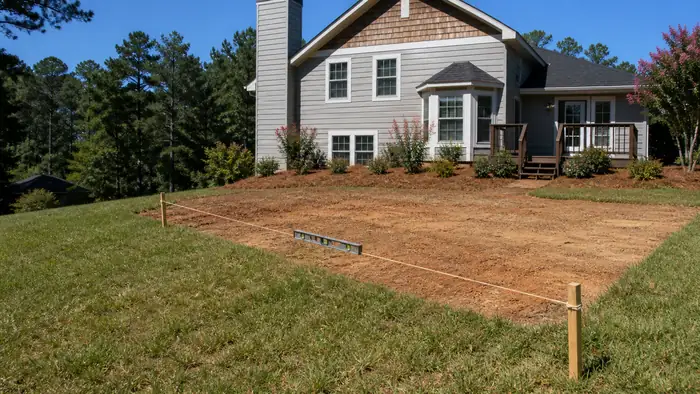
String lines and grade stakes laid out across a yard before a pour at a tan-brick colonial in Lawrenceville, GA, under bright midday cloud.

Step 1: Site Evaluation

We walk the slab with you and read what it is telling us. Hairline cracks, spalling, a driveway apron that has dropped an inch off the garage, edges crumbling where water sits. We check panel joints, look for voids under the corners, and probe the base where we can. Thickness matters, so we measure at an exposed edge or a saw cut. Then we talk about whether repair, leveling or a full tear out makes sense here.

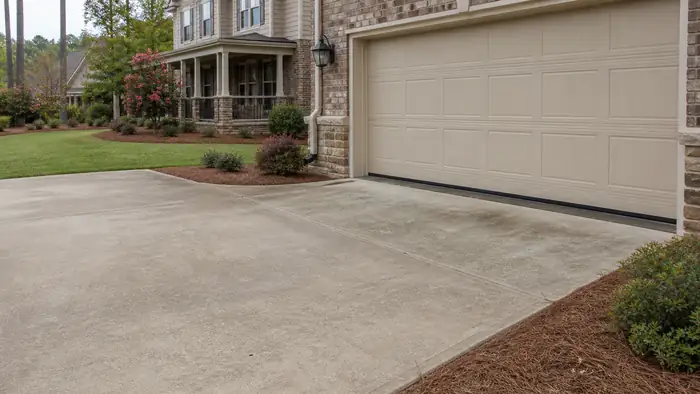
Concrete driveway and walk at a home, the kind of job an estimate covers at a red-brick ranch home in Lawrenceville, GA, under bright midday cloud.

Step 2: Written Estimate and Permits

You get the estimate in writing, with the scope spelled out: square footage, slab thickness, reinforcement, finish, joint layout and how we handle the tie-in to existing concrete. We note what we are demolishing and hauling away. If the work needs approval before we start, we handle that paperwork and schedule around it. Nothing gets ordered or torn out until you have read the estimate and agreed to it.

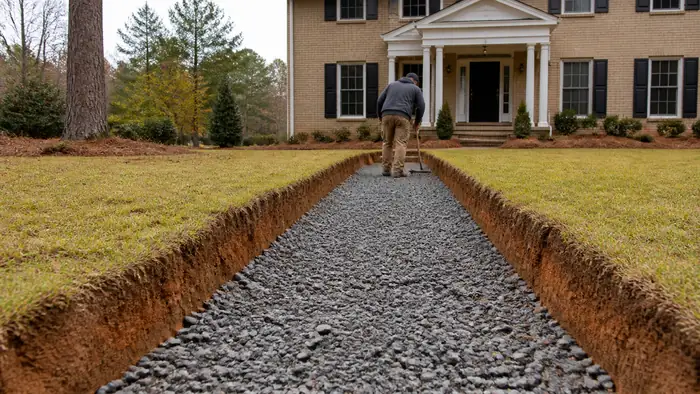
Broken-out concrete removed and the base rebuilt before a new pour at a charcoal farmhouse-modern home in Lawrenceville, GA, in early morning light.

Step 3: Demolition and Base Prep

Old concrete comes out in sections, gets loaded, and leaves the site. Under most failed driveways and sidewalks we find the real problem: washed out or never properly compacted base. We dig to a firm subgrade, cut in drainage falls, then bring in graded aggregate and compact it in lifts with a plate compactor or roller. A good four inches of packed stone under a slab does more for its life than anything poured on top.

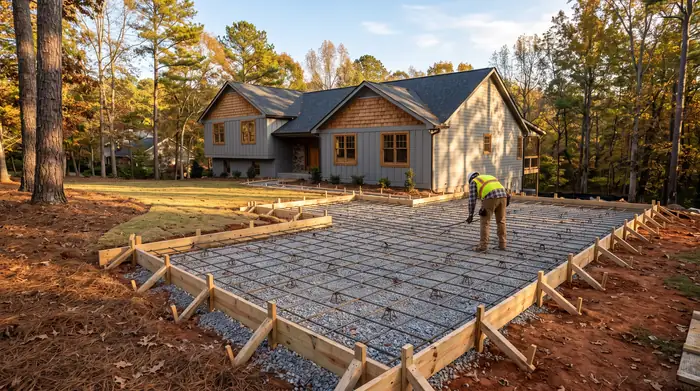
Wooden forms and rebar grid set and tied, ready for concrete at a grey split-level home in Lawrenceville, GA, in late afternoon light.

Step 4: Forming, Steel and the Pour

Forms go in straight and set to grade, with slope carried away from the house and across sidewalks toward the street. Rebar on chairs for driveways and anything carrying vehicles, wire mesh pulled up into the pour on lighter flatwork. Steel that lies on the ground does nothing. Concrete arrives ready mix, gets placed to a consistent depth, screeded, and worked with a bull float before it starts to set.

Freshly finished concrete slab curing under a clean broom texture at a buff-brick ranch home in Lawrenceville, GA, after a rain shower.

Step 5: Finishing, Curing and Final Walkthrough

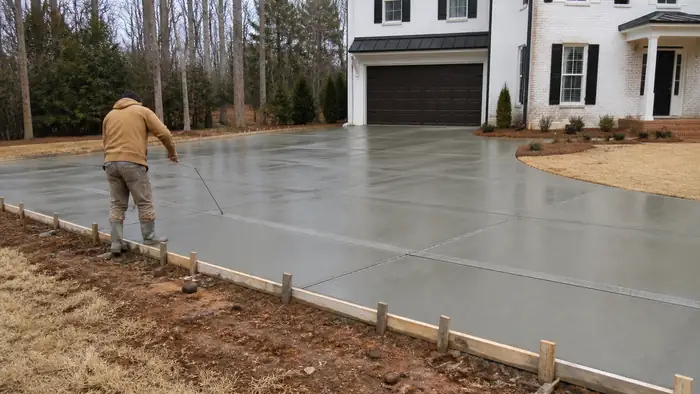
Finish depends on what you picked. Broom finish for traction on most concrete driveways, exposed aggregate washed back at the right moment, stamped and colored work run while the mix is still open. Control joints get cut early so the slab cracks where we chose. Then curing: keep it wet or sealed, stay off it on foot for a day or two, keep vehicles off longer. We walk the finished concrete installation with you and go over sealing and what to watch.

What Decides the Price

Price on repair, leveling and resurfacing work comes down to what we find at the slab, not what a tape measure says. Most of it you can look at yourself before anyone quotes.

What changes the priceWhich wayWhy
Old slab is sound underneath, only the surface is worncosts lessWe resurface over it instead of breaking it out
Concrete has to come out and get hauled offcosts moreDemolition, loading and disposal are their own day
Truck can back within a hose length of the pourcosts lessWheelbarrowing concrete across a yard takes bodies and time
Job calls for a thicker slab, rebar instead of wire meshcosts moreDriveways carrying vehicles need steel a patio does not
Water sits against the slab or runs toward the housecosts moreGrading and drainage get fixed first or the crack comes back
Stamped, colored or exposed aggregate finishcosts moreExtra material, extra labor, and a longer finishing window
Sprinkler lines, roots or utilities under the workcosts moreHand digging and repairs around them slow everything down

Between bids, compare thickness, reinforcement, and whether removal is in the number or added later. Ask each contractor what they intend to do about the water.

Questions About Repair, Leveling & Resurfacing

How soon can we walk on repaired concrete in Georgia weather?

That depends on the material more than the calendar. Polymer patching compounds and injected lifting foam take foot traffic within a few hours of the crew packing up. Poured flatwork is slower: a day before you walk on it, and closer to a week before a vehicle parks on it. Warm dry conditions shorten that, cool damp conditions stretch it, and we give you the timing for your slab before we leave.

Is my Lawrenceville concrete worth repairing, or should it be replaced?

Two things decide it: the base and the reinforcement. Repair is the right call when the slab itself is intact and the trouble sits on the surface or underneath, like scaling, a settled panel, or a crack that has stopped moving. Replacement is the call when sections rock independently, or when rusted steel has split the concrete from the inside. Lawrenceville's median home dates to 1987, so we often find both conditions on one driveway.

What causes concrete to sink in Lawrenceville, Georgia?

Almost always the ground underneath, not the concrete itself. Water does most of it: a downspout emptying at a slab edge, grade that runs toward the driveway instead of away, a leaking service line pulling fines out of the base. Fill that was never compacted keeps settling for years. Roots lift one side and leave the other sitting. We find the source before we lift anything, because a void with an active cause reopens.

Will a resurfaced Lawrenceville slab match the concrete next to it?

No. New surfacing material reads brighter and smoother than concrete that has weathered for decades, and no mix matches aged flatwork exactly. What we can control is where the difference lands: stopping the resurfacing at a control joint or a natural break so the eye reads it as a separate pour, or carrying it across the whole slab instead. Color and a stamped texture pull the two closer together.

Is repair cheaper than replacement for a Lawrenceville driveway?

Yes, in most cases. Repair skips the tear-out, the hauling, the disposal and the rebuilding of base, wire mesh or rebar underneath, so it uses a fraction of the material and a fraction of the days on site. The exception is a slab that has been patched several times and keeps failing. Repeated patching of a driveway that is finished costs more over time than replacing it once.

How does concrete lifting work, and does it last in Georgia?

We drill small ports through the slab, inject polyurethane foam beneath it, and let the foam expand to fill the void and carry the concrete back up to grade. Then we patch the ports. The foam is closed cell, so it does not absorb water or wash out the way a sand slurry can. The lift holds as long as the soil below stays put and the water is redirected.

Get a Free Estimate

Get a FREE Quote

We warranty all of our work because we believe in what we do.

Tap to call +1 470-229-2076