+1 470-229-2076
concrete patio repair completed by a local contractor at a charcoal farmhouse-modern home in Lawrenceville, GA, under an overcast sky.

Concrete Patio Repair in Lawrenceville, GA

Plenty of patios in Lawrenceville are as old as the houses behind them, and the median home here was built in 1987. That puts a lot of slabs near the forty-year mark. We repair what those years do: cracks that keep widening, sections that have settled or tipped toward the house, surfaces that have scaled or flaked, and joints that let water through to the base. Not every one needs tearing out.

A patch only holds if the cause gets fixed with it. Gwinnett County sees about 55 inches of rain a year, and on a sloped lot that water goes wherever the grade sends it, often under the slab. Pacolet soil drains well across much of the county, but it changes from site to site, so we test yours before work starts. Then we tell you what the patio actually needs. Call for a free estimate.

Call +1 470-229-2076

Get a FREE Quote

What Concrete Patio Repair Involves

concrete slab installation completed by a local contractor at a tan-brick colonial in Lawrenceville, GA, under bright midday cloud.

Concrete Slab Installation Cost

The price of a slab follows the work. Thickness counts: a 4-inch patio slab with wire mesh takes less material and labor than a 6-inch slab tied with rebar to carry a vehicle or a building. Site prep counts more than people expect. Gwinnett County is hilly, so a sloped yard can need cutting, fill and compaction before forms go in. Tearing out an old slab adds to it. Call for a free estimate and we price it once we've walked the site.


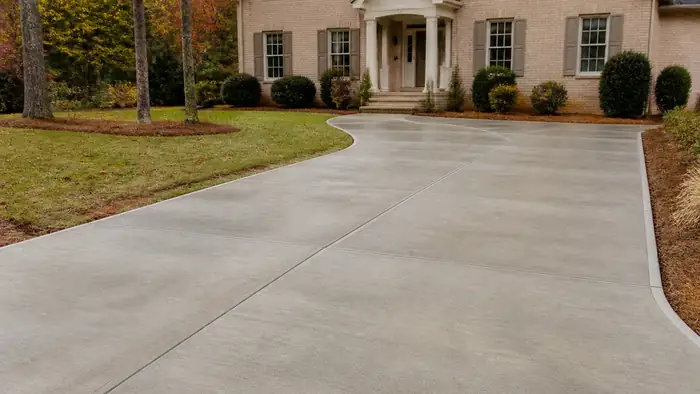
concrete driveway installation completed by a local contractor at a brick-and-siding two-story home in Lawrenceville, GA, in early morning light.

Concrete Driveway Installation

A driveway carries more weight than any other flat work around a house, so we build it that way. That means a compacted gravel base, rebar set on chairs so it sits mid-slab instead of in the dirt, and a pour thicker than a patio. Control joints go in early so cracks land in the joint, not across the middle. With about 55 inches of rain a year, every driveway gets pitched to move water off the surface and away from the garage. Finish is your call: broom, exposed aggregate or stamped.

concrete flooring installation completed by a local contractor at a charcoal farmhouse-modern home in Lawrenceville, GA, after a rain shower.

Concrete Flooring Installation

Garage floors, basements, workshops and small commercial spaces all start the same way: a compacted base, a polyethylene vapor barrier so ground moisture stays out of the slab, and reinforcement sized to the load. The finish is where they split. A garage usually gets a steel-troweled surface with a light broom for grip. A shop floor can be power-troweled hard and sealed. If tile or wood is going on top, we leave it flat and ready. We keep traffic off until the slab has cured.

concrete slab repair completed by a local contractor at a grey split-level home in Lawrenceville, GA, under low winter sun.

Concrete Slab Repair

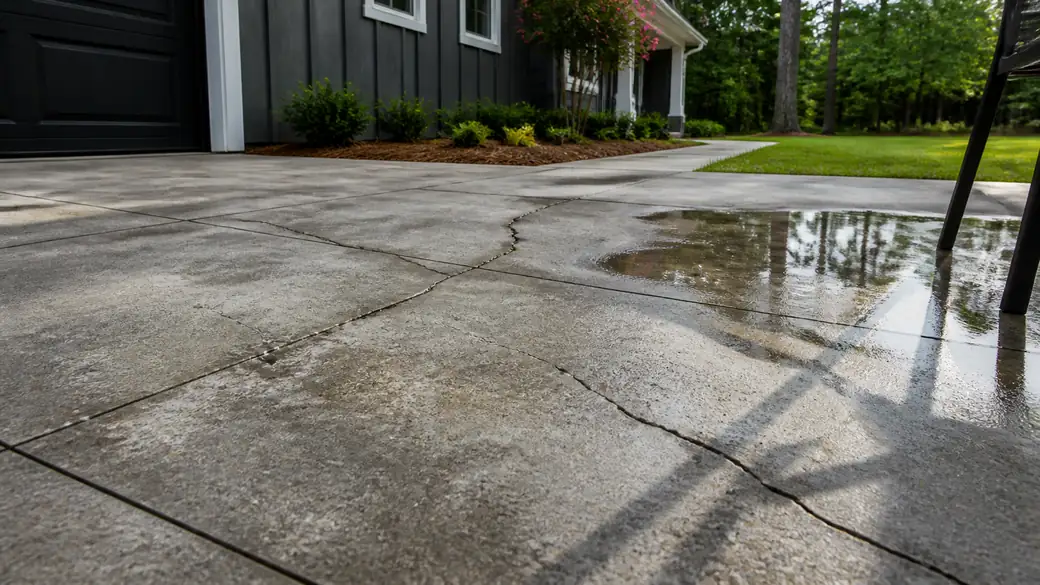
Most slabs we get called to fix have a reason underneath. The median home here was built in 1987, so a lot of patios and walks have had decades for the base to wash out, roots to push up, or a downspout to undercut an edge. We find the cause first. Hairline cracks get routed and sealed. A flaking or spalled surface can take a bonded overlay. A section that has sunk or heaved gets saw-cut out, the base rebuilt and compacted, and new concrete doweled into the old.

Our Warranty and Guarantee

What we stand behind is the part of a patio repair you never see. Before any new concrete goes down, we test the base on your property, because Pacolet soil drains well across most of Gwinnett County but not on every lot. We compact what needs compacting, set reinforcement where the slab carries load, and pitch the surface so water runs off it.

With about 55 inches of rain a year, water is what finds a weak repair first. It gets under a lifted edge, washes out the fill, and the crack comes back wider than before. So we fix the cause along with the surface, and we tell you plainly what we found underneath. Call for a free estimate and ask us anything about the work.

Our Concrete Process, Step by Step

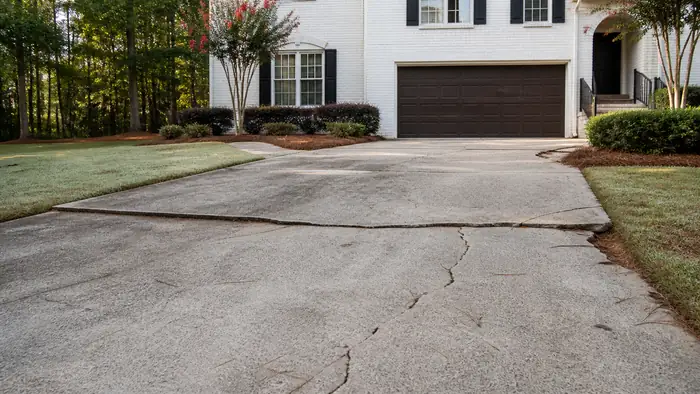
A worker examines an old driveway before replacement. at a painted-white-brick two-story home in Lawrenceville, GA, in early morning light.

Step 1: Site Assessment

The first visit is about finding out why the patio failed, not just where. We look at the cracks, the sunken corners and the gaps along the house, then watch how water runs off the surface. The median home here was built in 1987, so many patios have had decades to settle. The terrain around Lawrenceville is hilly, though it changes block to block, and a patio cut into a slope drains differently from one on a flat yard. We test the soil at your site before recommending anything.

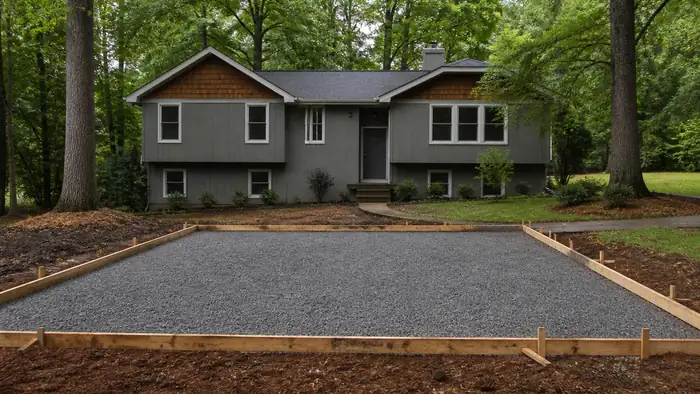
Crushed stone base is raked level inside driveway forms. at a grey split-level home in Lawrenceville, GA, after a rain shower.

Step 2: Site Preparation

Old concrete comes out where it has to, saw-cut along clean lines so the new section ties into what stays. Then comes the base. Pacolet soil, the most common type in this area, drains well, but it varies from yard to yard, so the subgrade still gets dug to firm ground, cleared of roots and soft fill, and compacted in lifts. Crushed stone goes down over it, graded to shed water away from the house. Skipping this step is how patios sink.

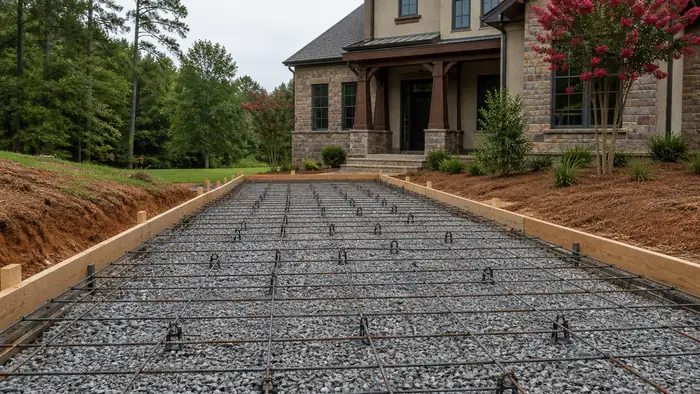
A worker ties rebar into a grid before a residential pour. at a stacked-stone and stucco home in Lawrenceville, GA, under an overcast sky.

Step 3: Forming & Reinforcement

Forms are set to a string line with a slight fall away from the house, so the finished patio never holds water against your foundation. Where new concrete meets old, we drill and epoxy steel dowels into the existing slab so the two sections move together instead of splitting apart. Reinforcement is rebar or welded wire, set up on chairs so it sits in the middle of the slab. Wire left lying on the ground does nothing, and it is one of the most common shortcuts we tear out.

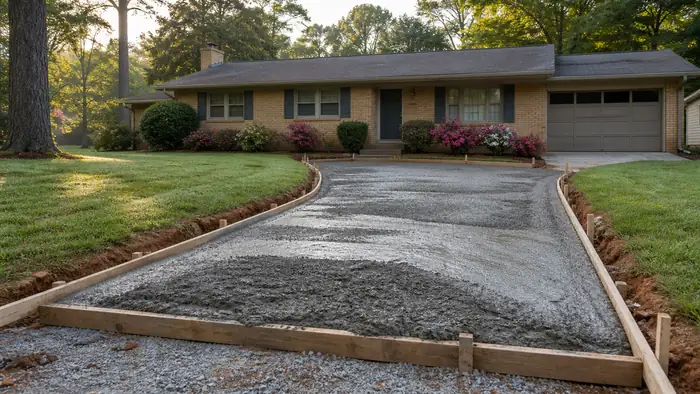
A ready-mix truck discharges concrete into a driveway form. at a buff-brick ranch home in Lawrenceville, GA, in early morning light.

Step 4: Pouring

The mix is ordered for the job: an exterior mix, with fiber added when the design calls for it. We check the forecast and do not pour ahead of heavy rain. On site, concrete goes in straight from the chute, or by wheelbarrow and pump where the yard is tight. Nobody adds water at the truck to make it spread easier. Extra water leaves a weak, dusty surface that scales early. Each load is screeded level and worked tight against the forms and dowels.

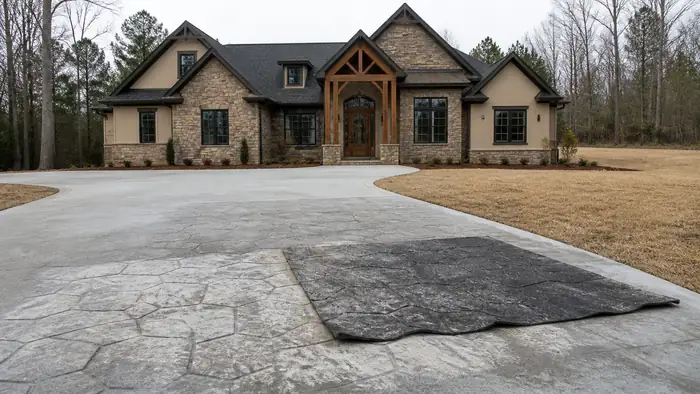
Stamping mats are pressed into a patio surface to imprint a pattern. at a stacked-stone and stucco home in Lawrenceville, GA, under an overcast sky.

Step 5: Finishing

Timing is the whole job here. After screeding, we bull float the surface, then wait for the bleed water to leave before touching it again. Troweling too early traps that water and leads to a top layer that flakes off later. Edges get rounded with an edger, and control joints are tooled or saw-cut to tell the slab where to crack. Most patios get a broom finish for grip. Stamped and colored concrete gives a decorative surface that reads as stone or brick.

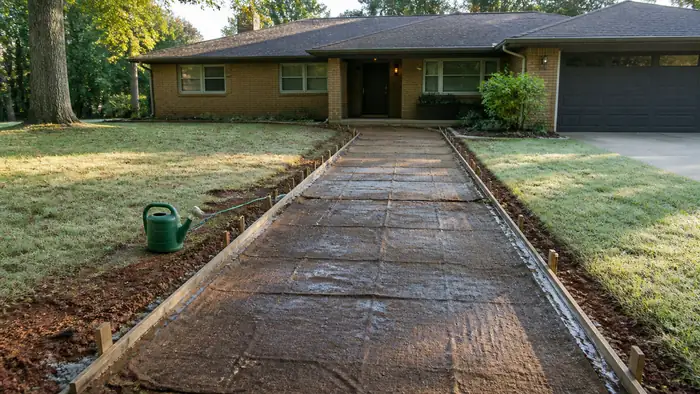
Damp burlap covers a small slab section during curing. at a buff-brick ranch home in Lawrenceville, GA, in early morning light.

Step 6: Curing

Curing decides how strong the patio ends up. Concrete gains strength slowly and needs moisture while it does, so we keep the surface damp or cover it with a curing compound right after finishing. Average highs here run around 72°F, and on a warm, windy day the real risk is the top drying ahead of the rest, which leaves fine surface cracks. Keep foot traffic light at first. Grills, planters and heavy furniture wait until the slab has had time to cure.

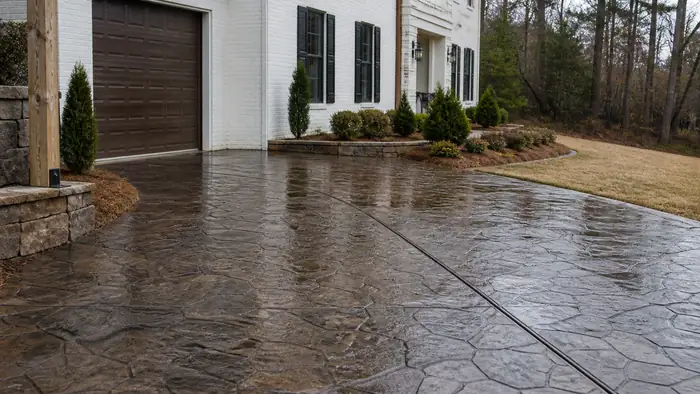
A roller applies sealer to a stamped patio surface. at a painted-white-brick two-story home in Lawrenceville, GA, after a rain shower.

Step 7: Sealing

Sealer goes on once the concrete has cured and dried out, not before. A penetrating silane or siloxane sealer soaks into the surface and keeps water and stains out without changing how it looks. Stamped and colored patios usually get an acrylic sealer, which deepens the color and adds a light sheen. With about 55 inches of rain a year, sealer earns its keep here. Reapplying it every few years keeps the surface looking right and slows wear from water and sun.

Choosing the Right Concrete System

A cracked patio does not always need to come out. Hairline cracks and a worn surface on a sound slab can take a bonded resurfacer or a stamped decorative overlay, which gives the old concrete a new face without the demolition. When the slab has settled, heaved or broken into pieces, a topping only hides the problem for a season. Then the right answer is tear-out and a new pour with proper reinforcement.

We pick the system by what sits under the patio, not by how the top looks. Pacolet soil, which drains well, is the most common type in this part of Georgia, but it changes from yard to yard and the land runs hilly. So we test each base, check the grade and look at where around 55 inches of yearly rain goes. With the median home here built in 1987, most slabs have had decades to show how they move.

Frequently Asked Questions About Concrete Patio Repair in Lawrenceville

How long does concrete patio repair take from start to finish for Lawrenceville properties?

It depends on what the patio needs, and we can tell you once we have seen it. Sealing cracks and patching a worn surface are usually quick jobs. Lifting a sunken section, or cutting out a broken panel and pouring new, takes longer because fresh concrete has to cure before it carries weight. Weather sets the pace too. Lawrenceville gets about 55 inches of rain a year, and we do not pour into a wet forecast.

How thick should a concrete patio be?

Thick enough for what sits on it, over a base that will not move. A patio that holds a table and chairs needs less than one carrying a hot tub or an outdoor kitchen, and heavier loads also call for more reinforcement. The base matters as much as the slab. Pacolet soil, the dominant type in Gwinnett County, drains well, but it varies, so we test every site before deciding. A good slab over a poor base still cracks.

How long will a concrete patio last in Lawrenceville?

A well-built patio can last for decades. Most early failures trace back to the base, poor drainage or missing control joints, not the concrete itself. The median home here was built in 1987, so many of the patios we repair are original to the house. Water is the thing to manage. With as much rain as this area gets, a surface that sheds water properly holds up far longer. Sealing stamped and decorative finishes helps them keep their color.

How long does it take to build a concrete patio in Lawrenceville, GA?

Longer than a repair, mostly because of the prep. We grade the site, set forms, compact the base and place reinforcement before any concrete arrives. Gwinnett County is hilly, with 181 feet of local relief within a few miles, so some yards need extra grading or a step to sit level. The pour itself goes quickly. Curing is what takes time, and we keep traffic off the new slab until it is ready for it.

How much does a 20x20 colored concrete patio typically cost in Lawrenceville?

Every colored patio gets priced after we see the site, so we do not quote a figure here. Size is only part of it. Color can be mixed through the concrete or applied to the surface, and each approach costs differently. Grading, removing an old slab, access for the truck, and whether you add a stamped pattern all move the number. Call for a free estimate, and the price you get comes from measuring your actual yard.

What's the average cost to build a concrete patio in Lawrenceville?

An average does not tell you much about your own yard, so we do not publish one. What a patio costs comes down to its size, the finish (plain broom, colored, stamped or other decorative work), how much grading the lot needs, and whether an old slab has to come out first. Materials and reinforcement add to it as well. A free estimate gives you a number built on your property, not on someone else's.

Get a Free Estimate

Get a FREE Quote

Tap to call +1 470-229-2076