+1 470-229-2076
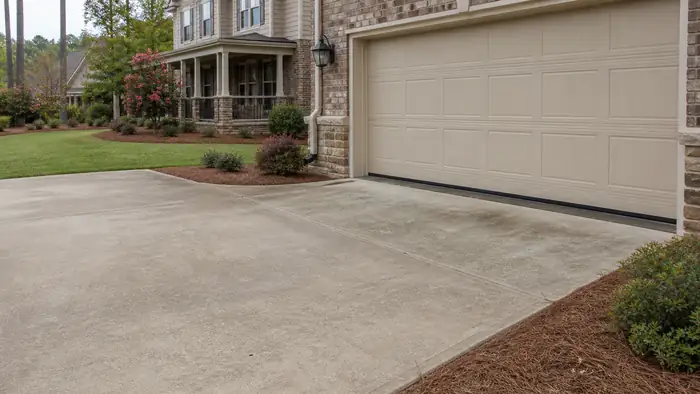
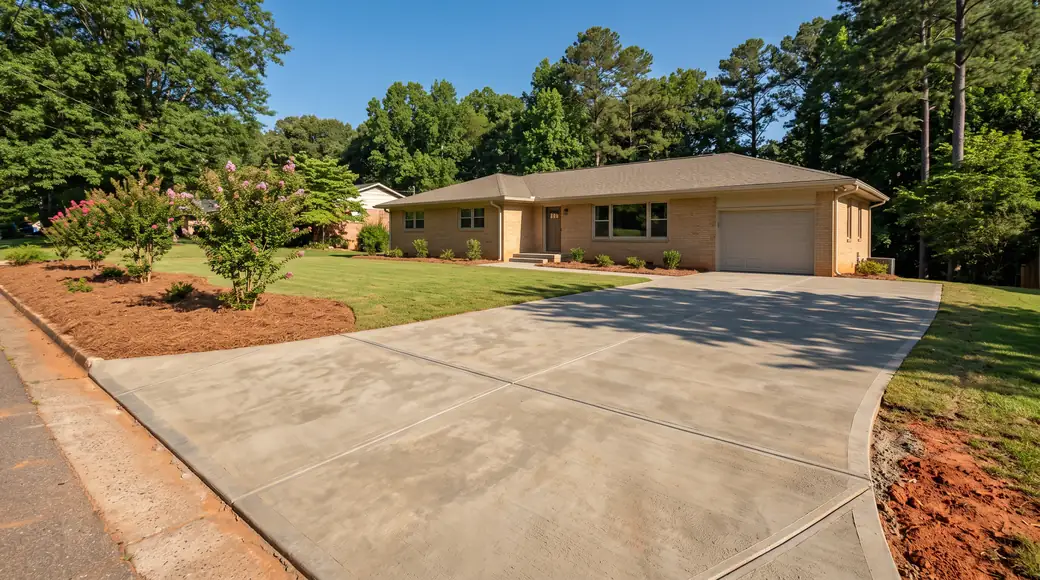
Wide view of finished concrete flatwork across the front of a home at a buff-brick ranch home in Lawrenceville, GA, in clear late-morning sun.

Colored Concrete in Lawrenceville, GA

We pour colored concrete in Lawrenceville: driveways, patios, front walks, pool decks and the occasional interior slab. Most of it is residential, some commercial. We are a concrete contractor first, which means the color goes over a slab we built ourselves, on ground we prepared, with steel we set and checked before the truck ever backs in. Nobody subs out the part that holds the finish. Color is the last decision on a job and the smallest of the reasons a slab is still flat and tight a decade later.

Most calls start with a driveway that has gone gray and mapped with cracks, or a patio that never matched the house it was poured against. Others are new work: a sidewalk running from the drive around to a side door, steps rebuilt in the same tone, a stamped concrete apron where the garage meets the pavement. We pour plain gray flatwork too, and we say so when that is the better call. Not every surface is improved by pigment. The ones that are, are improved a great deal.

Houses here are older than their curb appeal suggests, with a median build year of 1987, so a good number of original driveways are at the end of what they were ever going to give and plenty of patios were added later without much thought to how they would wear. Old work is useful. It shows us exactly what fails: thin edges, missing control joints, color that went down over a base that was never right. We look at what you have before we price anything, in Lawrenceville or out toward Suwanee, and we tell you what we find. Call for a free estimate.

Call +1 470-229-2076

Licensed, Bonded, and Insured ยท A combined 15 years of experience

Get a FREE Quote

We warranty all of our work because we believe in what we do.

What Colored Concrete Involves

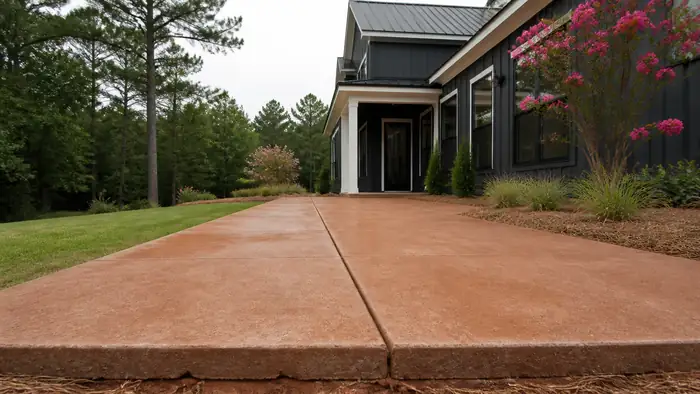
Concrete patio in terracotta integral colour running full depth at a charcoal farmhouse-modern home in Lawrenceville, GA, under an overcast sky.

Integral color concrete

Integral color goes into the mix at the plant or the truck, so the pigment runs all the way through the slab instead of sitting on top. Chips and saw cuts show the same shade as the surface. We pour flatwork at four inches over compacted base with rebar or wire mesh, depending on the slab. The main thing that goes wrong is water: adding a few gallons on site to make concrete easier to place lightens that load and leaves a blotchy panel nobody can fix afterward.
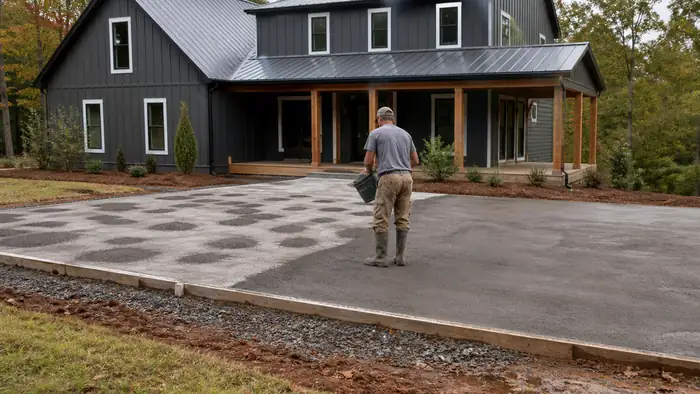
Dry-shake colour hardener being broadcast onto fresh concrete at a charcoal farmhouse-modern home in Lawrenceville, GA, after a rain shower.

Concrete color

Color arrives three ways. Integral pigment colors the whole batch, dry shake hardener is broadcast onto fresh concrete and worked in for a denser, brighter surface, and stains or release agents build the secondary tones that give stamped concrete its depth. A patio, a concrete sidewalk and a commercial concrete pad can carry the same color and still read differently, because the finish changes how light hits it. Any concrete contractor should pour you a sample and let it cure before you commit.

Colored Concrete in metro Atlanta

Most houses around here went up near 1987, and the flatwork poured with them has spent decades under sun, tires and foot traffic without ever being anything other than gray. Colored concrete gives that stock a driveway, sidewalk or patio that reads as part of the house instead of a utility surface laid down and forgotten. We work with integral color mixed at the plant and with hardeners broadcast on stamped work. Neither is paint. The older the slab beside it, the more the difference shows.

Across metro Atlanta the variables are lot access, the condition of what is already down, and where water goes once the new slab changes the grade. A subdivision street in Suwanee and an older lot in Lawrenceville can need two different approaches to get a truck near the pour, and that decision gets made before anyone breaks ground rather than the morning of. Older properties often have an existing slab worth removing instead of pouring over. Short haul, clean pour.

Trouble on colored work usually starts before the finish. Water added to the mix on site lightens the color and weakens the slab, subgrade that was never compacted lets the concrete settle and crack through whatever pattern sits on top, and a pour split across two loads from different batches can show a line you never get back out. Rebar or wire mesh goes in because a cracked slab shows color at the break. None of that announces itself the day the forms come off.

Getting it right takes attention more than anything else: one crew, one batch where the pour allows, joints cut where the slab wants to move, and a sealer put down once the color has cured rather than the moment the concrete looks dry. Sealer wears, and it gets renewed on a colored driveway that sees a car every day. Concrete finished this way still looks deliberate years later, which is the point of putting color in it at all.

How the Work Runs

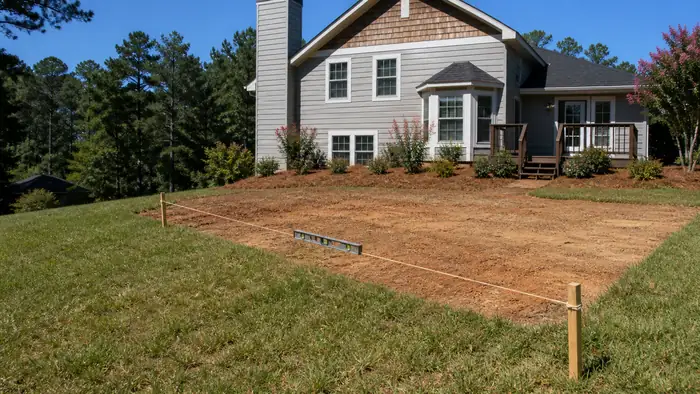
String lines and grade stakes laid out across a yard before a pour at a tan-brick colonial in Lawrenceville, GA, under bright midday cloud.

Step 1: Site Evaluation

We walk the area with you and look at what the concrete has to sit on. Slope, drainage, where water currently runs, how thick the existing slab is, whether tree roots are working underneath it. We measure the space and note access for a truck. Old driveways often tell us why they failed: no base, no steel, or a downspout dumping right at the edge.

Concrete driveway and walk at a home, the kind of job an estimate covers at a red-brick ranch home in Lawrenceville, GA, under bright midday cloud.

Step 2: Written Estimate and Permits

You get the scope in writing: square footage, slab thickness, reinforcement, the color system and release used, joint layout, and how we handle the tear-out. If your job needs a permit, we pull it. Colored work adds decisions that belong on paper, since integral color, a dry shake hardener and a stained topcoal all behave differently over time and cost differently to place.

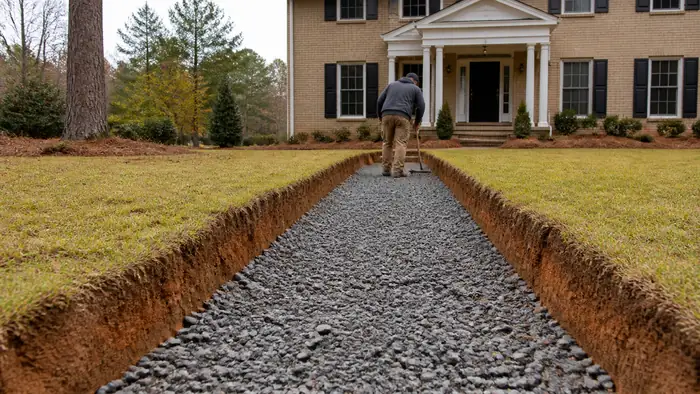
Broken-out concrete removed and the base rebuilt before a new pour at a charcoal farmhouse-modern home in Lawrenceville, GA, in early morning light.

Step 3: Demolition and Base Prep

Breaking out old concrete is half the job on a replacement. We haul the debris off, then cut or fill the subgrade to the grade the new work needs, keeping fall away from the house. Graded aggregate base goes down in lifts and gets compacted, usually four inches. Soft spots get dug out rather than bridged. Skipped compaction is the most common reason driveways crack in the first two years.

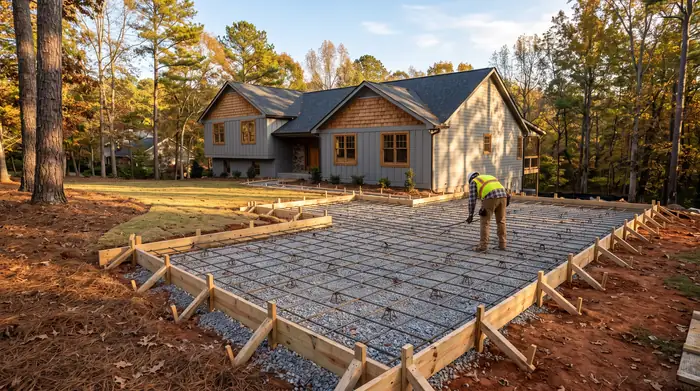
Wooden forms and rebar grid set and tied, ready for concrete at a grey split-level home in Lawrenceville, GA, in late afternoon light.

Step 4: Forming, Steel and the Pour

Forms get set to the finished grade and staked tight so they hold the pressure without bellying. Driveways get rebar on chairs, typically number three or four on a grid; sidewalks and lighter flatwork may use wire mesh held up off the base. Concrete installation happens in one continuous pour where possible. We place, screed, then bull float before any bleed water sits on the surface.

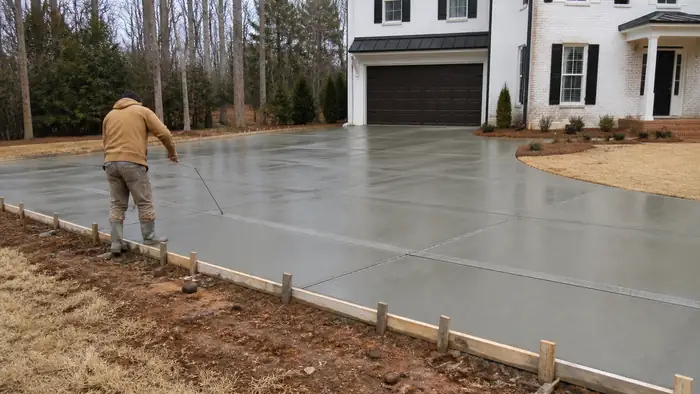
Freshly finished concrete slab curing under a clean broom texture at a buff-brick ranch home in Lawrenceville, GA, after a rain shower.

Step 5: Finishing, Curing and Final Walkthrough

Color and texture go on while the slab is still workable, so timing drives everything here. We tool the edges, cut control joints at the right spacing, and apply the release and stamp or broom finish. Curing matters more than people expect: a concrete driveway keeps gaining strength for weeks. We walk it with you, explain sealer timing, and show you which joints are supposed to crack.

What Decides the Price

Price on colored concrete comes down to a handful of things you can walk out and look at yourself. Most of them have nothing to do with color. The rest is what the truck has to get past, what has to come out first, and how much thickness and steel the finished slab needs.

What changes the priceWhich wayWhy
Old slab or asphalt sitting where the new one goesCosts moreIt gets broken out, loaded and hauled off before anything is poured.
A truck that can back within chute reach of the formsCosts lessA long wheelbarrow run or a pump puts hours of labor into the same yardage.
Thickness the use calls forCosts moreA patio you walk on and a driveway you park a truck on are not poured the same depth.
Rebar instead of wire meshCosts moreBar is heavier steel, tied and set on chairs, and takes real time to lay out.
Ground that will not hold a loadCosts moreSoft or wet subgrade gets dug out and replaced with compacted gravel.
Water with nowhere to runCosts moreFall has to be built into the pour, and sometimes a drain goes in with it.
Curves, steps and tight edgesCosts moreCurved forms are built by hand rather than snapped straight down a line.
Stamped or exposed aggregate finishCosts moreBoth are finish work on a clock, with more hands on the slab before it sets.

Comparing bids, look at the lines that are easy to leave out: thickness in inches, whether rebar or mesh is included, who removes and hauls the old concrete, and whether a gravel base is in the number. Two bids on the same driveway often differ by an inch of depth.

Questions About Colored Concrete

Can you match colour to existing concrete on my Lawrenceville property?

Yes, close enough that most people stop noticing, but not exact. Existing concrete carries years of dirt, wear and sun, and fresh color cures brighter before it settles down. We pull a reference off your old slab, mix a test batch and set it beside the existing work in daylight. Matching across a control joint reads far better than trying to match mid slab.

Is colour mixed through or added on top in Lawrenceville work?

Both, and the choice changes what you get. Integral color goes into the truck so pigment runs the full depth of the slab, which means a chip shows the same color underneath. Dry shake hardener is broadcast onto the fresh surface and gives deeper, harder color in the top layer. Stain goes on after cure. Stamped work usually pairs integral with a release.

Can coloured concrete on a Lawrenceville property be recoloured later?

Yes, on the surface. Clean cured concrete takes stain or dye, and going darker is straightforward. Integral color cannot be undone, since it lives in the mix rather than on the face of the slab. Any recolor means stripping old sealer first, and it behaves like a finish afterward: it wears, and it comes back on a schedule.

Does coloured concrete cost more per square foot around Lawrenceville?

Yes. Pigment is material the plant adds to the load, textured and stamped finishes take more hands working a shorter window, and sealer moves from optional to upkeep. Integral color sits above a plain gray pour. A broadcast hardener with a release and a stamp pattern sits above integral. Flatwork size, access and how much detail work the edges need all move it.

How consistent is the colour across a large Lawrenceville pour?

Expect variation. Concrete is not paint. Water added at the truck, subgrade moisture, finishing timing and batch sequence all shift the shade slightly across a big flatwork job. We order from one plant, hold water tight, and pour continuously so the slab goes down as one piece. On stamped or textured surfaces that variation reads as depth. On a wide smooth driveway it is more visible. Color handling does not change by town, and the work runs the same in Lawrenceville, Snellville, Suwanee, Duluth and Sugar Hill.

Will coloured concrete fade in Georgia sun?

Yes, some. Iron oxide pigments hold their color well over years of exposure, while bright reds and deep blacks lighten faster than earth tones. Surface stains give up more than integral color, because there is less of them. Efflorescence, that white haze from mineral salts, also lightens a slab and washes off. Resealing every few years brings the color back close to new.

Get a Free Estimate

Get a FREE Quote

We warranty all of our work because we believe in what we do.

Tap to call +1 470-229-2076