+1 470-229-2076
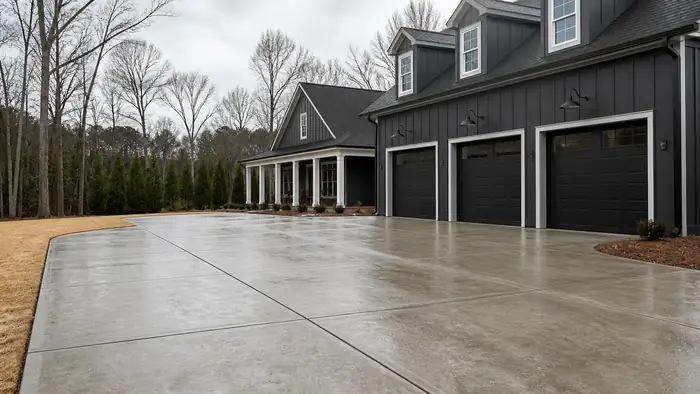
Poured concrete foundation wall and footing for a room addition at a charcoal farmhouse-modern home in Lawrenceville, GA, after a rain shower.

Foundation Pouring & Repair in Lawrenceville, GA

We pour and repair foundations in Lawrenceville, and we come at it as a concrete contractor first, which means the footing, the slab and the steel inside it are all one job to us. A house sitting on a failing foundation tells you before anyone else does: a door that sticks in one corner, a crack climbing the drywall, a garage slab that has pulled away from the wall. Some of that calls for a fresh pour. Some of it calls for patient repair and nothing more. We will tell you which one you are looking at, plainly, including the times the honest answer is that your concrete is fine and the problem sits somewhere else.

Most houses around here went up near 1987, going by the median build year, so much of our work involves foundations that have carried a load for decades and the flatwork poured alongside them. The crew that pours a foundation also pours a sidewalk, a driveway apron, a stamped concrete patio, and the standard does not slip between them. Anything that needs a permit gets one through the City of Lawrenceville before a truck shows up. If your address reads Suwanee instead, we work there on the same terms and with the same crew. Call for a free estimate on either the pour or the repair.

Call +1 470-229-2076

Licensed, Bonded, and Insured ยท A combined 15 years of experience

Get a FREE Quote

We warranty all of our work because we believe in what we do.

What Foundation Pouring & Repair Involves

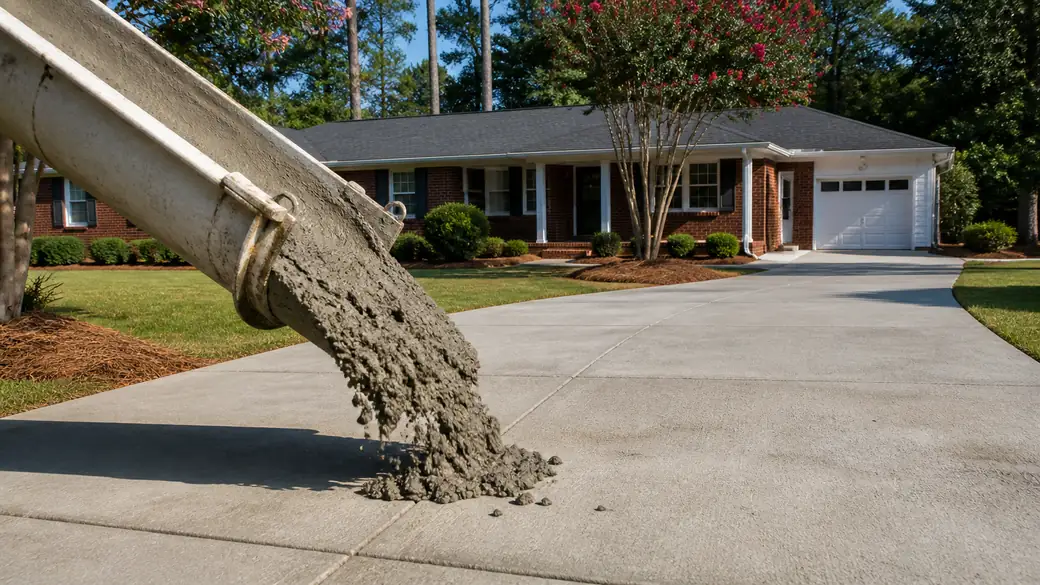
Concrete being poured into foundation wall forms at a buff-brick ranch home in Lawrenceville, GA, after a rain shower.

Foundation pouring

Most of the work happens before the truck backs in. We dig to firm, undisturbed bearing, set and brace the forms, tie rebar on chairs, and run wire mesh where the slab calls for it. A vapor barrier goes down lapped and sealed. Concrete is placed in one continuous pour wherever the layout allows, then screeded, floated and cured slowly. Depth and thickness follow the load the foundation has to carry. Letting a fresh slab dry out fast is what puts cracks in it.

Foundation wall crack being repaired with an injection port at a tan-brick colonial in Lawrenceville, GA, under an overcast sky.

Concrete foundation repair

Cracks say different things. Hairline shrinkage in a slab is cosmetic. A crack that steps, widens toward one end, or leaves one side sitting lower means something below it moved. We open the area, read the footing and the water reaching it, then repair to suit: injection for a wall crack, piers under a settled footing, cut-out and fresh rebar where steel has rusted and spalled the face. Houses around Lawrenceville run to a median build year of 1987, so grading and downspouts are worth checking before any concrete contractor pours anything.

Tall poured concrete basement wall with snap-tie holes visible at a tan-brick colonial in Lawrenceville, GA, in early morning light.

Poured concrete walls

Formed walls go up in a single pour where the site allows, with vertical and horizontal rebar tied continuous through the corners and a keyway or dowels locking the wall to its footing. We vibrate as we place, because honeycombing down at the base is where water eventually finds its way through. Cold joints get treated, not ignored. Exposed faces can take a form liner, or the flatwork running off them can take a stamped concrete finish. Commercial concrete walls follow the same sequence at larger scale.

Concrete footing poured at the base of an excavated trench, dowels set at a buff-brick ranch home in Lawrenceville, GA, under bright midday cloud.

Footing

The footing carries everything above it. It sits wider than the wall, on undisturbed soil rather than fill or topsoil, and steps down a slope in level runs instead of getting poured on a slant. Rebar runs continuous and laps properly at splices. Water is the other half of the job: a concrete sidewalk pitched back toward the house sends runoff straight down onto the footing, so we set sidewalk grades falling away and keep downspouts discharging well clear.

Foundation Pouring & Repair in metro Atlanta

We pour and repair foundations in Lawrenceville, and we work the same way in Snellville, Suwanee, Duluth and Sugar Hill, along with the rest of this part of metro Atlanta. No town on that list waits behind another. Same crew, same forms, same rebar, same standards for flatwork. We take residential and commercial concrete in all of them. Concrete driveways and sidewalks come with the territory, since foundation work often ends with tearing out and repouring whatever the equipment crossed. Distance changes the drive, not the pour.

The median home here was built in 1987, which means much of what we look at has been carrying load for close to forty years. That is not old for concrete. It is old enough that a slab has usually said most of what it intends to say: where it cracked, where it dropped, where one corner sits lower than the rest. We would rather read that record than guess at it, so on an older house we walk the whole perimeter instead of only the spot that got someone's attention.

Repair starts with finding out whether the concrete failed or whether something under it moved. Those are different problems, and they take different fixes. Sometimes the answer is a crack routed and sealed. Sometimes it is a section cut out and repoured against sound edges. On a new pour we set rebar or wire mesh to the plan, hold the thickness across the whole slab, and put the joints where we want the concrete to crack, because it will. Call for a free estimate on a foundation pour or a repair.

How the Work Runs

String lines and grade stakes laid out across a yard before a pour at a tan-brick colonial in Lawrenceville, GA, under bright midday cloud.

Step 1: Site Evaluation

We walk the area with you and look at what the concrete has to sit on. Grade, drainage, where water goes in a hard rain, how close the utilities run. We probe the subgrade for soft spots and check existing slabs for settling, spalling or cracks that run all the way through. Access matters too: whether a truck can reach the pour or whether we are wheeling it in.

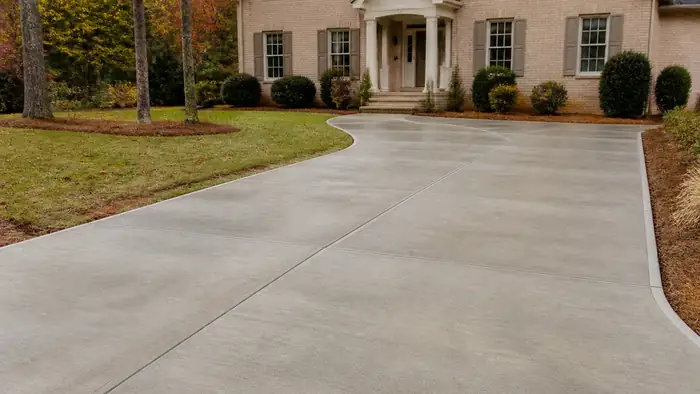
Concrete driveway and walk at a home, the kind of job an estimate covers at a red-brick ranch home in Lawrenceville, GA, under bright midday cloud.

Step 2: Written Estimate and Permits

You get the scope in writing: square footage, slab thickness, reinforcement (rebar or wire mesh), finish, and how the demolition and haul-off are handled. We handle the permit paperwork where the job needs it and schedule around inspection. Nothing starts until you have read the estimate and the two of us agree on what is being built.

Broken-out concrete removed and the base rebuilt before a new pour at a charcoal farmhouse-modern home in Lawrenceville, GA, in early morning light.

Step 3: Demolition and Base Prep

Old concrete comes out in sections and gets hauled off, not buried on site. Then the real work starts. We cut to grade, remove soft or organic soil, and bring in graded aggregate base, compacting it in lifts with a plate compactor or roller. A slab is only as good as what is under it. Most failed driveways we replace failed at the base, not the concrete.

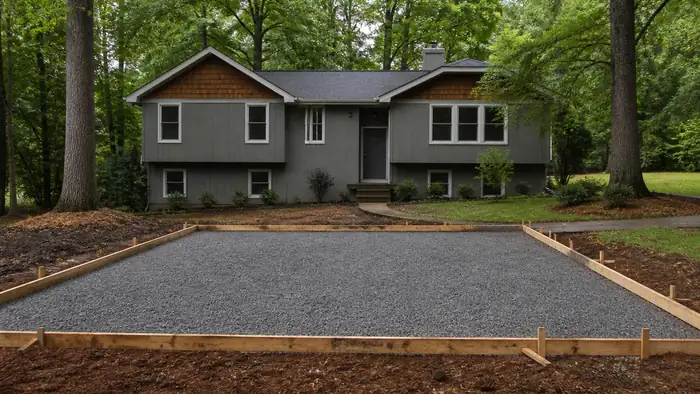
Wooden forms and rebar grid set and tied, ready for concrete at a grey split-level home in Lawrenceville, GA, in late afternoon light.

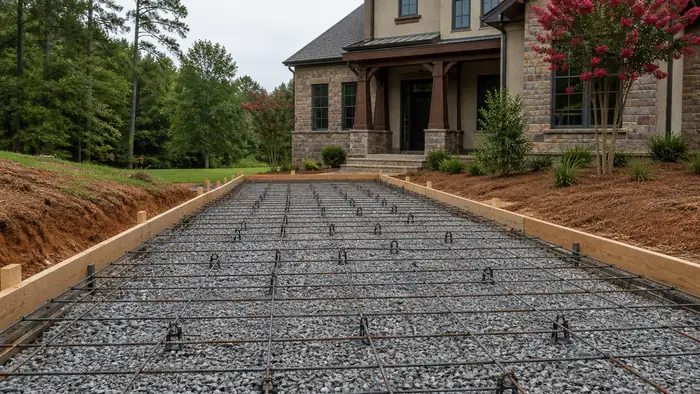
Step 4: Forming, Steel and the Pour

Forms get set to line and grade with the fall pitched away from the house, staked tight so nothing bows when the concrete pushes. Rebar or wire mesh goes on chairs so the steel sits in the slab rather than under it. Standard concrete installation runs four inches for sidewalks and patios, thicker for a concrete driveway that carries vehicles. We pour and screed in one continuous run.

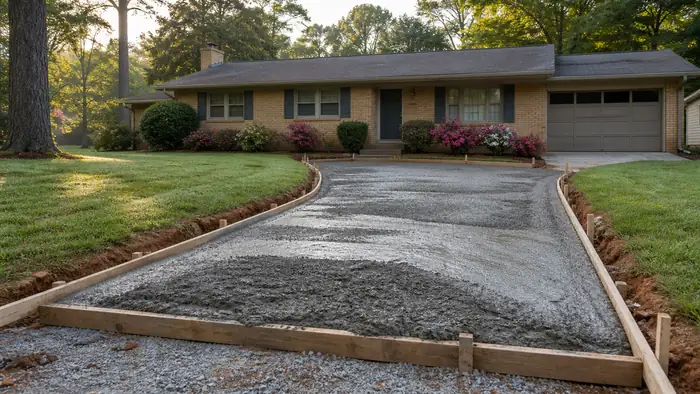
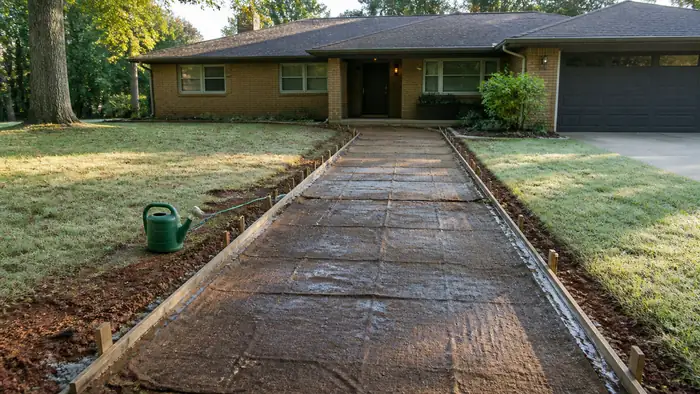
Freshly finished concrete slab curing under a clean broom texture at a buff-brick ranch home in Lawrenceville, GA, after a rain shower.

Step 5: Finishing, Curing and Final Walkthrough

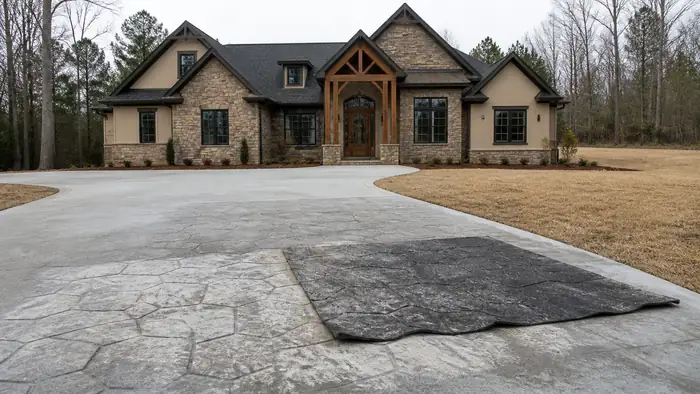
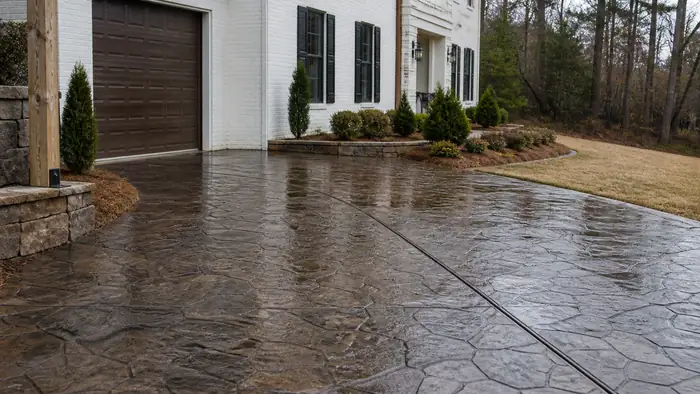
Finish depends on the surface. Broom finish for traction on sidewalks and driveways, stamped and colored for patios, exposed aggregate where you want texture and grip. Control joints get cut early so the slab cracks where we put the line. Then it cures, covered or kept damp, and we hold off traffic while it gains strength. We walk the finished work with you before we pull off the site.

What Decides the Price

Every estimate comes down to two things: what has to move before concrete goes down, and what the finished slab has to hold up. You can check most of this yourself in an afternoon.

What changes the priceWhich wayWhy
Old slab or footing already in placeCosts moreBreakout and haul-off happen before a single yard gets poured.
Mixer access to the workCosts less when a truck reaches itChute reach beats wheelbarrows or a pump line every time.
Slab thickness the load calls forCosts more as it climbsThicker flatwork means more yards and more finishing time.
Rebar instead of wire meshCosts moreTied bar takes material and layout hours that mesh does not.
Depth to firm bearingCosts more as we digFootings go down until the ground under them will carry the load.
Grade and how water leaves the siteCosts more if it sitsStanding water near a pour means drainage work first.
Trees, stumps or buried lines in the pour areaCosts moreEverything comes out, and lines get located before excavation.
Age of the existing structureVariesA house near the 1987 median build year gets its footings checked before we tie in.

Compare bids line by line: slab thickness, reinforcement type and spacing, whether demolition and haul-off are included, and how joints get cut.

Questions About Foundation Pouring & Repair

Do foundation repairs need a Lawrenceville permit and an engineer's letter?

Usually yes on both counts for structural work. A permit gets pulled before we break ground on underpinning, pier installation, or a replacement slab, and the plan reviewer often wants a stamped letter from a structural engineer describing the fix. Cosmetic crack sealing on a slab is a different matter. Call us with what you are seeing and we will tell you which side of that line your job falls on.

Will foundation work affect my home's value in metro Atlanta?

A sound foundation protects the value already in the house, and around here that is real money: the median home runs $335,100. Unrepaired settlement shows up in inspections and follows the property through a sale. Documented repair work, with the engineer's letter and permit paperwork in hand, is something you can hand a buyer. We keep records so you have them later.

How long does a Lawrenceville foundation cure before we can build on it?

Concrete keeps gaining strength for weeks, but you do not wait weeks to work. Footings and stem walls typically carry framing loads within about a week, depending on the mix, the weather, and what is going on top. Slabs want longer before heavy traffic. We give you a date at the pour and we do not rush it, because loading green concrete causes cracks nobody wants.

Can you pour a foundation on a sloped Lawrenceville lot?

Yes. Sloped lots get stepped footings, taller stem walls on the downhill side, or a full daylight basement wall, depending on how much fall you have across the building line. Drainage matters more on a grade, so we plan where water goes before we plan concrete. Rebar schedules go up as wall height goes up. We survey the slope first, then design to it.

What foundation problems are common in Lawrenceville, Georgia?

The housing stock here dates to a median build year of 1987, so we see a lot of forty-year-old slabs and block foundations. Common calls: settlement at a corner, cracked or bowing block walls, slab edges that have dropped, and water finding its way in where old drainage has failed. Additions poured later than the house often move independently of it.

How do you tell settlement from ordinary curing cracks in Georgia?

Shrinkage cracks are thin, roughly uniform in width, and stay put. Settlement cracks widen toward one end, run diagonally from door and window corners, and usually come with a companion sign: a door that binds, a sloping floor, a gap at the trim. We measure crack width, check floor elevations, and look at the outside walls. Then we monitor if the picture is unclear.

Get a Free Estimate

Get a FREE Quote

We warranty all of our work because we believe in what we do.

Tap to call +1 470-229-2076