+1 470-229-2076
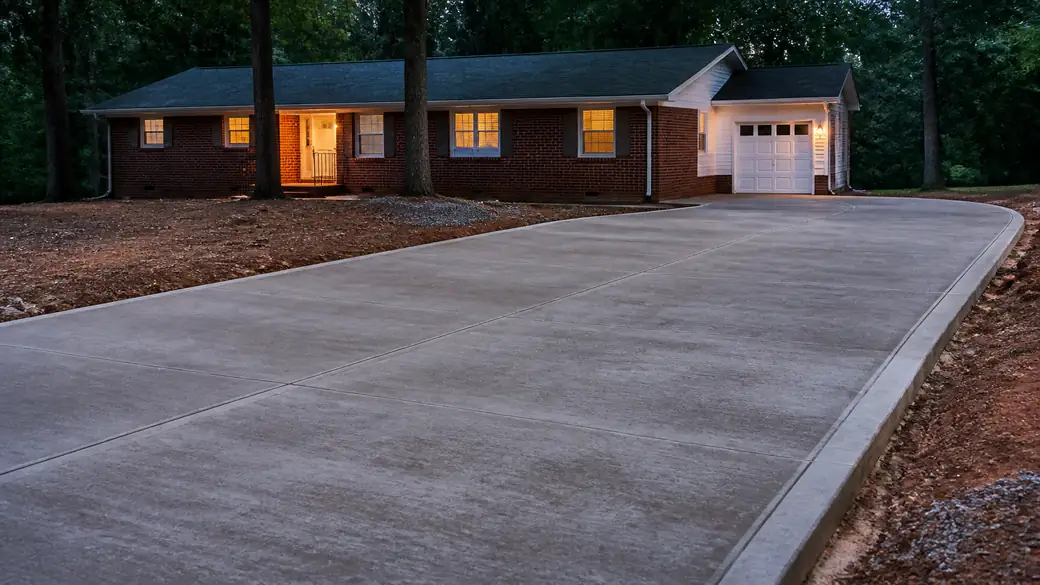
cement installation completed by a local contractor at a red-brick ranch home in Lawrenceville, GA, at blue hour.

Cement Installation in Lawrenceville, GA

The median home in Lawrenceville was built in 1987, so a lot of the driveways, walks and patios poured alongside those houses have been carrying cars and weather for decades. We install new concrete for residential and commercial property: driveways, patios, walkways, slabs, and stamped or decorative surfaces. Some projects replace a slab that has cracked or settled. Others start on bare ground. Either way, the surface is only as good as what sits under it.

Gwinnett County is hilly, with 181 feet of local relief within a few miles, and the ground changes from block to block. Pacolet soil (well drained) is the dominant type here, but we test every site on its own before work starts. That result sets the base, the reinforcement and the slope. With about 55 inches of rain a year, water has to leave the slab somewhere, and we decide where before we pour. Call for a free estimate.

Call +1 470-229-2076

Get a FREE Quote

What Cement Installation Involves

concrete slab installation completed by a local contractor at a tan-brick colonial in Lawrenceville, GA, under bright midday cloud.

Concrete Slab Installation Cost

What a slab costs depends on what sits under it and what it has to carry. A shed pad on flat ground is a short day. A garage slab on a sloped Lawrenceville lot means cut and fill, a compacted gravel base, rebar in place of wire mesh, and often a thickened edge. Tear-out of old concrete, pump access and the permit (we handle it) all land on the number too. We walk the property, measure, and price each line. Call for a free estimate.


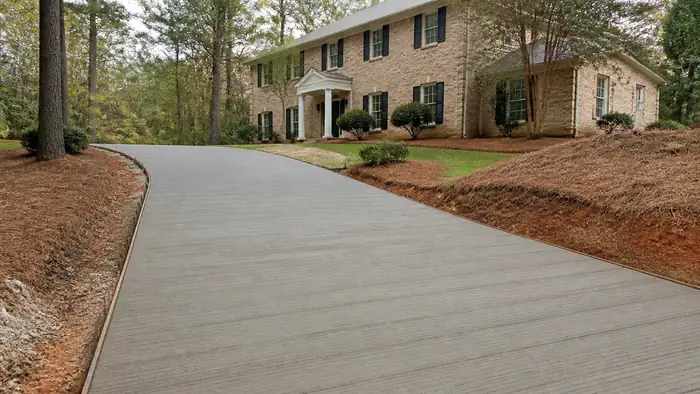
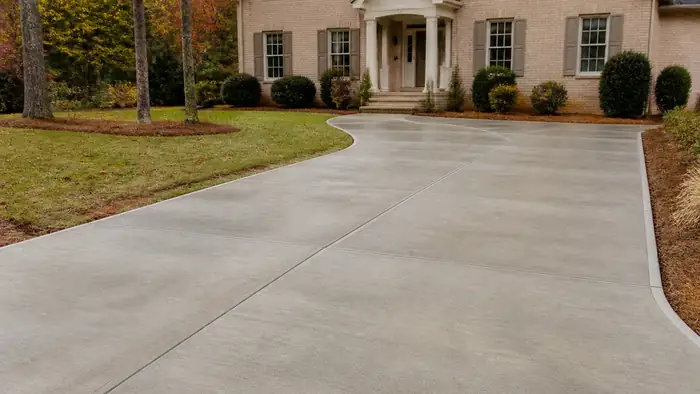
concrete driveway installation completed by a local contractor at a brick-and-siding two-story home in Lawrenceville, GA, in early morning light.

Concrete Driveway Installation

A driveway fails from the bottom up, so most of the work is out of sight. We grade so water runs off the slab and away from the garage, then lay and compact a gravel base before forms go in. Rebar sits up on chairs, not in the dirt. Control joints go in the same day so cracks follow our lines. With about 55 inches of rain a year, a broom finish that grips when wet usually beats a slick one. Stamped and decorative borders are an option.

concrete flooring installation completed by a local contractor at a charcoal farmhouse-modern home in Lawrenceville, GA, after a rain shower.

Concrete Flooring Installation

Indoor floors need a different finish than outdoor surfaces. We lay a vapor barrier under the slab so ground moisture does not come up and lift whatever goes on top later: tile, epoxy or vinyl plank. Garage and shop floors get a hard steel-trowel finish and a sealer. Polished concrete is ground in stages once it cures. We keep the mix stiff and cure it slowly, because a wet mix that dries fast curls at the edges and dusts under traffic.

concrete slab repair completed by a local contractor at a grey split-level home in Lawrenceville, GA, under low winter sun.

Concrete Slab Repair

Not every cracked slab needs tearing out. Thin shrinkage cracks get routed and sealed. A section that has sunk usually has a void underneath where the base washed out, and we either fill and lift it or cut it out and repour. If a crack has one side higher than the other, the problem is structural and patching only hides it. The main soil here is well-drained Pacolet, but it changes from lot to lot, so we dig and check before deciding.

Our Warranty and Guarantee

The best assurance a slab can carry is the work under it. Before we pour, every site is graded and tested on its own, because Gwinnett County ground changes from block to block even where the Pacolet soil runs well drained. We set reinforcement to suit the load, whether that is a driveway or a patio, and we place it where it belongs.

About 55 inches of rain falls here a year, so drainage decides how long a surface lasts. We slope each slab to carry water off and away from the house, and we cut control joints so any cracking follows a line we chose. Ask about the mix, the joints or the finish while we are on site. Clear answers are part of the job. Call for a free estimate.

Our Concrete Process, Step by Step

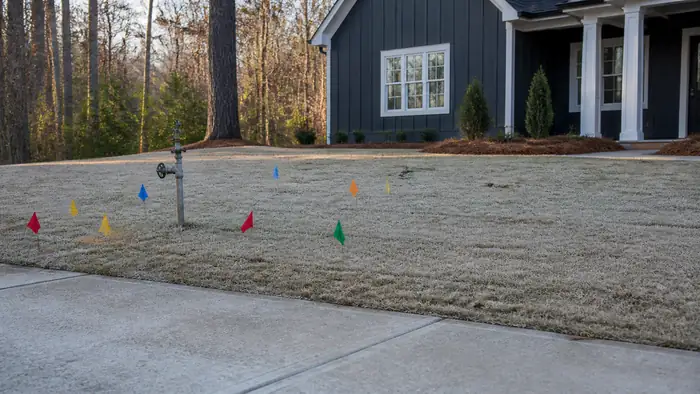
Utility flags mark buried lines before digging starts. at a charcoal farmhouse-modern home in Lawrenceville, GA, in early morning light.

Step 1: Site Assessment

Every project starts on the property itself. We walk the area, measure it, and watch where water runs across it. Gwinnett County is hilly (181 ft of local relief within a few miles), and slope changes from one lot to the next. Pacolet soil dominates the county and drains well, but it varies, so we test your site before we write the estimate. The median home here was built in 1987, and plenty of original driveways show it. We handle the permit.

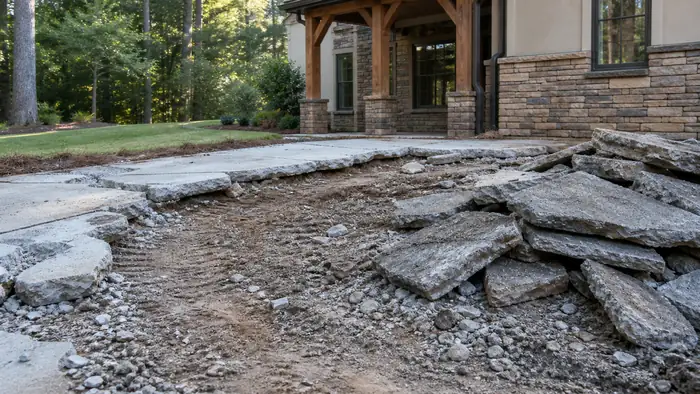
An old patio slab is broken up and hauled away. at a stacked-stone and stucco home in Lawrenceville, GA, under low winter sun.

Step 2: Site Preparation

Grading sets the slab up to shed water. We break out and haul off any old concrete, strip topsoil and roots, and cut the subgrade to a steady fall away from the house and garage. With about 55" of rain a year, a driveway that ponds or sends runoff toward the foundation is a problem you see every week. Soft spots get dug out and replaced. Then we lay a gravel base in lifts and compact each one until the ground stops moving underfoot.

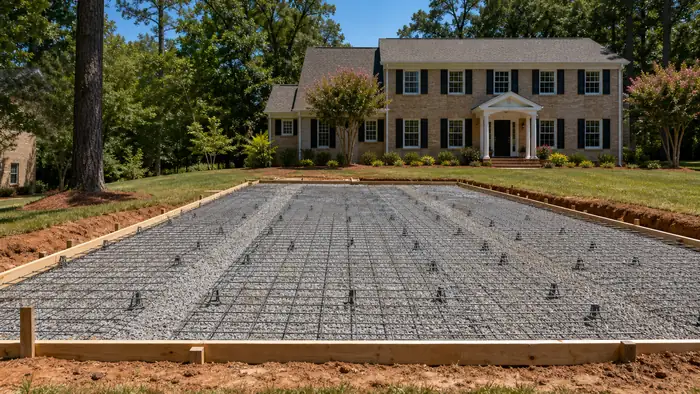
Wire mesh is unrolled across a driveway base before pouring. at a tan-brick colonial in Lawrenceville, GA, in clear late-morning sun.

Step 3: Forming & Reinforcement

Once the base is set, we build the forms: straight lumber for driveways and walks, bendable forms for curved patio edges, all staked, strung and checked for pitch. Reinforcement depends on the load. A patio might get welded wire mesh or fiber in the mix. A driveway that carries trucks gets steel rebar in a grid, tied at the crossings. The steel sits on plastic chairs so it ends up inside the slab. Mesh left lying on the gravel does almost nothing.

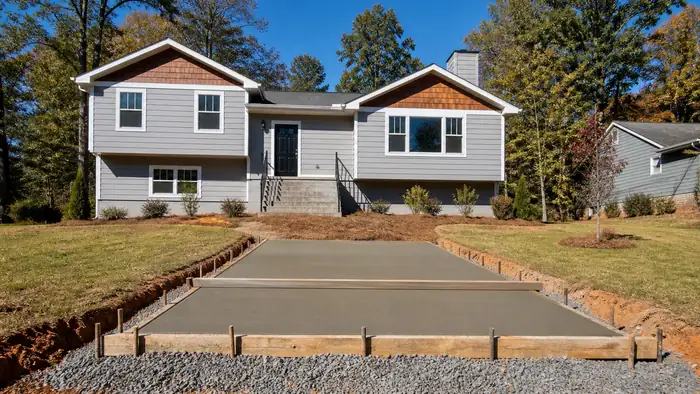
A screed board levels fresh concrete on a small patio. at a grey split-level home in Lawrenceville, GA, in clear late-morning sun.

Step 4: Pouring

Ready-mix trucks bring concrete batched for the job, with a strength suited to what the slab will carry and air entrainment for exterior surfaces. The pour has to stay continuous. A truck that runs late can leave a cold joint, a seam where fresh concrete meets a load that has already started to set, so we schedule deliveries tight. Adding water at the chute makes concrete easier to place and weaker once it cures. We don't. We rake it into every corner and screed it level.

A broom drags across a driveway creating a slip-resistant texture. at a tan-brick colonial in Lawrenceville, GA, under bright midday cloud.

Step 5: Finishing

Timing matters most here. After screeding, we bull float the surface to push the stone down and bring the cream up, then wait for bleed water to leave before touching it again. Working that water back in is how slabs end up flaking. An edger rounds the edges, and control joints get tooled or saw-cut so cracks form in straight lines instead of across the middle. Driveways and walks get a broom finish for grip. Stamped and decorative work gets its color and pattern now.

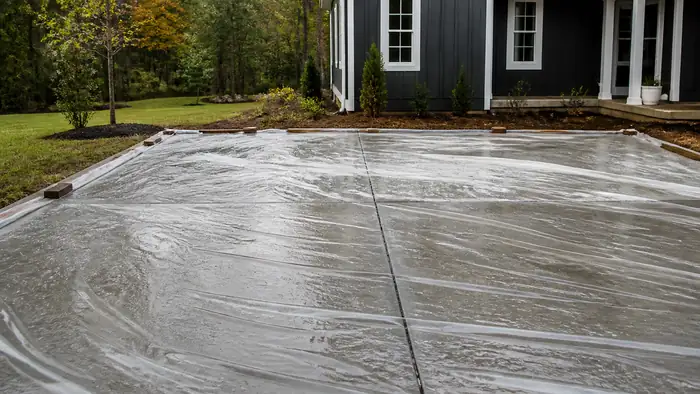
Plastic sheeting covers a curing driveway slab. at a charcoal farmhouse-modern home in Lawrenceville, GA, after a rain shower.

Step 6: Curing

Fresh concrete looks done long before it is. Strength comes from water staying in the slab while the cement hydrates, so we keep the surface damp or spray a curing compound right after finishing. Average daily highs sit around 72°F and lows around 53°F, but a hot afternoon or a dry wind can still pull moisture out fast and leave fine surface cracks. Foot traffic can go on after a few days. Cars wait longer, and we give you the date.

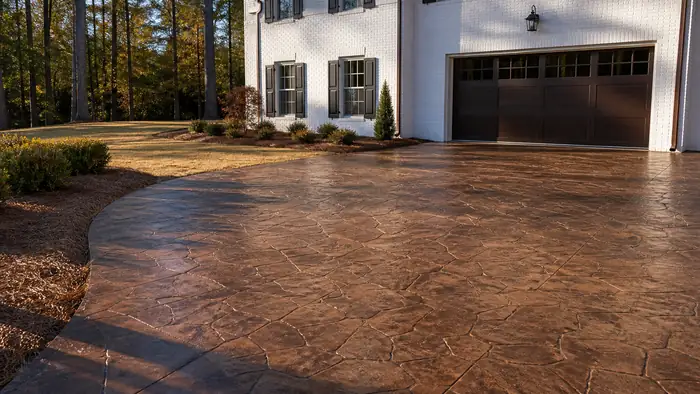
A finished stamped surface shows a glossy sealed sheen. at a painted-white-brick two-story home in Lawrenceville, GA, in late afternoon light.

Step 7: Sealing

A sealer is the last coat, and it goes on only after the slab has cured long enough to take it. Plain broom-finished driveways usually get a penetrating silane or siloxane sealer, which soaks in and repels water without changing the look. Stamped and colored patios get an acrylic sealer that deepens the color and protects the pattern. We apply it thin, in even coats, because a heavy coat traps moisture and turns cloudy. Resealing every few years keeps it working.

Choosing the Right Concrete System

The right system depends on what the slab has to carry and how you want it to look. A driveway takes the weight of vehicles every day, so we size the thickness and the steel reinforcement to that load. A patio or walkway carries people and furniture, which leaves room for stamped or decorative finishes. Plain broom-finish concrete is the workhorse. Stamped surfaces add texture and pattern where people will see them.

Ground matters as much as finish. Pacolet soil is the dominant type in Gwinnett County and it drains well, but it changes from one yard to the next, so we test every site before we pour. The land is hilly, and about 55 inches of rain a year will find any low spot. We grade for runoff and set the base to match. The median home here was built in 1987, and an existing slab often shows us what the ground has been doing for decades.

Frequently Asked Questions About Cement Installation in Lawrenceville

Is cement installation in Lawrenceville, GA affected by the local climate or soil conditions?

Yes. Gwinnett County gets about 55" of rain a year, so drainage and slope matter as much as the mix does. The dominant soil here is Pacolet, which drains well, but it changes across the county, and the ground is hilly in places. That is why we grade and test every site on its own before we pour. Averages tell us where to start. They don't tell us what to do.

What types of cement finishes work best for outdoor commercial surfaces in Lawrenceville?

A broom finish is the workhorse for walkways, entrances and loading areas, because it gives shoes and tires something to grip when the surface is wet. With the rain this area sees, that texture earns its keep. Where a property wants something with more character, we do stamped and decorative work, and we still build traction into it. Smooth troweled concrete belongs indoors, not on a sidewalk people cross in a downpour.

What commercial cement installation services do you offer in Lawrenceville?

Slabs, sidewalks, curbs, parking pads, dumpster pads, entry walks and patios for businesses, along with foundations and structural work that calls for proper reinforcement. A lot of commercial work is practical: a storefront walk that has heaved, a pad for new equipment, an extension to a lot. We handle the permit, the forming, the pour and the finish, and we keep the site workable for your customers while the job is underway. Call for a free estimate.

How thick should a cement slab be for a residential garage in Lawrenceville, GA?

It depends on what the garage carries and what sits under it. A slab for everyday cars is built thicker than a patio, and one that will hold a heavy truck, a lift or a workshop needs more depth and more reinforcement again. The base matters just as much as the concrete. Because soil and grade change from lot to lot in Lawrenceville, we set the thickness after we test your site, not before.

How much does a cubic yard of cement typically cost in Lawrenceville?

That price moves with the supplier, the mix and the time of year, so we don't quote it off the cuff. Strictly speaking, cement is the powder; what the truck delivers is concrete, and the material is only part of the bill. Site prep, forming, reinforcement, finishing and access usually shape the total more than the yardage does. Call for a free estimate, and the number you get will be for your project, not a rule of thumb.

How do you ensure cement quality, strength, and code compliance on commercial projects in Lawrenceville?

Quality starts under the slab. We test the soil, compact the base and check grade before any forms go up. On pour day we confirm the mix against the job's specifications and place reinforcement exactly where the design calls for it. Curing gets as much attention as finishing, because rushed curing weakens good concrete. We handle the permit and the required inspections, so the work is documented and built to the code that applies to your property.

Get a Free Estimate

Get a FREE Quote

Tap to call +1 470-229-2076