+1 470-229-2076
concrete foundation pouring completed by a local contractor at a red-brick ranch home in Lawrenceville, GA, under low winter sun.

Concrete Foundation Pouring in Lawrenceville, GA

A foundation is the one piece of concrete on a property you never look at again once the building goes up, so it has to be right the day it is poured. We pour residential and commercial foundations across Lawrenceville: footings, stem walls and slabs, sized to the load they carry and reinforced to match. Gwinnett County is hilly, with 181 feet of relief within a few miles, and no two lots sit quite the same.

Most foundation trouble starts below the concrete. Pacolet soil, which drains well, is the county's dominant type, but it changes from block to block, so we test every site on its own before a single form goes in. With about 55 inches of rain a year, grading and drainage matter as much as the mix. We handle the permit, set the reinforcement, and pour once the ground is ready. Call for a free estimate.

Call +1 470-229-2076

Get a FREE Quote

What Concrete Foundation Pouring Involves

concrete slab installation completed by a local contractor at a tan-brick colonial in Lawrenceville, GA, under bright midday cloud.

Concrete Slab Installation Cost

What a slab costs comes down to what sits under it and what goes into it. Thickness, rebar or wire mesh, and the depth of compacted base stone all move the number. So does the lot. The ground here is hilly and changes from block to block, so a sloped yard means cutting, filling and compacting before any forms go up. Truck access matters too: if the mixer cannot reach the pour, we pump. We price every slab from the site itself.


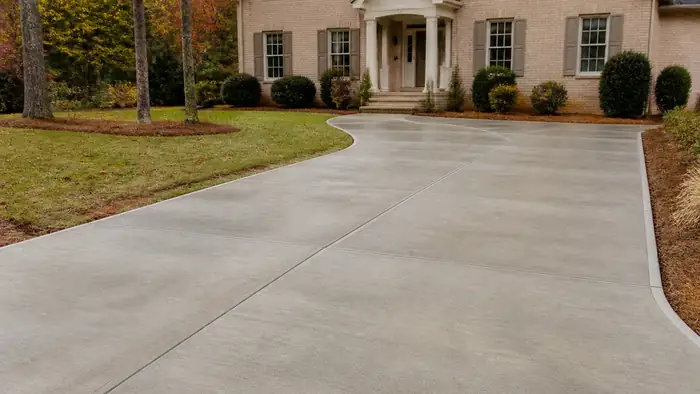
concrete driveway installation completed by a local contractor at a brick-and-siding two-story home in Lawrenceville, GA, in early morning light.

Concrete Driveway Installation

A driveway takes more abuse than any other slab on the property. Loaded cars, turning tires and delivery trucks that swing wide all work on it. We pour it thicker where heavy vehicles park, reinforce it with rebar, and cut control joints close enough that cracks land in the joints instead of across the middle. Slope gets the same care. With about 55 inches of rain a year, water has to run toward the street, not back into the garage. Broom finish is standard; stamped and decorative finishes are available.

concrete flooring installation completed by a local contractor at a charcoal farmhouse-modern home in Lawrenceville, GA, after a rain shower.

Concrete Flooring Installation

Basements, garages and shop floors go down over compacted stone with a vapor barrier underneath, so ground moisture stays out of whatever sits on top. Pacolet soil, the most common type in this area, drains well. It still varies, and we test each site before we set grade. Reinforcement is wire mesh or rebar depending on the load the floor will carry. Finishes run from a smooth steel trowel, for coatings or polish, to a light broom texture where footing matters.

concrete slab repair completed by a local contractor at a grey split-level home in Lawrenceville, GA, under low winter sun.

Concrete Slab Repair

The median home in Lawrenceville was built in 1987, and slabs that age show it. Cracks keep widening, sections settle where the fill underneath washed out, and surfaces scale and flake. The first job is finding out why. A hairline shrinkage crack can be routed and sealed. A slab that has sunk or broken into pieces usually needs the bad section cut out, the base recompacted, and new concrete doweled into the old. Patching over a failing base only buys a little time.

Our Warranty and Guarantee

What we stand behind is the slab itself, and that starts before any concrete arrives. Every site gets graded and tested on its own, because Pacolet soil drains well but is not the same on every lot. We set forms, reinforcement and base to what the ground actually shows us. Nothing gets poured on a guess.

With about 55 inches of rain a year, some pour days get moved. If the forecast or the ground is wrong, we wait, because a foundation poured into bad conditions carries that mistake for as long as the house stands. Before we call the project finished, we walk the foundation with you and show you what went into it: the reinforcement, the base, the cure.

Our Concrete Process, Step by Step

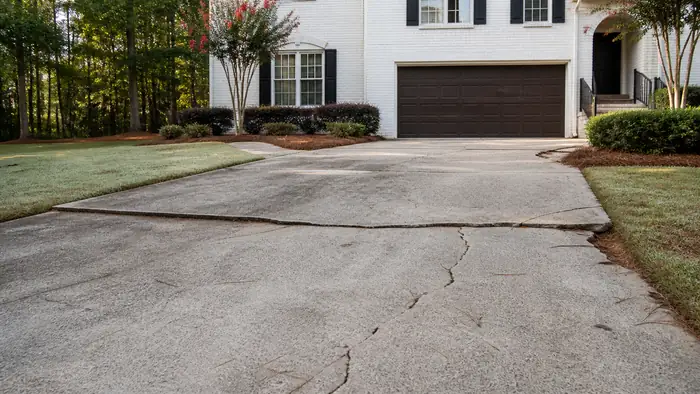
A worker examines an old driveway before replacement. at a painted-white-brick two-story home in Lawrenceville, GA, in early morning light.

Step 1: Site Assessment

Before anything is formed, we walk the lot and test the ground where the foundation will sit. Pacolet soil is the dominant type in Gwinnett County and it drains well, but it changes across the county, so we never take it for granted on your property. We check bearing capacity, slope, where water runs after a storm, and what utilities are buried nearby. The median home here was built in 1987, so when the job is an addition we also check how new footings will tie into the old ones.

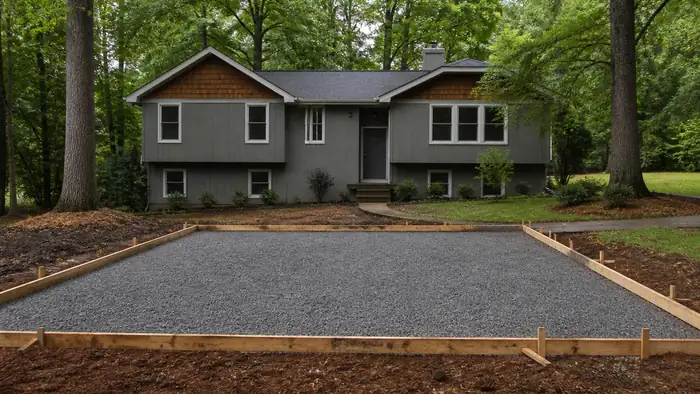
Crushed stone base is raked level inside driveway forms. at a grey split-level home in Lawrenceville, GA, after a rain shower.

Step 2: Site Preparation

Grading comes next. Gwinnett County has 181 feet of local relief within a few miles, and plenty of lots show it as a slope that has to be cut, filled or stepped. We strip topsoil and roots, bring in fill where it's needed and compact it in lifts so it won't settle under the slab later. A bed of crushed stone goes down under the slab area, and we shape the grade so water moves away from the footprint instead of pooling against it.

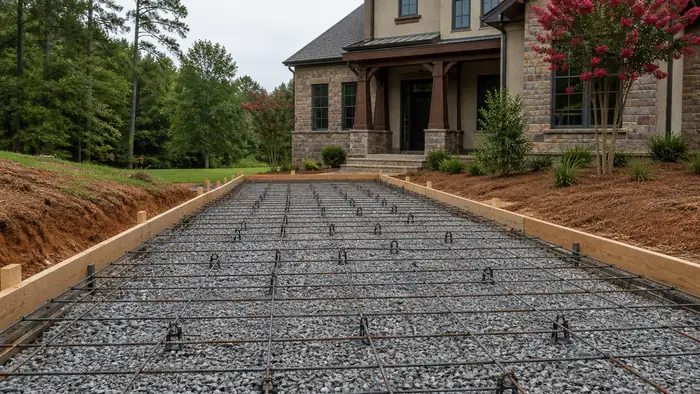
A worker ties rebar into a grid before a residential pour. at a stacked-stone and stucco home in Lawrenceville, GA, under an overcast sky.

Step 3: Forming & Reinforcement

Footings get dug to undisturbed soil and formed square, level and to the dimensions on the plan. We set steel rebar through the footings and slab, held up on chairs so it ends up inside the concrete, not lying in the dirt underneath. Steel on the ground does no structural work at all. A polyethylene vapor barrier goes under the slab, anchor bolts and plumbing sleeves are placed, and we handle the permit and the inspection before any truck is called.

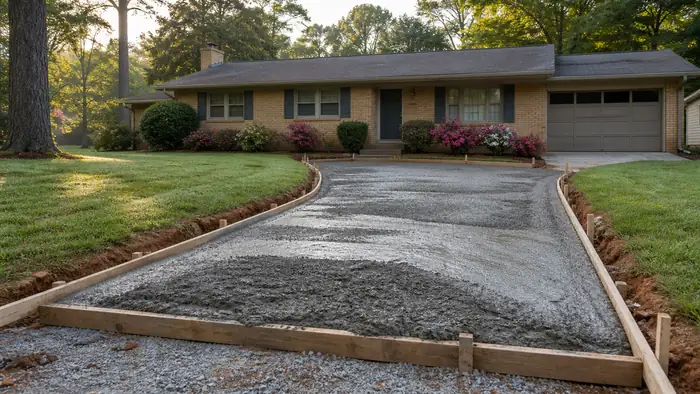
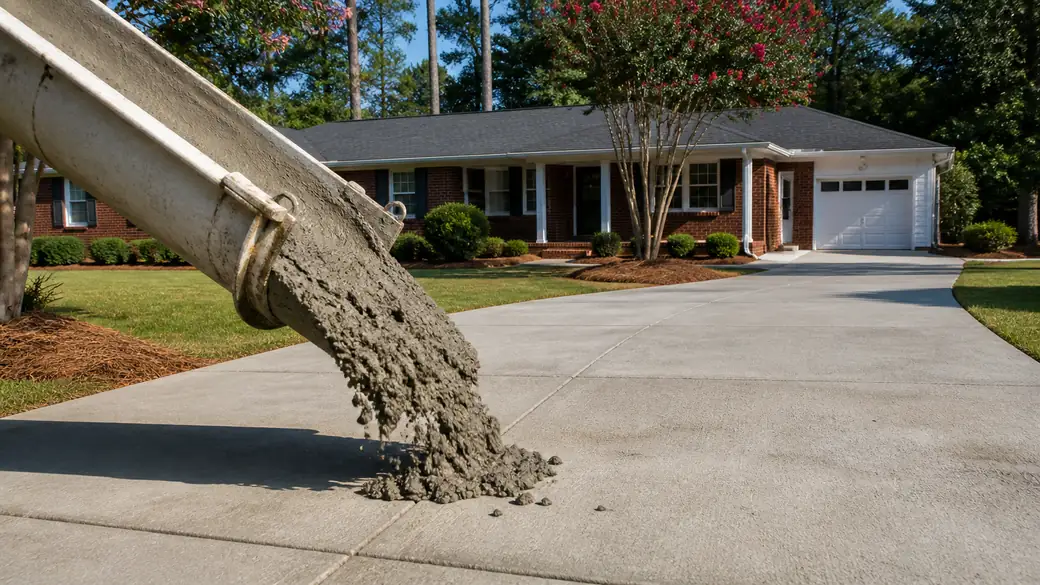
A ready-mix truck discharges concrete into a driveway form. at a buff-brick ranch home in Lawrenceville, GA, in early morning light.

Step 4: Pouring

Ready-mix arrives batched to the strength the structure calls for, and we check the slump at the chute before it goes in. Adding water at the truck makes concrete easier to place and weaker once it sets, so we don't do it. We pour continuously where we can, working the mix into corners and around the steel, and vibrate footings and walls to drive out air pockets. With about 55 inches of rain a year here, we watch the forecast and reschedule rather than pour into a storm.

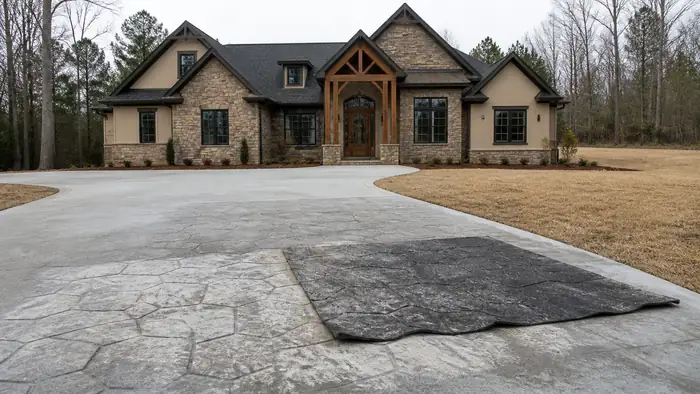
Stamping mats are pressed into a patio surface to imprint a pattern. at a stacked-stone and stucco home in Lawrenceville, GA, under an overcast sky.

Step 5: Finishing

Once the concrete is placed, we strike it off with a screed to bring the surface flat and to grade, then float it to push the aggregate down and bring cream to the top. Timing decides everything at this stage. Trowel too early and bleed water gets trapped, which later flakes off as scaling; wait too long and the surface won't close. Control joints are cut or tooled at planned spacing so the slab cracks where we choose, in a straight line, instead of wherever it likes.

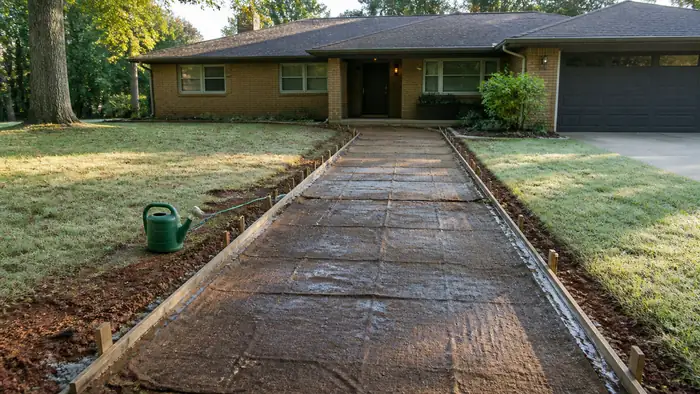
Damp burlap covers a small slab section during curing. at a buff-brick ranch home in Lawrenceville, GA, in early morning light.

Step 6: Curing

Concrete gains strength by holding onto its water, not by drying out. For the first week we keep the surface damp with wet curing, curing blankets or a spray-on curing compound, depending on the weather and the size of the slab. Average highs here run around 72°F with lows near 53°F, which is good curing weather most of the year. A hot, windy afternoon can still pull moisture off the top fast enough to cause shrinkage cracks, so we keep watching it. Framing loads wait until it's ready.

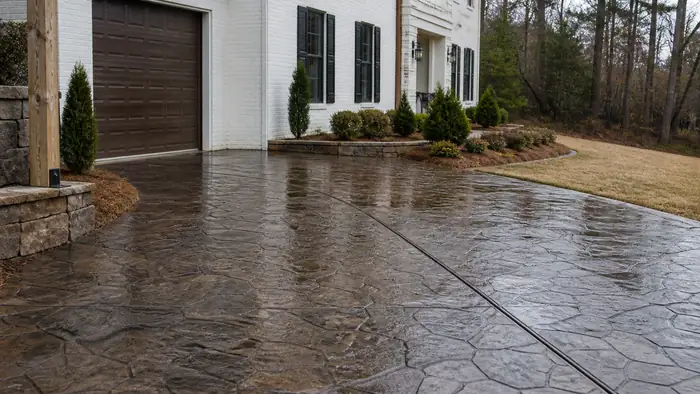
A roller applies sealer to a stamped patio surface. at a painted-white-brick two-story home in Lawrenceville, GA, after a rain shower.

Step 7: Sealing

Sealing is the last step, and on a foundation most of it happens below grade. We apply a damp-proofing or waterproofing coating to the outside of foundation walls before backfill, and add drain tile along the footing where the site calls for it. Exposed slab edges, and any concrete surface tied to the foundation that stays uncovered, like a garage floor or patio, get a penetrating sealer that slows water from soaking in. Water is what wears concrete down over time, and keeping it out is the whole point.

Choosing the Right Concrete System

The right foundation depends on the lot more than the house. A flat, well-drained site usually suits a monolithic slab, with the footings and floor poured together. A lot that falls away calls for a stem wall or stepped footings, so the structure sits level while the ground does not. Gwinnett County is hilly, with about 181 feet of relief within a few miles, and it changes from block to block. We grade and test every site before recommending a system.

Soil and water settle the rest. Pacolet soil is the county's dominant type and drains well, but it varies, so the test tells us what we are actually building on. With around 55 inches of rain a year, we plan drainage and reinforcement around where the water really goes. Adding onto an older house? The median home here was built in 1987, and we match new footings to what is already there. Call for a free estimate.

Frequently Asked Questions About Concrete Foundation Pouring in Lawrenceville

How much does concrete foundation pouring cost?

It depends on what goes into the ground. Footprint, footing depth, wall height, the amount of steel reinforcement and how close a truck can get to the forms all move the number. A flat lot with open access pours for less than a tight backyard where the concrete has to be pumped. We do not quote from a chart. Call for a free estimate, built from your actual site.

What's the cost of foundation pouring in Lawrenceville?

Slope drives a lot of it here. The ground around Lawrenceville is hilly, with 181 feet of local relief within a few miles, and it changes from one block to the next. A lot that needs cutting, filling or stepped footings takes more excavation, more forming and more concrete than a level one. We grade and test every site on its own before work starts, so the estimate reflects your lot, not your neighbor's.

What permits do I need for concrete foundation pouring in Lawrenceville?

A building permit, and we handle it. Foundation work usually comes with inspections at set points, such as before the concrete goes in, and we plan the schedule around them so nothing is poured before it has been checked. The exact requirements depend on the property and the project, so we sort them out as part of the job. You do not need to pull anything yourself or chase paperwork.

How much does concrete foundation pouring cost in Lawrenceville?

Beyond slope, the soil matters. Pacolet soil, which drains well, is the most common type in the county, but it is not uniform, and a pocket of soft or wet ground under a footing changes the plan. Water counts too: the area sees about 55 inches of rain a year, and a foundation needs drainage that can handle it. We test each site individually, and your estimate comes from those results.

How much does concrete formwork and pouring cost in Lawrenceville, GA?

Formwork can be a large share of the total, especially on a slope. Taller walls need stronger forms and more bracing. Stepped footings need more form changes, and a crawlspace or basement wall takes far more forming than a slab on grade. Labor for setting and stripping the forms is counted alongside the concrete and steel, so nothing shows up later. For your property, the full figure comes from a free estimate.

What areas beyond Lawrenceville do you serve?

We work throughout metro Atlanta, in Lawrenceville and the towns that surround it, and every one of them is served on the same terms. A foundation in Snellville gets the same site testing, the same grading and the same care at the pour as one down the street from us. Not sure whether your property falls inside the area we cover? Call and ask. The estimate is free either way.

Get a Free Estimate

Get a FREE Quote

Tap to call +1 470-229-2076