+1 470-229-2076
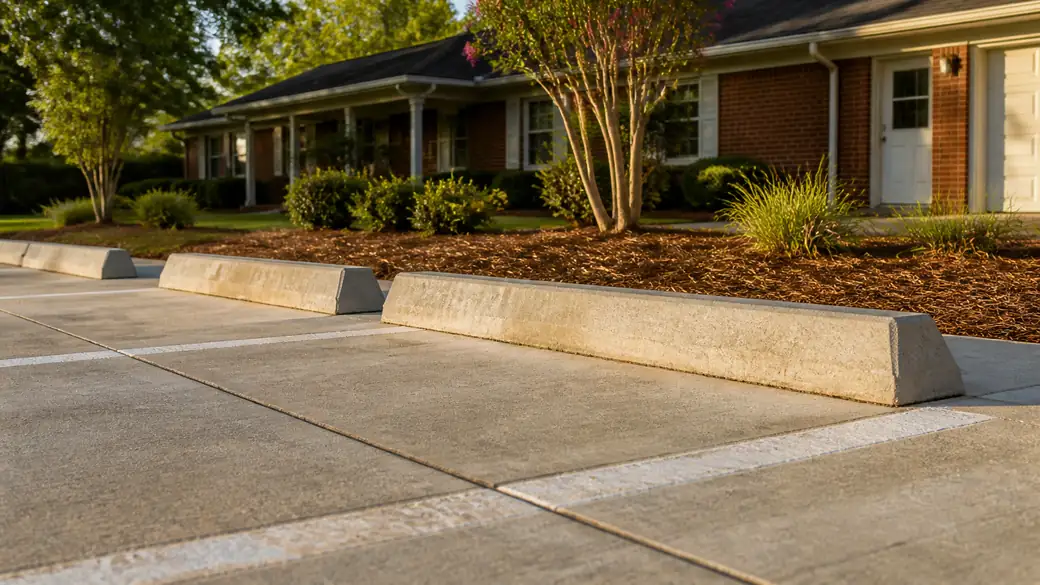
concrete parking lot construction completed by a local contractor at a red-brick ranch home in Lawrenceville, GA, in late afternoon light.

Concrete Parking Lot Construction in Lawrenceville, GA

A parking lot is the first surface a customer crosses and the one that takes the most punishment, from delivery trucks backing in to the same few stalls turning over all day. We build concrete parking lots for commercial property around Lawrenceville: retail lots, office lots, church and school lots, plus the drive aisles and loading pads that tie them together. Concrete holds its shape under heavy loads. It doesn't soften on a hot afternoon or rut where the trucks stop. Built right, with the correct thickness and reinforcement for the traffic it will see, the slab asks for little more than joint upkeep and a wash now and then.

The ground decides most of the job. Gwinnett County is hilly, with 181 feet of local relief within a few miles, and it changes from one block to the next, so we grade and test every site on its own before a single form goes up. Pacolet soil is the dominant type here and it drains well, but it varies across the county, and we test it instead of assuming it. With about 55 inches of rain a year, slope and drainage get settled before the pour, not patched after it. We handle the permit, set the reinforcement, and plan the pours around how your property needs to keep running.

Call +1 470-229-2076

Get a FREE Quote

What Concrete Parking Lot Construction Involves

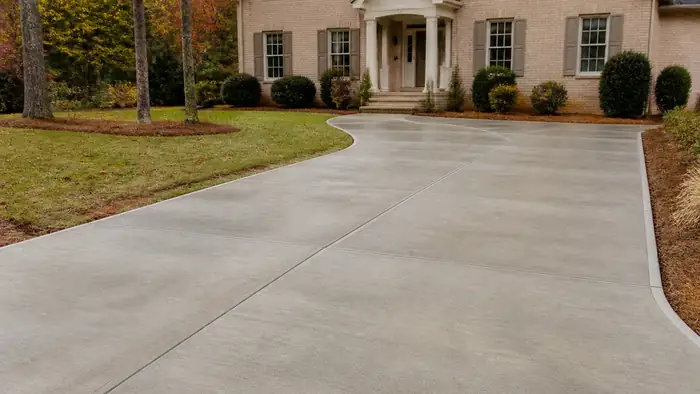
concrete slab installation completed by a local contractor at a tan-brick colonial in Lawrenceville, GA, under bright midday cloud.

Concrete Slab Installation Cost

Price on a slab comes down to what sits under it and what it has to carry. Thickness, the strength of the mix, and how much steel goes in all move the number, and so does site work. Gwinnett County is hilly, so a lot that looks flat often needs cut, fill and compaction before we set forms. We grade and test every site on its own, then price the slab from what we find, not from a chart. Call for a free estimate.


concrete driveway installation completed by a local contractor at a brick-and-siding two-story home in Lawrenceville, GA, in early morning light.

Concrete Driveway Installation

A driveway fails from the bottom up. We strip the topsoil, compact a crushed stone base, and set forms with enough pitch to shed water off the surface and away from the garage. With about 55 inches of rain a year, drainage matters more than the finish. Wire mesh or rebar goes in on chairs so it sits mid-slab, not in the dirt. Control joints get cut on a spacing that tells cracks where to go. Broom finish is standard, with stamped and decorative options.

concrete flooring installation completed by a local contractor at a charcoal farmhouse-modern home in Lawrenceville, GA, after a rain shower.

Concrete Flooring Installation

Garage floors, shop floors, basements and commercial spaces each ask for something different. Interior slabs get a vapor barrier underneath so ground moisture does not come up through the floor and lift the coating or flooring laid on top. Pacolet soil, the county's most common type, drains well, but it varies, so we test before we pour. Finishes run from a hard steel trowel for warehouse floors to a light broom where traction matters, or an epoxy-ready surface when a coating goes on later.

concrete slab repair completed by a local contractor at a grey split-level home in Lawrenceville, GA, under low winter sun.

Concrete Slab Repair

Not every cracked slab needs to come out. Hairline shrinkage cracks can be routed and sealed. A slab that has settled or heaved usually points to a washed-out base or tree roots, and patching the surface will not fix that. The median home here was built in 1987, so plenty of patios, walks and garage floors are old enough to show it. We find out why the slab moved, then decide whether to seal it, lift it, or cut out a section and repour with new reinforcement doweled into the sound concrete.

Our Warranty and Guarantee

The best assurance a parking lot can carry is the way it was built. We test every site before we set a form, because Pacolet soil drains well across much of Gwinnett County but changes from one property to the next. We grade for the ground in front of us, compact the base in lifts, and size the slab and its reinforcement for the traffic it will actually carry: delivery trucks, not just cars. Then we look over the finished surface joint by joint before we call the project done.

Most commercial concrete that fails early fails from water. With about 55 inches of rain a year and slopes that shift from block to block, a lot has to shed runoff to its drains instead of letting it pool at the curb or soak in under the slab. We set the fall carefully, cut control joints at the right spacing and depth, and cure the concrete properly rather than rushing it open to traffic. We handle the permit too. Call us for a free estimate and ask how we would build yours.

Choosing the Right Concrete System

A parking lot is a set of decisions made before the first truck arrives: slab thickness, reinforcement, joint spacing and the way water leaves the surface. The traffic decides most of them. A lot that sees only passenger cars can run a thinner slab than one that takes delivery trucks, trash haulers or a fire lane, and we often pour the heavy lanes thicker than the stalls beside them. For reinforcement we choose between rebar, welded wire and fiber mixed into the concrete, or some combination. Rebar earns its place where loads are heavy and repeated. Fiber helps control surface cracking. Neither replaces good joints.

What sits underneath matters as much as the mix. Gwinnett County's dominant soil is Pacolet, which drains well, but it changes across the county, so we test every site before we commit to a design. Grade matters too. The county is hilly, with 181 feet of local relief within a few miles, and a lot on a slope needs its base built up and compacted evenly or the slab settles in places. With about 55 inches of rain a year, drainage is part of the structure: we set the slope, the curb lines and the joint pattern so water runs off the surface instead of sitting on it. Call for a free estimate.

How Much Does Concrete Parking Lot Construction Cost in Lawrenceville?

We don't price a parking lot over the phone. The number comes from the site itself: what is already on the ground, how the trucks get in, how much the land falls, and where about 55 inches of rain a year will go once the slab is down. Most of that you can walk out and check yourself.

What changes the priceWhich wayWhy
Old asphalt or concrete still in placecosts moreIt has to be broken out, loaded and hauled off before grading starts. Thick or reinforced slabs take longer to remove.
A lot that falls noticeably from one end to the othercosts moreGwinnett County is hilly, with 181 feet of local relief within a few miles. Steeper ground means more cut and fill, and sometimes a retaining edge.
Soft or wet spots in the groundcosts morePacolet soil drains well and is common here, but it varies. We test every site, and weak areas get dug out and replaced with compacted stone.
Tight access for a ready-mix truckcosts moreA truck that backs up to the forms pours straight from the chute. Narrow gates, low wires or a long reach mean a pump or buggies.
Delivery trucks, dumpsters or heavy vans using the lotcosts moreHeavier loads call for a thicker slab and heavier reinforcement where those vehicles turn and stop.
Working drains and pipe already on sitecosts lessWe can tie into what is there. A lot with nowhere for water to go needs inlets, pipe or a swale added.
Open ground clear of trees and stumpscosts lessRoots, stumps and buried lines add digging and hand work.

When you compare bids, make sure they describe the same slab. Look for the thickness, the type and spacing of reinforcement, the depth of the stone base and the spacing of control joints. Check who removes the old surface and whether the permit is included. A low number usually means one of those lines is missing.

Frequently Asked Questions About Concrete Parking Lot Construction in Lawrenceville

What does commercial parking lot construction cost in Lawrenceville?

It depends on the lot, and we don't put a figure on one we haven't walked. Size is the obvious driver. Slab thickness, reinforcement, how much grading the site needs, drainage structures, striping and how much old surface has to come out all move the number too. A lot built for delivery trucks is a different project from one built for cars. Call for a free estimate and we price your site on its own.

What size parking lot requires permits in Lawrenceville?

There isn't a single size we'd quote without seeing the plans. Whether a permit applies turns on more than square footage: new paved surface, changes to how water drains off the property, work near the street and the property's zoning can all bring one into play. So we check the requirements for your specific project before anything is scheduled. Then we handle the permit, and you don't have to sort out the rules yourself.

Will Lawrenceville Best Concrete take care of our city permits and inspections?

Yes. We handle the permit and schedule the inspections that come with it, so you aren't the one tracking paperwork or meeting an inspector on site. Inspections on a parking lot typically come before the pour, once the subgrade, forms and reinforcement are in place, and they have to pass before any concrete goes down. We build that timing into the schedule from the start. Your part is deciding what the lot needs to do.

Do you only serve Lawrenceville, or do you work in surrounding areas too?

No. Lawrenceville is where we're based, not where we stop. We build parking lots, driveways, patios and slabs across the surrounding metro Atlanta towns, and a lot in Snellville gets the same crew, the same materials and the same process as one down the road from us. Distance doesn't change how the base is prepared or how the surface is finished. Not sure whether you're in our area? Call and ask.

How does the climate in Lawrenceville affect patio longevity and what does your company do to mitigate these effects?

Water does most of the work against a patio. This area averages about 55 inches of rain a year, while snow is light, around 2 inches. So our focus is moving water off the slab and away from it. We pitch every patio to drain, compact the base properly and place reinforcement so the slab holds together. Pacolet soil, the most common type here, drains well. We still test each site before we start.

What specific areas and neighborhoods do you serve outside of Lawrenceville?

Our coverage runs through the metro Atlanta towns around Lawrenceville in every direction, and every one of them is served on the same terms. The full list of towns is elsewhere on this page. We don't keep a separate list of neighborhoods, because the town is what matters. Whether it's a commercial lot, a residential driveway or a stamped patio, call for a free estimate and tell us where the property sits.

Get a Free Estimate

Get a FREE Quote

Tap to call +1 470-229-2076
