+1 470-229-2076
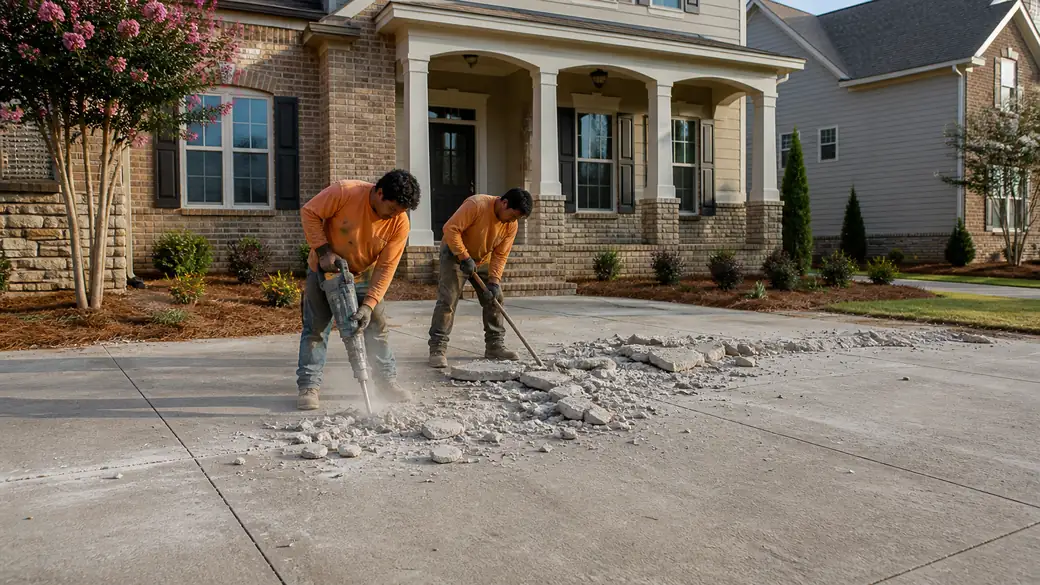
concrete demolition and removal completed by a local contractor at a brick-and-siding two-story home in Lawrenceville, GA, under low winter sun.

Concrete Demolition And Removal in Lawrenceville, GA

We break out and haul away old concrete across Lawrenceville: cracked driveways, sunken patios, walkways that tilt back toward the house, and slabs left behind by sheds or additions that are long gone. The median home here was built in 1987, so much of the concrete around these properties has been in the ground for decades. Some of it has settled. Some was poured thin, or without enough reinforcement to begin with. Either way, the surface you see is rarely the whole story, and taking it out cleanly is the first step before anything new goes in.

Removal takes more than a jackhammer and a truck. We saw-cut the edges so the concrete that stays, like a garage apron or a neighbor's walk, keeps a straight, clean line. Then we break the slab into pieces we can load, pull out any rebar or wire mesh, and take the materials off the property. Gwinnett County is hilly, and what sits under an old slab changes from one lot to the next, so we look at the grade and the base before a new driveway or patio is planned. We handle the permit where one is needed. Call for a free estimate on your project.

Call +1 470-229-2076

Get a FREE Quote

What Concrete Demolition And Removal Involves

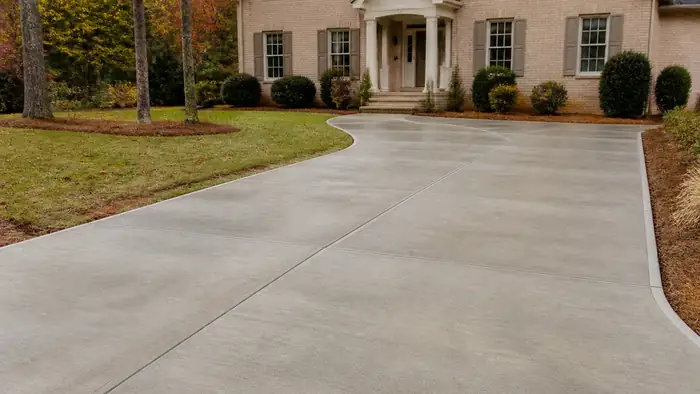
concrete slab installation completed by a local contractor at a tan-brick colonial in Lawrenceville, GA, under bright midday cloud.

Concrete Slab Installation Cost

What a slab costs comes down to what sits under it and what has to come out first. Breaking up an old slab and hauling it off adds labor and dump weight. Gwinnett County is hilly, so a sloped lot may need cut, fill and a compacted base before any forms go up. Thickness, rebar or wire mesh, and the finish all move the number. We price after walking the site and testing the ground. Call for a free estimate.


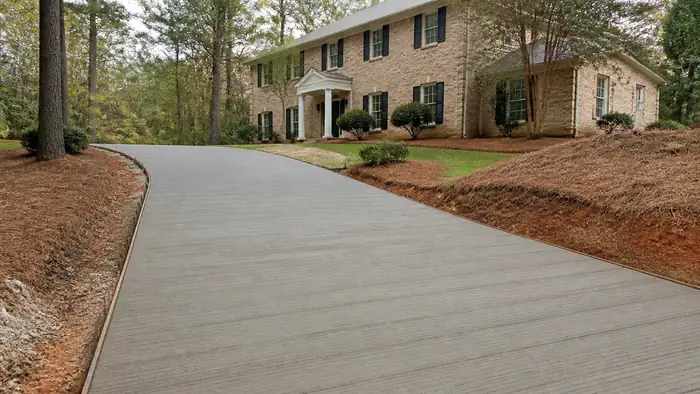
concrete driveway installation completed by a local contractor at a brick-and-siding two-story home in Lawrenceville, GA, in early morning light.

Concrete Driveway Installation

Most driveways we replace are cracked, heaved or settled. The median home here was built in 1987, so the original pour has had a long life. We saw-cut clean edges where we tie in, break out the rest and haul it away. Then we grade for drainage, since the area sees about 55 inches of rain a year, compact the base, set rebar on chairs and pour. Control joints go in before the concrete can pick its own cracks.

concrete flooring installation completed by a local contractor at a charcoal farmhouse-modern home in Lawrenceville, GA, after a rain shower.

Concrete Flooring Installation

Interior floors start with getting the old material out cleanly: tile, adhesive, a damaged garage slab, or a basement floor that has cracked and sunk. Inside a house, removal means dust control and protecting walls and doorways. We lay a vapor barrier over compacted stone, set reinforcement and pour to a flat, level surface. Finishes run from a hard steel-trowel surface for garages and shops to sealed, polished or stained concrete for living space and commercial rooms.

concrete slab repair completed by a local contractor at a grey split-level home in Lawrenceville, GA, under low winter sun.

Concrete Slab Repair

Not every cracked slab needs to come out. Hairline shrinkage cracks can be routed and sealed. A section that sank because the base washed out underneath is a different problem, and patching the surface will not hold. We find the cause first: poor drainage, a thin base, missing reinforcement or roots. Where damage is limited, we cut out the bad panel, rebuild the base, dowel into the sound concrete and pour new. Where it runs across the whole slab, replacement is the better use of money.

Our Concrete Process, Step by Step

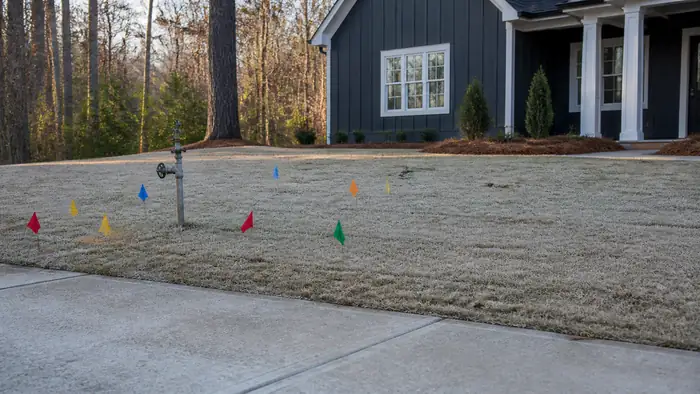
Utility flags mark buried lines before digging starts. at a charcoal farmhouse-modern home in Lawrenceville, GA, in early morning light.

Step 1: Site Assessment

Most of our demolition jobs start with an old slab that has cracked, heaved or sunk, and the first question is why. We look at drainage, tree roots, the grade and what sits under the existing concrete before anything gets broken out. Gwinnett County is hilly, with 181 ft of local relief within a few miles, so runoff often explains the damage. Pacolet soil is the dominant type here. It varies, though, so we test every site on its own.

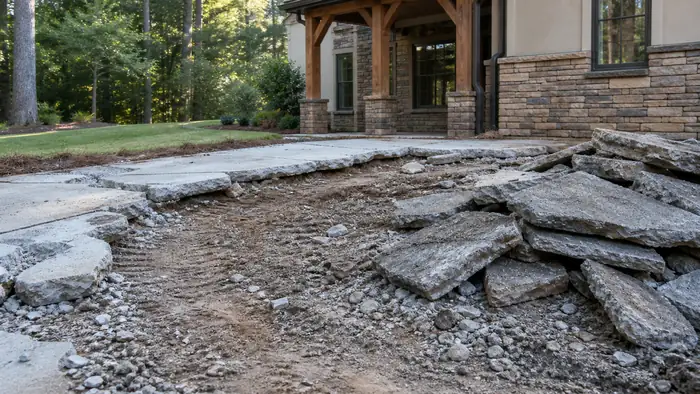
An old patio slab is broken up and hauled away. at a stacked-stone and stucco home in Lawrenceville, GA, under low winter sun.

Step 2: Site Preparation

Breaking out the old slab is the loud part. We saw-cut the edges so the demolition stops where it should, then break the concrete up, pull the old reinforcement and haul it all off the property. After that, the subgrade gets our attention. Soft spots are dug out, gravel base goes down in compacted lifts, and the grade is set to carry water away from the house. Skipped compaction is the most common reason a new slab settles.

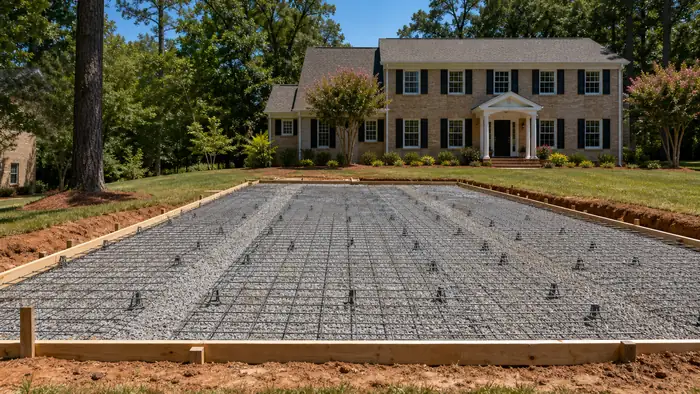
Wire mesh is unrolled across a driveway base before pouring. at a tan-brick colonial in Lawrenceville, GA, in clear late-morning sun.

Step 3: Forming & Reinforcement

Forms are straight lumber, staked at finished height and checked against a string line so the slab has the pitch it needs to drain. Driveways get steel rebar on a grid, set on chairs so it sits inside the slab instead of on the gravel. Lighter patios and walkways may take welded wire mesh. Rebar lying on the ground does nothing, and we find it that way in a lot of the concrete we tear out.

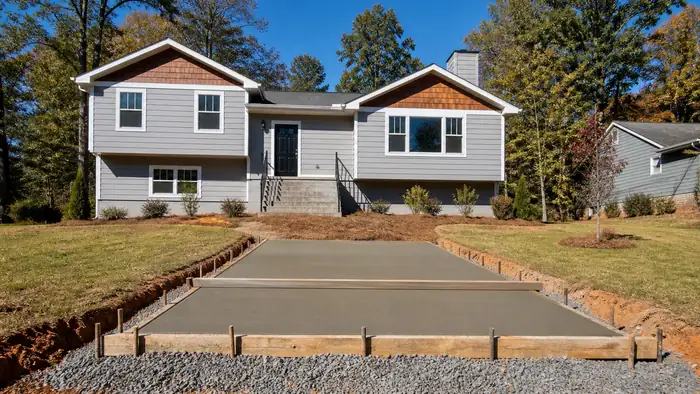
A screed board levels fresh concrete on a small patio. at a grey split-level home in Lawrenceville, GA, in clear late-morning sun.

Step 4: Pouring

The mix is ordered for the job: a driveway that carries vehicles gets a stronger mix than a garden path. When the truck arrives, we place concrete close to where it ends up rather than dragging it across the forms, which separates the stone from the paste. Adding water at the chute makes concrete easier to spread and weaker once it sets. We don't do it. The slab is screeded to the forms, then bull-floated to close the surface.

A broom drags across a driveway creating a slip-resistant texture. at a tan-brick colonial in Lawrenceville, GA, under bright midday cloud.

Step 5: Finishing

Timing matters more than technique here. We wait for the bleed water to leave the surface, because working it back in leaves a weak top layer that flakes later. Control joints are tooled or cut so the slab has a planned place to crack. Driveways usually get a broom finish for grip in the wet, which counts with about 55" of rain a year. Stamped and decorative finishes are pressed in while the concrete is still soft enough to take the pattern.

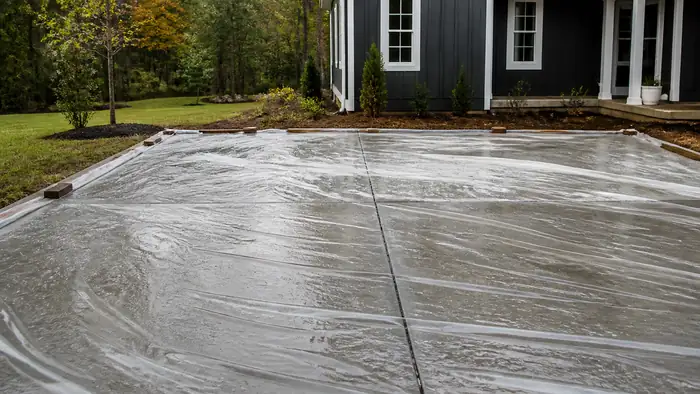
Plastic sheeting covers a curing driveway slab. at a charcoal farmhouse-modern home in Lawrenceville, GA, after a rain shower.

Step 6: Curing

Concrete keeps gaining strength long after it looks dry, and it needs moisture to do that. We cover the slab or apply a curing compound so the surface does not dry out faster than the concrete underneath. Wind and direct sun pull water from the top first, and a slab left bare can craze or dust. Foot traffic comes before vehicles. Keep cars off a new driveway until we say it is ready, not when it looks finished.

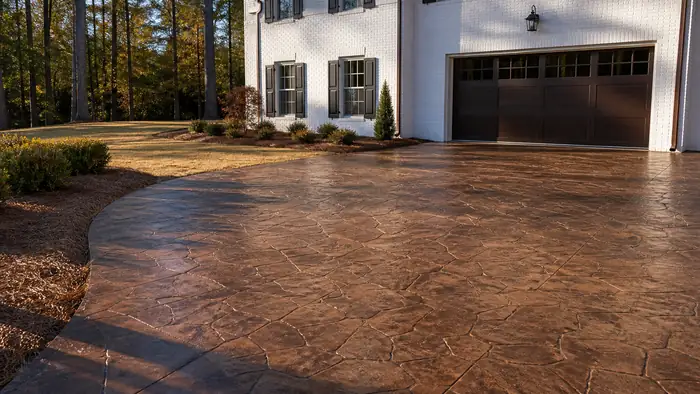
A finished stamped surface shows a glossy sealed sheen. at a painted-white-brick two-story home in Lawrenceville, GA, in late afternoon light.

Step 7: Sealing

Sealer goes on once the concrete has cured, never before. A penetrating sealer soaks in and helps keep water and oil out of a plain broom-finished driveway without changing how it looks. Stamped and colored surfaces usually get a film-forming sealer that deepens the color and needs recoating over time. Either kind slows the staining and wear that make older concrete look tired. No sealer rescues a badly poured slab, which is why the earlier steps matter more.

Choosing the Right Concrete System

Tearing out the old concrete is half the decision. The other half is what goes back down, and that depends on how the surface will be used. A driveway that carries a truck every day needs a thicker slab and steel reinforcement held at the right height in the pour, not mesh lying flat on the gravel. A patio or walkway can run thinner, and it is a good place for stamped or decorative finishes if plain broom texture is not what you want. The median home in Lawrenceville was built in 1987. Many of the slabs we remove have been down for decades, and what a household parks or builds on today may not match what the original pour was sized for.

Site conditions settle the rest. Gwinnett County is hilly, with 181 feet of local relief within a few miles, and the area sees about 55 inches of rain a year. Grade and drainage matter as much as the mix. On a sloped lot we look at where water will run once the new slab is in, and we set the pitch so it moves away from the house and garage. Pacolet soil, which drains well, is the most common type in the county, but it changes from lot to lot. We test every site before recommending a base, a thickness or a reinforcement plan, and we explain why.

How Much Does Concrete Demolition And Removal Cost in Lawrenceville?

Square footage is only the start of the price. Two slabs the same size can take very different amounts of work to break and haul away, and most of what separates them is something you can check on your own property before anyone comes out.

What changes the priceWhich wayWhy
Wire mesh or rebar inside the slabcosts moreSteel has to be cut free from the broken concrete before it can be loaded and hauled.
A thicker slab, like one poured to carry an RV or work truckcosts moreMore passes with the breaker, and more weight in every load that leaves the site.
A clear, wide path from the streetcosts lessA skid steer and dump truck can drive to the work instead of a crew wheeling debris out through a gate.
A steep lotcosts moreGwinnett County is hilly, and machines need safe footing. On a steep grade, more of the breaking and loading happens by hand.
Water, gas or irrigation lines under or near the slabcosts moreWe break slowly and carefully around them instead of running a machine straight through.
Posts, a shed, fencing or a hot tub on the concretecosts moreAnything sitting on or anchored into the slab comes out first.
Ground that stays wet after raincosts moreWith about 55 inches of rain a year here, a soggy subgrade has to dry or be firmed up before the next step.
Clean concrete with nothing mixed incosts lessA load of only concrete is simpler to dispose of than one mixed with asphalt, soil or trash.

Put competing bids side by side and check what each one assumes. Look for whether haul-off and disposal are included, whether cutting reinforcement is priced in or left as an extra, and who handles the permit. Ask what the ground looks like when the crew leaves: raked and level, or just empty. A bid that names the thickness and steel it expects to find is easier to hold someone to than one that simply says "remove concrete."

Frequently Asked Questions About Concrete Demolition And Removal in Lawrenceville

Do you handle the concrete demolition and removal permits, utility locating, and site safety in Lawrenceville?

Yes. We handle the permit where the job needs one, and we get underground utilities marked before any saw or breaker touches the slab. Gas, water, power and cable lines often run closer to a driveway than people expect. On site, we tape off the work area, keep water on the saw blade to hold the dust down, and protect the surfaces that are staying. Kids and pets stay back until the last load is gone.

What concrete demolition methods do you use for Lawrenceville driveways, patios, and slabs?

That depends on thickness, reinforcement and access. A thin patio can come apart with a jackhammer and a pry bar. A driveway usually gets a skid steer with a hydraulic breaker, which cracks the slab into pieces we can lift and load. Where part of a slab stays, we saw-cut a straight line first so the break stops exactly where it should. Rebar and wire mesh get cut free as we go, and everything is hauled off.

What factors affect the cost of concrete demolition and removal in Lawrenceville?

Square footage matters, but thickness and reinforcement matter more. A thin patio of plain concrete breaks fast. A thick slab tied with rebar takes longer and fills more trucks. Access counts too: a backyard patio with no gate wide enough for equipment may come out by hand. The median home here dates to 1987, so many slabs we remove have had patches, footings and add-ons poured against them over the years, and those show up in the work.

How much does concrete demolition and removal cost in Lawrenceville, GA?

It comes down to the slab in front of us, so we don't quote a figure over the phone. Two driveways of the same size can differ a lot once you account for thickness, rebar, access, and how far the debris has to travel. The estimate covers the whole job: breaking, loading, hauling, and leaving a clean, graded base ready for whatever goes in next. Call for a free estimate.

What permits are required for retaining walls in Lawrenceville?

Not every wall needs one. Whether a permit applies depends on the wall's height, whether it holds up a driveway, a structure or a slope above it, and how close it sits to a property line. Taller walls and walls carrying a load often need engineered drawings on top of the permit itself. We sort out what the wall requires before any excavation starts, and we handle the permit, so you are not left piecing the rules together yourself.

Does Lawrenceville Best Concrete build retaining walls for hillside properties?

Yes. Gwinnett County is hilly, with 181 feet of local relief within a few miles, and a wall on a slope has to hold back real weight. The ground changes from block to block, so every site is graded and tested on its own before work starts. Pacolet soil, the county's dominant type, is well drained, but it varies too, and about 55 inches of rain a year still has to go somewhere. We build drainage behind every wall and reinforcement through it.

Get a Free Estimate

Get a FREE Quote

Tap to call +1 470-229-2076