+1 470-229-2076
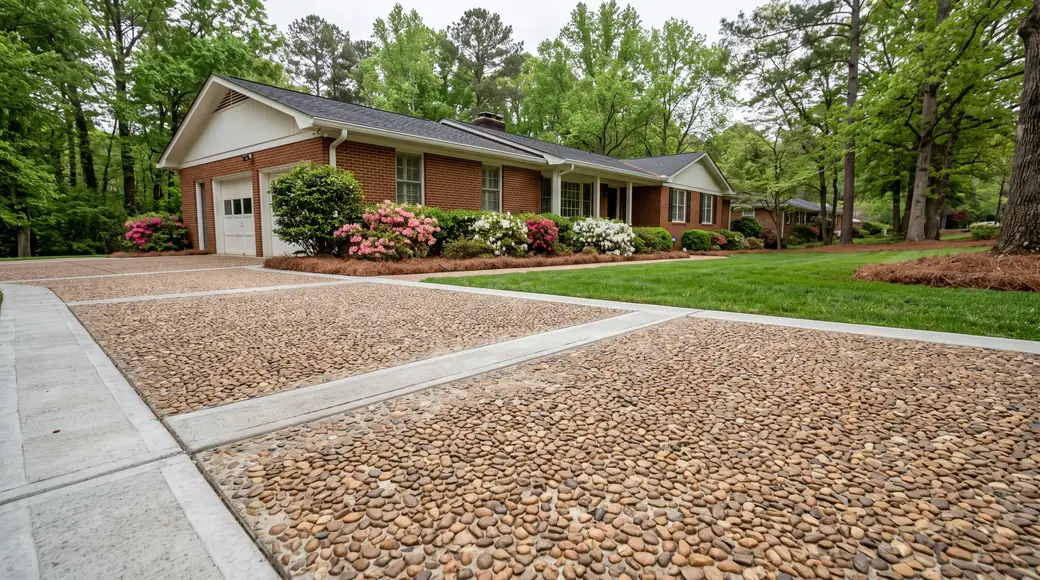
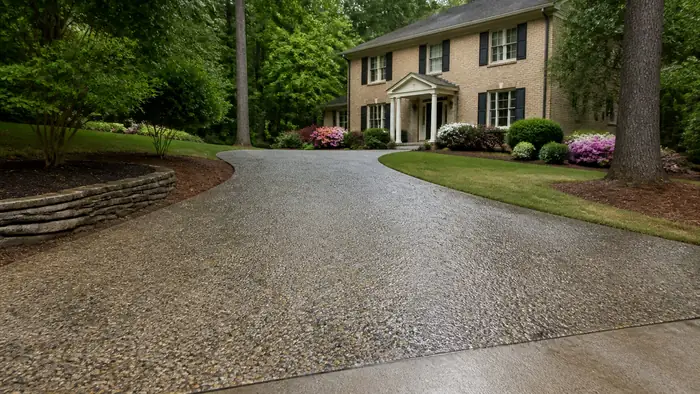
Exposed aggregate concrete driveway showing washed river-rock stone at a red-brick ranch home in Lawrenceville, GA, under an overcast sky.

Exposed Aggregate Finishes in Lawrenceville, GA

We pour exposed aggregate for driveways, patios, walkways and pool decks around Lawrenceville. It is ordinary concrete with the top layer of paste washed back so the stone in the mix carries the surface. You get texture underfoot instead of a smooth troweled slab, and color that comes from rock rather than from a coating. Homeowners usually come to us for it after a plain slab has gone chalky, or after a season of watching a smooth pool deck turn slick. Some want it set against stamped concrete already on the property. Others redo the whole front at once.

Most houses in Lawrenceville were built around 1987, and much of the original flatwork has worn out on roughly the same schedule. That shapes what we get asked to do: a driveway apron cracked along the wire mesh, a front sidewalk broken into three pieces, back steps that never drained right. Exposed aggregate suits replacement work like that. The median house here sits around $335,100, and new flatwork across the front is one of the few changes that reads from the street the day the forms come off.

Getting the finish right is mostly a question of timing. The wash has to come when the surface has set enough to hold the stone and not so late that the paste will not lift, and that window is narrow. Miss it and you get bald spots, or stone that sheds loose under a shovel. That is the part worth asking about when you are choosing a concrete contractor, because it does not show up in a photograph and it does not show up on day one. We are glad to walk the job with you, talk through stone size and color, and put together a free estimate.

Call +1 470-229-2076

Licensed, Bonded, and Insured ยท A combined 15 years of experience

Get a FREE Quote

We warranty all of our work because we believe in what we do.

What Exposed Aggregate Finishes Involves

Image slot Exposed aggregate driveway 700px · 16:9 · no image declared for this subject

Exposed aggregate driveway

An exposed aggregate driveway starts as ordinary concrete: we pour a four inch slab over compacted base, tie in rebar or wire mesh at the drive apron where vehicles turn, then wash off the surface paste before it sets hard. What is left is the stone itself, textured and slip resistant. Timing decides everything. Wash too early and stone rolls loose, too late and the finish comes out patchy. Most driveways here sit on homes built around 1987, so old slabs often need full removal rather than a topping.
Exposed Aggregate Finishes in metro Atlanta

Exposed aggregate is a surface, not a material. We pour the slab the same as any flatwork, then wash the top layer of cement paste off the fresh concrete so the stone in the mix shows through. Underneath sits the same concrete, the same rebar or wire mesh, the same thickness we would use for a plain gray driveway. What changes is the last hour of the pour. That hour is why the finish looks the way it does, and why it is worth doing carefully.

Coverage across metro Atlanta works the same regardless of which side of the county you are on. A slab in Suwanee and a slab three streets from our shop get the same crew, the same mix and the same attention through the wash. The median home in Lawrenceville was built in 1987, so a good share of the driveways and sidewalks we replace are original to the house. A slab that age tells us plenty before we ever break it up.

Two things go wrong with this finish, and both happen early. Wash the surface too soon and stone pulls loose under the first car that turns hard on it. Wait too long and the paste sets over the top, leaving a haze that never fully comes off. The window is short and it shifts with the mix, the slab and the day. That timing is what separates one concrete contractor from another on exposed aggregate work, far more than the stone anyone picks.

Getting it right costs attention on the front end. We size the base for the load the slab will actually carry, set the reinforcement properly, and stay on site through the wash instead of pouring and driving off. Exposed aggregate hides less than stamped or colored concrete does, so everything under the surface has to be right the first time. There is no going back and fixing a finish like this after the fact. Call for a free estimate if you want to talk through stone options and see what the finish looks like in place.

How the Work Runs

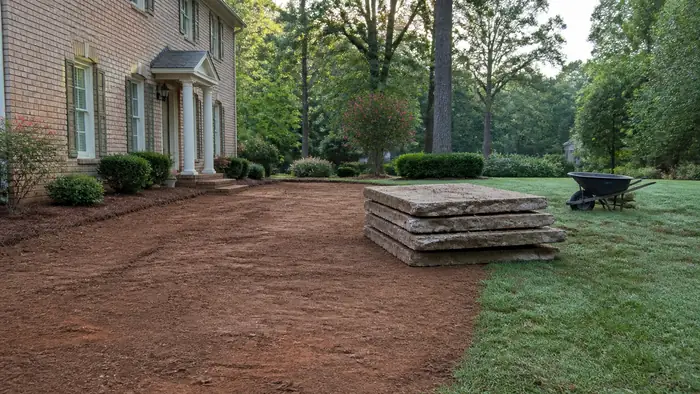
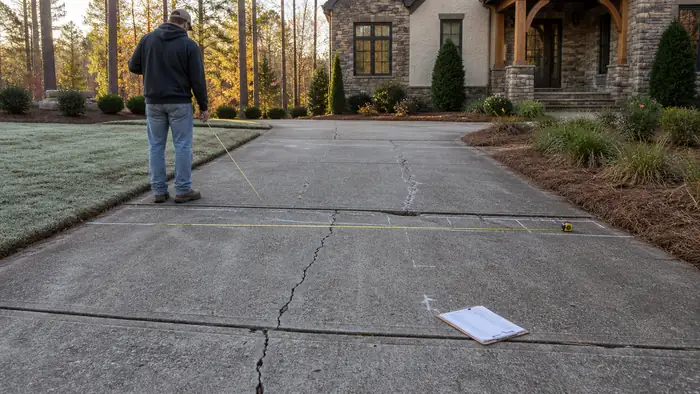
String lines and grade stakes laid out across a yard before a pour at a tan-brick colonial in Lawrenceville, GA, under bright midday cloud.

Step 1: Site Evaluation

We walk the area with you and look at what the concrete has to sit on. Grade, drainage, how water leaves the house, where tree roots run, and how thick the existing slab is. Exposed aggregate needs a stable base, so soft spots and old fill matter. We measure the space, note access for a truck and chute, and talk through stone size and color.

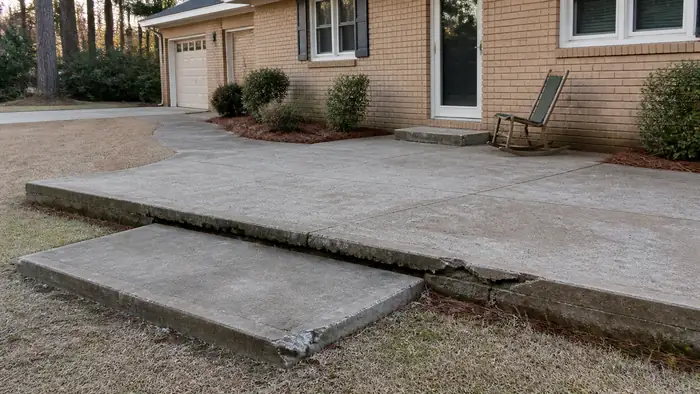
Concrete driveway and walk at a home, the kind of job an estimate covers at a red-brick ranch home in Lawrenceville, GA, under bright midday cloud.

Step 2: Written Estimate and Permits

You get the scope in writing: square footage, slab thickness, reinforcement, the aggregate mix, and how the edges are handled. Any approvals needed get pulled before we schedule. Most homes here were built around 1987, and older driveways often sit at 4 inches with no steel, so replacement scope gets spelled out rather than assumed. Nothing starts until you have read it.

Broken-out concrete removed and the base rebuilt before a new pour at a charcoal farmhouse-modern home in Lawrenceville, GA, in early morning light.

Step 3: Demolition and Base Prep

Old concrete comes out in sections and gets hauled off, not buried on site. Then we cut the subgrade to depth, remove organics and loose fill, add graded base stone where the soil will not hold, and compact it in lifts. This is where failures start. Skipped compaction shows up two winters later as a settled corner or a crack running the width of a driveway.

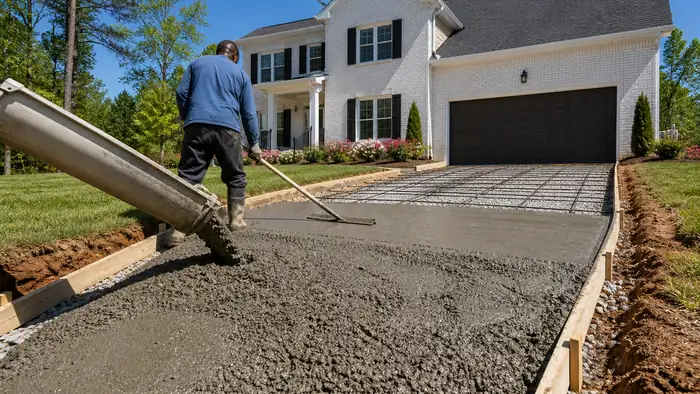
Wooden forms and rebar grid set and tied, ready for concrete at a grey split-level home in Lawrenceville, GA, in late afternoon light.

Step 4: Forming, Steel and the Pour

Forms get set to the finished elevation and staked tight so nothing bellies out under load. We run rebar on chairs for a concrete driveway and wire mesh or bar for sidewalks, held up in the slab instead of lying on the ground. Concrete installation happens in one continuous placement per section. We screed, bull float, and apply surface retarder before the top skins over.

Freshly finished concrete slab curing under a clean broom texture at a buff-brick ranch home in Lawrenceville, GA, after a rain shower.

Step 5: Finishing, Curing and Final Walkthrough

Timing is everything on exposed aggregate. Wash and brush too early and stone rolls out of the paste; too late and the retarder loses the fight. We expose to a consistent depth across the whole surface, cut control joints, then seal once it has cured. We walk it with you, cover cleaning and when to reseal, and show you where the joints are meant to crack.

What Decides the Price

Most of what moves the number on an exposed aggregate job is visible from your own driveway before anyone writes a bid. Access, what is already in the ground, and how much load the slab has to carry account for most of the spread between quotes. Walk the site yourself with the list below.

What changes the priceWhich wayWhy
Old concrete already in placecosts moreIt gets broken out, loaded and hauled before we set a single form. Thick slabs with rebar inside take longer to remove.
How close a mixer truck can reach the pourcosts less when closeChute range means concrete goes straight into the forms. A long wheelbarrow run or a narrow side yard adds crew and time.
Thickness and reinforcement the use calls forcosts more for heavier dutyA patio you walk on is not a driveway holding a loaded truck. Vehicle loads want a thicker slab with rebar rather than wire mesh.
Which way the ground fallscosts more when it drains toward the houseWater has to leave the slab. Correcting fall, adding a drain or rebuilding grade is real work before any concrete arrives.
Trees, roots and buried lines at the edgecosts moreIrrigation, gas and power near the pour mean hand digging and sleeving. Check your meter and valve boxes.
Sidewalk work in the right of waycosts morePermits through the City of Lawrenceville mean forms staked to line and grade, plus an inspection.
Soft or filled subgradecosts moreGround that will not hold compaction needs stone base and rolling first.
Curves, steps and banded borderscosts moreForming and hand finishing curved edges takes far longer than a rectangle.

When two bids differ, the difference usually sits in the parts you cannot see after the pour. Compare slab thickness, reinforcement type and spacing, base depth, joint layout, and who hauls the old concrete away. Ask whether sealing is included. Have every bid written against the same scope.

Questions About Exposed Aggregate Finishes

What stone options do you use for exposed aggregate around Lawrenceville?

We pour river rock, pea gravel, and crushed granite blends most often, and we size the stone to the slab it is going into. Smaller rounded stone reads better on a patio or a concrete sidewalk. Larger, more angular aggregate suits a driveway. Color comes from the stone, not a dye, so we set a test panel before the main pour. Same choices in Lawrenceville, Snellville, Suwanee, Duluth and Sugar Hill.

Does exposed aggregate need sealing in Georgia?

Yes. A sealer keeps the paste at the surface locked around each stone, slows staining from oil and leaves, and brings the color back up on stone that has gone dull and chalky. First coat goes on once the slab has cured. After that, expect to recoat on a cycle, sooner on a driveway that sees sun and traffic than on a covered patio.

Is exposed aggregate too rough underfoot around a Lawrenceville pool?

No, not if the finish is set for it. The texture depends on how deep we wash the surface and how big the stone is, and both are things we control on the day of the pour. For pool decks we run smaller rounded aggregate and a lighter wash, which leaves grip without the sharp edges people picture. Bare feet do fine on it.

How does exposed aggregate compare on price in Lawrenceville?

It sits above a plain broom finish and lands near stamped concrete on most jobs. The concrete itself is not the difference. The added work is stone selection, the retarder and wash step, and the timing that step demands, since the crew has to be there at the right hour rather than a convenient one. Square footage and access still move the number more than the finish does.

Can you expose aggregate on an existing slab in Lawrenceville?

No. Exposing aggregate happens while the concrete is still green, when we can wash the top layer of paste off and leave the stone standing proud. Once a slab has cured, that window is closed. If you want the look on an existing patio or drive, we are talking about a tear out and a fresh pour, or a bonded topping, which is a different product with different limits.

How does exposed aggregate wear on a Lawrenceville driveway?

It wears well. The texture holds traction, and the mixed stone color hides tire marks and general grime far better than gray flatwork does. What matters underneath is the base and the steel, so we set rebar or wire mesh and control joints for the loads a driveway takes. Neglected sealer is the usual failure we see, showing up as loose stone at the edges and along the apron.

Get a Free Estimate

Get a FREE Quote

We warranty all of our work because we believe in what we do.

Tap to call +1 470-229-2076