+1 470-229-2076
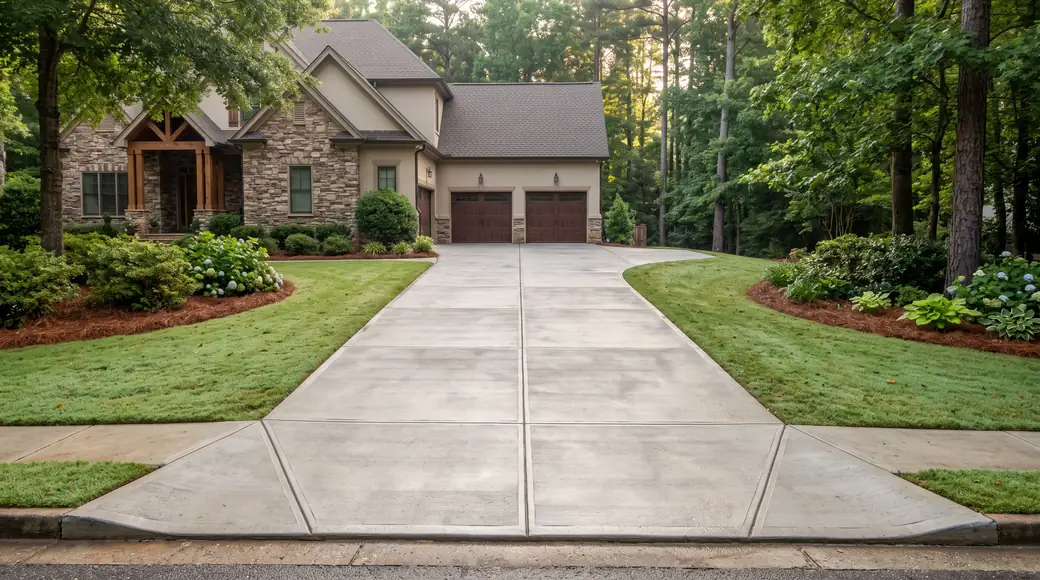
Broom-finished concrete driveway running up to a two-car garage at a stacked-stone and stucco home in Lawrenceville, GA, in early morning light.

Driveway Installation & Replacement in Lawrenceville, GA

We pour concrete driveways in Lawrenceville, and most of what we do is replacement rather than new construction. A slab that has cracked clean through, settled at the apron, or spalled across the surface has usually gone past what patching will fix. We break out the old concrete, rebuild the base, set rebar or wire mesh depending on the pour, and finish it flat. The same crew handles sidewalk work, garage slabs, and stamped concrete when a homeowner wants something besides a broom finish. We are a concrete contractor and nothing else, not a remodeler subbing the flatwork out, so the person who looks at your driveway is the person who pours it.

Our coverage runs across Lawrenceville, Snellville, Suwanee, Duluth and Sugar Hill, all on the same terms, all in the same stretch of metro Atlanta. The median home around here was built in 1987, so plenty of driveways still in the ground are original to the house, poured before anyone expected them to hold two full-size vehicles nose to tail. Those come out whole. What goes back in is reinforced and jointed deliberately, so the cracking shows up in the control joints instead of wherever it feels like going. Exposed aggregate, colored concrete, stamped, or plain gray: you pick the surface. Call for a free estimate.

Call +1 470-229-2076

Licensed, Bonded, and Insured ยท A combined 15 years of experience

Get a FREE Quote

We warranty all of our work because we believe in what we do.

What Driveway Installation & Replacement Involves

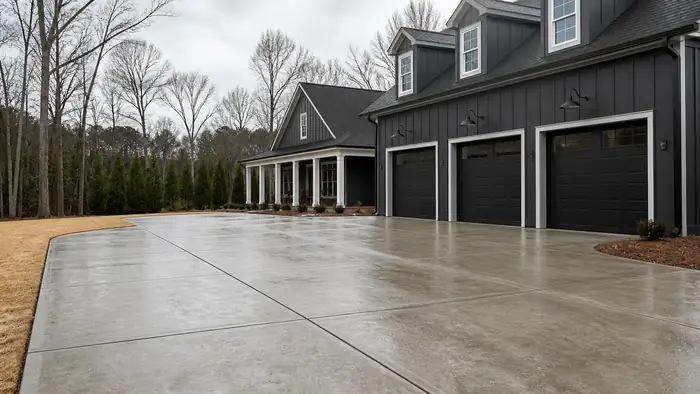
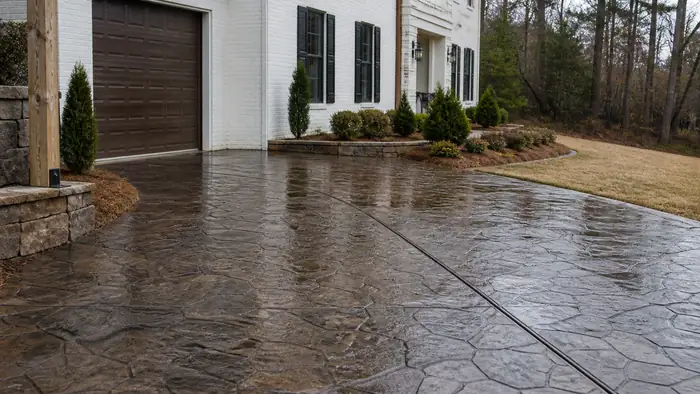
Freshly poured concrete driveway still curing, dark and damp at a stacked-stone and stucco home in Lawrenceville, GA, after a rain shower.

Driveway installation

A new driveway is won or lost below the surface. We work as a concrete contractor rather than a paving crew, so the prep is ours: topsoil stripped, a graded stone base compacted, forms set to hold slope away from the garage. Slabs get rebar or wire mesh tied in, and they sit heavier at the apron where the weight comes off the street. Control joints go in early. Driveway work in the City of Lawrenceville can require a permit, and we pull it.

Old driveway broken out with a new concrete pour underway beside it at a brick-and-siding two-story home in Lawrenceville, GA, under bright midday cloud.

Driveway replacement

Replacement is what happens once patching stops holding. We break out the old concrete, haul it off, and look at what caused the failure, usually a thin slab, a base nobody compacted, or tree roots lifting panels. The ground gets fixed first. Then new forms, new reinforcement, and a pour matched in width and slope to how the drive actually gets used. The median home here was built in 1987, so plenty of driveways are still the original pour.

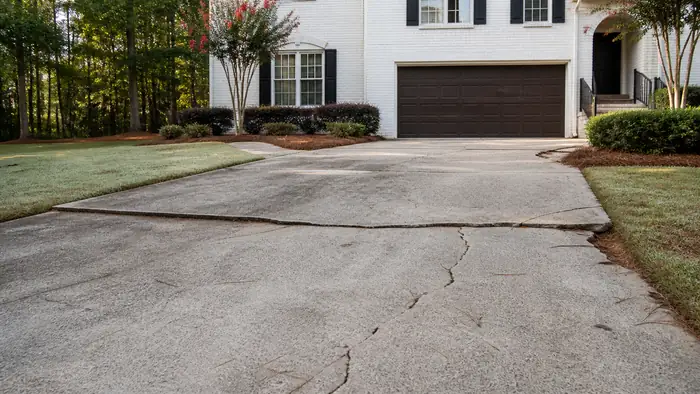
Cracked driveway panel cut out and marked for repair at a brick-and-siding two-story home in Lawrenceville, GA, under bright midday cloud.

Concrete driveway repair

Not every bad driveway needs to come out. Hairline cracks get routed and sealed. A settled panel can be cut at the joints and repoured on corrected base, leaving the rest of the slab alone. Surface spalling, cracks that step up at the edge, and panels that rock underfoot point to trouble below the concrete. We handle the concrete sidewalk and steps tying into the drive too, since the two tend to fail together.

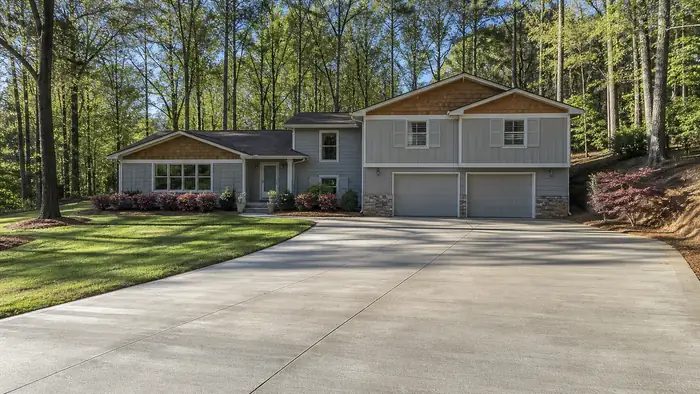
Wide concrete driveway viewed from the street toward the garage at a grey split-level home in Lawrenceville, GA, after a rain shower.

Driveway paving

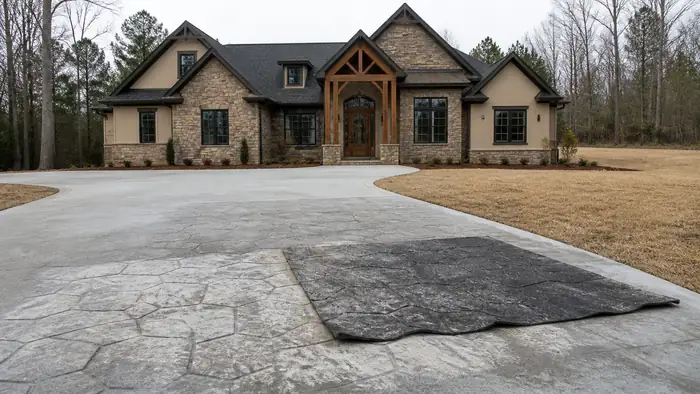
Broom, stamped, colored, washed: the finish is the last decision and the one you look at every day. A broom finish gives traction and hides wear well. Stamped concrete takes its pattern before the surface sets, and integral color goes into the mix instead of onto the top. Exposed aggregate washes the paste back to show the stone. Sealer keeps stamped and colored work from fading. We pour the same flatwork on sidewalks and commercial concrete.

Driveway Installation & Replacement in metro Atlanta

Lawrenceville's housing stock runs to a median build year of 1987, so many of the driveways we replace are close to forty years old. Concrete that age has done its job. It carried cars through decades of daily use, and it shows: spider cracking across the panels, corners broken off at the apron, sections that have settled and now hold water after a rain. Plenty of it went down thin, with no rebar and no wire mesh, back when that passed for standard. We take that slab out and pour a driveway built to outlast it.

Replacement makes up most of our driveway work across metro Atlanta, though we pour new as well: additions, second parking pads, turnarounds where a house has outgrown its original approach. A concrete driveway does not have to stay plain gray. Stamped concrete, colored concrete and exposed aggregate are finishes worked into the same slab, so the choice is about how the surface reads from the street, not about what holds the weight. Homes built in the eighties often sit behind a straight, narrow strip of concrete, and widening it while the forms are open is worth thinking about.

Driveways rarely stand alone on a property. The same pour often takes in the concrete sidewalk that crosses it, a landing at the front steps, or the apron that meets the street, and we do that flatwork as part of the same job. We handle commercial concrete too, so parking areas and walkways at small business properties around Lawrenceville and out toward Suwanee are familiar ground. If your driveway is cracked, sunken, or old enough that patching keeps failing, call us for a free estimate.

How the Work Runs

String lines and grade stakes laid out across a yard before a pour at a tan-brick colonial in Lawrenceville, GA, under bright midday cloud.

Step 1: Site Evaluation

We walk the existing driveway with you and look at what the concrete is telling us. Cracking that runs corner to corner usually means base failure, not a bad mix. We check slope, where water leaves the slab, how the apron meets the street, and whether tree roots are lifting sections. We measure the pad, note thickness at any broken edge, and talk through what you want the finish to be.

Concrete driveway and walk at a home, the kind of job an estimate covers at a red-brick ranch home in Lawrenceville, GA, under bright midday cloud.

Step 2: Written Estimate and Permits

You get the scope in writing: square footage, slab thickness, reinforcement, finish, jointing plan, and how we handle the old concrete. We pull whatever permits the job requires before anything gets broken up. Nothing starts until you have read the estimate and agreed to it. If you want stamped or colored concrete instead of a broom finish, that is priced as its own line so you can see the difference.

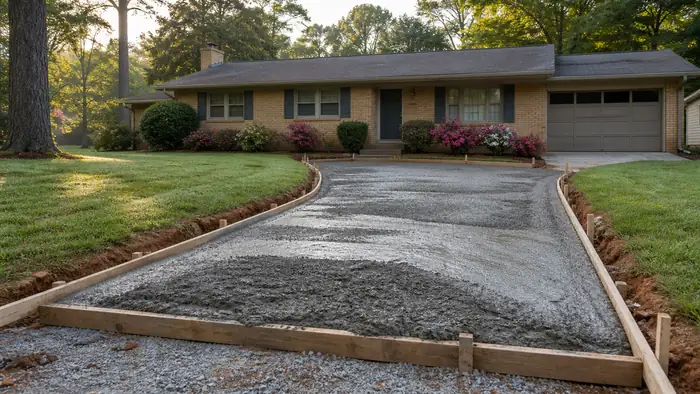
Broken-out concrete removed and the base rebuilt before a new pour at a charcoal farmhouse-modern home in Lawrenceville, GA, in early morning light.

Step 3: Demolition and Base Prep

Old concrete comes out in full, hauled off, not buried under the new pour. Then we get to the part that decides how long a concrete driveway lasts: the base. We cut out soft spots, bring in graded aggregate, and compact it in lifts rather than dumping it all at once and rolling the top. Poor compaction is why slabs settle and crack, and no amount of good concrete installation fixes a base that moves.

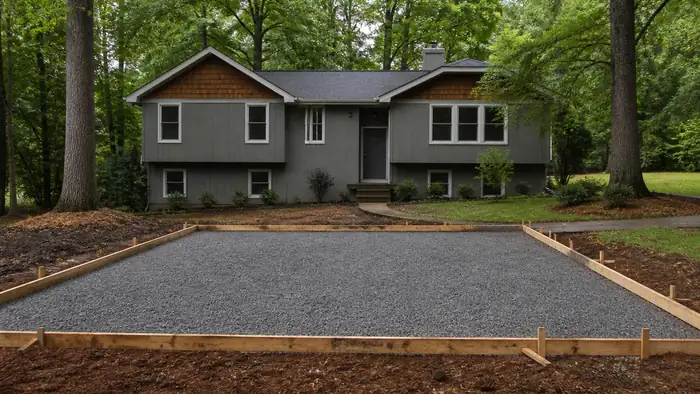
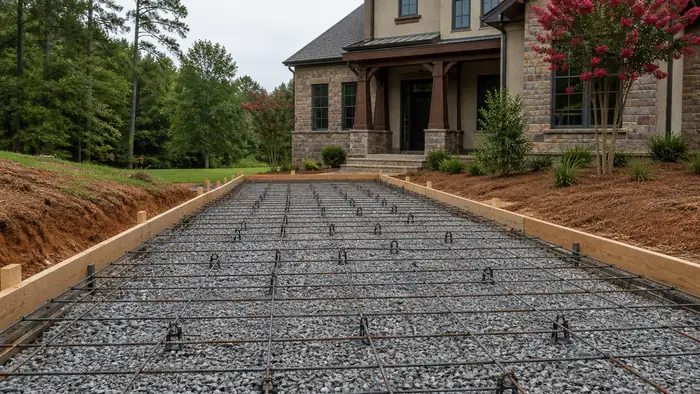
Wooden forms and rebar grid set and tied, ready for concrete at a grey split-level home in Lawrenceville, GA, in late afternoon light.

Step 4: Forming, Steel and the Pour

Forms get set to the grade we measured, holding fall away from the house and garage. Driveways get four inches of concrete minimum, thicker where trucks turn or park, with rebar on chairs or wire mesh held up in the slab where it does something. Steel lying on the dirt is steel doing nothing. We pour continuously, screed, and float, and we place control joints on a spacing that tells the slab where to crack.

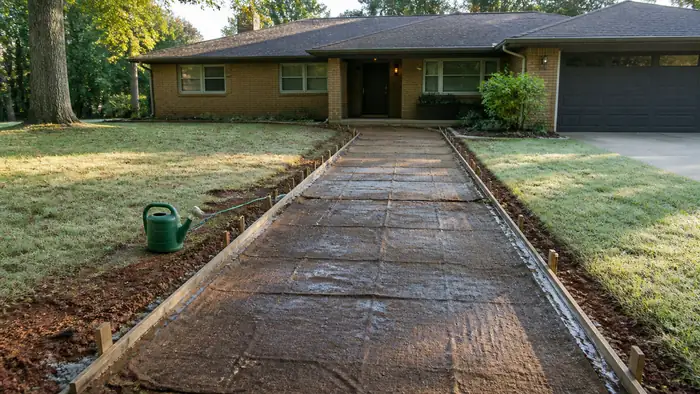
Freshly finished concrete slab curing under a clean broom texture at a buff-brick ranch home in Lawrenceville, GA, after a rain shower.

Step 5: Finishing, Curing and Final Walkthrough

Finish depends on what you picked: broom for grip, exposed aggregate, or a stamp and color pressed while the concrete is still open. We cut or tool the joints, then cure the surface so it gains strength slowly instead of drying out and dusting. Stay off it on foot for a day or so, and keep vehicles off for a week. We walk the driveway and any adjacent sidewalks with you before we pull off.

What Decides the Price

Two driveways the same width can price out differently, and most of the reasons are visible from the street. What sits under the old surface, how close a mixer can get, and how much concrete the finished slab actually calls for do the heavy lifting.

What changes the priceWhich wayWhy
An old slab that has to come outcosts moreBreaking, loading and hauling concrete is a day of its own.
A truck that can back up to the formscosts lessWheelbarrowing every yard by hand adds hours of labor.
Rebar on chairs instead of wire meshcosts moreMore steel, and someone has to cut and tie it.
A slab thickened for an RV or work truckscosts moreExtra depth means extra concrete across the entire driveway.
Water that runs back toward the garagecosts moreGrade gets rebuilt, sometimes with a drain set in the pour.
Tree roots or irrigation lines in the pathcosts moreRoots get cut and lines get moved before forms go down.
Stamped, colored or exposed aggregate finishcosts moreColoring and finishing take longer than pulling a broom across it.

Read competing bids line by line. Slab thickness, reinforcement, whether removal and haul off are included, how the base is prepared. A bid that leaves those blank is not cheaper. It is vaguer.

Questions About Driveway Installation & Replacement

How thick should a concrete driveway be in Lawrenceville, Georgia?

Four inches of concrete over a compacted base handles cars and light trucks. Where an RV, a work truck, or a loaded trailer sits, we go five or six inches and size the reinforcement to match. Thickness alone does not carry a driveway. A four inch slab on a well prepared base will outlast a thicker one poured over soft fill, so the base gets the same attention as the pour.

What causes driveway cracking in Georgia, and can it be prevented?

Concrete shrinks as it cures, and that stress relieves itself somewhere. Control joints decide where. Cut deep enough and spaced correctly, they pull the crack down into the joint, where nobody notices it. The rest of the cracking traces back to the base: soft spots, thin compaction, water finding a path under the slab. Prevention is joints, base prep and steel, not an additive mixed into the truck.

Can you replace a Lawrenceville driveway without damaging the garage apron?

Yes. We saw cut a clean line at the apron rather than breaking back into it, so the slab you are keeping holds a square edge and stays where it is. The new pour ties into that line with dowels, which lets the two slabs move independently instead of stepping apart at the seam. If the apron itself is already failing, we tell you before demolition, not after.

How long before I can park on a new driveway in Lawrenceville?

A week is the figure we give for cars, since concrete takes on most of its strength in those first days. Walking on it happens sooner. Once you are parking, stay off the outer edges for the first month and put a pad under trailer jacks and jack stands. Concentrated point loads do far more damage to young concrete than the weight of a vehicle ever does.

Is a reinforced driveway worth the extra cost around Lawrenceville?

Yes. Rebar tied on chairs, or wire mesh held up off the subgrade, does not keep concrete from cracking. It keeps the pieces locked together and level when a crack does come through, so you get a hairline you can ignore instead of two slabs at different heights. Reinforcement is a small part of the work and the one part that cannot be added later.

Do you remove the old driveway before pouring a new one in Lawrenceville?

Yes. Pouring over a failed slab buries the problem and raises the finished surface against the garage and the street, which throws off drainage and the transition at the curb. We break out the old concrete, haul it away, then repair what shifted underneath. On houses from around 1987, the median build year here, that generally means rebuilding a base that settled decades ago.

Get a Free Estimate

Get a FREE Quote

We warranty all of our work because we believe in what we do.

Tap to call +1 470-229-2076