+1 470-229-2076
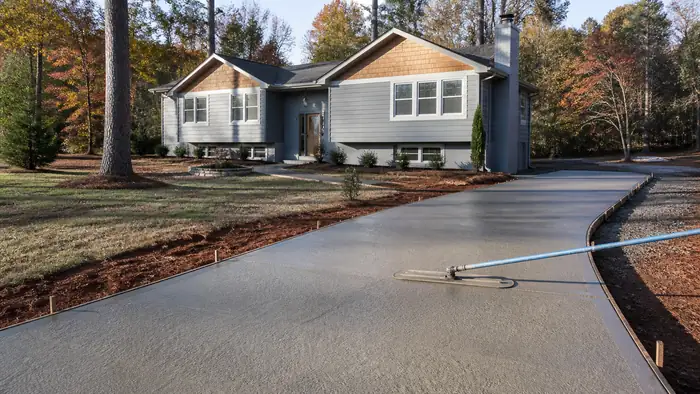
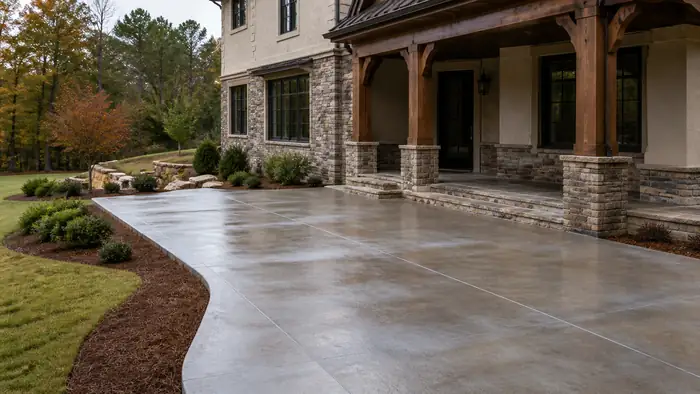
concrete slab installation completed by a local contractor at a tan-brick colonial in Lawrenceville, GA, under bright midday cloud.

Concrete Slab Installation in Buford, Georgia

A slab is the flat, load-bearing piece of concrete that everything else sits on: a garage floor, a patio, a shed pad, the base under a workshop or a hot tub. We pour residential and light commercial slabs across Buford, and we treat each one as a structural job rather than a surface job. That means we care less about how the top looks on the day we finish it and more about how it holds up after a few years of cars, furniture and weather. A good slab is quiet. You stop noticing it once it's down, which is the point.

Most of what decides whether a slab cracks happens before the truck arrives. Pacolet soil, which drains well, is the dominant type in the county, but it changes from one lot to the next, so we test every site before we plan the base. From there it's grading, a compacted subbase, the right reinforcement for the load, and control joints set where the concrete will want to move. Rain matters too: this area sees about 55 inches a year, so we plan where the water goes before the forms go up. Call for a free estimate, and tell us what the slab needs to carry.

Call +1 470-229-2076

Get a FREE Quote

What We Do in Buford

Concrete Slab Installation Cost

We price a slab after we have walked the site, not before. The estimate we write out is itemized: excavation and grading, the compacted stone base, forms, reinforcement, the concrete itself, finishing and curing. You can see where the money goes and ask about any line of it. If a lighter option still holds up for the job, such as a thinner slab for a shed pad, we say so. Call us for a free estimate.


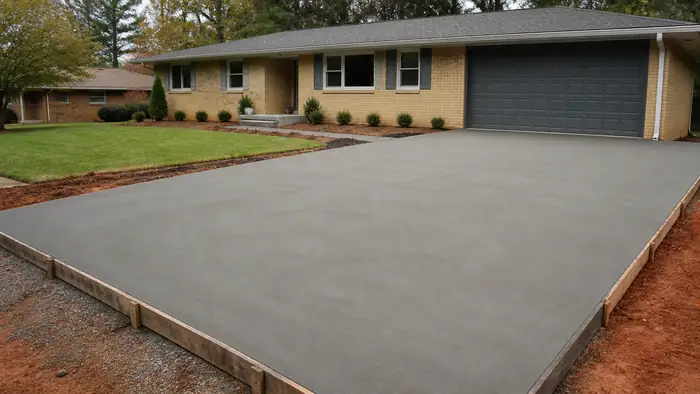
concrete driveway installation completed by a local contractor at a brick-and-siding two-story home in Lawrenceville, GA, in early morning light.

Concrete Driveway Installation

Driveways fail from the ground up, so most of our work happens before the truck arrives. We strip out topsoil and roots, lay and compact a crushed stone base, and set rebar on chairs so it sits in the middle of the slab instead of the bottom. The apron at the street gets extra depth, since that is where heavy vehicles turn. Control joints go in the day we pour. Finishes run from plain broom texture to stamped, colored decorative surfaces.

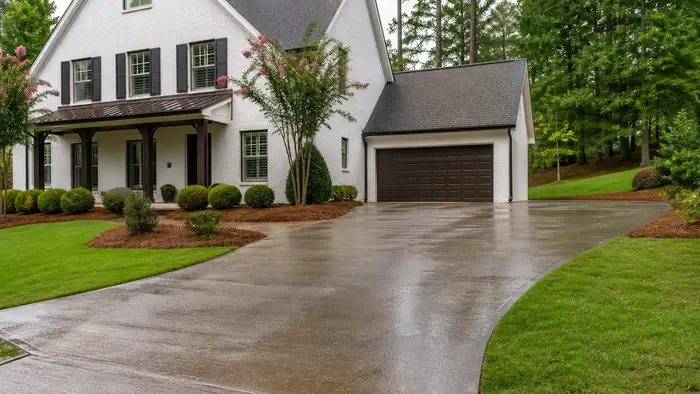
concrete flooring installation completed by a local contractor at a charcoal farmhouse-modern home in Lawrenceville, GA, after a rain shower.

Concrete Flooring Installation

Garage floors, basement floors and shop floors each need something different. Under any interior slab we lay a vapor barrier over the compacted base so ground moisture stays out of whatever sits on top. A garage gets a slight pitch toward the door. A shop that will carry a lift or heavy shelving gets thicker concrete and tighter rebar where the load lands. Interior floors get a steel trowel finish: smooth, dense, and ready for sealer, epoxy or polish later.

concrete slab repair completed by a local contractor at a grey split-level home in Lawrenceville, GA, under low winter sun.

Concrete Slab Repair

Not every cracked slab needs to come out. Hairline shrinkage cracks are normal and can be routed and sealed. A slab that has sunk or shifted is a different problem, usually traced to a washed-out base or poor drainage, and with about 55 inches of rain a year here, water is the first thing we check. We tell you plainly whether a repair will last or whether replacing the section makes more sense over time. Sometimes the honest answer is replacement.

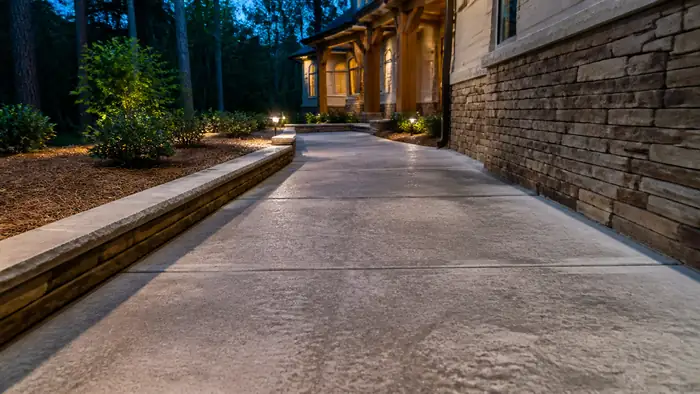
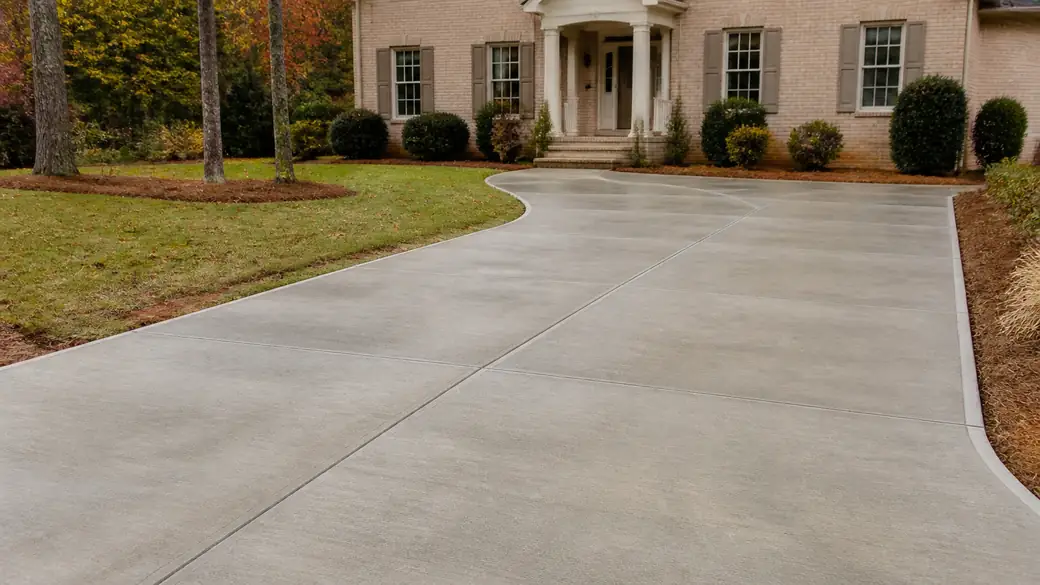
concrete sidewalk installation completed by a local contractor at a stacked-stone and stucco home in Lawrenceville, GA, at blue hour.

Concrete Sidewalk Installation

Walkways look simple, which is why so many of them heave and crack. We grade each walk so water runs off the side instead of pooling, compact the base, and cut joints at regular spacing so that when cracks come, they stay in the joint. Where a walk meets the house, the driveway or a step, we set an expansion joint so the slabs move independently. A light broom finish gives good footing when the surface is wet.

Why Buford Chooses Lawrenceville Best Concrete

We test the ground before we quote a slab. Pacolet soil is the dominant type in Gwinnett County and it drains well, but it is not the same from one property to the next, so every site gets tested on its own before any work starts. That result sets the base depth, the compaction and the reinforcement, rather than a standard spec carried over from the last job. A slab is only as good as what it sits on. We would rather spend the time finding that out than pour on a guess and leave a homeowner with cracks later.

Water is the other thing we plan around. This part of Gwinnett County gets about 55 inches of rain a year, and runoff with nowhere to go ends up under a driveway or against a foundation wall. We set the pitch of every surface so it carries water away from the house, and we cut control joints where a slab is most likely to crack, so any crack follows a line we chose instead of wandering across the middle. Driveways, patios, garage floors and stamped decorative work all get the same care on a Buford property. Call us for a free estimate.
Our Concrete Process, Step by Step

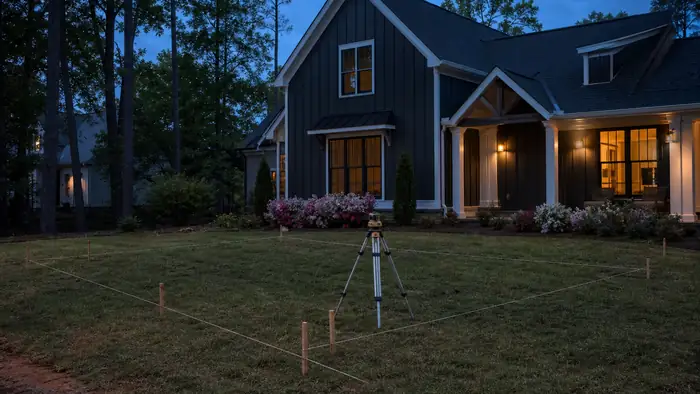
A contractor checks slope and drainage before work begins. at a charcoal farmhouse-modern home in Lawrenceville, GA, at blue hour.

Step 1: Site Assessment

We walk the property before anything is drawn up. We look at where water goes when it rains, what the slab has to carry, and what sits under the grass. Pacolet soil, which is well drained, is the dominant type in Gwinnett County, but it varies from one lot to the next, so every site is tested on its own before work starts. We also mark utilities, check the existing grade and note any tree roots near the slab line.

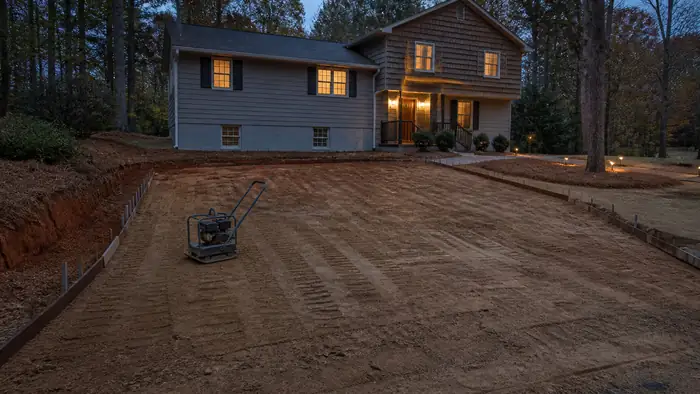
A plate compactor tamps down soil in a small excavated area. at a grey split-level home in Lawrenceville, GA, at blue hour.

Step 2: Site Preparation

Most slab failures start here, not at the pour. We strip sod and topsoil down to firm ground, dig out soft spots and bring in crushed stone for the base. That base is compacted in lifts with a plate compactor, not dumped and raked flat. Then we set the grade so the finished surface sheds water away from the house. With about 55 inches of rain a year, a slab that holds puddles gets tested often.

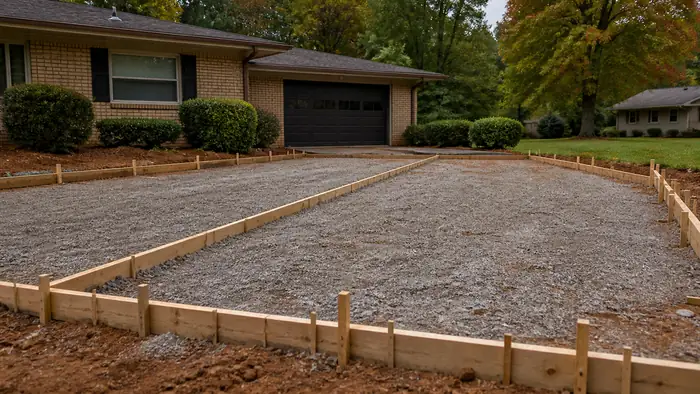
Wooden forms outline a patio slab before the pour. at a buff-brick ranch home in Lawrenceville, GA, under an overcast sky.

Step 3: Forming & Reinforcement

Forms are straight lumber staked tight, set to string lines, and checked for level and pitch before a truck is called. Inside them goes the reinforcement: steel rebar on chairs for driveways and anything that carries a vehicle, welded wire mesh or fiber for lighter patios and walkways. Chairs matter. Steel lying on the stone does nothing, because it ends up under the slab instead of in it. We also set expansion joint material wherever new concrete meets an existing structure.

A bull float smooths a residential walkway surface after screeding. at a grey split-level home in Lawrenceville, GA, under low winter sun.

Step 4: Pouring

Concrete arrives with a fixed amount of working time, so the crew is in place and the forms are checked before the truck backs in. We place it close to where it belongs rather than dragging it across the reinforcement, which separates the stone from the paste. Then it is screeded off the forms and bull floated. Extra water at the chute makes the mix easier to spread and weaker once it cures. We don't add it.

A hand trowel smooths a small patio surface to a hard finish. at a buff-brick ranch home in Lawrenceville, GA, under bright midday cloud.

Step 5: Finishing

Timing decides the finish. Work the surface while bleed water is still sitting on it and the top turns weak and flakes later. Once it firms up, we edge the sides and cut control joints deep enough that the slab cracks where we choose, not where it wants. Then comes the texture: a broom finish for traction on driveways and walks, a smooth trowel for garage floors, or stamped and colored patterns for decorative patios.

A hand sprayer applies curing compound to a finished patio. at a stacked-stone and stucco home in Lawrenceville, GA, after a rain shower.

Step 6: Curing

Fresh concrete gains strength only while it holds its moisture. If the surface dries too fast, it cracks and dusts. We keep it damp or cover it with a curing compound, and we keep people and vehicles off until it can take them. Foot traffic comes back first. Cars wait longer. Curing is quiet work, and skipping it is a common reason a slab that looked fine on pour day goes wrong in its first year.

A sprayer applies sealer across a driveway. at a painted-white-brick two-story home in Lawrenceville, GA, after a rain shower.

Step 7: Sealing

Sealer is the last coat, applied once the slab has cured enough to accept it. It slows water, oil and stains from soaking into the surface, and on stamped or colored concrete it holds the color and sharpens the pattern. We use a penetrating sealer on broom-finished driveways and an acrylic sealer on decorative work. Neither lasts forever, so we tell you which product went down and roughly how often it will need another coat.

Concrete Systems and Materials for Buford

A slab is only as good as what sits under it and what runs through it. Every residential slab we pour starts on a compacted stone base, with steel reinforcement held at the right height inside the pour: rebar or welded wire, depending on the load the surface has to carry. Driveways take more than patios. The concrete mix is chosen for the job as well, and we tell you which one and why before any materials are ordered.

Ground conditions decide the rest. Pacolet soil is the dominant type in Gwinnett County, and it drains well, but it varies from one lot to the next, so we test every site individually before work starts. That test sets how deep the base goes and how much compaction it needs. Rain matters too. About 55 inches falls here in a typical year, so each surface gets a slope that sheds water, and we plan pours around the forecast.

Most slab failures trace back to shortcuts: a thin base, wire mesh left lying at the bottom of the pour, control joints cut too late or spaced too far apart. Cracks follow. Getting it right costs time on the preparation, not on the finish. Stamped and decorative surfaces follow the same rule, since a pattern pressed into poorly supported concrete cracks just as readily as a plain broom finish does.

What Decides the Price of Concrete in Buford

Two slabs of the same size can come in far apart on price, and most of the reasons are sitting right there on the property. Walk the site before you call and you will already know most of what we look at.

What changes the priceWhich wayWhy
Old concrete, asphalt or pavers where the new slab goescosts moreIt all has to be broken up, loaded out and hauled away before we can grade.
A clear, level path for the truck to back up to the formscosts lessThe chute places concrete directly. If the truck cannot get close, we pump or wheel it in, which adds equipment and hands.
Stumps, roots or loose fill under the slab areacosts moreAnything that will rot or settle comes out, and the hole gets filled with compacted base.
A driveway or pad meant to carry vehicles, a trailer or heavy equipmentcosts moreThat calls for a thicker section and heavier reinforcement than a patio or walkway.
Ground that falls noticeably from one side of the slab to the othercosts moreMore grading, taller forms on the low side, and often extra base to bring it level.
Water that pools or runs toward the slab area after a stormcosts moreWith around 55 inches of rain a year, the grade has to shed water away, and sometimes that means adding a drain.
Irrigation lines, buried utilities or a septic field near the workcosts moreWe locate them, dig by hand where we have to, and form around them.

Compare competing bids line by line, not by the bottom number. Check that each one states slab thickness, the type and spacing of reinforcement, base depth, who handles demolition and haul-off, and how drainage is handled. A bid that leaves one of those out is not cheaper. It just has not priced it yet.

Get a Free Estimate

Get a FREE Quote

Tap to call +1 470-229-2076