+1 470-229-2076
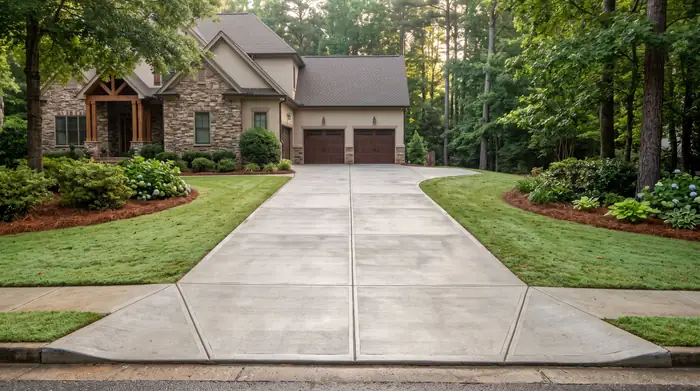
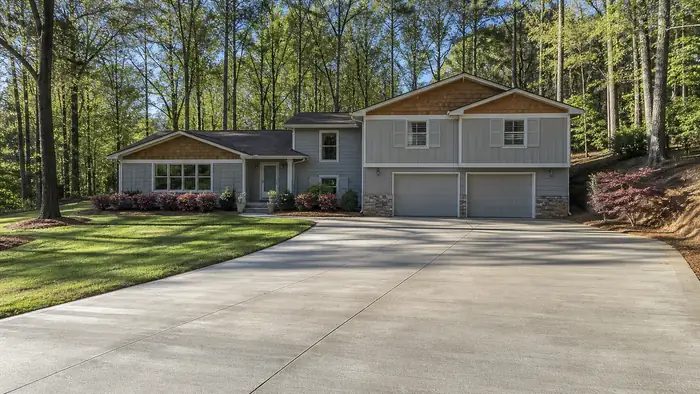
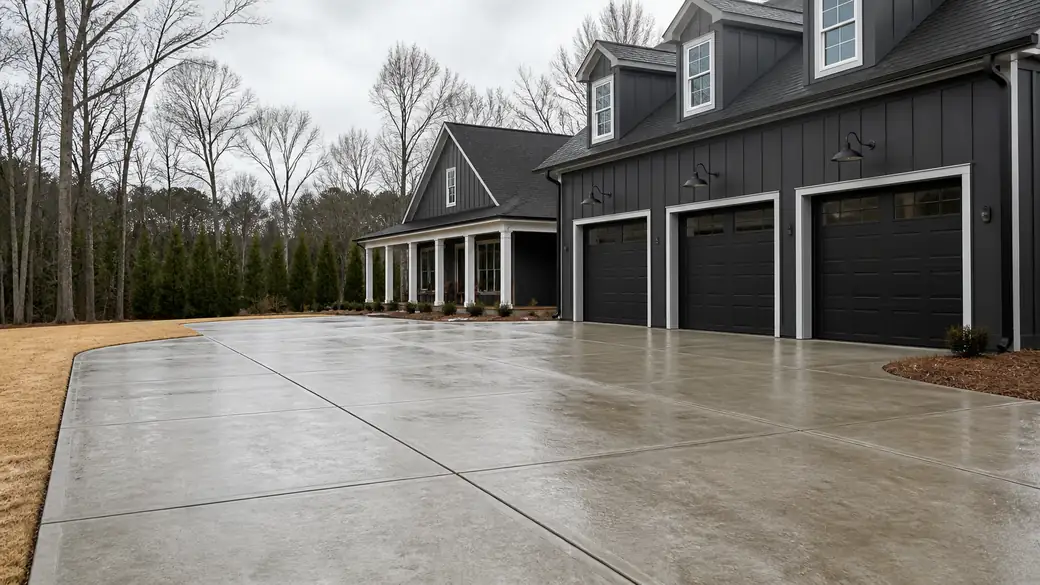
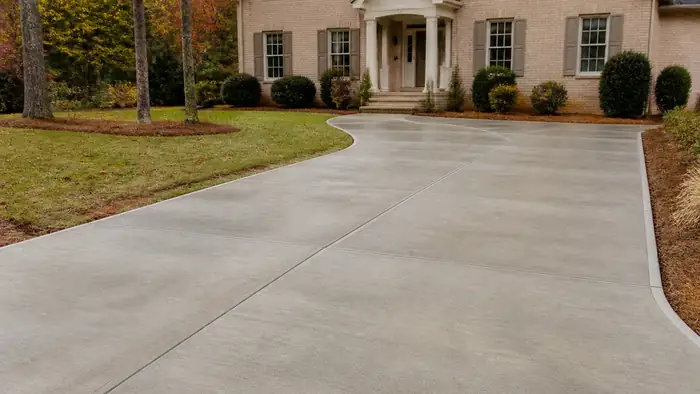
Wide view of finished concrete flatwork across the front of a home at a buff-brick ranch home in Lawrenceville, GA, in clear late-morning sun.

Garage & Shed Floors in Lawrenceville, GA

We pour garage and shed floors, and the calls tend to come in two shapes: a new slab under a building that never had one, or a replacement for a floor that has cracked, settled, or gone dusty underfoot. Garage concrete takes more punishment than anything else flat on a property. Vehicle weight parked in the same two spots for years, dropped tools, spilled oil, water running off the wheels and sitting where the floor is low. A slab built for that is a different animal from a patio, and we treat it that way.

What makes one last is mostly under it. We compact the base, set the slab thick enough for what is going to sit on it, tie in rebar or wire mesh, and cut control joints so the concrete cracks along the line we chose instead of somewhere across the middle of the bay. Finish matters too. A garage floor wants a hard, flat surface that sweeps clean and drains toward the door rather than holding water. Sheds are smaller and simpler, though the same rules hold.

Housing in Lawrenceville runs to a median build year of 1987, so a good share of what we look at is a slab that has done its decades and is finished. Some of it we can work around. Some of it comes out and gets replaced properly. Working as a concrete contractor means the same crew also handles driveways, sidewalk repair and replacement, and stamped concrete for people who want a pattern underfoot out back. Call for a free estimate on the floor you have in mind.

Call +1 470-229-2076

Licensed, Bonded, and Insured ยท A combined 15 years of experience

Get a FREE Quote

We warranty all of our work because we believe in what we do.

What Garage & Shed Floors Involves

Epoxy-coated garage floor with speckled grey and charcoal flakes in Lawrenceville, GA, in clear late-morning sun.

Garage floor coating

Coating goes over cured concrete, so the slab underneath decides how well it holds. We grind the surface open, fill spalls and cracks, then roll epoxy or polyaspartic in thin coats, with broadcast flake if you want texture and grip. Peeling comes from oil soaked into the pores, moisture pushing up from below, or a slab troweled too tight to bond. We check moisture first. As a concrete contractor we prep this the way we prep stamped concrete: clean, sound, dry.

New concrete garage floor slab troweled smooth in an unfinished garage in Lawrenceville, GA, in early morning light.

Concrete floor installation

New slabs go four inches thick over compacted base, with a vapor barrier under any floor attached to the house. Rebar sits on chairs, or wire mesh gets pulled up into the pour rather than left lying on the dirt. We slope shed floors toward the door and saw control joints early, so the cracking lands where we put it. Thickened edges carry the door track, the same detail that keeps a concrete sidewalk or commercial concrete walkway from breaking apart at its edge.

Garage & Shed Floors in metro Atlanta

Garages across metro Atlanta sit on slabs poured decades ago. In Lawrenceville the median home went up in 1987, so plenty of those floors have carried cars, water heaters and dropped tools for close to forty years. Detached sheds are usually younger and thinner. We pour new garage and shed slabs, and we replace old ones that have cracked through, settled at a corner, or spalled until the surface sheds grit every time you sweep it.

Work outside Lawrenceville runs the way it runs here. A slab in Duluth gets the same base prep, the same rebar or wire mesh, the same finish schedule. Distance changes our drive time and nothing else. We stay inside the metro radius on purpose, because a crew that can get back to a pour the next morning is worth more than one stretched across half the state. Same trucks, same hands, same flatwork.

Most of the failures we see start under the slab rather than on top of it. Fill that was never compacted settles, and the concrete bridges the gap until a car parks over it. Older garage floors were often poured thin right at the door, which is where the weight actually lands. Shed floors get placed on soft ground with no edge thickening at all. None of that announces itself for years.

Getting one right is not complicated. It is just unforgiving of shortcuts. Thickened edges, reinforcement tied and held in place instead of pulled up after the pour, control joints cut on time, and a real cure. Skip any of those and the slab still looks finished on day one. The difference shows up in year three. Call for a free estimate on a new garage or shed floor, or on tearing out one that has quit.

How the Work Runs

String lines and grade stakes laid out across a yard before a pour at a tan-brick colonial in Lawrenceville, GA, under bright midday cloud.

Step 1: Site Evaluation

We walk the space with you and look at what the slab has to sit on. Grade, drainage, how water moves off the apron, whether the old floor is cracked through or just surface spalled. We check door swing, threshold height, and how the pad ties into an existing concrete driveway. In a shed, we look at how the framing meets the ground. Measurements and photos get taken then, not later.

Concrete driveway and walk at a home, the kind of job an estimate covers at a red-brick ranch home in Lawrenceville, GA, under bright midday cloud.

Step 2: Written Estimate and Permits

You get the scope in writing: square footage, slab thickness, reinforcement, finish, and what happens to the material we haul out. We list what is included and what is not, so there is no argument about the vapor barrier or the saw cuts later. Permit paperwork gets handled before anything starts. If your build needs an inspection on the base or the steel, we schedule around it.

Broken-out concrete removed and the base rebuilt before a new pour at a charcoal farmhouse-modern home in Lawrenceville, GA, in early morning light.

Step 3: Demolition and Base Prep

Old slabs come out in pieces and get hauled off. Under the new floor we want compacted graded aggregate base, usually four inches, run over with a plate compactor in lifts rather than dumped and leveled once. Soft spots get dug out and replaced. Most garage floors that fail early failed here, on a base that was never compacted, and no amount of concrete on top fixes a subgrade that moves.

Wooden forms and rebar grid set and tied, ready for concrete at a grey split-level home in Lawrenceville, GA, in late afternoon light.

Step 4: Forming, Steel and the Pour

Forms get set to grade with a slight fall toward the door so water leaves instead of pooling at the back wall. Garage slabs run four inches, thicker where a lift or heavy equipment lands. Rebar on chairs for the heavy work, wire mesh pulled up into the pour for lighter sheds. Vapor barrier goes under conditioned space. We pour continuous and screed as we go.

Freshly finished concrete slab curing under a clean broom texture at a buff-brick ranch home in Lawrenceville, GA, after a rain shower.

Step 5: Finishing, Curing and Final Walkthrough

Finish depends on use. A hard steel trowel gives you a smooth floor that sweeps clean, though it is slick when wet, so a light broom near the door is common. Exposed aggregate and stamped concrete belong outside on patios and sidewalks. Control joints get cut within the first day so the slab cracks where we put the line. Curing runs a week before vehicles.

What Decides the Price

Two garage floors of the same size can price out very differently, and most of the reasons are visible from the driveway before anyone writes a number down. Here is what we look at.

What changes the priceWhich wayWhy
An old slab already sitting thereCosts moreIt has to be broken up, loaded and hauled off before any new concrete goes down, and thick old flatwork with wire in it fights back.
Buried water line, conduit or a floor drainCosts moreWe dig those by hand, work the forms around them, and sometimes reroute a drain to fall the right direction.
How close the truck gets to the openingCosts less when it is closeA mixer that backs to the door chutes straight into the forms. Past that, it becomes buggies, a pump or wheelbarrows and more hands.
Slab thickness the use calls forCosts more when thickerA shed floor holding a mower and a few totes is not the slab that parks a loaded truck. Thicker means more concrete and deeper stone.
Rebar on a grid instead of wire meshCosts moreRebar is more steel, tied by hand and chaired up off the base.
Ground that holds waterCosts moreWet subgrade gets dug out, stone gets added, and we shape fall so water leaves the slab.
Stumps, roots, sod or soft fill in the padCosts moreAll of it comes out and gets replaced with compactable material.
Stamped, colored or exposed aggregate finishCosts moreExtra material, extra labor, and a longer day at finishing.

Compare bids line by line: slab thickness, stone depth, reinforcement type and spacing, whether demolition and haul-off are included, and who handles the grading around the door.

Questions About Garage & Shed Floors

How long before I can drive on a new Lawrenceville garage floor?

Foot traffic is fine the next day. We ask you to keep vehicles off for about a week, longer in cold weather, because concrete gains most of its strength early but not all of it. Parking a truck on a green slab can leave tire ruts or start cracks you will be looking at for years. The slab keeps hardening for a month and beyond. Waiting costs you nothing.

Can you level a sloping garage floor in a Lawrenceville home?

Yes, though a garage floor should never sit dead flat. It needs pitch toward the door so water running off a vehicle leaves instead of standing against the back wall. When settlement has thrown the slope the wrong way, we either grind the high side, pour a bonded topping, or take the slab out and replace it. Which one depends on how far off it sits.

Why does my Lawrenceville garage floor dust, and can it be fixed?

Dusting means the top layer of the slab is weak, usually because it was troweled while bleed water still sat on the surface, or because it never cured properly. Houses here run to a median build year of 1987, so plenty of garage floors have had a long time to shed. It is fixable. We grind off the soft skin, apply a densifier, then seal or coat.

Do you do workshop and shed floors around Lawrenceville too?

Yes. Workshop slabs, shed floors, detached garages and equipment pads are the same flatwork, just a different footprint, whether the building sits in town or out toward Suwanee. We look hard at the base first, then set wire mesh or rebar depending on what will live on the slab. Detached work can require a permit, which runs through the City of Lawrenceville, so we check before digging.

What coating holds up on a garage floor in Georgia humidity?

Moisture is what kills coatings, and most of it comes up through the slab rather than out of the air. We test the concrete before choosing anything. Polyaspartic and good epoxy systems both hold once the floor is ground to a proper profile and the moisture reading is where it needs to be. Skipping prep is why coatings peel in sheets. A densified, sealed floor is a fair option too.

Can you pour a new garage floor over the old one in Lawrenceville?

Yes, when the old slab is sound. A bonded overlay needs a clean, solid base, enough thickness to hold together, and headroom under the garage door for the added height. If the existing floor is heaving, cracked through, or sitting on a base that has moved, an overlay simply inherits the problem. In that case we break it out and start from the ground up.

Get a Free Estimate

Get a FREE Quote

We warranty all of our work because we believe in what we do.

Tap to call +1 470-229-2076