+1 470-229-2076
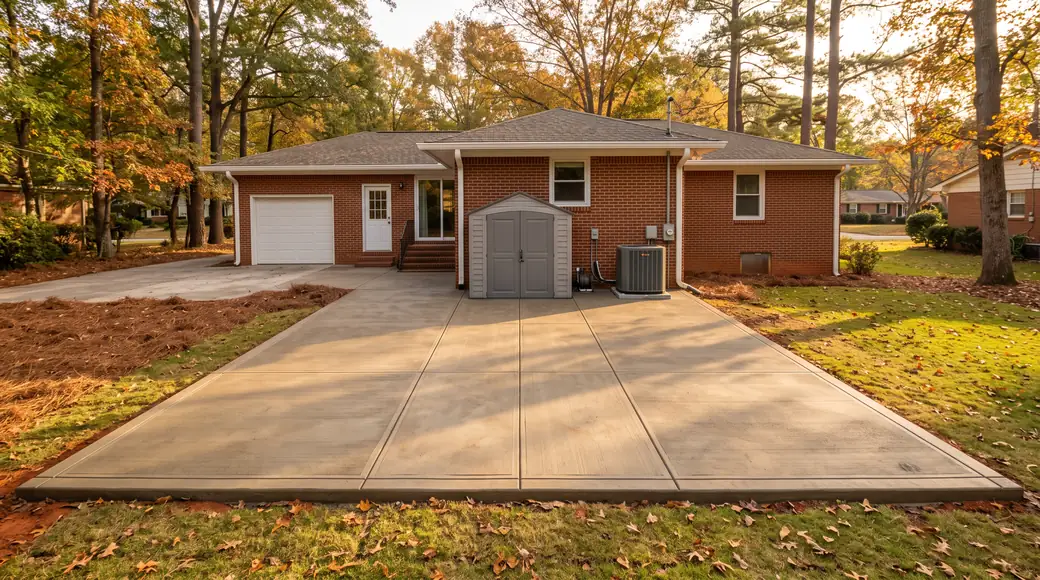
Square-edged concrete slab pad with a storage shed on it at a red-brick ranch home in Lawrenceville, GA, in late afternoon light.

Concrete Slabs & Pads in Lawrenceville, GA

We pour concrete slabs and pads for houses and small commercial buildings around Lawrenceville. A shed floor, a hot tub pad, a garage extension, a slab under an addition: the work is the same underneath, and the size is what changes. We are a concrete contractor, so the pour is not handed off to a crew you have never met. The people who set the forms are the people who finish the surface, which matters more on a slab than on almost anything else.

Most pads we set get a plain broom finish, because that is what holds up under a truck, a workbench or a set of patio furniture. Stamped concrete and exposed aggregate are worth the money on a pad you actually look at, off a back door or under a pergola. Reinforcement is rebar or wire mesh depending on what the slab carries. Where a sidewalk or driveway meets the new pour, we match elevations so water leaves and nothing catches a toe.

Half the houses here were built in 1987 or before, and slabs that old tell you something before you pour anything beside them. Cracks that have opened and kept moving. A corner that settled. A patio pulling back from the foundation an inch at a time. We would rather say so up front than pour a new pad against a problem that is still going. Call for a free estimate on the slab you have in mind.

Call +1 470-229-2076

Licensed, Bonded, and Insured ยท A combined 15 years of experience

Get a FREE Quote

We warranty all of our work because we believe in what we do.

What Concrete Slabs & Pads Involves

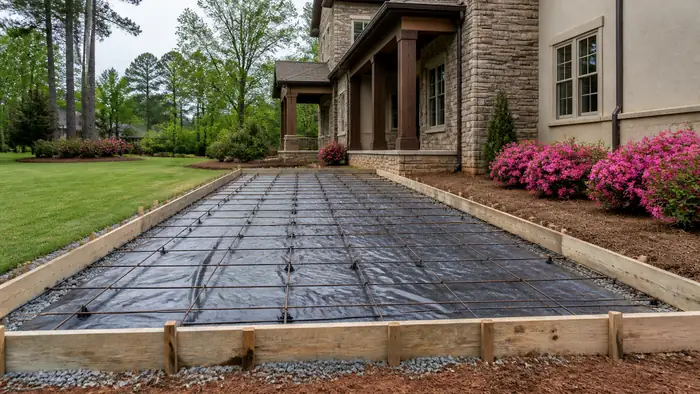
Concrete slab area formed and prepped, wire mesh set before the pour at a stacked-stone and stucco home in Lawrenceville, GA, under bright midday cloud.

Slab installation

Slab installation starts below the surface. We strip topsoil and organic material, cut to grade, then compact a base of graded aggregate in lifts so the fill does not settle later. Most residential slabs go four inches thick, thickened at the edges where walls or posts land. Rebar on chairs or wire mesh pulled up into the pour, never left lying on the base. Vapor barrier under anything that gets finished floors.
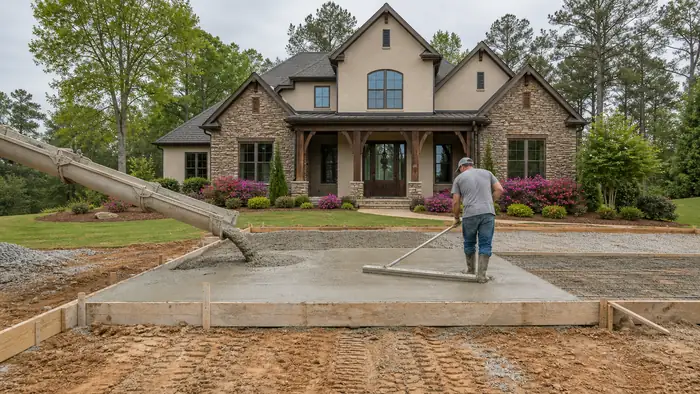
Concrete being poured and screeded across a formed slab at a stacked-stone and stucco home in Lawrenceville, GA, under bright midday cloud.

Concrete pouring

Pouring is the part with no undo. We set forms, check grade in both directions, and place the concrete in a continuous pour so there are no cold joints running through the middle of a slab. Screed, bull float, then wait. Finishing too early traps bleed water and gives you a surface that dusts and scales. Control joints get cut within the first day, roughly a quarter of the slab depth, so cracks land where we put them.

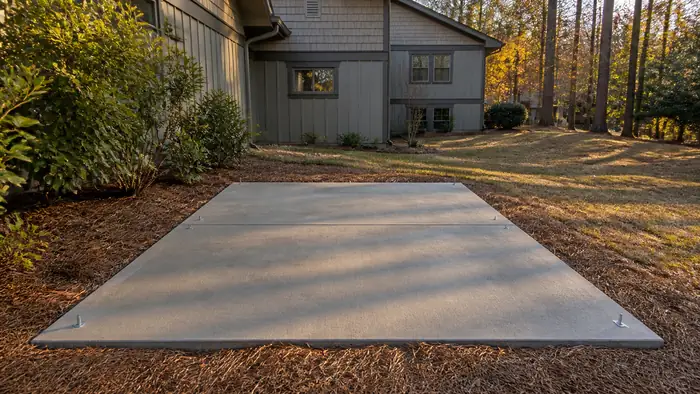
Small square concrete pad poured for a storage shed, anchor bolts set at a grey split-level home in Lawrenceville, GA, in late afternoon light.

Shed slab

A shed slab is small work that still has to be done right, because a shed sitting on a slab that pitches the wrong way rots from the sill up. We form to the shed footprint, hold the pad an inch or two above surrounding grade, and slope the finish away from the door. Four inches with mesh handles a mower, a workbench and shelving. Anchor bolts go in wet if you are strapping the building down.

Concrete Slabs & Pads in metro Atlanta

Half the homes in Lawrenceville were built before 1987, the median year for the housing stock here, which means a lot of the original flatwork has been in the ground for close to four decades. That shows up in the calls we get. A patio slab poured with the house settles at one corner, a shed pad cracks through where nothing was under it, a landing sinks away from the back step. We pour new slabs and pads for those houses: patio slabs, shed and workshop pads, equipment and generator pads, hot tub pads, landings, and extensions off existing concrete driveways where somebody needs more room to park.

Tying new concrete into old is the part that decides whether the finished job looks intentional or looks patched, and on a house from the late eighties the existing slab has almost always moved. We check where it actually sits, set forms to meet it at the height it holds now, and run an isolation joint between the two so the new pour moves on its own instead of dragging against forty year old concrete. Rebar or wire mesh goes in depending on the pad and the load. Subgrade gets compacted first, every time.

Our concrete work runs through Lawrenceville and out across the surrounding metro Atlanta suburbs, and the jobs look much the same from one neighborhood to the next, because the houses went up in the same stretch of years. Finish is your call. A broom finish is what most people want behind the house, stamped concrete and colored concrete both hold up on a patio, and exposed aggregate gives you texture without a pattern. Call for a free estimate on a slab or pad.

How the Work Runs

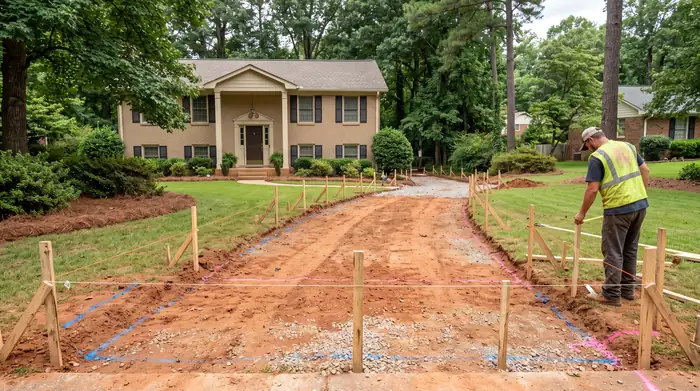
String lines and grade stakes laid out across a yard before a pour at a tan-brick colonial in Lawrenceville, GA, under bright midday cloud.

Step 1: Site Evaluation

We walk the area with you and look at what the concrete has to sit on. Grade, drainage, how water leaves the yard, where roots and utility lines run. We measure, check the depth of any existing slab, and look at what failed on it if something did. Soft spots under an old pad tell us more than the surface ever will. You get our read on the spot, plainly.

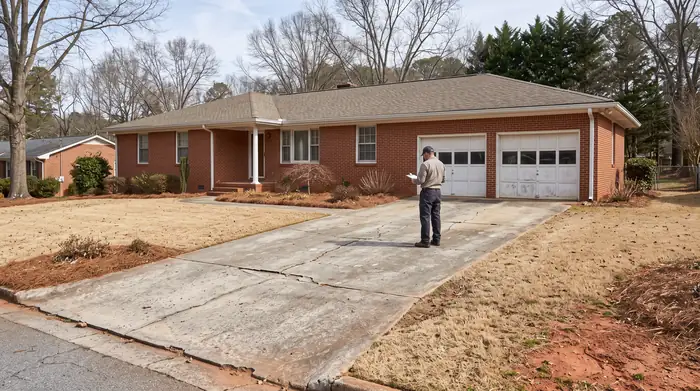
Concrete driveway and walk at a home, the kind of job an estimate covers at a red-brick ranch home in Lawrenceville, GA, under bright midday cloud.

Step 2: Written Estimate and Permits

Everything goes in writing before we order material: square footage, slab thickness, reinforcement, finish, and how we handle the spoil from demo. Permits, when the job needs them, we pull. Most homes here were built around 1987, so plans on file are often thin or missing, and we verify setbacks and easements ourselves rather than trusting an old survey drawing.

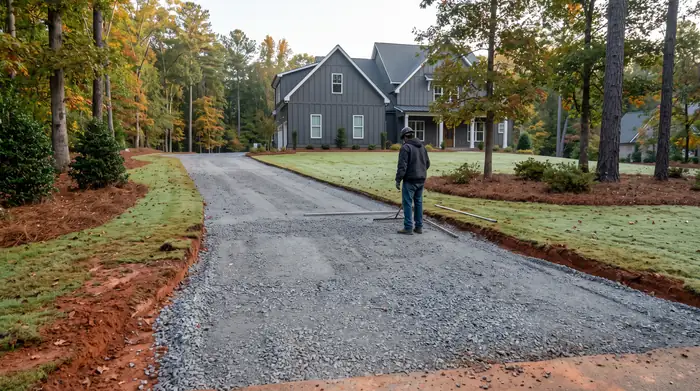
Broken-out concrete removed and the base rebuilt before a new pour at a charcoal farmhouse-modern home in Lawrenceville, GA, in early morning light.

Step 3: Demolition and Base Prep

Old concrete comes out in full, including the crumbling edges people are tempted to leave. We haul it off, then cut and shape the subgrade, remove organics, and compact graded aggregate base in lifts with a plate compactor or roller. Base work is where driveways are won or lost. A pad poured on loose fill settles, and no amount of thickness or steel above it fixes that.

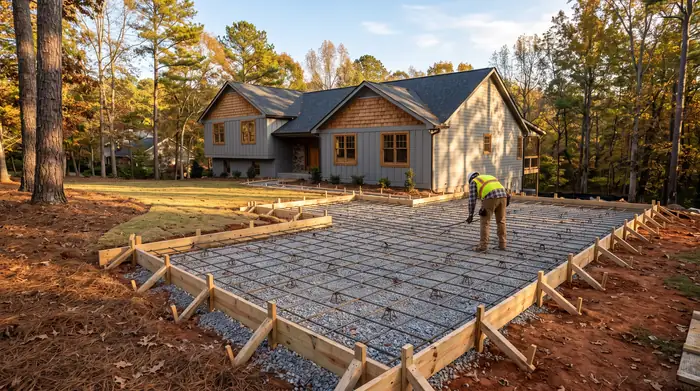
Wooden forms and rebar grid set and tied, ready for concrete at a grey split-level home in Lawrenceville, GA, in late afternoon light.

Step 4: Forming, Steel and the Pour

Forms get set to line and grade with real slope for drainage, staked tight so nothing bows under load. Reinforcement depends on the job: rebar on a grid for a concrete driveway, wire mesh or fiber on lighter flatwork, all held up on chairs so the steel sits in the slab, not under it. We pour to spec thickness, screed, and consolidate as we go.

Freshly finished concrete slab curing under a clean broom texture at a buff-brick ranch home in Lawrenceville, GA, after a rain shower.

Step 5: Finishing, Curing and Final Walkthrough

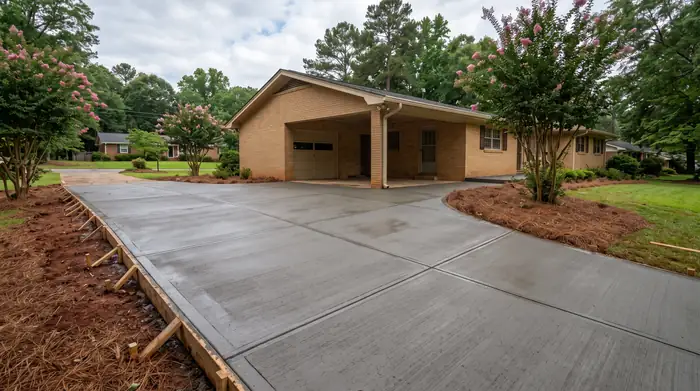
Finish depends on what you picked: broom for traction on sidewalks, stamped or exposed aggregate where you want texture and pattern. We tool the edges, cut control joints early so cracking goes where we put it, and cure the surface instead of letting it dry out fast. Then we walk the concrete installation with you and go over joints, drainage, and when to drive on it.

What Decides the Price

Two slabs the same size can come back at very different numbers, and the difference is almost always in the ground, the access, and the spec. Here is what moves it, all of which you can look at yourself before anyone quotes you.

What changes the priceWhich wayWhy
An old slab or footing already in placeCosts moreIt has to be broken out, loaded and hauled off before we form anything.
How close the mixer gets to the formsCosts less when it backs right upLong wheelbarrow runs, tight gates and pumping all add hours or equipment.
Thickness the use calls forCosts more as it goes upA parking pad carrying a truck is not the same pour as a patio slab.
Rebar on chairs instead of wire meshCosts moreMore steel, more tying, more labor, and it belongs in heavier flatwork.
Trees, stumps and roots in the footprintCosts moreGrinding and clearing come first, then the subgrade gets rebuilt and compacted.
Which way the site drainsCosts more where water sitsFill, fall and sometimes a drain get built in so the slab sheds water.
Stamped or colored finish over broomCosts moreStamping, release, sealing and color are added material and a longer finish window.
Permits through the City of LawrencevilleVaries by scopeSome slabs need one, some do not, and the review adds time either way.

Comparing bids, read past the total. Look for slab thickness, reinforcement, subgrade prep, joint spacing, and whether demolition and haul-off are included or excluded.

Questions About Concrete Slabs & Pads

What thickness of slab do I need for a shed or workshop in Lawrenceville?

Four inches handles a garden shed, a mower, bikes and general storage. Step up to five or six inches for a workshop that holds a car, a lift, a welder or heavy benches, and thicken the edges where the walls land. We reinforce flatwork with wire mesh or rebar depending on the load. Tell us what goes on the slab and we size it from there.

Do I need a permit for a slab on my Lawrenceville property?

Often yes. It depends on the size of the pour, what sits on top of it, whether it ties into the house, and how close it runs to a property line or easement. A small concrete patio and a workshop foundation are not treated the same way. We confirm what your specific job requires before any concrete gets ordered.

How level can you get a Lawrenceville slab, and how is that measured?

Interior slabs we finish flat to a ten foot straightedge, and commercial concrete gets held to FF and FL floor numbers when the spec calls for them. Exterior work is different. A concrete driveway or patio needs deliberate fall, usually about a quarter inch per foot away from the house, so water leaves instead of standing. Grades get shot with a laser before and after the pour.

Would a monolithic or a floating slab suit a Lawrenceville property?

Monolithic pours are the usual choice for garages, workshops and additions, since the footing and the floor go down in one placement and carry the walls together. A floating slab suits a shed or a patio holding nothing structural. The median home here was built in 1987, so we look at how the existing foundation sits before we decide either way.

Can you pour a slab in Lawrenceville in winter?

Yes. We work off overnight temperatures and ground conditions rather than the calendar. Concrete does not go on frozen ground, mixes get adjusted for cold weather placement, and blankets cover fresh flatwork when the numbers call for it. Same approach and same terms for concrete work in Snellville, Suwanee, Duluth and Sugar Hill, and across the rest of metro Atlanta.

Does a slab need a vapour barrier in Georgia?

Yes, under anything enclosed, heated, cooled or finished. Poly under the slab stops ground moisture from moving up through the concrete and into flooring, stored goods or the bottom of a wall. We run it over a compacted stone base, lap the seams and seal them, then keep it intact while the rebar goes down. Open patios and exposed aggregate walkways don't need one.

Get a Free Estimate

Get a FREE Quote

We warranty all of our work because we believe in what we do.

Tap to call +1 470-229-2076