+1 470-229-2076
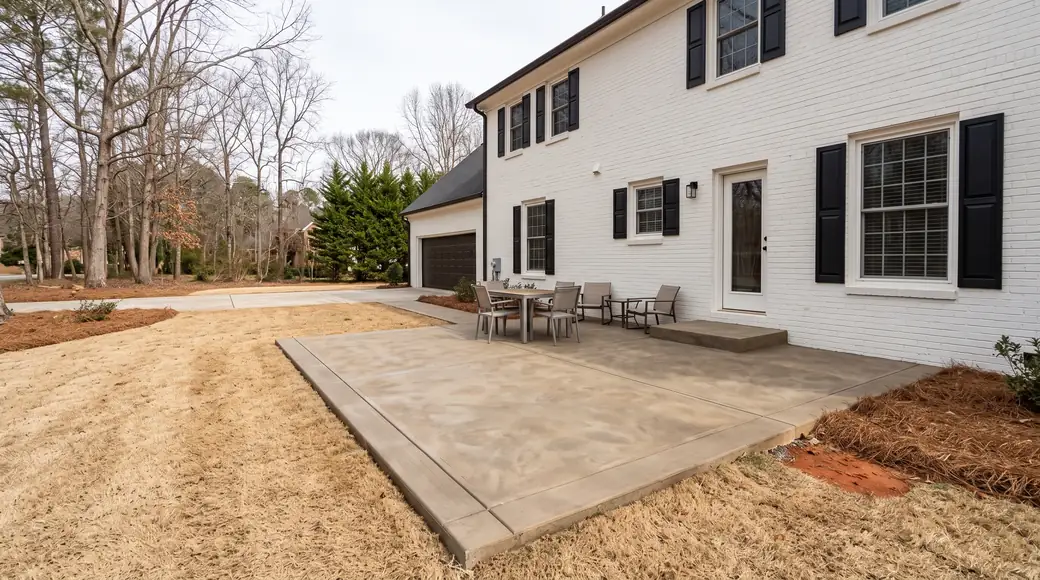
Rectangular concrete patio with a low step up to the rear door at a painted-white-brick two-story home in Lawrenceville, GA, under bright midday cloud.

Patio Construction & Outdoor Living in Lawrenceville, GA

We pour concrete patios in Lawrenceville, along with the steps, landings and sidewalk runs that tie a patio back to the driveway or the side gate. Some of it is plain broom finish. Some of it is stamped concrete, cut to read as slate or plank, or colored to sit closer to the brick already on the house. As a concrete contractor we handle the flatwork end of outdoor living: the slab everything else stands on, and the surfaces you cross to get to it.

Every patio starts underneath. We look at where water goes when it leaves the roof, how the yard falls away from the foundation, and what the ground gives us to build on. Base gets compacted. Forms get set to a slope you will not feel underfoot but the water will, and reinforcement, rebar or wire mesh depending on the pour, goes in before the truck arrives. Control joints get cut on a plan rather than wherever they happen to land. Concrete cracks eventually; joints decide where.

Most houses around here date to about 1987, so a patio poured with the original build has had decades to settle, spall, or pull away from what it was tied to. Tear-out and repour is a good share of what we do, and it is usually the honest answer when a slab has moved. Permitting, on the jobs that need it, runs through the City of Lawrenceville, and we handle that paperwork rather than leaving it with you. Homeowners in Suwanee get the same crew and the same approach. Call for a free estimate.

Call +1 470-229-2076

Licensed, Bonded, and Insured ยท A combined 15 years of experience

Get a FREE Quote

We warranty all of our work because we believe in what we do.

What Patio Construction & Outdoor Living Involves

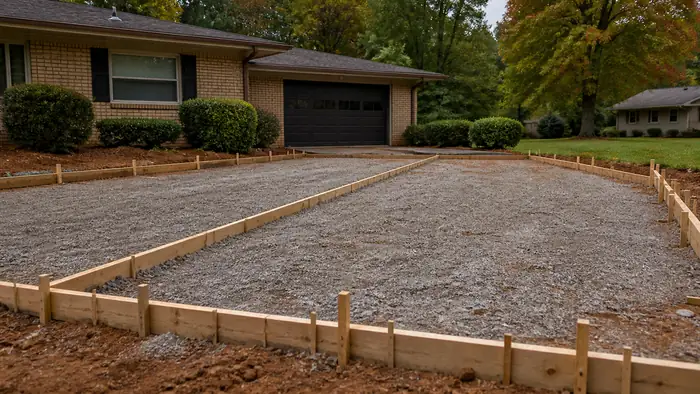
Concrete patio formed and prepped, base and rebar visible before the pour at a red-brick ranch home in Lawrenceville, GA, under an overcast sky.

Patio construction

A patio starts below the surface. We strip topsoil and organics, cut to grade, then compact a base of crushed stone so the slab bears on something stable. Forms go in next, set to fall away from the house so water leaves. Most patios pour at four inches with rebar or wire mesh through the field. Skipping the base is what cracks patios, not the concrete itself. A good concrete contractor spends more time on dirt than on mud.

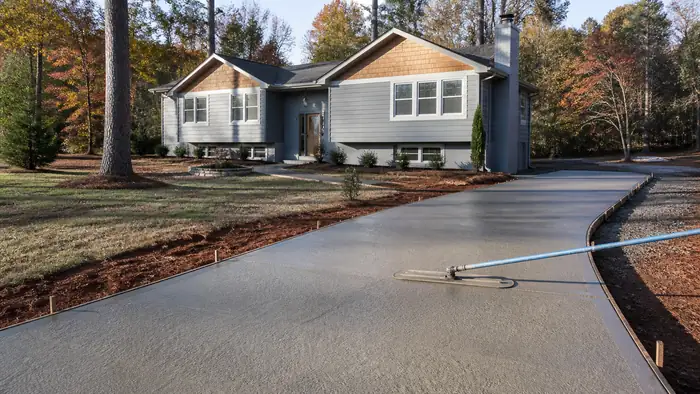
Freshly poured concrete patio still curing under plastic sheeting at a stacked-stone and stucco home in Lawrenceville, GA, in late afternoon light.

Concrete patio installation

Installation day moves fast once trucks arrive. We place, screed and bull float, then wait for the bleed water to leave before finishing. Broom finish, exposed aggregate and stamped concrete each need a different window, and stamped patterns need release powder and clean mat work to look right. Control joints get cut early, usually within the first day, so shrinkage cracks land where we put them. Colored concrete gets sealed after cure. Tie-in to an existing concrete sidewalk is matched at the joint.

Patio Construction & Outdoor Living in metro Atlanta

Patio work here usually starts with a slab somebody poured a long time ago and never loved. We build concrete patios, stamped and colored surfaces, exposed aggregate, and the flatwork that ties a back door to a yard. Some jobs are a clean rectangle off the kitchen. Others wrap a grill run, a seating area and a walk out to the driveway, across Lawrenceville and the metro Atlanta streets running toward Snellville. The concrete is the same either way.

The median house in this city was built in 1987, so most of what we pour goes next to something that already exists. That changes the layout work. We measure off the door threshold, the old slab edge and the line the downspouts already take, rather than drawing a shape and forcing the house to accept it. Older backyards have history in them. Walking one tells us more in ten minutes than a satellite photo tells us in an afternoon.

Most failed patios we tear out failed underneath, where nobody was looking. Thin pours over loose fill crack early. Rebar and wire mesh get set and then walked flat before the truck arrives, which leaves steel sitting uselessly at the bottom of the slab. Control joints go in late, or in the wrong place, and the concrete picks its own crack instead. None of that shows at the start. It shows up years later, and by then the repair is the whole slab.

Getting it right is mostly unglamorous work done in order. Grade the base, compact it, hold the steel at the right height, pour at a workable consistency, then finish before the surface gets ahead of you. Stamped concrete narrows that further, since the texture and the color both get decided in one short window while the slab is still open. We plan the whole day around that window. Call for a free estimate on the patio you have in mind.

How the Work Runs

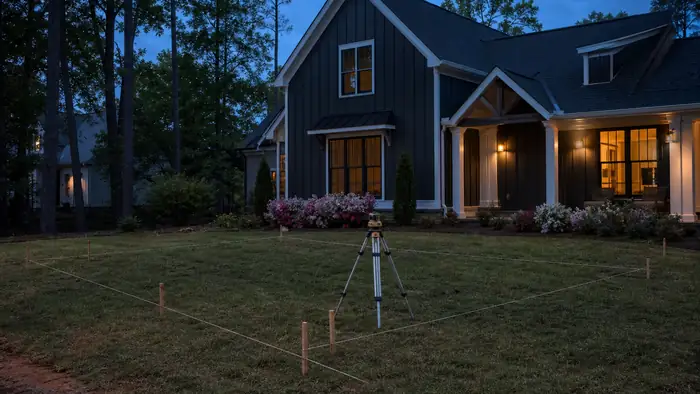
String lines and grade stakes laid out across a yard before a pour at a tan-brick colonial in Lawrenceville, GA, under bright midday cloud.

Step 1: Site Evaluation

We walk the area with you and look at what the ground is doing. Drainage direction, how far the soil drops across the footprint, tree roots within reach, and where water already collects after a hard rain. We measure, check access for a truck and a wheelbarrow run, and note anything buried. Most patio problems trace back to what nobody checked before the pour, so we spend real time here.

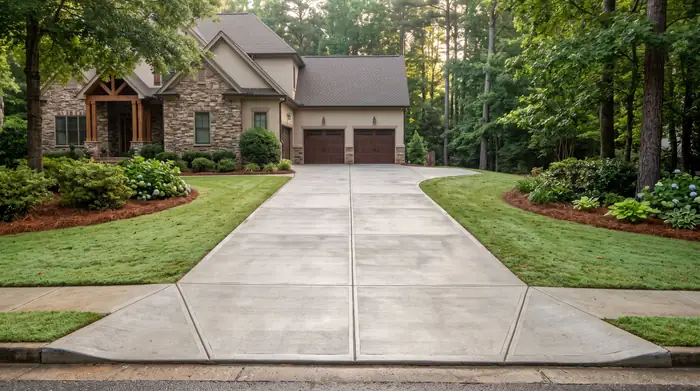
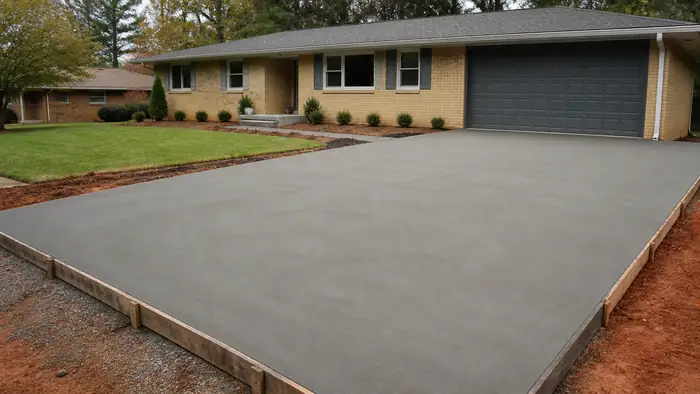
Concrete driveway and walk at a home, the kind of job an estimate covers at a red-brick ranch home in Lawrenceville, GA, under bright midday cloud.

Step 2: Written Estimate and Permits

You get the scope in writing: square footage, slab thickness, reinforcement, finish, joint layout and how the edges are handled. Everything is itemized, so you can see what a stamped surface adds over a broom finish, or what changes if the patio ties into existing driveways. We handle the paperwork side and schedule around it. Nothing starts until you have read the estimate and agreed to it.

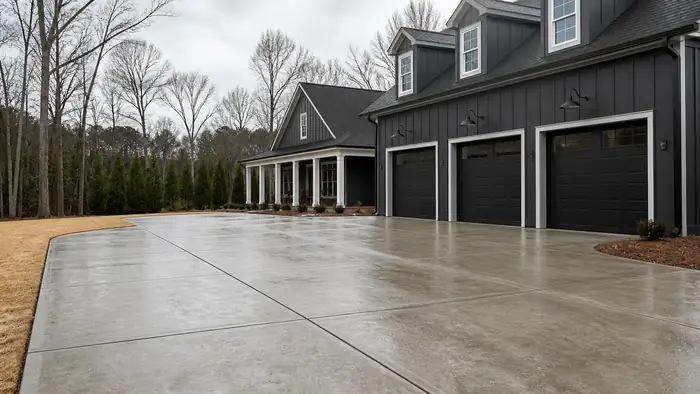
Broken-out concrete removed and the base rebuilt before a new pour at a charcoal farmhouse-modern home in Lawrenceville, GA, in early morning light.

Step 3: Demolition and Base Prep

Old slabs come out in pieces and get hauled off, not buried on site. Then we cut the subgrade to the depth we need, remove soft or organic material, and bring in crushed stone compacted in lifts. A patio built on loose fill will settle in patches and crack along the low spots. Grade matters here too: we set a slight fall away from the house before any forms go down.

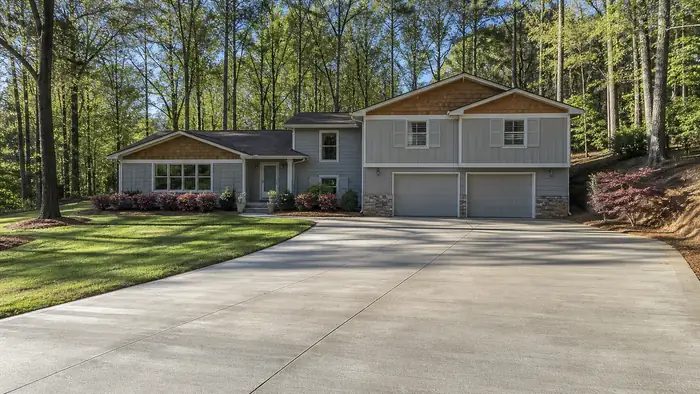
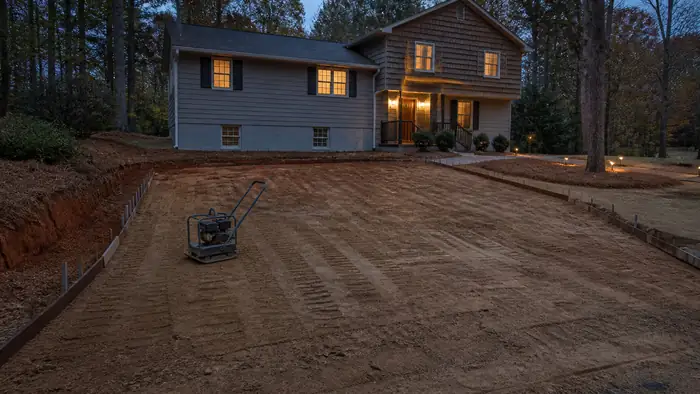
Wooden forms and rebar grid set and tied, ready for concrete at a grey split-level home in Lawrenceville, GA, in late afternoon light.

Step 4: Forming, Steel and the Pour

Forms get staked, strung and checked for grade and square. Reinforcement depends on the slab. Wire mesh for lighter flatwork, rebar on a grid for thicker pours or anything carrying vehicle load, chaired up so the steel sits in the middle rather than on the dirt. Concrete installation runs in one continuous placement where we can manage it. We screed, bull float, and cut control joints on a spacing that suits the slab.

Freshly finished concrete slab curing under a clean broom texture at a buff-brick ranch home in Lawrenceville, GA, after a rain shower.

Step 5: Finishing, Curing and Final Walkthrough

Finish work happens on the concrete's schedule, not ours. Broom texture, exposed aggregate, colored or stamped patterns all have their own window, and rushing any of them shows up permanently in the surface. We seal joints, cure the slab, and tell you plainly how long to stay off it and when furniture can go back. Then we walk it with you, including any adjoining concrete driveway or sidewalks we touched, and go over what to watch for through the first season.

What Decides the Price

Two patios of the same size can price out far apart, and the reasons are usually sitting in plain view before anyone pours. The median Lawrenceville home was built in 1987, so on a lot of these jobs there is old concrete to deal with before new work starts. Here is what we look at when we walk a yard.

What changes the priceWhich wayWhy
An old slab or pavers already in the footprintcosts moreBreaking out, loading and hauling is its own stretch of work before a single form goes in.
Distance from the street to the pourcosts more when longWhen a truck cannot back near the yard, the mix moves by buggy or pump, and that is added labor.
Slab thickness the use calls forcosts more when thickerA patio carrying a hot tub or an outdoor kitchen needs more depth than one carrying a table and chairs.
Rebar instead of wire meshcosts moreHeavier reinforcement means more steel and more tying time, and some slabs genuinely call for it.
How the ground drains nowcosts more when it holds waterWater standing near the foundation means regrading, extra base stone, or a drain worked into the plan.
Roots, irrigation lines and downspouts under the footprintcosts moreAnything buried there has to be cut, rerouted or worked around first.
Stamped or colored finish, or exposed aggregatecosts more than a broom finishStamps, release, sealer and the surface time all sit on top of plain flatwork.

Set two bids side by side and read past the total. Check that both name the same thickness, the same reinforcement, the same base preparation, and say who hauls the old slab away. Wide gaps usually come from something one bid left out.

Questions About Patio Construction & Outdoor Living

Can you pour a patio around an existing deck or pool in Lawrenceville?

Yes. We pour up to a deck post or a pool shell with an isolation joint between the two, so the slab moves on its own and never pushes against something it should not. Around pools we keep the fall running away from the water. Sometimes we cut back a little deck skirting to get clean forms. The deck itself stays where it is.

What size patio makes sense for a typical Lawrenceville back garden?

Start with the furniture, not the footprint. A table with chairs pulled all the way out takes more room than most people picture, and a grill wants its own space off the walking path. We mark the outline in paint and stakes before we form anything, so you can walk it, set a chair down, and judge the size in your own yard.

What finish wears best on a patio in Georgia?

A broom finish and exposed aggregate ask the least of you over the years. Both hold traction when wet, and neither shows traffic the way a smooth troweled surface does. Stamped and colored concrete look better than either, and they carry a sealer that needs redoing on a schedule to keep the color true. That is the honest trade: appearance against upkeep.

Can a Lawrenceville patio be extended later without the join showing?

No, not invisibly. New concrete cures a different shade than concrete that has been down for years, and the two never match exactly. What we can do is make the join look deliberate: a tooled joint, a border in a contrasting finish, or a change in level that reads as a second space. Tell us at the first pour and we will set the joints for it.

How do you stop a patio holding water after Lawrenceville rain?

Slope. Every slab we pour falls away from the house across its whole surface, enough to move water without you feeling the tilt underfoot. We build that grade into the forms and check it with a level as we screed, because it cannot be fixed afterward. Where a patio sits low or tight against a wall, we add a drain and run it out to daylight.

Will a concrete patio get too hot to walk on in Georgia summers?

Yes, in full sun on bare feet, the same as any hard surface out in the open. Lighter colors and a broom finish stay cooler than dark stamped work, and a rough texture sheds heat better than a slick one. Shade does more than any of that. If the spot catches sun all afternoon, plan a pergola or an awning, and we will pour to suit it.

Get a Free Estimate

Get a FREE Quote

We warranty all of our work because we believe in what we do.

Tap to call +1 470-229-2076