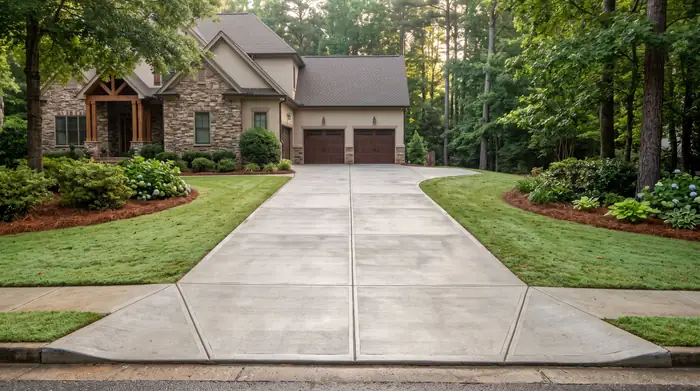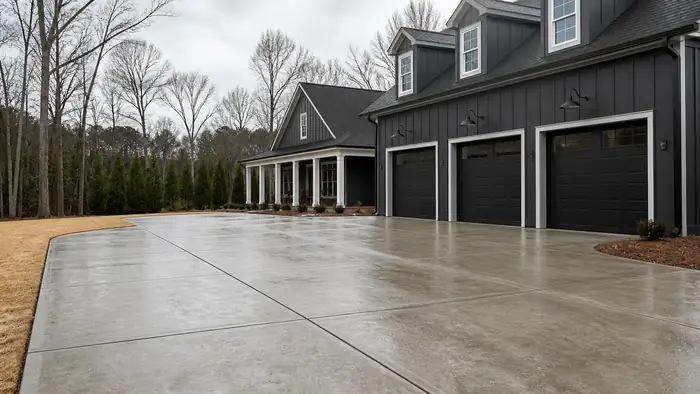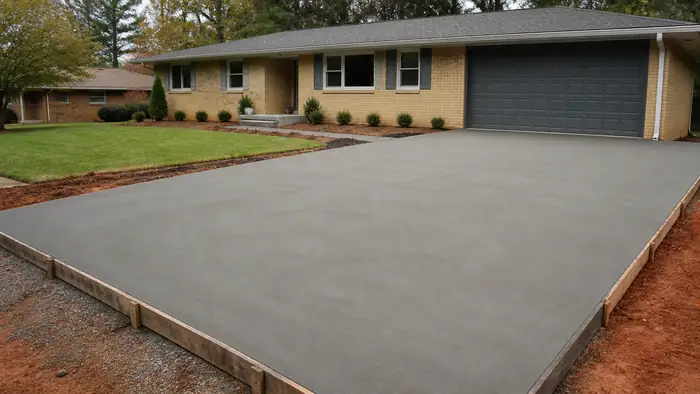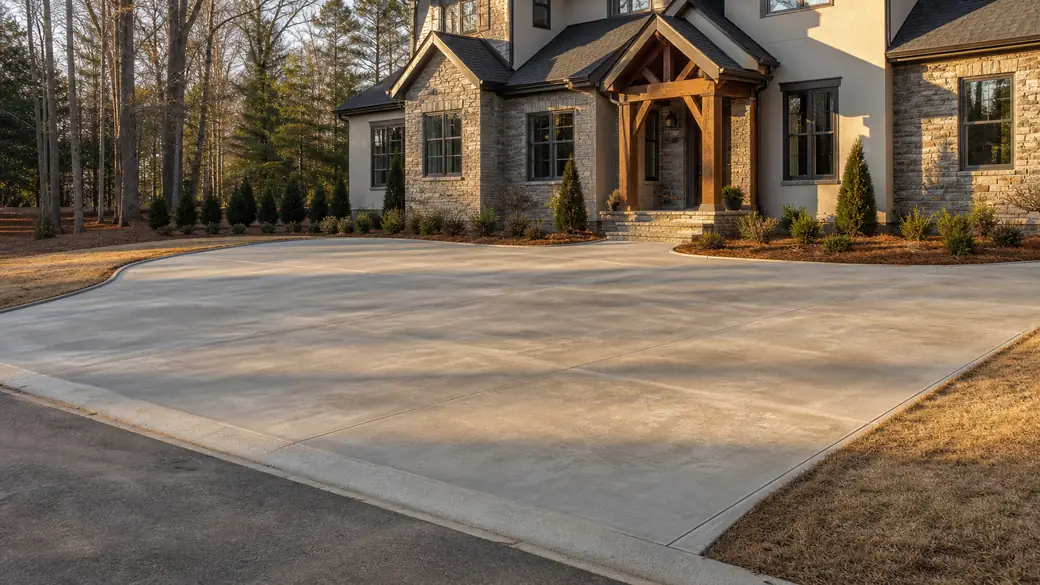
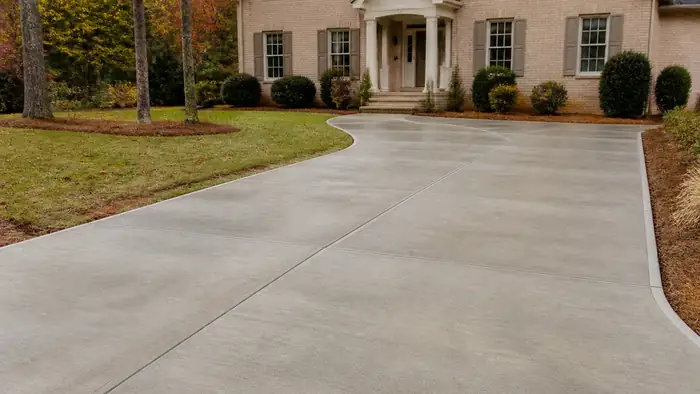
Commercial concrete for a warehouse is flatwork under load. The slab carries loaded forklifts turning in the same spot a hundred times a day, pallet racking with posts that push weight into a few square inches, and truck traffic at the dock. That is a different animal from a residential driveway. In the distribution buildings around Lawrenceville, we pour building slabs, dock approaches and aprons, exterior equipment pads, and the concrete sidewalk that runs along the front where people actually walk in.
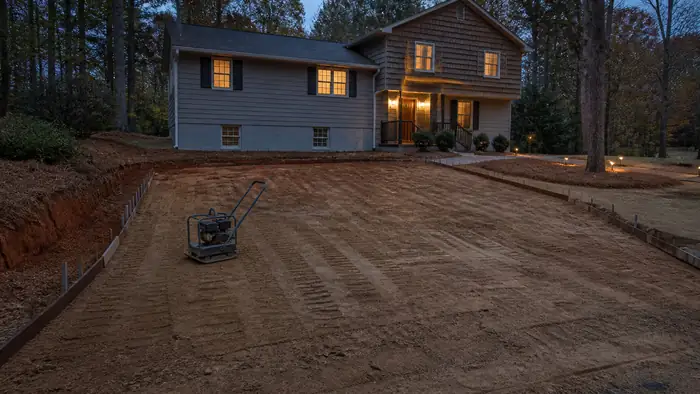
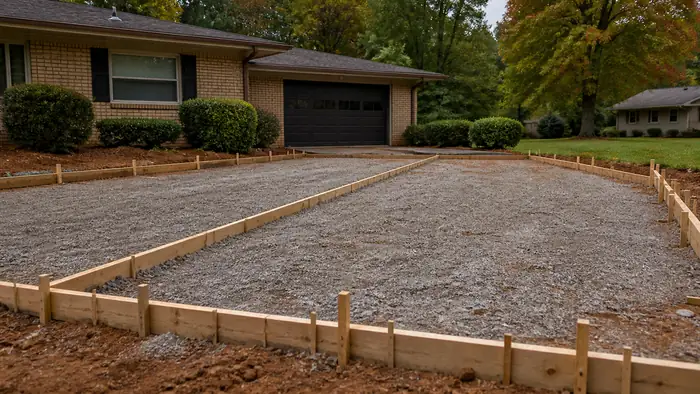
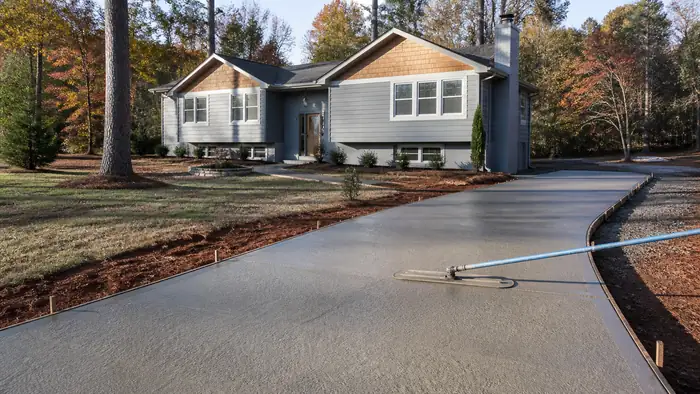
Before any of that, the ground gets sorted out. Subgrade is graded and compacted, stone comes in where the soil will not hold, and thickness is set to the loads the floor will see rather than to habit. Rebar goes in where the engineering calls for it, wire mesh in lighter work, and joints are laid out on paper before the first truck arrives. A pour runs on a clock. We staff it so the concrete gets placed, screeded and finished at the pace it sets.
Most failures trace back to what happened under the slab, or in the first day after the pour. Cracks wander when joints are cut late or spaced too far apart. Slabs curl at the edges when the surface dries faster than the body underneath. Dusting and shallow spalling come from working water into the finish to make troweling easier. Thin sections at a dock, where the loads are heaviest, break first. None of that is bad luck. It is a shortcut showing up two years later.
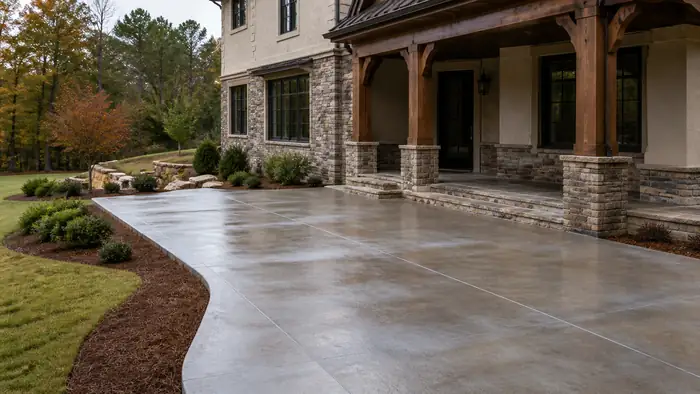
Getting it right takes time more than anything else: real subgrade prep, correct thickness, steel where it belongs, joints on a plan, and curing that is protected instead of walked away from. Surface quality matters most on the parts people see. Some buildings want stamped concrete or exposed aggregate at the office entrance while the interior stays a hard troweled slab, and stamped work is the same craft poured to different tolerances. A concrete contractor who owns the whole sequence answers for all of it.